Beneficiary Tradução
Description


Get your form ready online
Our built-in tools help you complete, sign, share, and store your documents in one place.
Make edits, fill in missing information, and update formatting in US Legal Forms—just like you would in MS Word.
Download a copy, print it, send it by email, or mail it via USPS—whatever works best for your next step.
Sign and collect signatures with our SignNow integration. Send to multiple recipients, set reminders, and more. Go Premium to unlock E-Sign.
If this form requires notarization, complete it online through a secure video call—no need to meet a notary in person or wait for an appointment.
We protect your documents and personal data by following strict security and privacy standards.

Make edits, fill in missing information, and update formatting in US Legal Forms—just like you would in MS Word.

Download a copy, print it, send it by email, or mail it via USPS—whatever works best for your next step.

Sign and collect signatures with our SignNow integration. Send to multiple recipients, set reminders, and more. Go Premium to unlock E-Sign.

If this form requires notarization, complete it online through a secure video call—no need to meet a notary in person or wait for an appointment.

We protect your documents and personal data by following strict security and privacy standards.
Looking for another form?




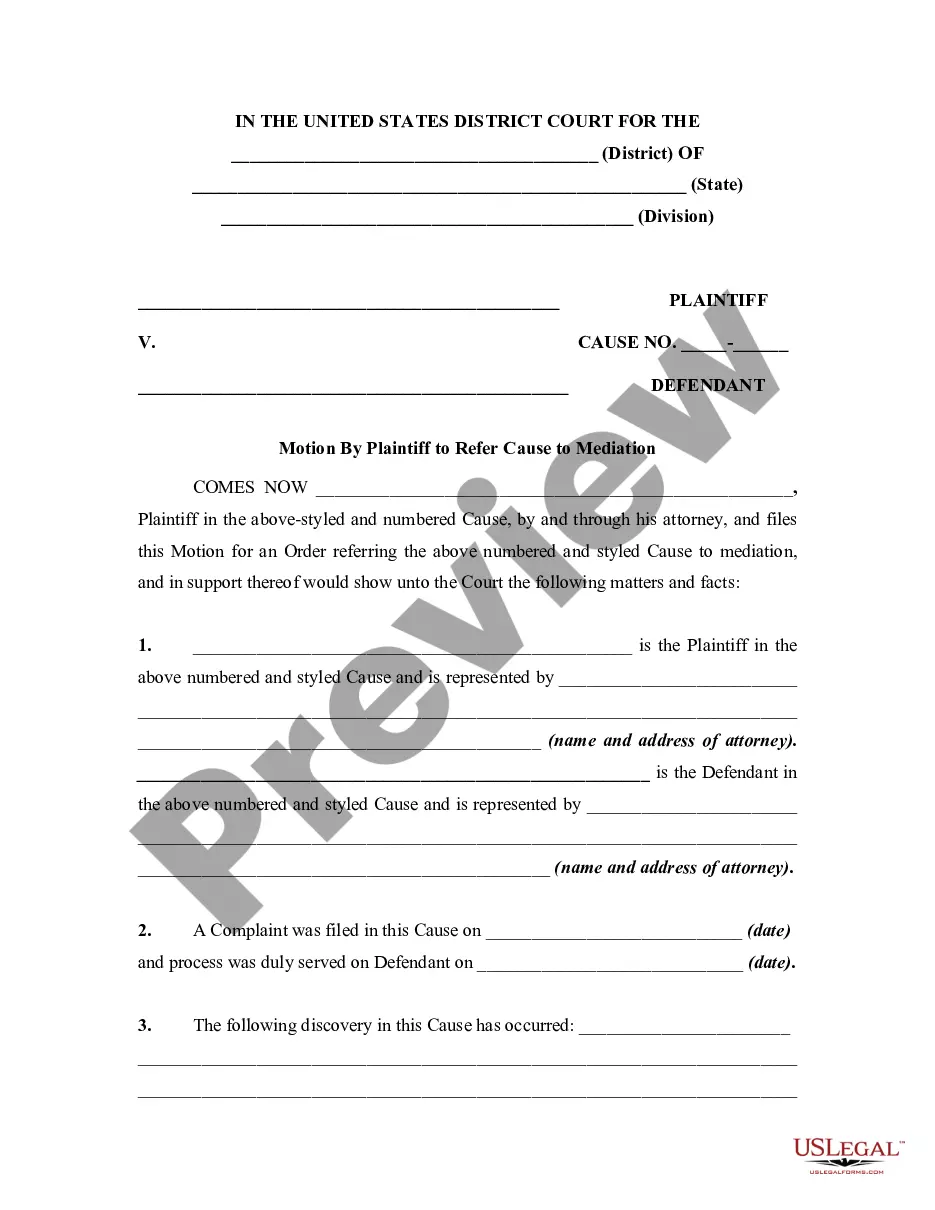



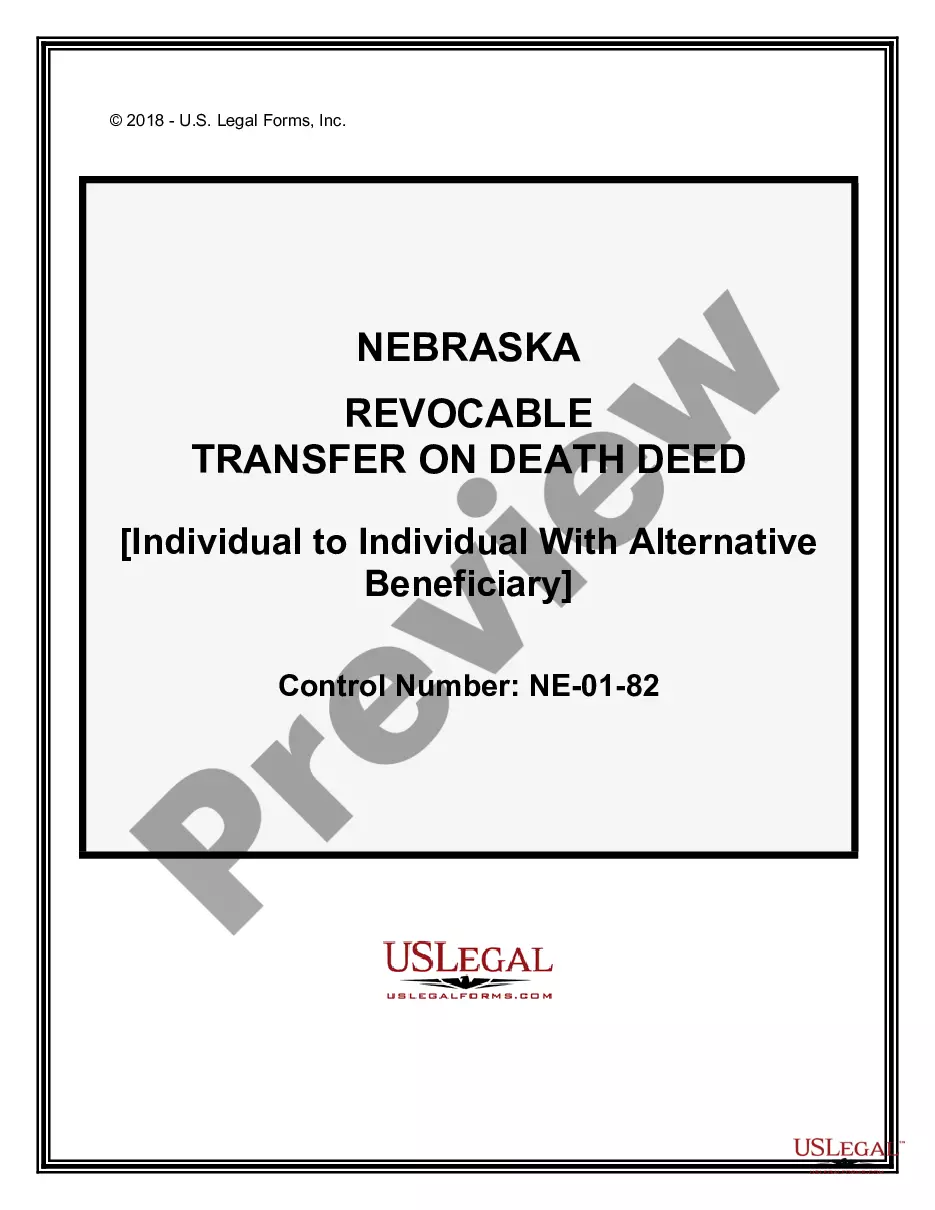
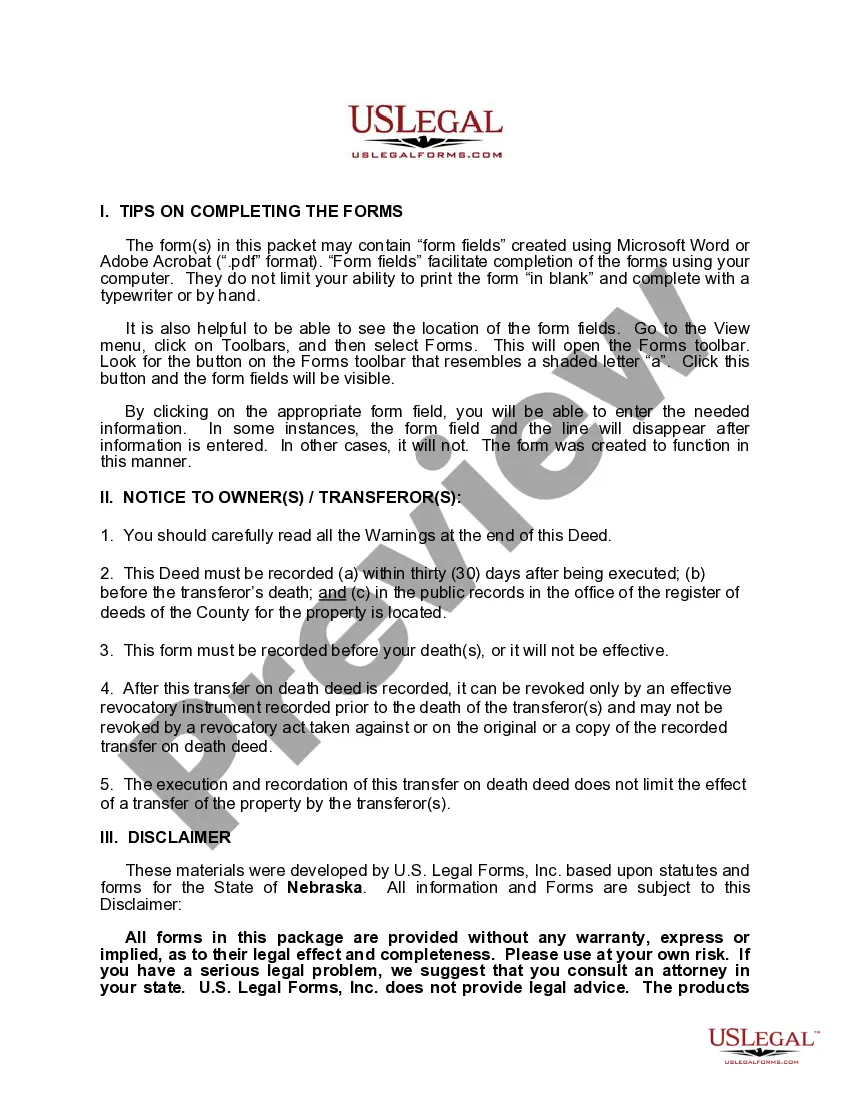
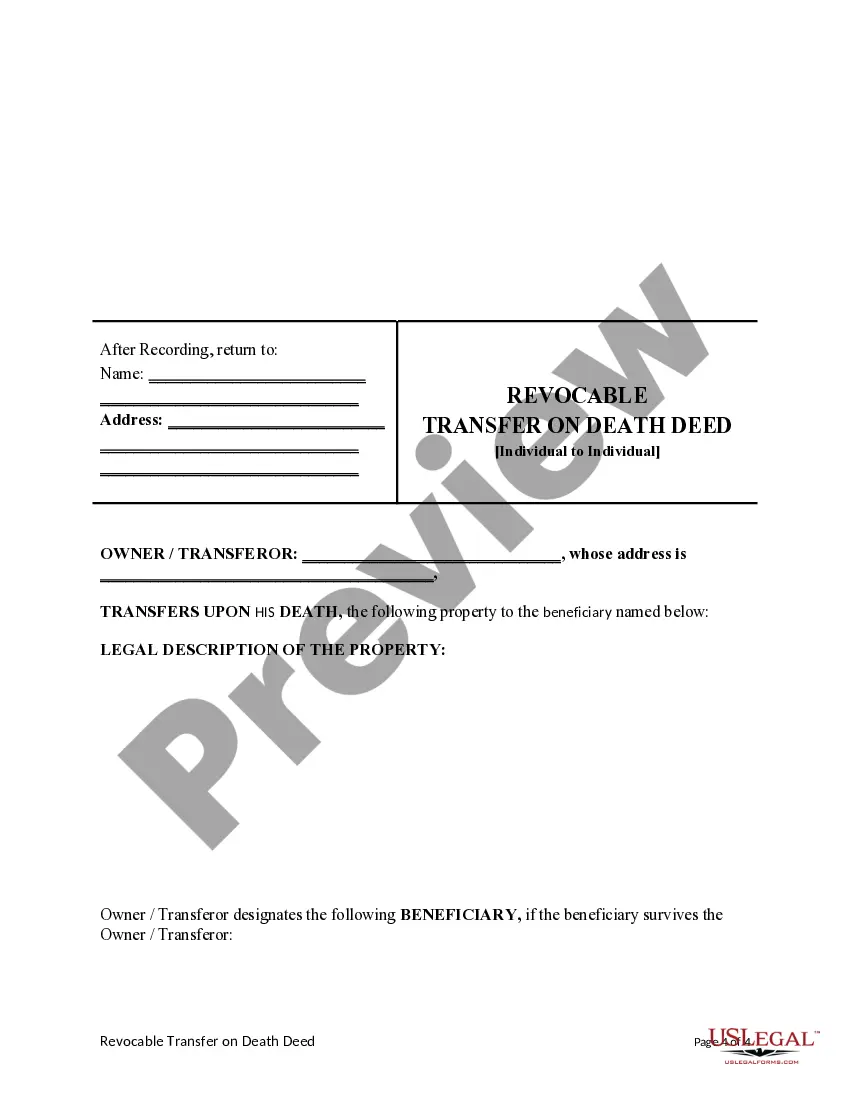
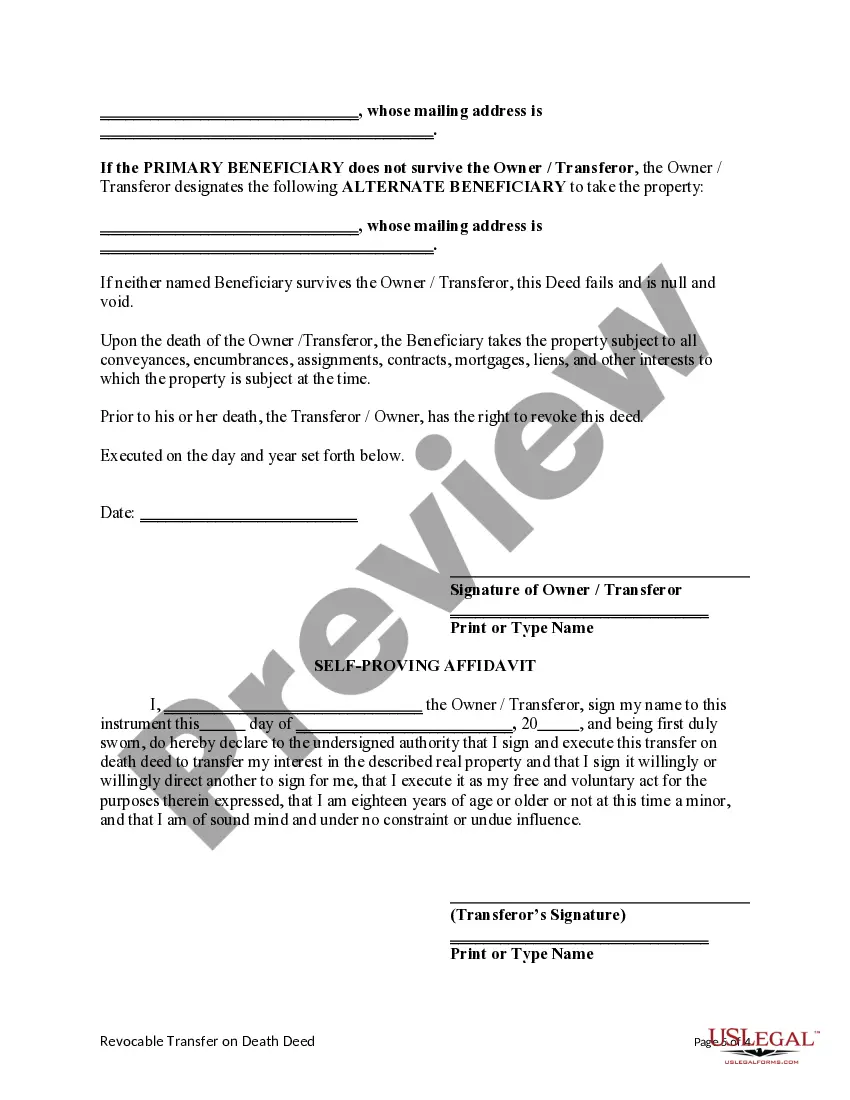
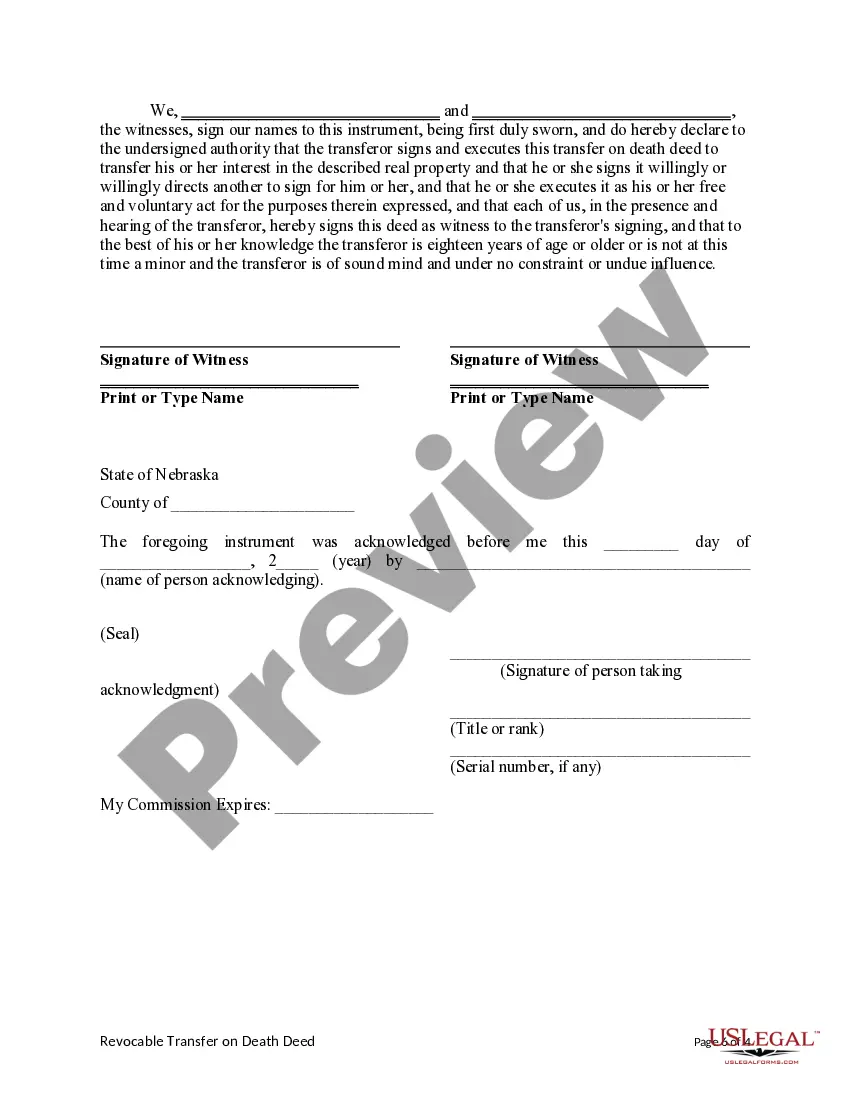
How to fill out Nebraska Transfer On Death Deed Or TOD - Beneficiary Deed - Individual To Individual With Provision For Alternate Beneficiary?
- If you're a returning user, log in to your account and click the Download button to save your required template. Ensure that your subscription remains active; if it has lapsed, follow the prompts to renew it as needed.
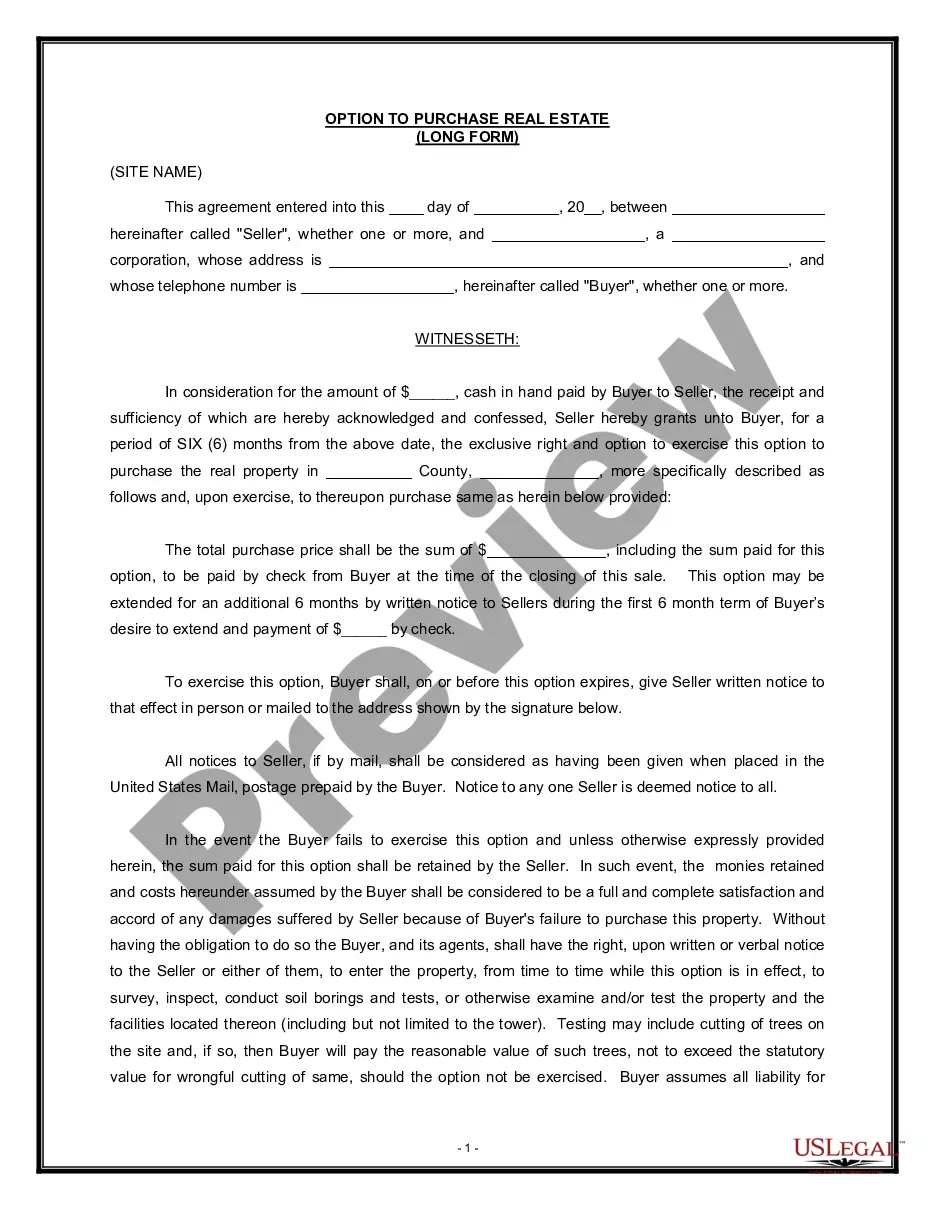
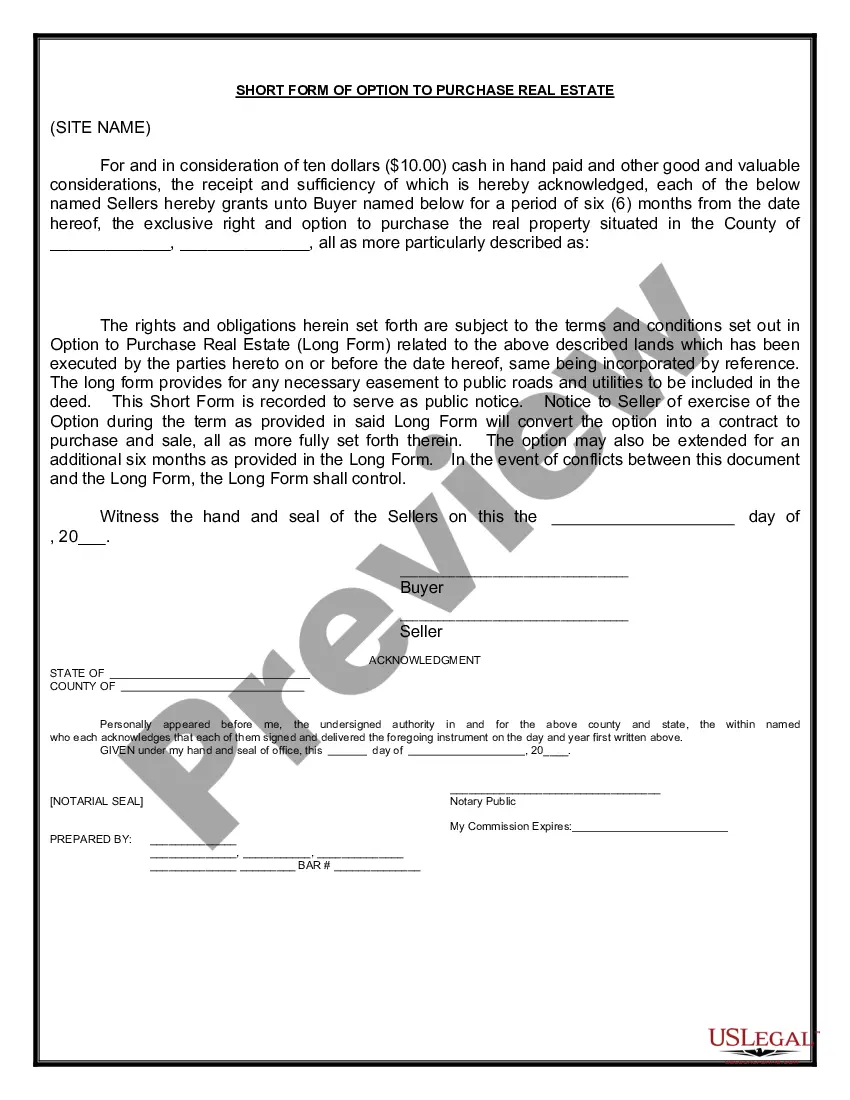
- For first-time users, start by checking the Preview mode and form description. Confirm that the chosen document matches your specific needs and complies with local jurisdiction standards.
- If you need another template, utilize the Search tab to locate the correct form. Ensure it aligns with what you require and proceed.
- Complete your purchase by clicking on the Buy Now button, and choose a suitable subscription plan. Remember to create an account to unlock access to the extensive library of forms.
- Finalize your order by entering your payment information, using either a credit card or PayPal for a seamless transaction.
- Download your form to your device for completion. You can always revisit your purchased documents in the My Forms section of your profile.
In conclusion, US Legal Forms provides a robust collection of over 85,000 legal forms, helping both individuals and attorneys perform legal tasks efficiently. With expert assistance available, you can ensure that your documents are accurate and legally valid.
Ready to simplify your legal process? Visit US Legal Forms today!
Form popularity
FAQ
To discover someone's beneficiary, you may need access to their legal documents, such as a will or trust. If you are unsure how to obtain this information, consider consulting a legal professional who specializes in estate planning. Understanding the concept of 'Beneficiary tradução' can be beneficial when attempting to clarify these matters, as it can vary with local laws.
You can claim family members, friends, or organizations as beneficiaries, as long as they are properly noted in the relevant documentation. Each situation has unique legal requirements, so it's helpful to consult with an expert to ensure that your choices are valid. Engaging with platforms like uslegalforms can help you navigate the complexities of naming a beneficiary and understanding 'Beneficiary tradução'.
A beneficiary qualifies when they are designated in legal documents such as wills or trust agreements. The definition can vary, so it’s important to understand local laws that might influence eligibility. Familiarizing yourself with 'Beneficiary tradução' can provide clarity, assisting you in ensuring that your selected beneficiaries align with your intentions.
Anyone can be a beneficiary, including family members, friends, and charitable organizations, as long as they are specifically named in a legal document. The eligibility may depend on your jurisdiction's laws regarding inheritance and trusts. It's important to understand the term 'Beneficiary tradução' to ensure that you make informed decisions about who will inherit your assets.
It's wise to avoid naming individuals who may mismanage funds or have unresolved legal issues as your beneficiaries. Additionally, consider excluding individuals who may not respect your wishes. The term 'Beneficiary tradução' reflects that the choice for a beneficiary should always be made thoughtfully, and often requires legal advice.
A qualified eligible beneficiary is someone who meets the criteria to receive benefits from a legal trust or estate. Typically, this includes individuals named in a will or trust documents. Understanding the term 'Beneficiary tradução' can help clarify these roles in different contexts, ensuring that your intentions align with legal definitions.
To fill out a beneficiary statement, begin by entering your personal information, including your policy number. Next, clearly list the names and details of your beneficiaries, ensuring that relationships and any percentages of benefits are clearly defined. Finally, review your entries for accuracy, as errors can cause delays in distribution. US Legal Forms can assist you in this process with easy-to-understand templates, making your beneficiary translations straightforward.
Filling out a beneficiary form requires you to accurately input the names, contact information, and relationships of your chosen beneficiaries. Ensure you double-check all details before submitting the form to avoid potential issues later on. It’s often helpful to refer to a clear example or guideline. For precise instructions and templates, consider using US Legal Forms, which provides effective solutions for beneficiary translations.
You should generally avoid naming minors or individuals with questionable financial habits as beneficiaries. Naming someone who may not responsibly manage the funds can lead to disputes and misuse of the benefit. Instead, consider naming a trusted adult or establishing a trust for minors. If you’re unsure, consult resources like US Legal Forms for guidance on beneficiary translations and options.
The best way to list beneficiaries is to include specific names and relationships, which ensures clarity. Make sure to review and update your list regularly, especially after significant life changes like marriage or divorce. Additionally, using a comprehensive form can help you capture all essential details. US Legal Forms offers user-friendly templates that can guide you in making informed beneficiary translations.