North Carolina Eviction Laws Without Lease
Description

Get your form ready online
Our built-in tools help you complete, sign, share, and store your documents in one place.
Make edits, fill in missing information, and update formatting in US Legal Forms—just like you would in MS Word.
Download a copy, print it, send it by email, or mail it via USPS—whatever works best for your next step.
Sign and collect signatures with our SignNow integration. Send to multiple recipients, set reminders, and more. Go Premium to unlock E-Sign.
If this form requires notarization, complete it online through a secure video call—no need to meet a notary in person or wait for an appointment.
We protect your documents and personal data by following strict security and privacy standards.

Make edits, fill in missing information, and update formatting in US Legal Forms—just like you would in MS Word.

Download a copy, print it, send it by email, or mail it via USPS—whatever works best for your next step.

Sign and collect signatures with our SignNow integration. Send to multiple recipients, set reminders, and more. Go Premium to unlock E-Sign.

If this form requires notarization, complete it online through a secure video call—no need to meet a notary in person or wait for an appointment.

We protect your documents and personal data by following strict security and privacy standards.
Looking for another form?
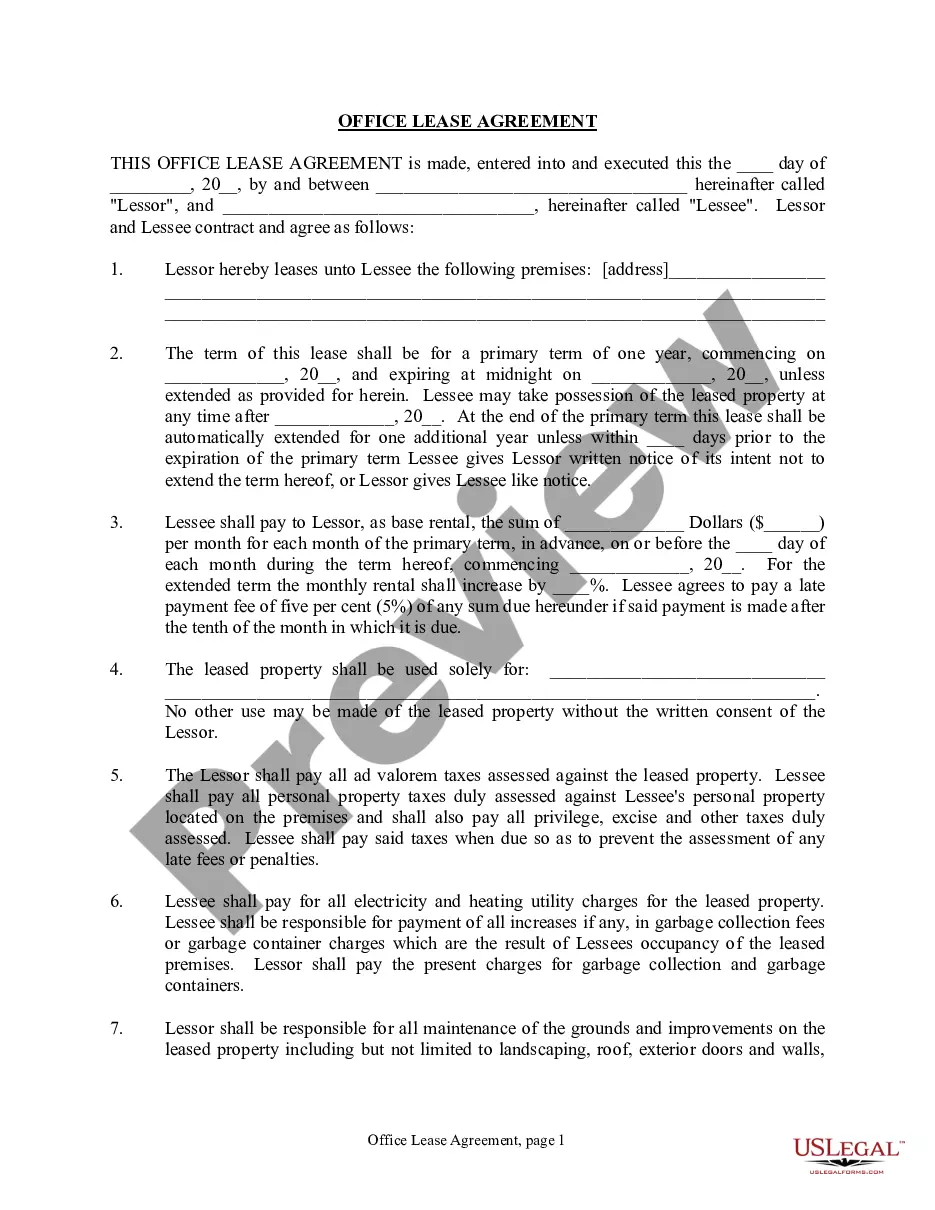

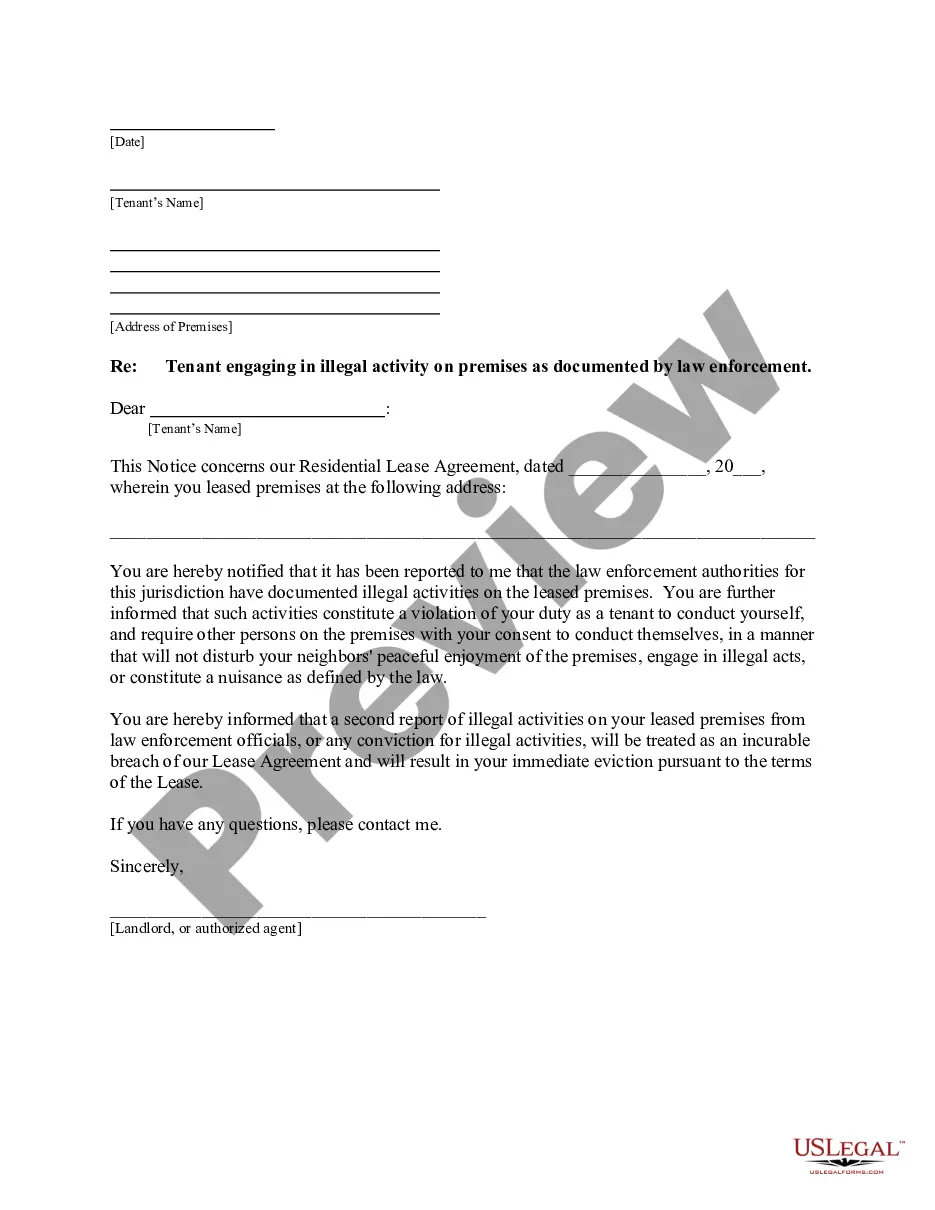
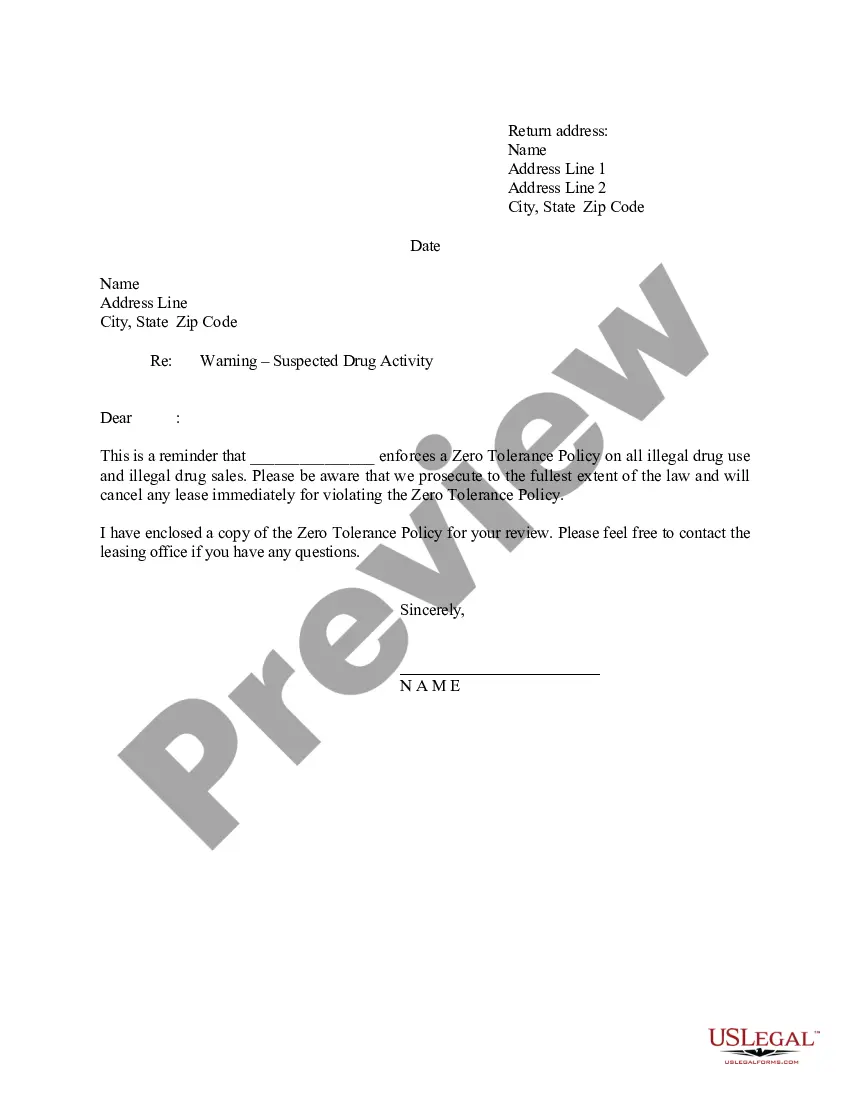
How to fill out North Carolina Letter From Landlord To Tenant About Tenant Engaging In Illegal Activity In Premises As Documented By Law Enforcement And If Repeated, Lease Terminates?
Regardless of whether you frequently handle documents or occasionally need to send a legal paper, it is crucial to have a resource where all the examples are interconnected and current.
The initial step to take using a North Carolina Eviction Laws Without Lease is to confirm that it is the most recent version, as it determines its eligibility for submission.
If you want to make your search for the latest document examples easier, look for them on US Legal Forms.
- US Legal Forms is a repository of legal templates that includes nearly every document example you may need.
- Look for the forms you require, check their relevance immediately, and learn more about their application.
- With US Legal Forms, you gain access to approximately 85,000 document templates across various fields.
- Retrieve the North Carolina Eviction Laws Without Lease examples in a few clicks and store them in your account whenever you need.
- Having a US Legal Forms account will allow you to access all the templates you need with ease and minimal trouble.
- Simply click Log In in the website header and navigate to the My documents section, where all the forms you need will be available at your fingertips, eliminating the need to spend time searching for the correct template or verifying its legitimacy.
- To obtain a form without an account, follow these instructions.
Form popularity
FAQ
The eviction process in North Carolina is called a Summary Ejectment. The Summary Ejectment eviction process in North Carolina applies if you have no lease with your tenant. When we use the term eviction, what we are referring to is the summary ejectment process.
The landlord can evict the tenant for violating any of the terms stipulated in the lease. They are not required to give the tenant any form of notice that informs the tenant of their violation. The landlord may allow the tenant time to cure the violation, but they are not required by North Carolina law to do so.
If there is no tenancy agreement, a tenant cannot be given a section 21 notice for eviction. Instead, a landlord must use a section 8 notice (with a ground for eviction). To be able to evict a tenant in the absence of a written tenancy agreement, a landlord will need to apply to the courts for a possession order.
If there is no tenancy agreement therefore, then there is no authority for the landlord to make any deductions from the tenancy deposit no matter how dreadful the condition of the property when the tenant moves out. If he tries to make any deductions, any challenge made by the tenant will succeed at adjudication.
Eviction Process for No Lease / End of LeaseWeek-to-Week If rent is paid on a week-to-week basis, a landlord must provide the tenant with a 2-Day Notice to Quit.Month-to-Month If rent is paid on a month-to-month basis, a landlord must provide the tenant with a 7-Day Notice to Quit.More items...?