Montana Power Attorney With Will
Description
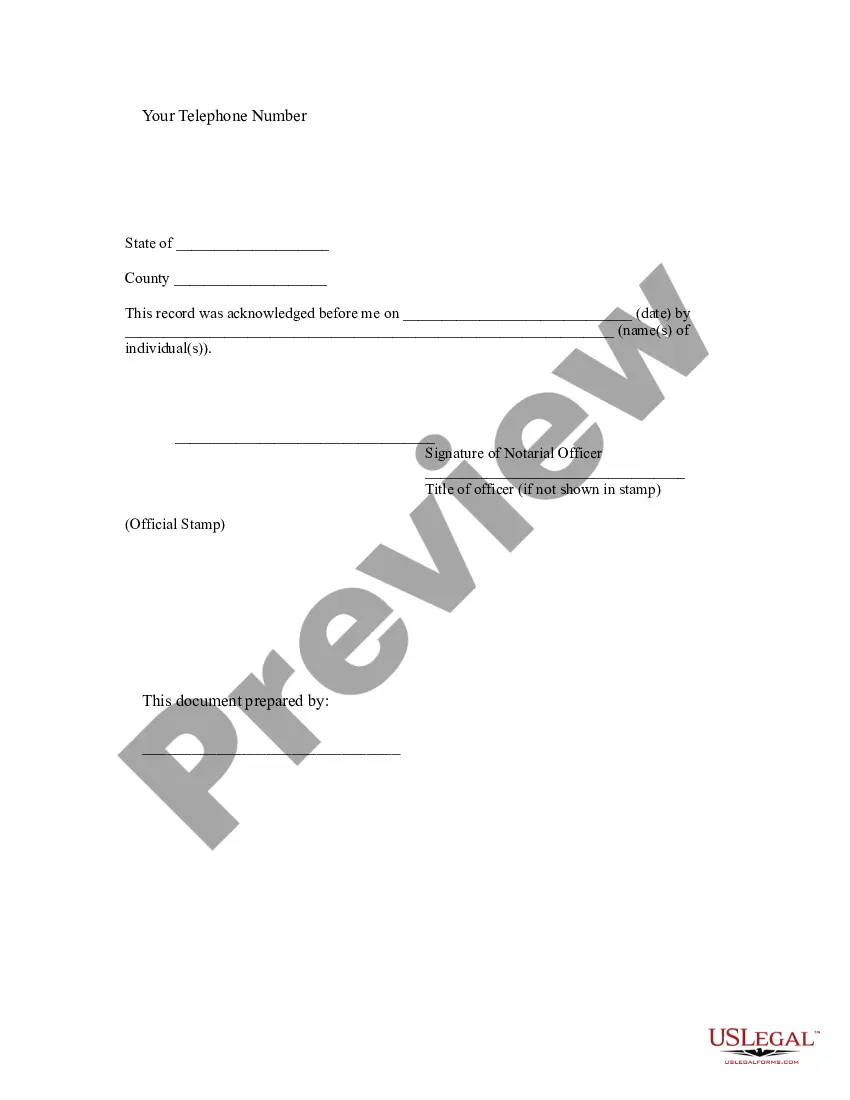
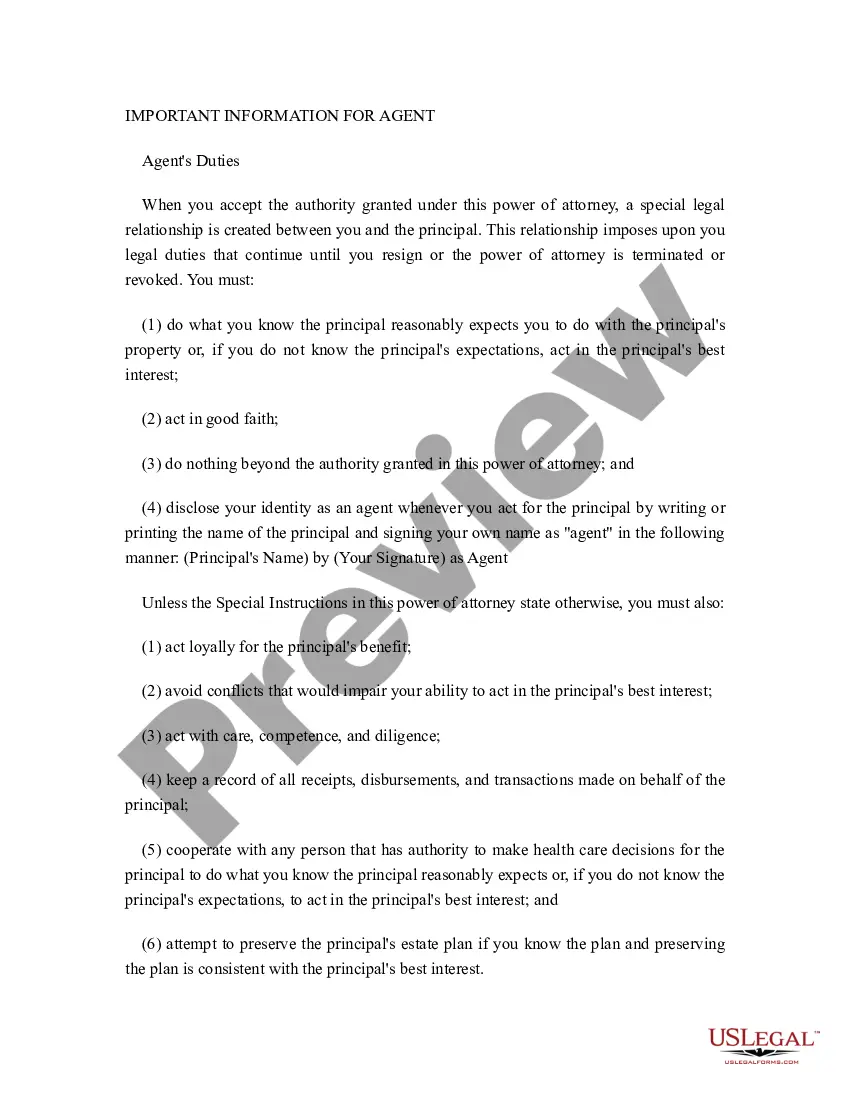
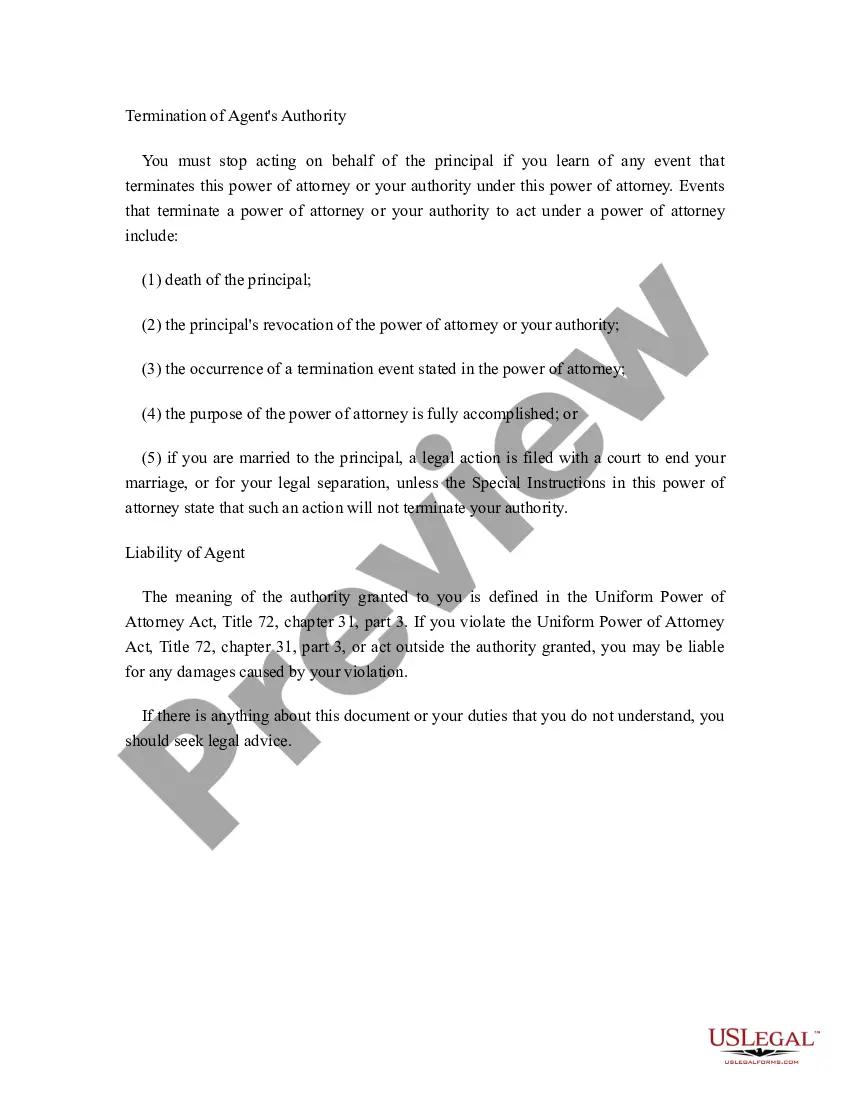
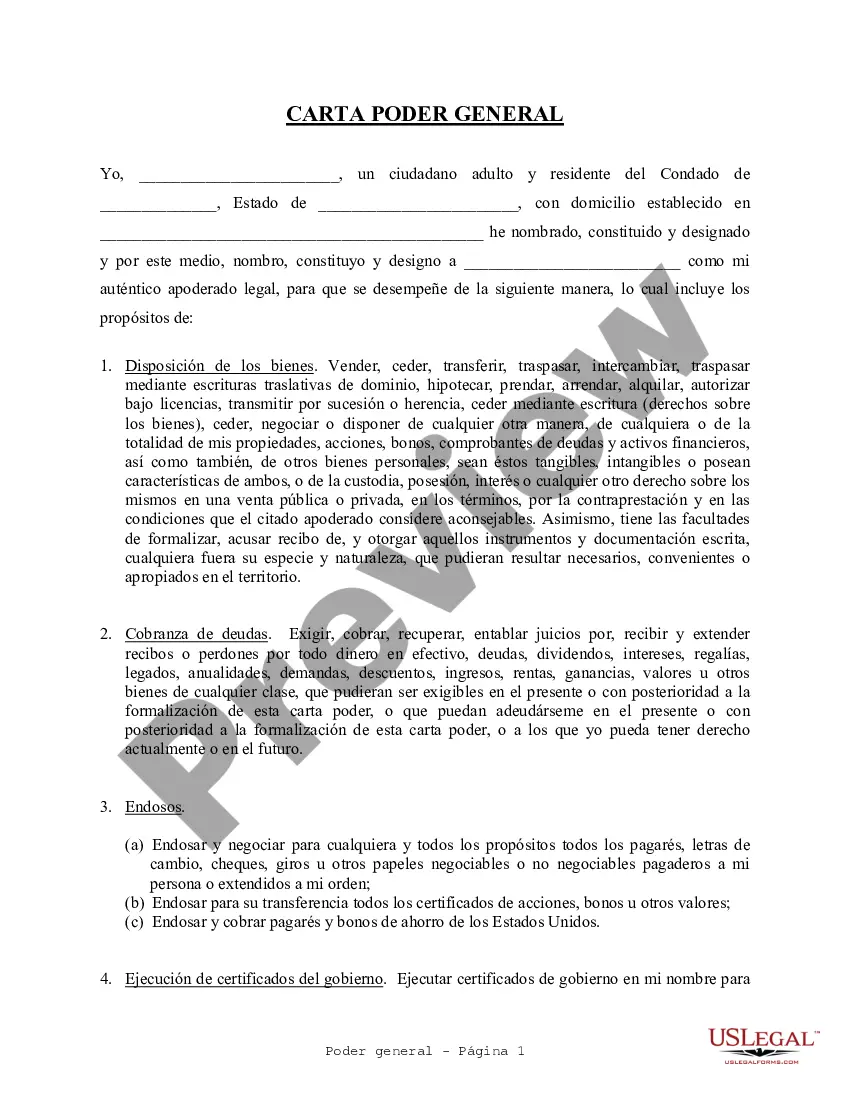
Get your form ready online
Our built-in tools help you complete, sign, share, and store your documents in one place.
Make edits, fill in missing information, and update formatting in US Legal Forms—just like you would in MS Word.
Download a copy, print it, send it by email, or mail it via USPS—whatever works best for your next step.
Sign and collect signatures with our SignNow integration. Send to multiple recipients, set reminders, and more. Go Premium to unlock E-Sign.
If this form requires notarization, complete it online through a secure video call—no need to meet a notary in person or wait for an appointment.
We protect your documents and personal data by following strict security and privacy standards.

Make edits, fill in missing information, and update formatting in US Legal Forms—just like you would in MS Word.

Download a copy, print it, send it by email, or mail it via USPS—whatever works best for your next step.

Sign and collect signatures with our SignNow integration. Send to multiple recipients, set reminders, and more. Go Premium to unlock E-Sign.

If this form requires notarization, complete it online through a secure video call—no need to meet a notary in person or wait for an appointment.

We protect your documents and personal data by following strict security and privacy standards.
Looking for another form?


How to fill out Montana Statutory General Power Of Attorney With Durable Provisions?
Accessing legal templates that meet the federal and state regulations is essential, and the internet offers a lot of options to pick from. But what’s the point in wasting time looking for the correctly drafted Montana Power Attorney With Will sample on the web if the US Legal Forms online library already has such templates accumulated in one place?
US Legal Forms is the most extensive online legal catalog with over 85,000 fillable templates drafted by attorneys for any business and life case. They are simple to browse with all files grouped by state and purpose of use. Our experts keep up with legislative changes, so you can always be confident your paperwork is up to date and compliant when obtaining a Montana Power Attorney With Will from our website.
Getting a Montana Power Attorney With Will is easy and quick for both current and new users. If you already have an account with a valid subscription, log in and download the document sample you need in the preferred format. If you are new to our website, adhere to the guidelines below:
- Examine the template using the Preview option or through the text description to ensure it meets your requirements.
- Locate a different sample using the search function at the top of the page if needed.
- Click Buy Now when you’ve located the suitable form and opt for a subscription plan.
- Create an account or log in and make a payment with PayPal or a credit card.
- Choose the right format for your Montana Power Attorney With Will and download it.
All templates you locate through US Legal Forms are multi-usable. To re-download and complete previously purchased forms, open the My Forms tab in your profile. Benefit from the most extensive and straightforward-to-use legal paperwork service!
Form popularity
FAQ
Does a Power of Attorney remain valid after a death? The short answer is no, a Power of Attorney dies with the person. A Power of Attorney is a document that grants another person permission to act on their behalf, during life, thus when that individual passes away, the document is null and void.
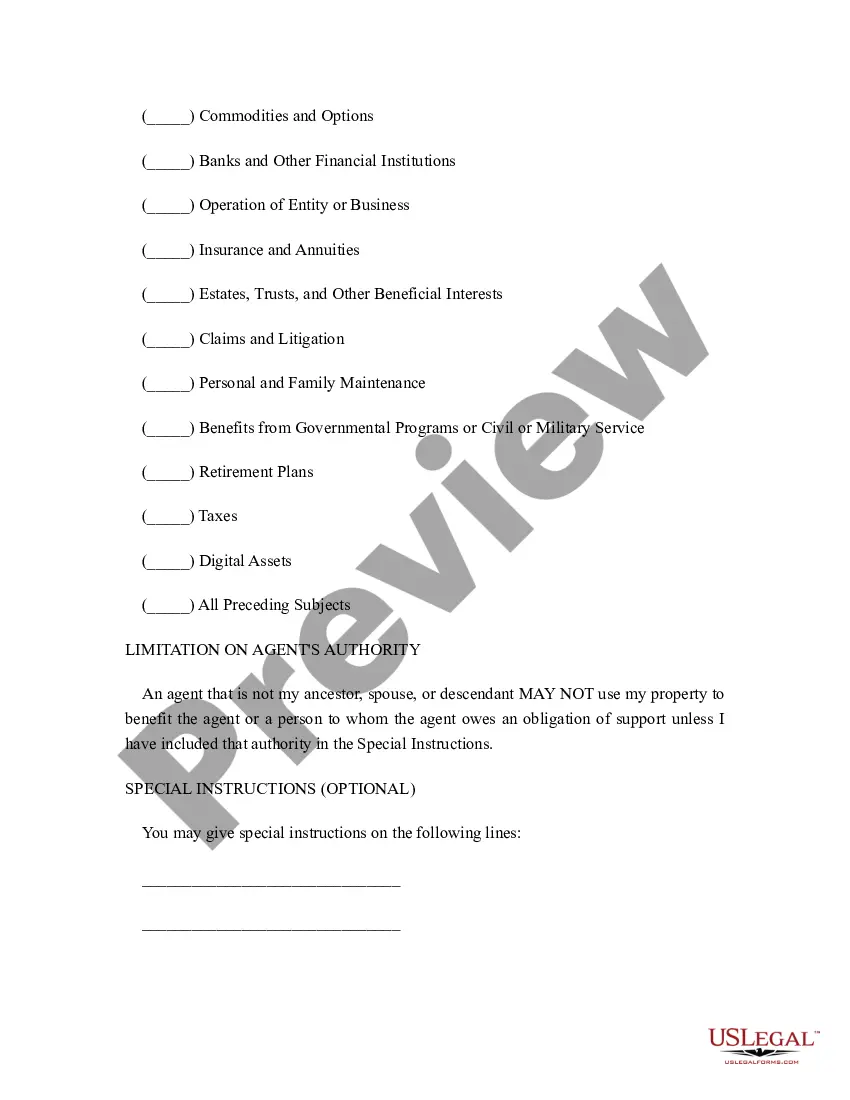
If you initialed "real property," giving your agent the power to conduct transactions with real estate, you should also file a copy of your POA in the land records office of the county where you own real estate or expect to transact real estate. In Montana, this office is known as the Office of the Clerk and Recorder.
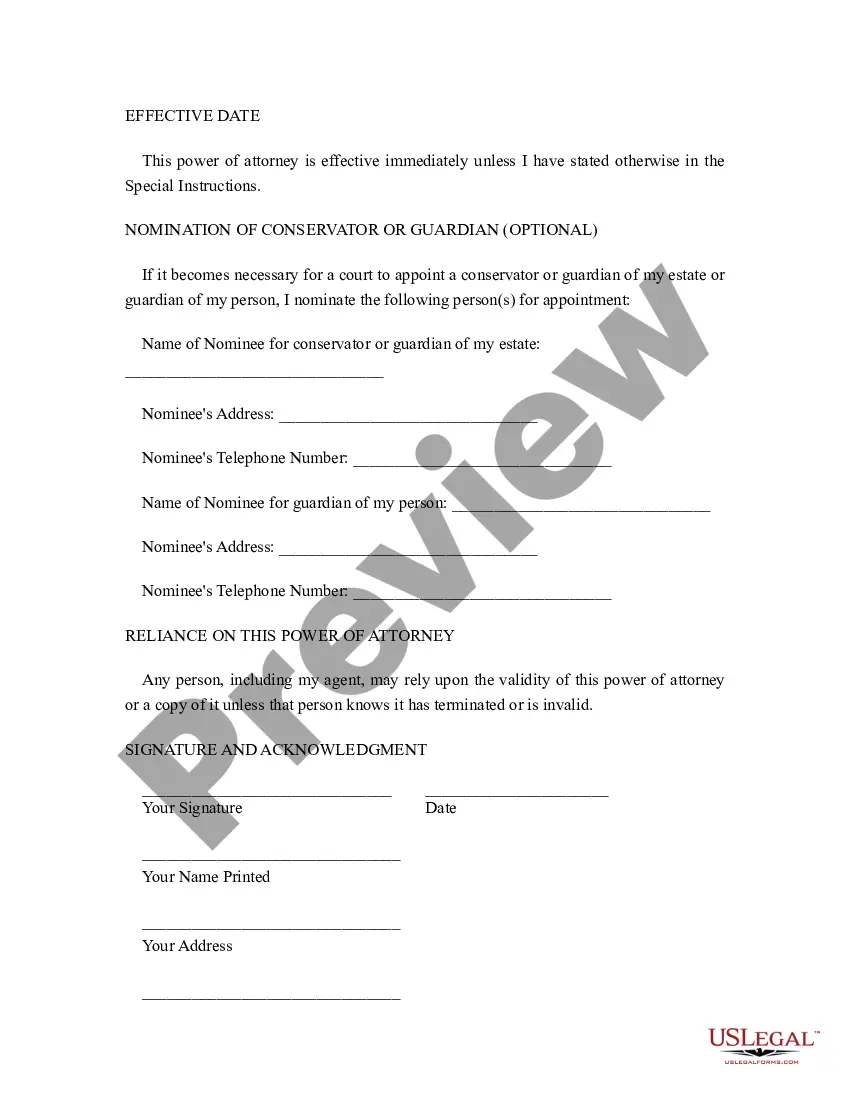
In Montana, a power of attorney requires the principal, or the person granting the power, to be at least 18 years old and mentally competent. The document must clearly state the powers granted to the agent, who will be acting on the principal's behalf, and must be signed by the principal.
If you give away the power to transact real estate, you'll also need to have the POA notarized to record (file) it in the land records office.
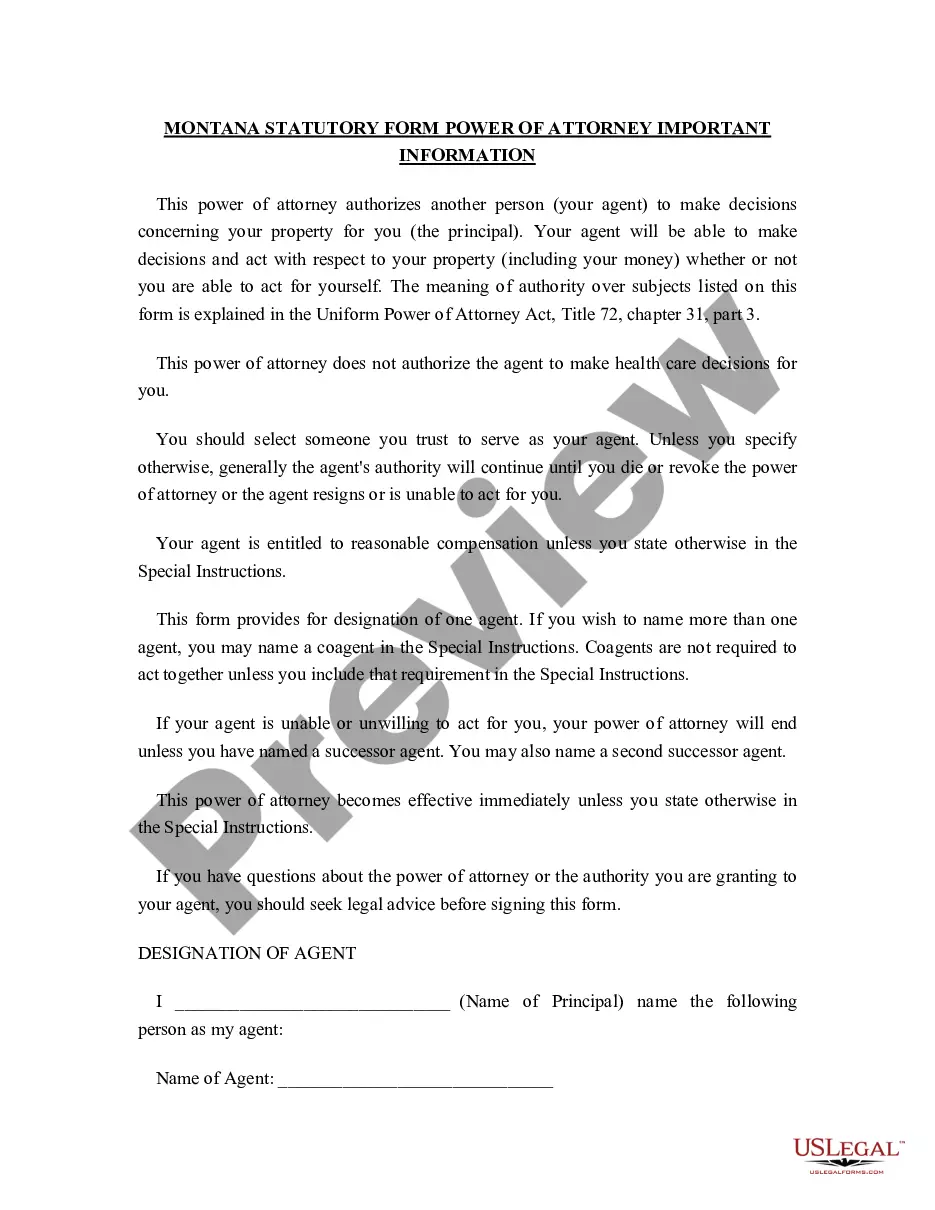
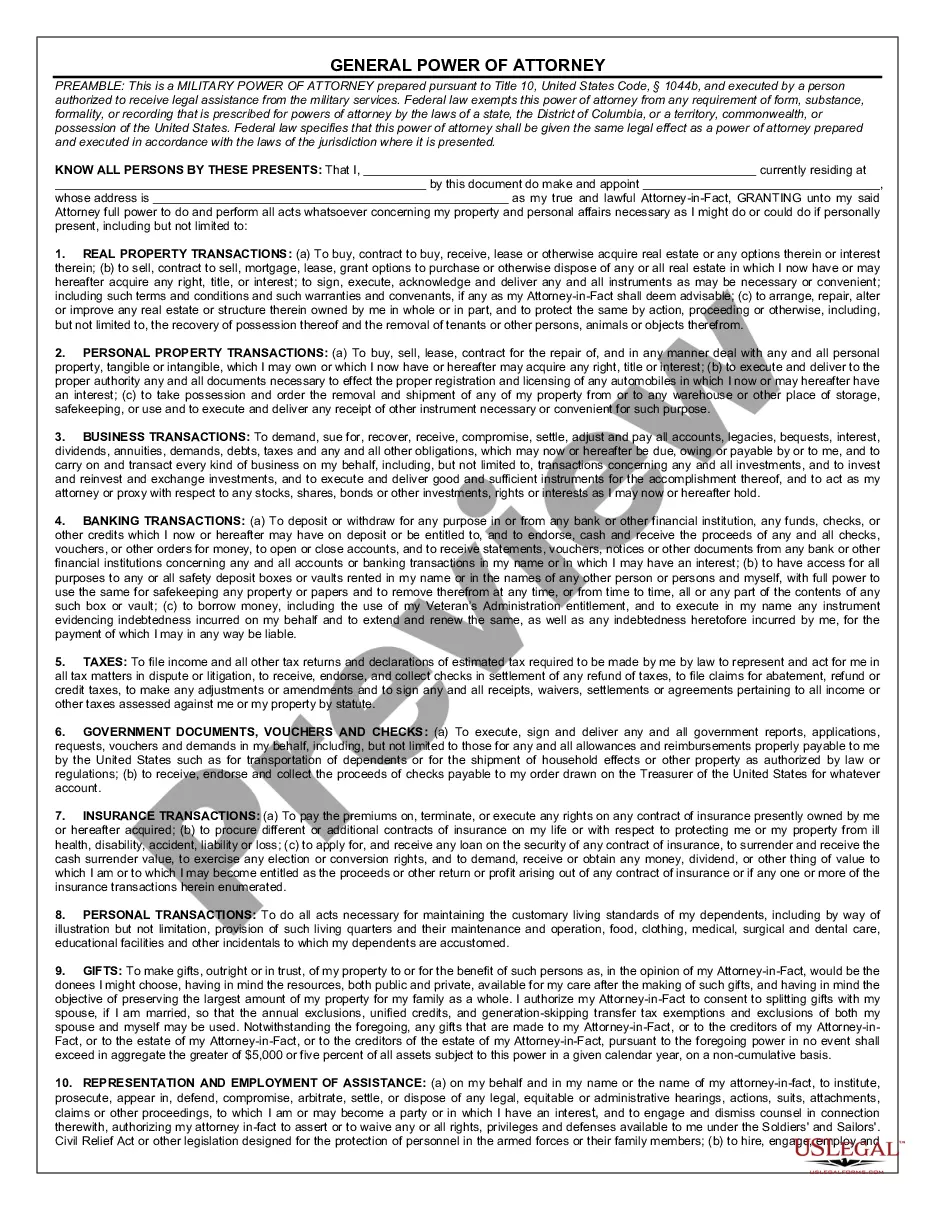
This power of attorney authorizes another person (your agent) to make decisions concerning your property for you (the principal). Your agent will be able to make decisions and act with respect to your property (including your money) whether or not you are able to act for yourself.