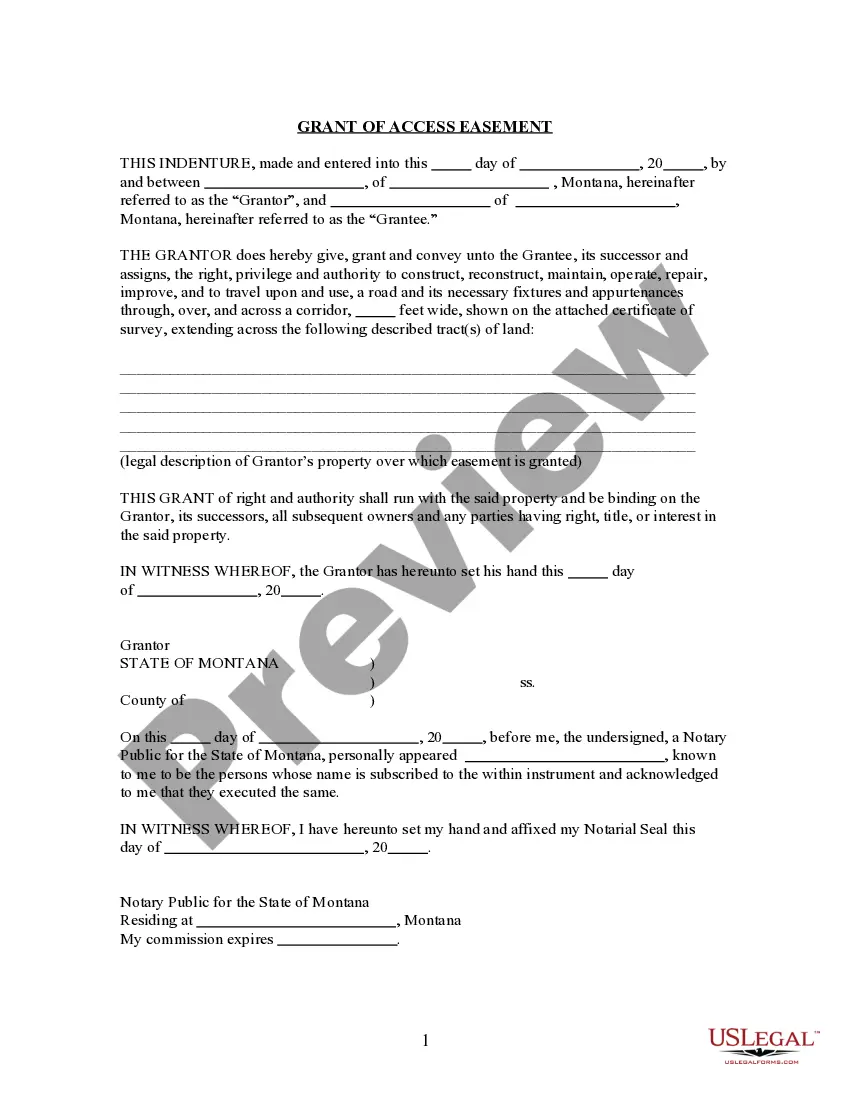
Montana Road Easement Laws
Description
Get your form ready online
Our built-in tools help you complete, sign, share, and store your documents in one place.
Make edits, fill in missing information, and update formatting in US Legal Forms—just like you would in MS Word.
Download a copy, print it, send it by email, or mail it via USPS—whatever works best for your next step.
Sign and collect signatures with our SignNow integration. Send to multiple recipients, set reminders, and more. Go Premium to unlock E-Sign.
If this form requires notarization, complete it online through a secure video call—no need to meet a notary in person or wait for an appointment.
We protect your documents and personal data by following strict security and privacy standards.

Make edits, fill in missing information, and update formatting in US Legal Forms—just like you would in MS Word.

Download a copy, print it, send it by email, or mail it via USPS—whatever works best for your next step.

Sign and collect signatures with our SignNow integration. Send to multiple recipients, set reminders, and more. Go Premium to unlock E-Sign.

If this form requires notarization, complete it online through a secure video call—no need to meet a notary in person or wait for an appointment.

We protect your documents and personal data by following strict security and privacy standards.
Looking for another form?








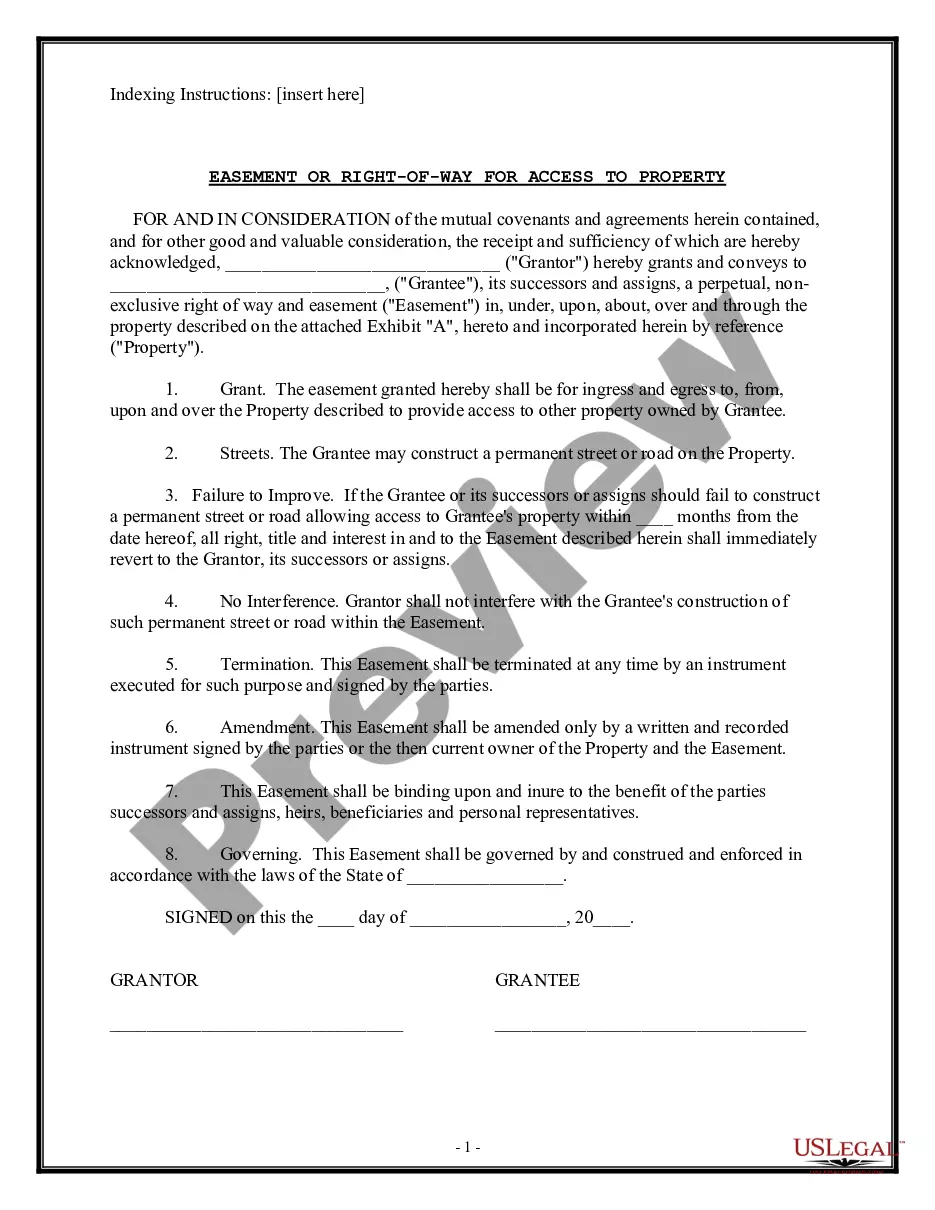
How to fill out Montana Grant Of Access Easement For Access To Land By A Road?
Discovering a reliable destination for obtaining the most up-to-date and pertinent legal documents is a significant part of dealing with bureaucracy.
Selecting the appropriate legal papers requires precision and carefulness, which is why it's essential to obtain samples of Montana Road Easement Laws solely from credible sources, such as US Legal Forms.
Once the form is on your device, you can edit it using a text editor or print it out to fill it in manually. Remove the complications that come with your legal documentation. Explore the comprehensive US Legal Forms catalog where you can discover legal templates, verify their relevance to your situation, and download them instantly.
- Utilize the catalog navigation or search bar to find your template.
- Examine the form’s details to confirm it meets your state and area requirements.
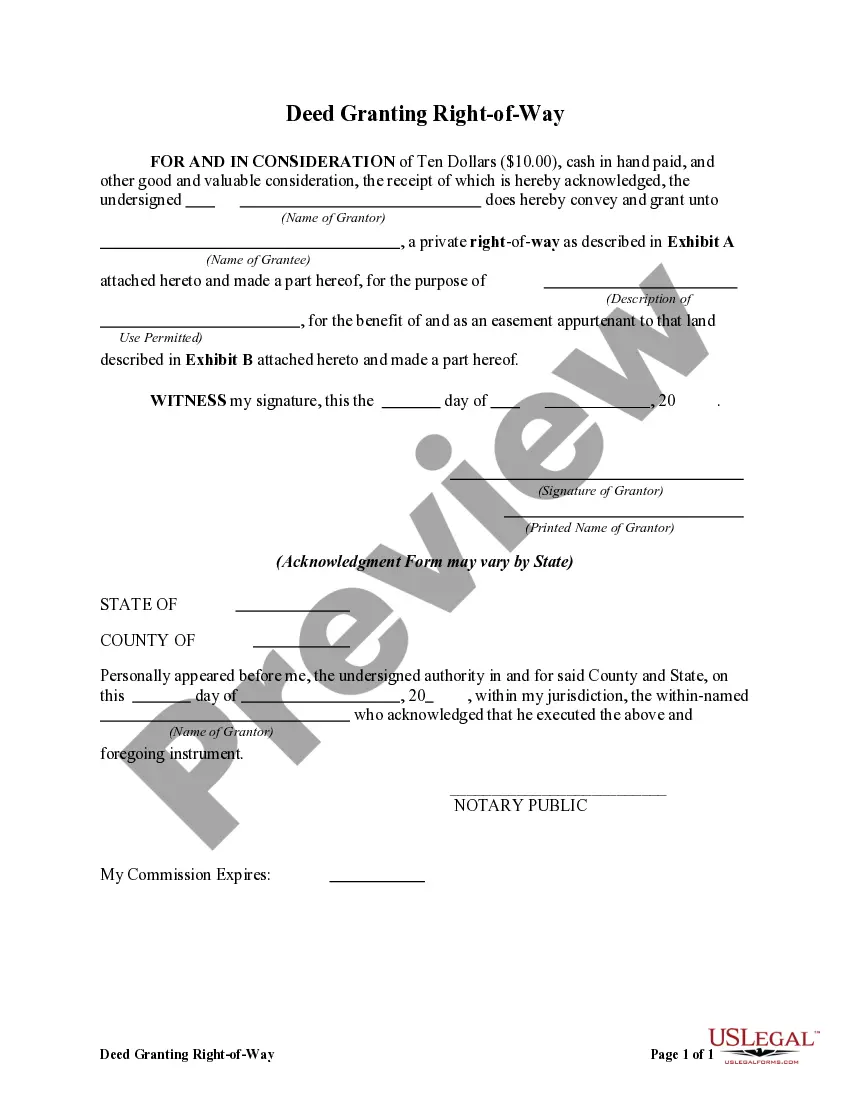
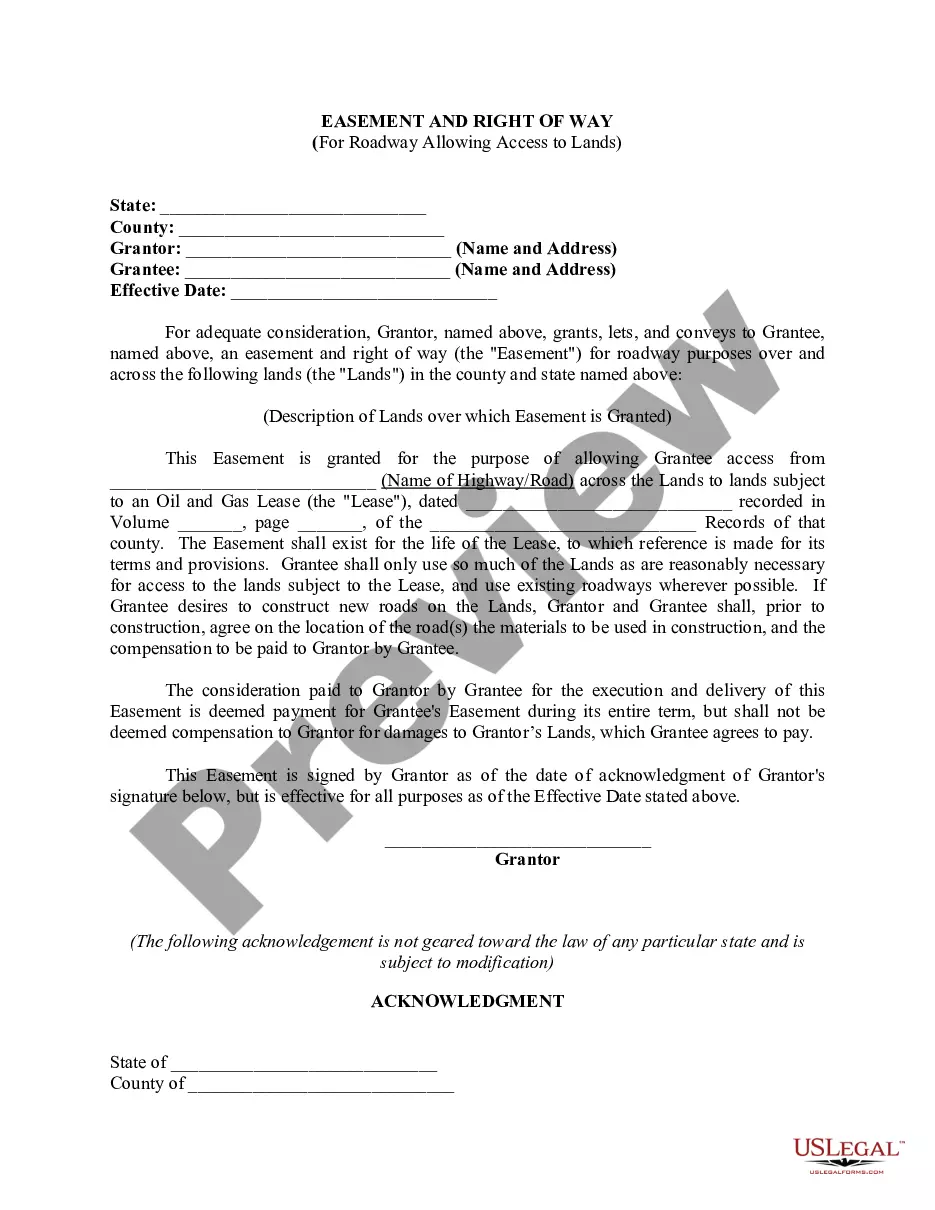
- Check the form preview, if available, to ensure it’s indeed the template you want.
- Continue searching to find the correct template if the Montana Road Easement Laws does not satisfy your needs.
- If you are confident in the form’s applicability, download it.
- As a registered user, click Log in to verify and access your chosen forms in My documents.
- If you lack an account, click Buy now to obtain the template.
- Choose the pricing option that meets your needs.
- Proceed to sign up to finalize your purchase.
- Complete your transaction by selecting a payment method (credit card or PayPal).
- Select the file format for downloading the Montana Road Easement Laws.
Form popularity
FAQ
If the tenancy of the land is divided among several people, Montana will not accept an adverse possession claim. To have a valid claim, the squatter must assert exclusive ownership of the building, land, or home and maintain continuous occupancy for a minimum of five years.
An easement can be created in one of three ways: by an express grant or reservation, by implication, and by prescription.
More than 3 million acres of public state and federal land in Montana is considered landlocked, which means that the public can't access those acres without crossing through private property. Unless they own a helicopter or have express permission from a private land owner, it is impossible to legally access this land.
A perpetual easement lasts forever. Montana law also allows for a term easement which must be in place for a minimum of 15 years. Perpetual easements provide the best protection for the land and make potential tax benefits available to the landowner. Term easements offer no such deductions.
As discussed, prescriptive easement actions require proof of open, notorious, exclusive, adverse, and continuous possession or use for the statutory period of 5 years. The burden is on the party seeking to establish the prescriptive easement, and all elements must be proved. Tanner v. Dream Island, Inc., 275 Mont.