Slip Fall Case Without Injury
Description
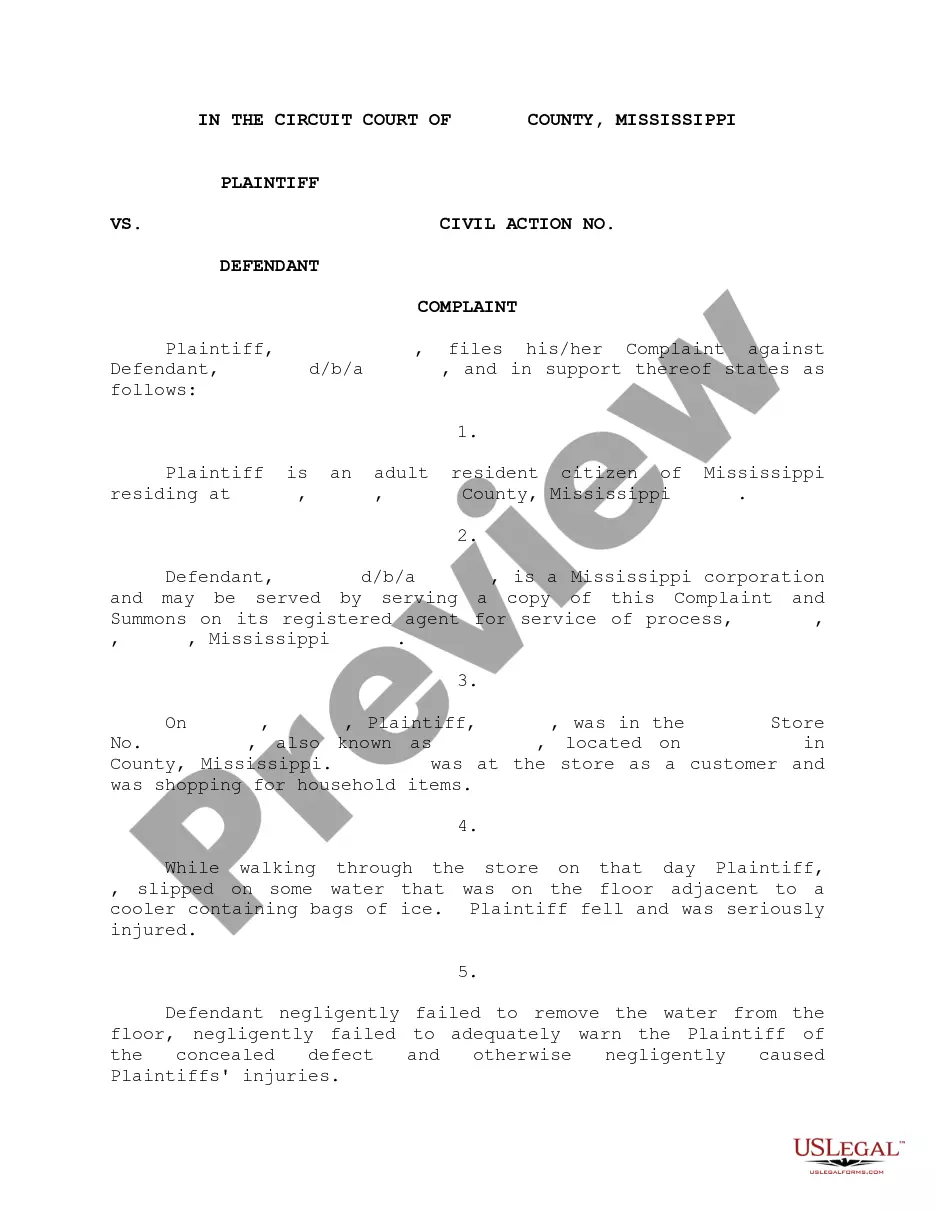
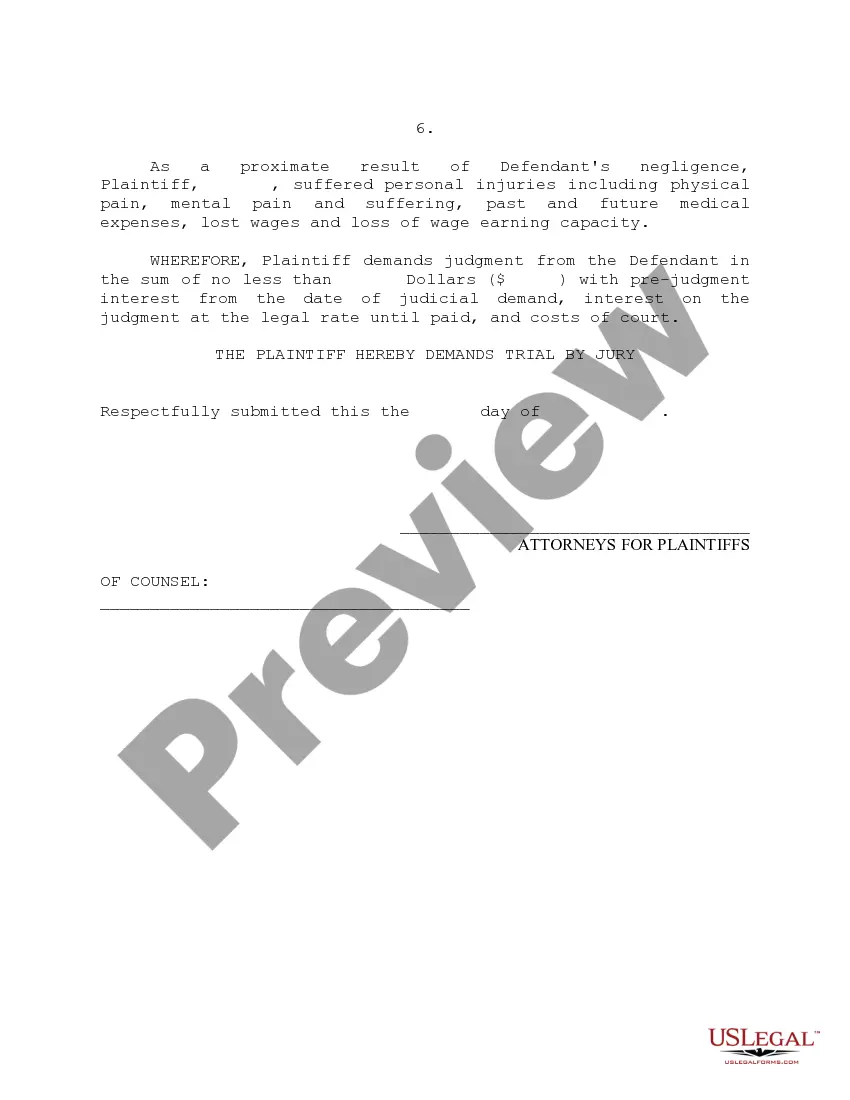
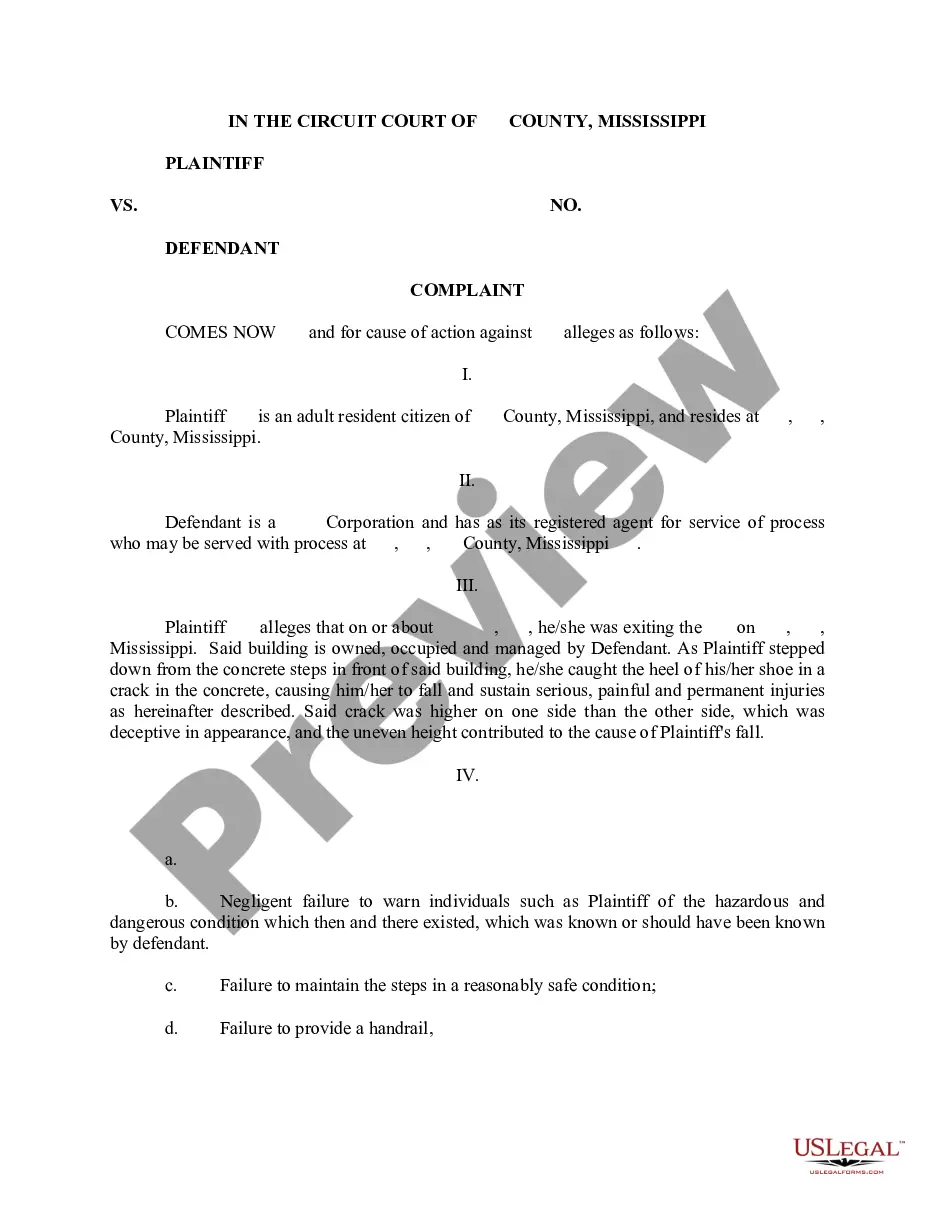
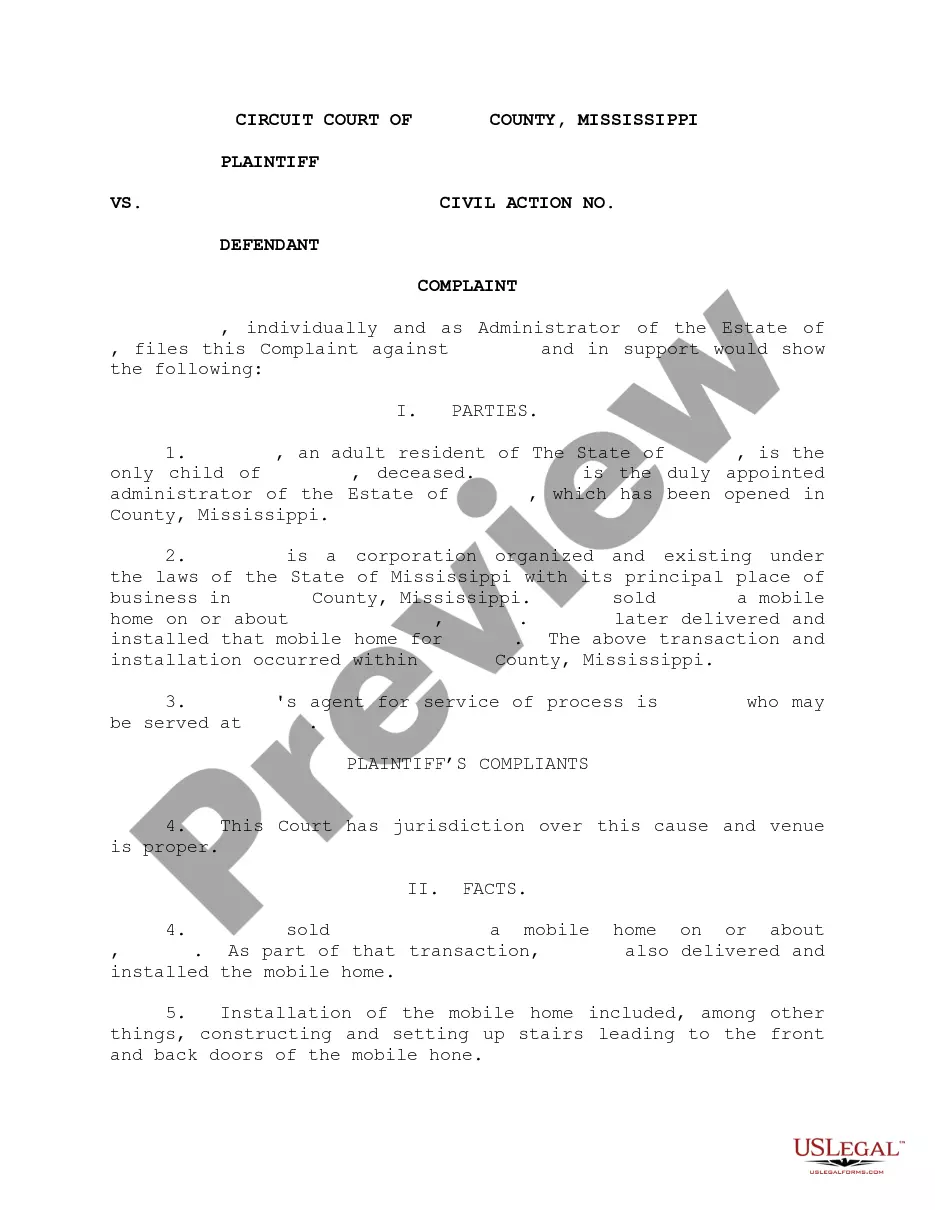
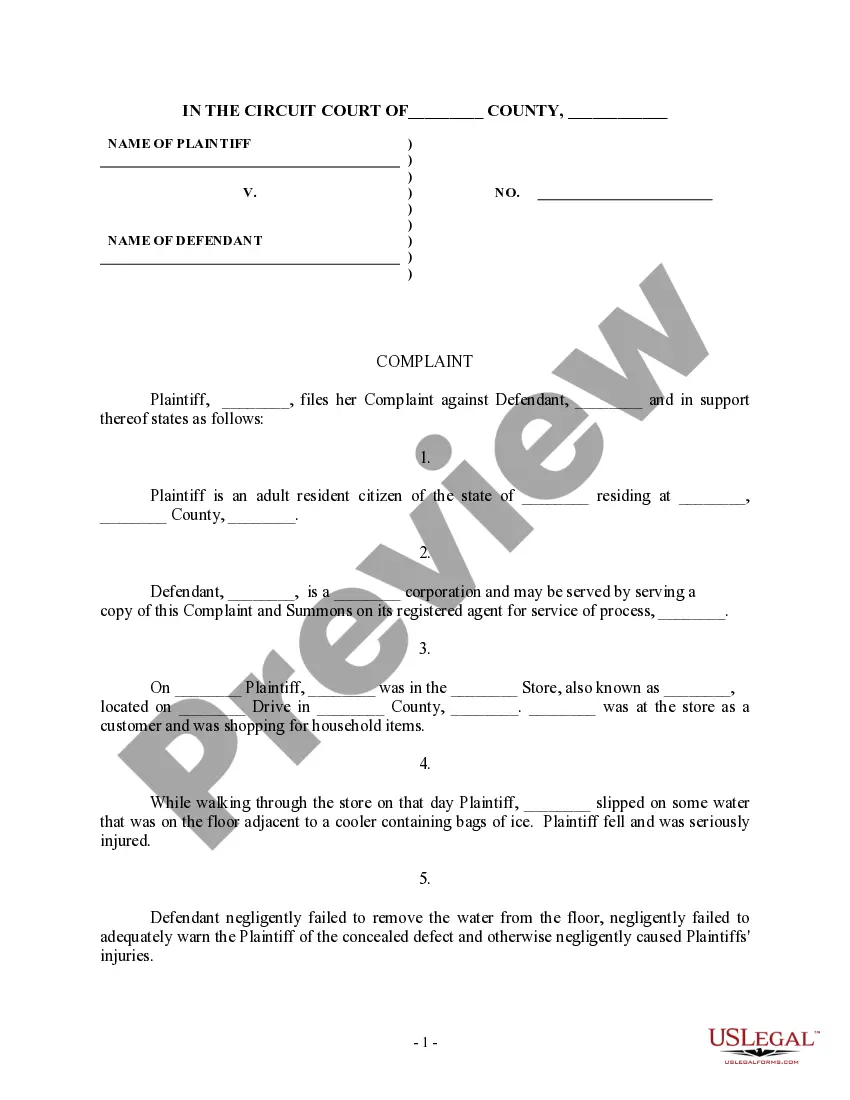
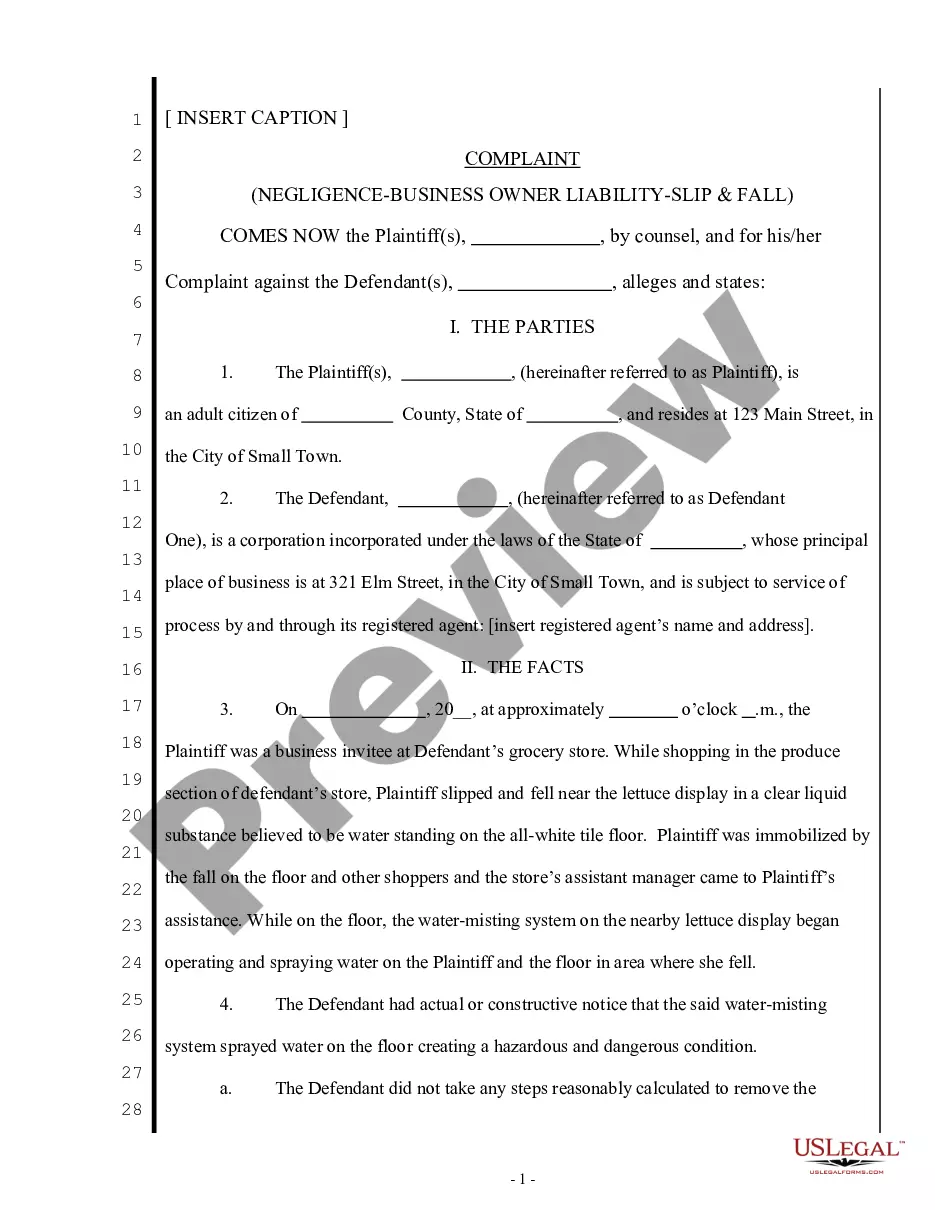
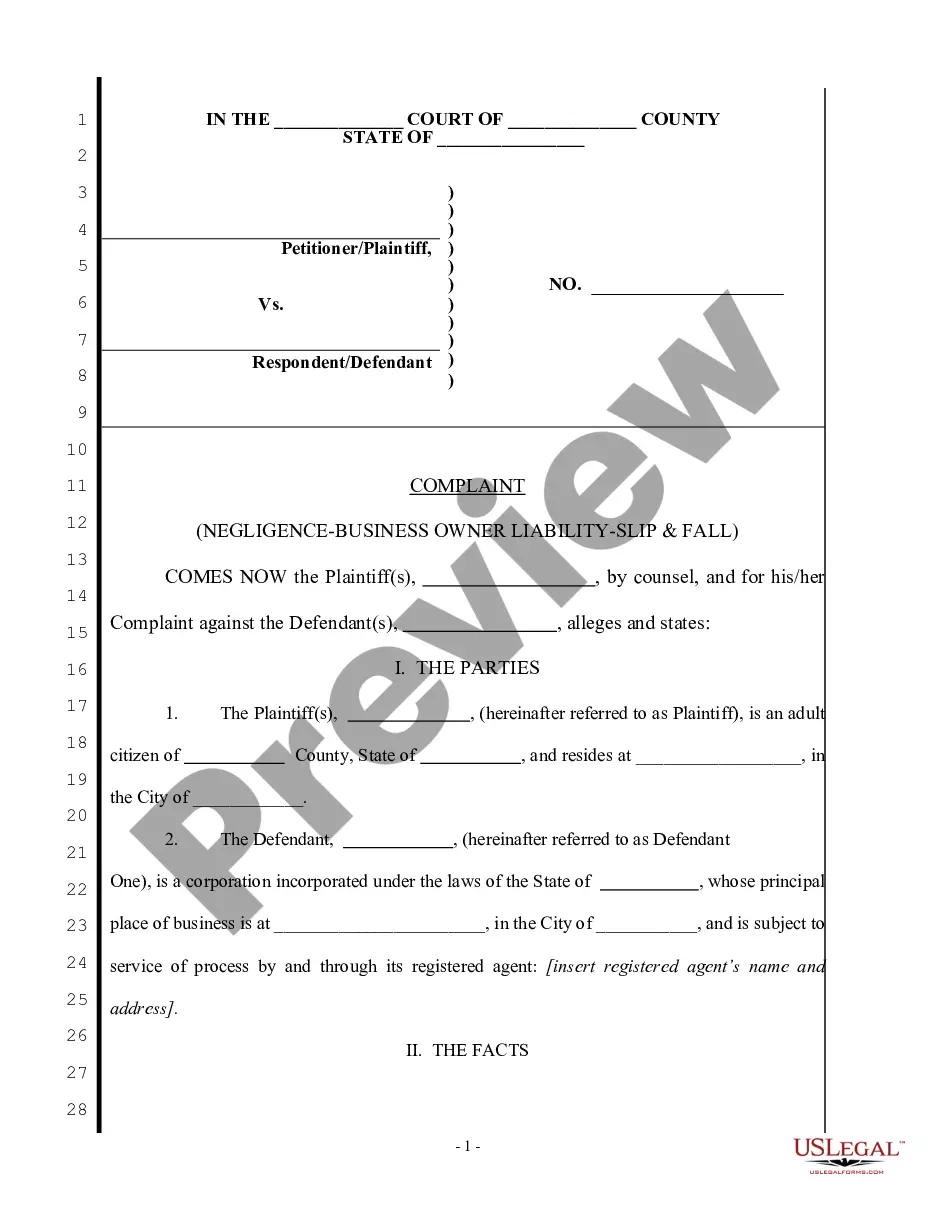
Get your form ready online
Our built-in tools help you complete, sign, share, and store your documents in one place.
Make edits, fill in missing information, and update formatting in US Legal Forms—just like you would in MS Word.
Download a copy, print it, send it by email, or mail it via USPS—whatever works best for your next step.
Sign and collect signatures with our SignNow integration. Send to multiple recipients, set reminders, and more. Go Premium to unlock E-Sign.
If this form requires notarization, complete it online through a secure video call—no need to meet a notary in person or wait for an appointment.
We protect your documents and personal data by following strict security and privacy standards.

Make edits, fill in missing information, and update formatting in US Legal Forms—just like you would in MS Word.

Download a copy, print it, send it by email, or mail it via USPS—whatever works best for your next step.

Sign and collect signatures with our SignNow integration. Send to multiple recipients, set reminders, and more. Go Premium to unlock E-Sign.

If this form requires notarization, complete it online through a secure video call—no need to meet a notary in person or wait for an appointment.

We protect your documents and personal data by following strict security and privacy standards.
Looking for another form?





How to fill out Mississippi Complaint?
Identifying a preferred location to obtain the most up-to-date and pertinent legal templates is half the challenge of dealing with bureaucracy.
Obtaining the correct legal paperwork requires precision and diligence, which is why it is crucial to source samples of Slip Fall Case Without Injury exclusively from trustworthy providers, such as US Legal Forms. An incorrect template can squander your time and prolong your current situation. With US Legal Forms, you have minimal concerns. You can access and review all the details regarding the document's applicability and significance for your circumstances and in your state or locality.
Eliminate the complications associated with your legal documentation. Browse the extensive US Legal Forms catalog to find legal templates, assess their relevance to your situation, and download them immediately.
- Utilize the library navigation or search box to find your template.
- Examine the form's details to confirm if it meets the criteria of your state and locality.
- Check the form preview, if available, to verify that the template is indeed the one you need.
- Return to the search and find the correct document if the Slip Fall Case Without Injury does not suit your needs.
- Once you are certain about the form's applicability, download it.
- If you are a registered customer, click Log in to verify and access your chosen templates in My documents.
- If you do not have an account yet, click Buy now to acquire the template.
- Choose the pricing option that suits your needs.
- Proceed to the registration to finalize your purchase.
- Complete your transaction by selecting a payment method (credit card or PayPal).
- Choose the document format for downloading Slip Fall Case Without Injury.
- After acquiring the form on your device, you can edit it with the editor or print it and complete it manually.
Form popularity
FAQ
Proving a slip and fall case involves gathering evidence to support your claim. Start by documenting the scene, taking photographs, and collecting witness statements. Additionally, you should keep records of any communications with property owners or managers. Utilizing platforms like US Legal Forms can help you access necessary legal documents to strengthen your case, even in situations where you have a slip fall case without injury.
To establish negligence in a slip fall case without injury, you typically need to prove three key elements: a duty of care, a breach of that duty, and causation. First, you must show that the property owner had a responsibility to ensure safety. Next, demonstrate that they failed to meet that responsibility, leading to your slip and fall incident. Finally, you need to connect this breach directly to your experience, even if no physical injury occurred.
In a slip fall case without injury, proving psychological or emotional trauma can be particularly challenging. Unlike physical injuries, which can be documented with medical records, emotional distress often lacks tangible evidence. It is crucial to work with legal professionals who can help articulate these experiences effectively. Understanding the nuances of your case can significantly impact the outcome.
Slip and fall cases, especially those without injury, can be challenging to win. Defendants often argue that victims should have been more cautious. Additionally, proving negligence requires solid evidence, which can sometimes be difficult to obtain. For assistance, consider using USLegalForms, which provides resources to help you navigate your case effectively.
Yes, there can be negligence without injury in a slip and fall case. If a property owner fails to uphold safety standards, they may still be liable even if no physical harm occurred. Establishing negligence is essential, as it demonstrates the owner's responsibility for maintaining safe conditions.
Evidence that helps a slip and fall case without injury includes clear documentation of the incident. This may involve photos showing the hazardous condition, reports from witnesses, and any communication with the property owner. The more detailed and organized your evidence, the better your chances of a favorable outcome.
In a slip and fall case without injury, various types of evidence can bolster your claim. Photographs of the accident scene, maintenance logs, and witness testimonies are crucial. Additionally, any prior complaints about the same hazard can strengthen your case.
The settlement amount for a slip and fall case without injury can vary widely based on several factors. Typically, settlements reflect the severity of the incident, the evidence provided, and the willingness of the parties to negotiate. While some cases settle for a few hundred dollars, others may reach thousands, especially if negligence is clear.
To prove a slip and fall case without injury, you must demonstrate that the property owner was negligent. This involves showing that they failed to maintain a safe environment. Collecting evidence like photographs of the scene, witness statements, and maintenance records can significantly support your claim.
Winning a slip fall case without injury can be challenging, but it is not impossible. The outcome often depends on the quality of your evidence and the specifics of your case. Liability can be complex, especially when determining negligence. Engaging a legal expert can significantly enhance your chances of success.