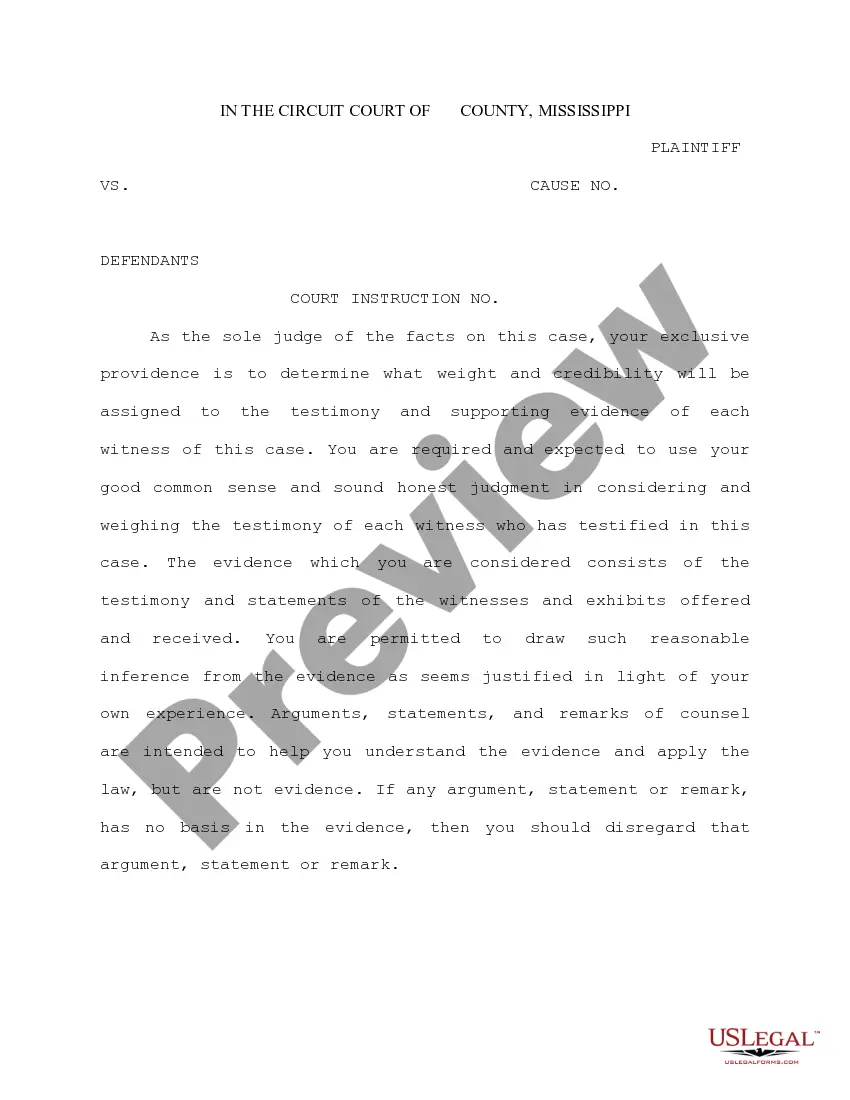
Mississippi Model Jury Instructions For Authors
Description
Get your form ready online
Our built-in tools help you complete, sign, share, and store your documents in one place.
Make edits, fill in missing information, and update formatting in US Legal Forms—just like you would in MS Word.
Download a copy, print it, send it by email, or mail it via USPS—whatever works best for your next step.
Sign and collect signatures with our SignNow integration. Send to multiple recipients, set reminders, and more. Go Premium to unlock E-Sign.
If this form requires notarization, complete it online through a secure video call—no need to meet a notary in person or wait for an appointment.
We protect your documents and personal data by following strict security and privacy standards.

Make edits, fill in missing information, and update formatting in US Legal Forms—just like you would in MS Word.

Download a copy, print it, send it by email, or mail it via USPS—whatever works best for your next step.

Sign and collect signatures with our SignNow integration. Send to multiple recipients, set reminders, and more. Go Premium to unlock E-Sign.

If this form requires notarization, complete it online through a secure video call—no need to meet a notary in person or wait for an appointment.

We protect your documents and personal data by following strict security and privacy standards.
Looking for another form?






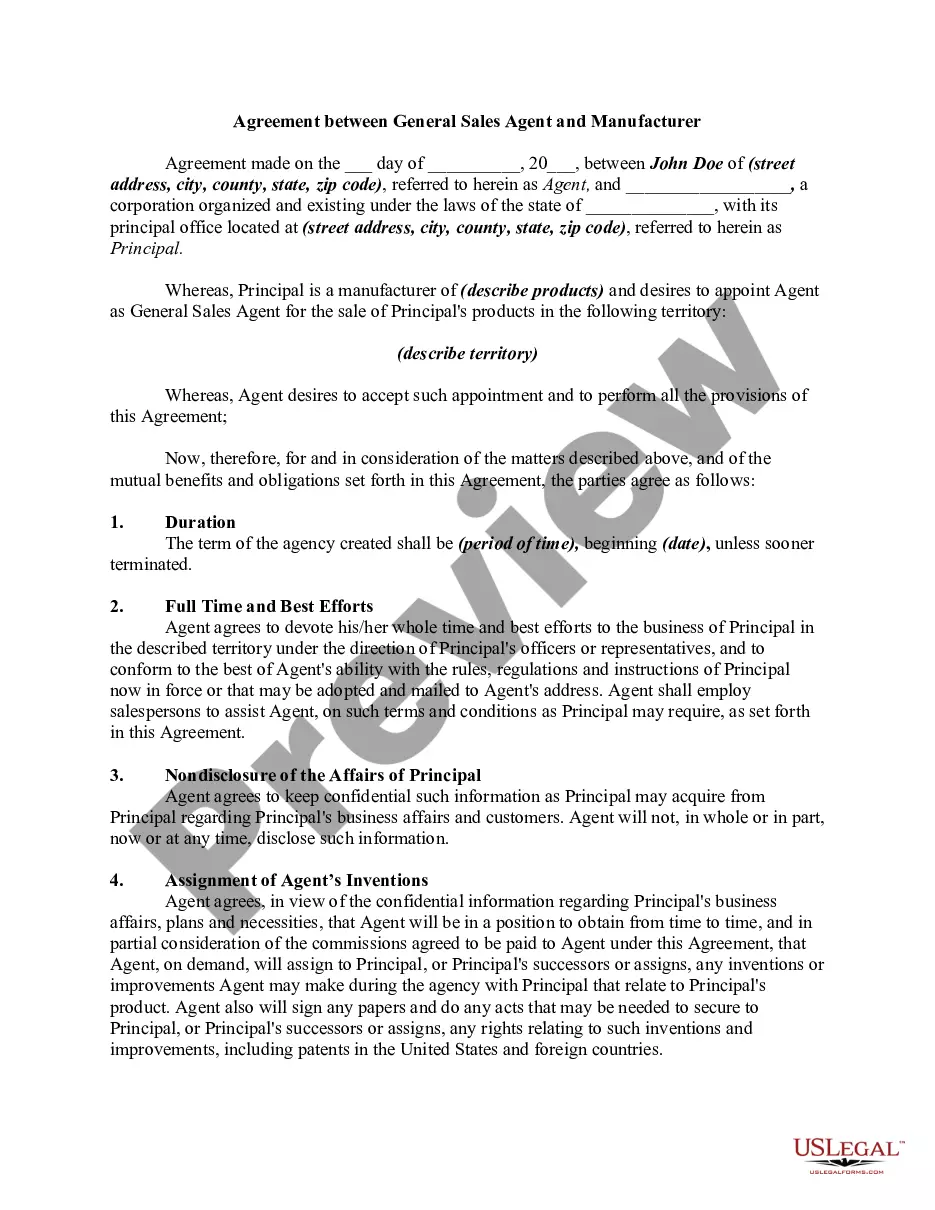
How to fill out Mississippi Jury Instruction - Court Instruction - Final Instructions General?
It’s well known that you cannot transform into a legal expert instantly, nor can you understand how to swiftly compile Mississippi Model Jury Instructions For Authors without possessing a specialized array of abilities.
Assembling legal documents is a lengthy process that demands specific education and expertise. Therefore, why not entrust the development of the Mississippi Model Jury Instructions For Authors to the specialists.
With US Legal Forms, one of the most extensive repositories of legal templates, you can locate everything from court documents to forms for internal business communication. We recognize how vital it is to comply with and adhere to federal and local laws and regulations.
You can revisit your forms from the My documents tab whenever you wish. If you’re a current client, simply Log In, and locate and download the template from the same section.
Regardless of the intention behind your forms—whether financial and legal, or personal—our platform has everything you need. Explore US Legal Forms today!
- Find the form you need using the search bar positioned at the top of the page.
- If available, view it and review the accompanying description to determine if Mississippi Model Jury Instructions For Authors is what you're looking for.
- If you require a different form, begin your search anew.
- Create a complimentary account and select a subscription plan to purchase the form.
- Click Buy now. Once the transaction is finalized, you can download the Mississippi Model Jury Instructions For Authors, complete it, print it, and deliver it, or mail it to the specified individuals or organizations.
Form popularity
FAQ
The judge provides jurors with instructions that clarify the legal standards applicable to the case. These Mississippi model jury instructions for authors outline how jurors should interpret the law, weigh evidence, and deliberate on the verdict. Jurors depend on these directives to ensure a fair and impartial decision that aligns with legal expectations.
Answer First, click on Secondary Sources under the Content Types tab on the main Westlaw Edge page. Then, click on Jury Instructions.
(1) Members of the jury, now it is time for me to instruct you about the law you must follow in deciding this case. (2) I will start by explaining your duties and the general rules that apply in every criminal case. (3) Then I will explain the elements of the crimes that the defendant is accused of committing.
Jury instructions should ideally be brief, concise, non-repetitive, relevant to the case's details, understandable to the average juror, and should correctly state the law without misleading the jury or inviting unnecessary speculation.
The judge will advise the jury that it is the sole judge of the facts and of the credibility (believability) of witnesses. He or she will note that the jurors are to base their conclusions on the evidence as presented in the trial, and that the opening and closing arguments of the lawyers are not evidence.