Real Estate Seller
Description
Get your form ready online
Our built-in tools help you complete, sign, share, and store your documents in one place.
Make edits, fill in missing information, and update formatting in US Legal Forms—just like you would in MS Word.
Download a copy, print it, send it by email, or mail it via USPS—whatever works best for your next step.
Sign and collect signatures with our SignNow integration. Send to multiple recipients, set reminders, and more. Go Premium to unlock E-Sign.
If this form requires notarization, complete it online through a secure video call—no need to meet a notary in person or wait for an appointment.
We protect your documents and personal data by following strict security and privacy standards.

Make edits, fill in missing information, and update formatting in US Legal Forms—just like you would in MS Word.

Download a copy, print it, send it by email, or mail it via USPS—whatever works best for your next step.

Sign and collect signatures with our SignNow integration. Send to multiple recipients, set reminders, and more. Go Premium to unlock E-Sign.

If this form requires notarization, complete it online through a secure video call—no need to meet a notary in person or wait for an appointment.

We protect your documents and personal data by following strict security and privacy standards.
Looking for another form?





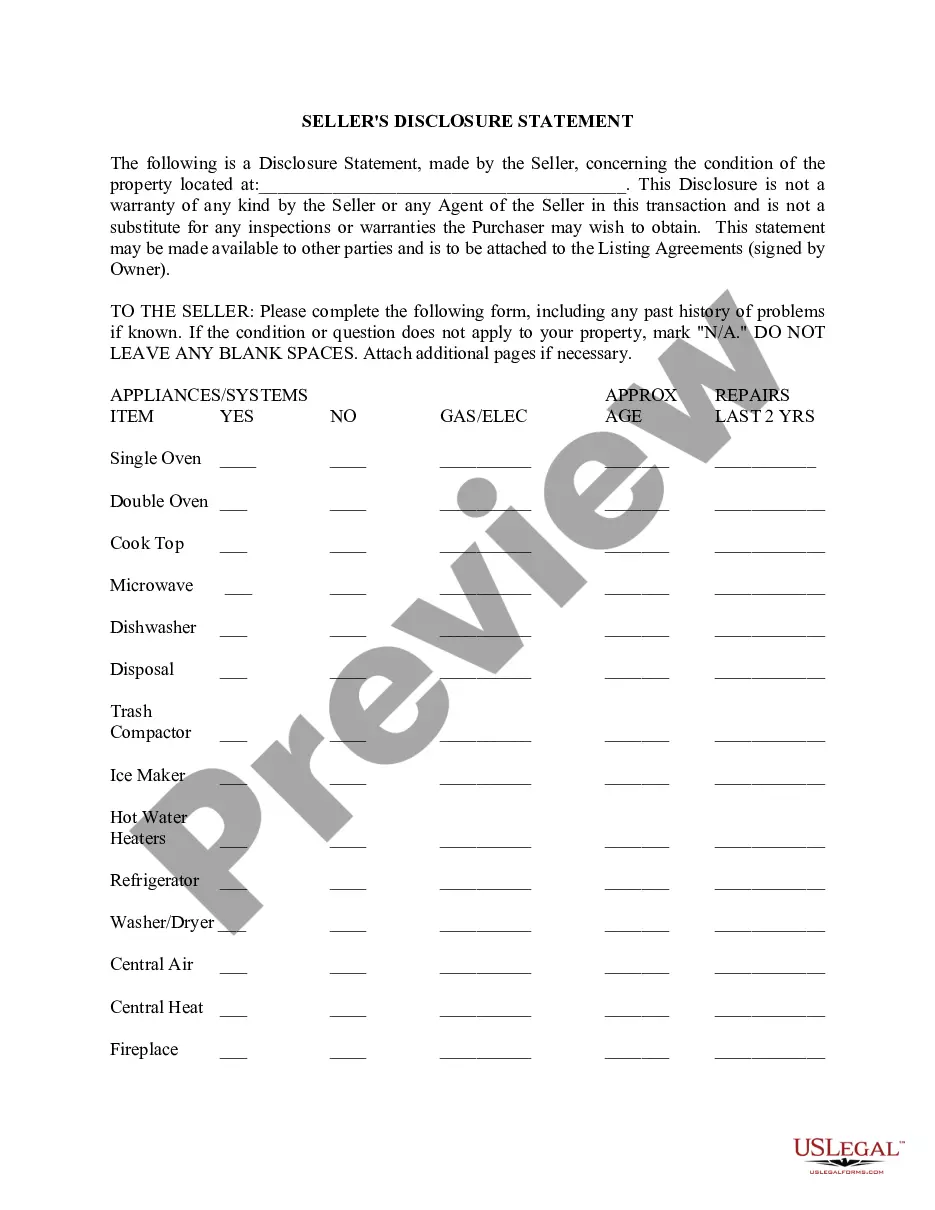
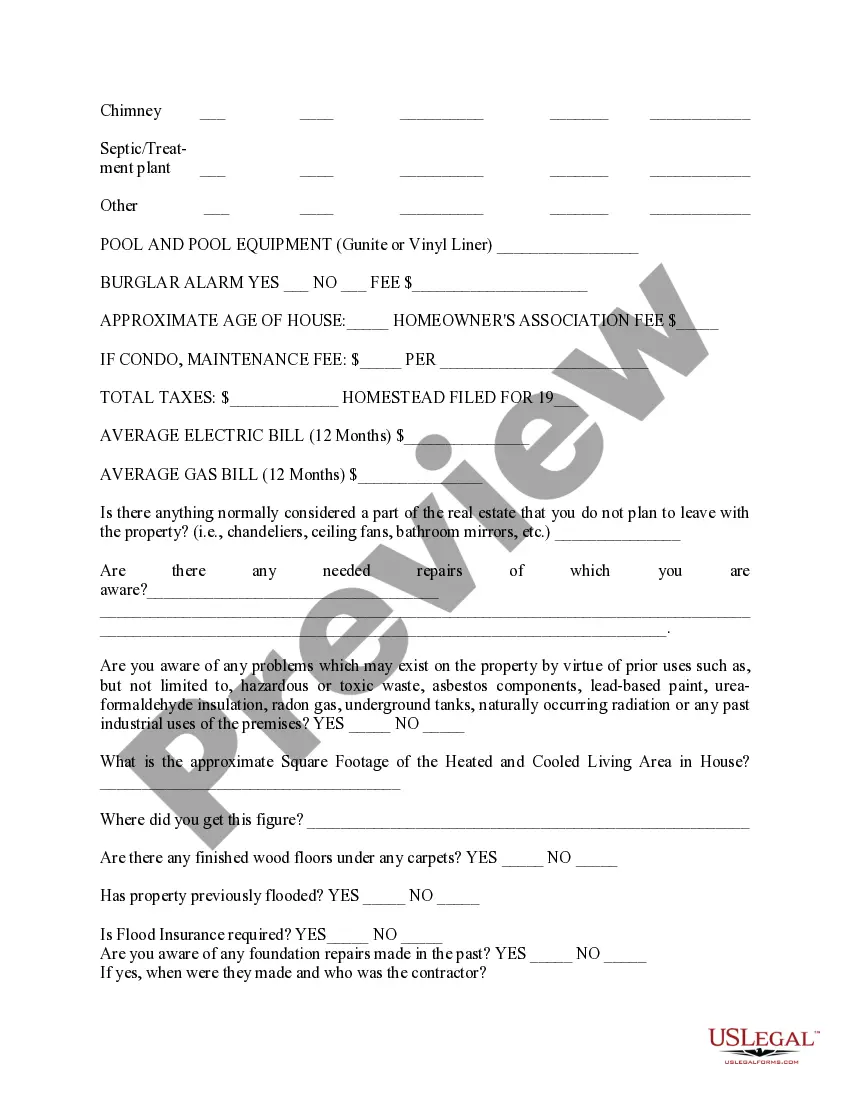
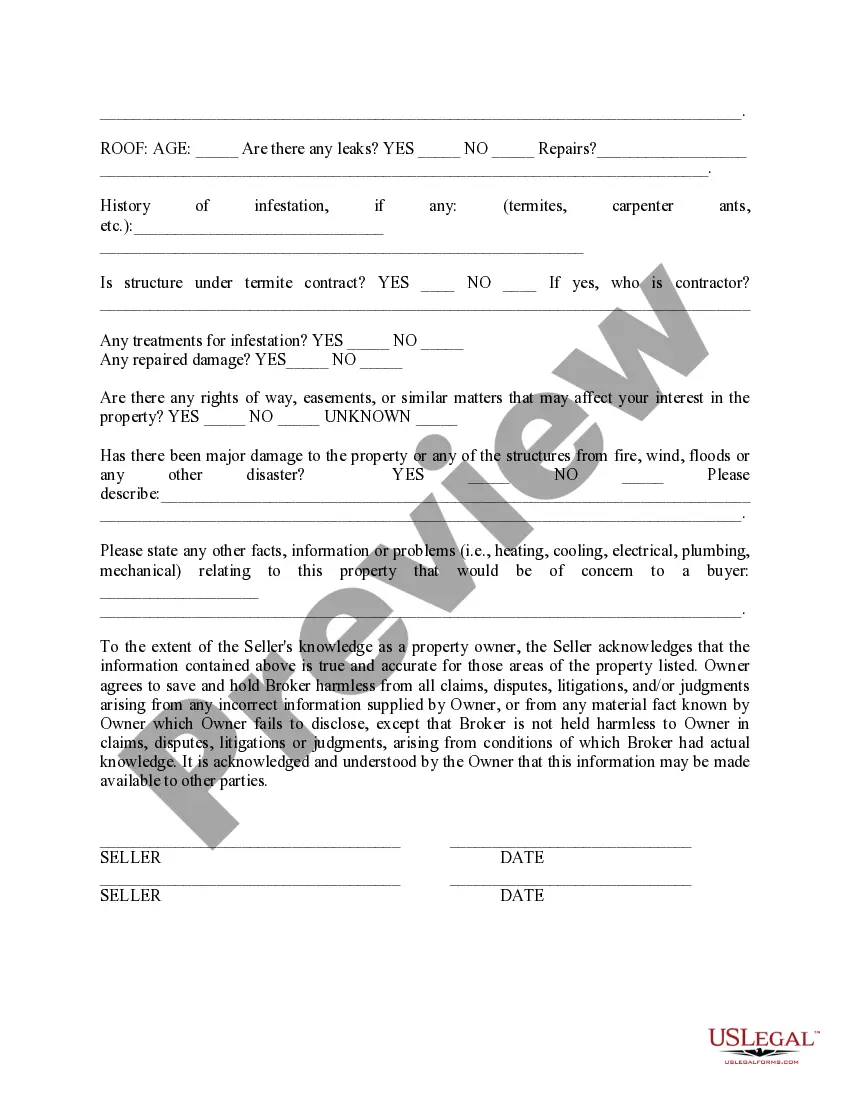
How to fill out Mississippi Seller's Residential Real Estate Disclosure Statement?
- Start by logging into your account on the US Legal Forms website. Ensure that your subscription is active to access your required templates.
- In the Preview mode, review the description of the form to confirm it aligns with your specific needs and jurisdictional requirements.
- If you encounter any discrepancies, utilize the Search feature to find alternative templates that better suit your case.
- Select the desired document and click on the Buy Now button, then choose a subscription plan that fits your needs.
- Complete your purchase by entering your payment details or utilizing your PayPal account.
- After the transaction, download the legal form to your device. You can also find it in the My Forms section of your profile for future access.
By utilizing US Legal Forms, real estate sellers can access a vast library of over 85,000 customizable legal documents, ensuring that they are well-equipped to handle their legal needs efficiently.
Experience the ease of document preparation with US Legal Forms today! Empower yourself by accessing premium support and ensure your forms are completed accurately.
Form popularity
FAQ
A person who sells a house is commonly referred to as a seller. This designation applies to anyone with the legal authority to transfer property ownership. As a real estate seller, understanding your position in the market can significantly impact your selling strategies and outcomes.
The term 'seller' in real estate specifically denotes the individual or entity selling a property. This title remains unchanged throughout the sale process, emphasizing their role in the transaction. As a real estate seller, you must be aware of your rights and responsibilities throughout this journey.
A seller in real estate refers to the person or organization that offers property for sale. They negotiate terms and finalize the sale with a buyer. For any real estate seller, understanding this role is essential for a smooth transaction and ensuring all obligations are met.
In a real estate transaction, the seller is the individual or entity that owns the property being sold. This person has the legal right to transfer ownership to a buyer. As a real estate seller, you will be responsible for disclosing necessary information about the property.
The agent who represents the seller in a real estate transaction is commonly known as a listing agent. This professional focuses on promoting the property, handling inquiries, and managing negotiations. As a real estate seller, partnering with a listing agent can enhance your chances of a successful sale.
Not every real estate seller will receive a 1099 when selling a house. The issuance depends on factors like the sale amount and whether the buyer is obligated to report the transaction. Always verify your specific circumstances with a tax professional to ensure you meet all reporting requirements.
To report the sale of a house on your taxes, begin by calculating your gain or loss from the sale. You'll need to fill out Schedule D and Form 8949 to reflect these calculations accurately. As a real estate seller, using US Legal Forms can guide you through the required forms, making this process simpler.
Typically, the buyer of your property is responsible for sending out the 1099 forms after a home sale if the transaction meets certain criteria. The buyer must report the sale, particularly if it involves financing. Staying informed on this process can help ensure that you are adequately prepared for tax time.
Indeed, as a real estate seller, you must report any sale to the IRS, particularly if you realize a profit. Reporting doesn’t only apply to a primary residence; it involves any property that generates income or appreciates in value. Using platforms like US Legal Forms can simplify the documentation required for reporting.
Certain real estate sellers may be exempt from 1099 reporting, including those whose sales meet specific criteria. For instance, if a home is sold for an amount below $600, the reporting requirement may not apply. However, it’s essential to consult with a tax professional to understand your specific situation.