Life Estate Language For Deed
Description

Get your form ready online
Our built-in tools help you complete, sign, share, and store your documents in one place.
Make edits, fill in missing information, and update formatting in US Legal Forms—just like you would in MS Word.
Download a copy, print it, send it by email, or mail it via USPS—whatever works best for your next step.
Sign and collect signatures with our SignNow integration. Send to multiple recipients, set reminders, and more. Go Premium to unlock E-Sign.
If this form requires notarization, complete it online through a secure video call—no need to meet a notary in person or wait for an appointment.
We protect your documents and personal data by following strict security and privacy standards.

Make edits, fill in missing information, and update formatting in US Legal Forms—just like you would in MS Word.

Download a copy, print it, send it by email, or mail it via USPS—whatever works best for your next step.

Sign and collect signatures with our SignNow integration. Send to multiple recipients, set reminders, and more. Go Premium to unlock E-Sign.

If this form requires notarization, complete it online through a secure video call—no need to meet a notary in person or wait for an appointment.

We protect your documents and personal data by following strict security and privacy standards.
Looking for another form?

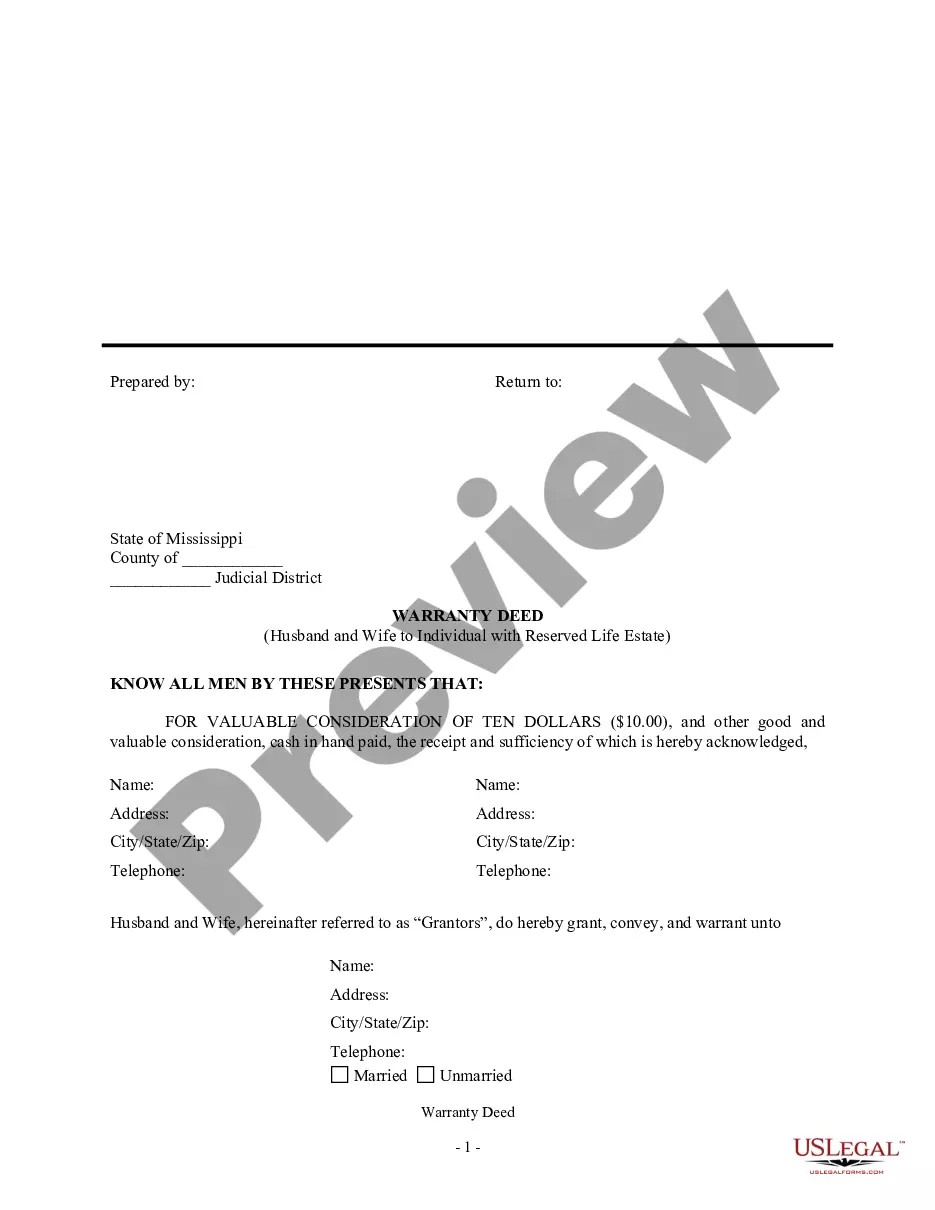
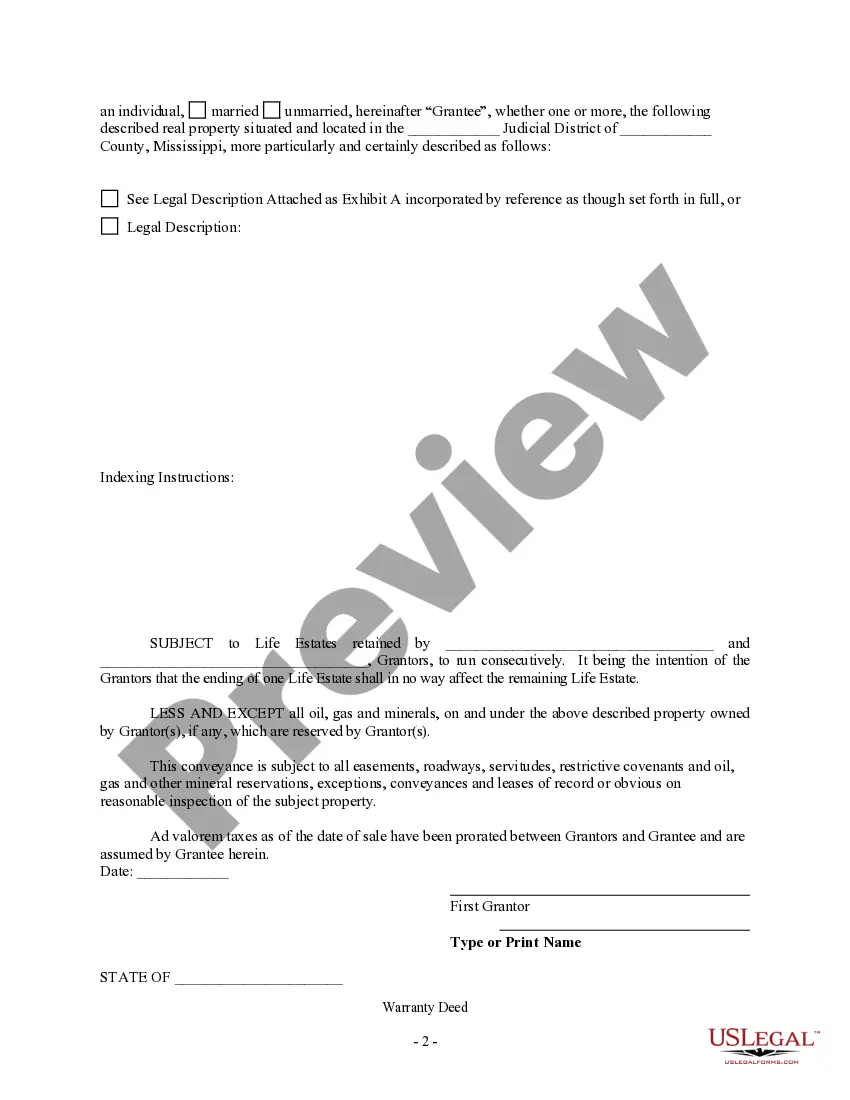
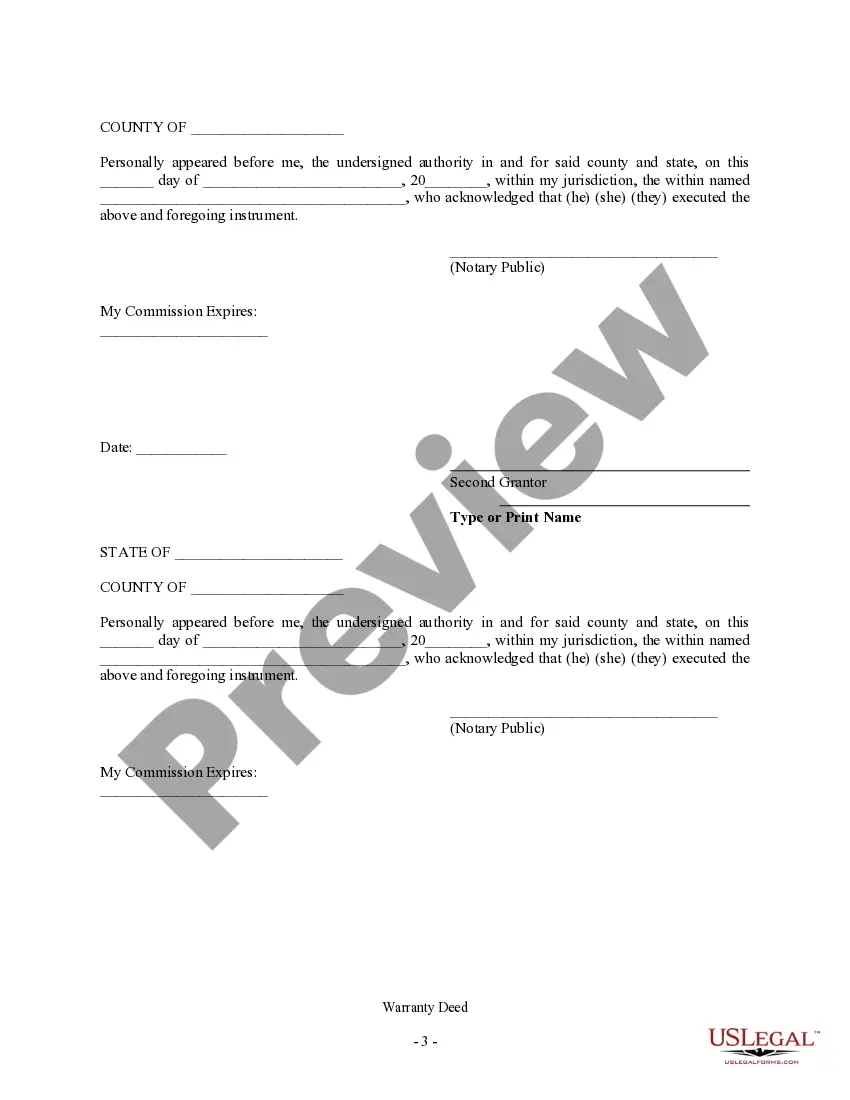
How to fill out Mississippi Warranty Deed To Child Reserving A Life Estate In The Parents?
- If you are an existing user, log in to your account and download the desired form template. Ensure your subscription remains valid, or renew it if necessary.
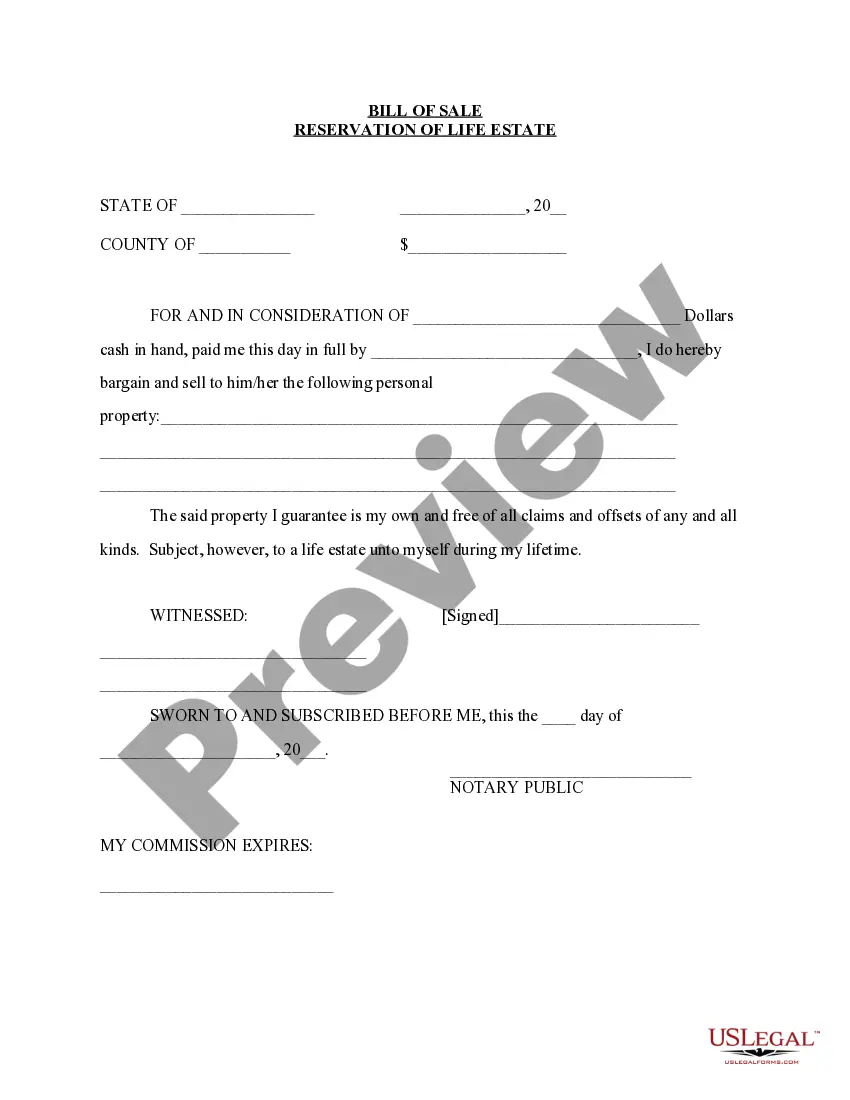
- If you are new to US Legal Forms, start by checking the preview and description of the life estate language for deed to confirm it meets your needs.
- Utilize the search feature to find alternative templates if necessary, ensuring compliance with local regulations before proceeding.
- To purchase the document, click the Buy Now button and choose your preferred subscription plan. Create an account to access the form library.
- Complete your purchase using credit card details or PayPal to finalize your subscription and gain access to the forms.
- Once purchased, download your form and save it to your device, ensuring easy access anytime via the My Forms menu of your profile.
By following these steps, you empower yourself with the tools needed for effective legal documentation. With over 85,000 forms available, US Legal Forms provides unmatched access to essential legal resources.
Start your journey towards mastering legal documents today through US Legal Forms!
Form popularity
FAQ
A granting clause in a deed is a critical component that establishes the transfer of ownership. This clause typically contains verbs indicating the grant of property, such as 'convey', 'grant', or 'bargain'. To ensure clarity, the life estate language for deed should explicitly describe the type of estate being conveyed and the parties involved. Including precise language helps prevent future disputes and solidifies the intent of the transfer.
One key drawback of a life estate deed is that it limits the property owner's ability to sell or mortgage the property without the consent of the remainder beneficiaries. Additionally, the property is subject to creditors' claims, which can affect the life tenant's control. Moreover, life estate language for deed can complicate estate planning, as it may not align with other goals you have for your estate. Ultimately, understanding these implications can help you decide if a life estate deed fits your needs.
To create a life estate, you need specific words that outline the arrangement, such as 'for life' or 'life estate.' Additionally, you should include terms that identify both the life tenant and the remainderman clearly. Using the right life estate language for deed is essential for clarity and legality. Platforms like USLegalForms provide useful resources to help you choose the right wording for your deed.
Life estates are generally created by a deed or a will, specifying the life tenant and the remainderman. The legal language must clearly indicate the intent to establish a life estate, using proper life estate language for deed. This clarity ensures that the property is managed and transferred according to the grantor's wishes. To create an effective life estate, consider templates and guidance available on platforms like USLegalForms.
Life estate terms dictate that the life tenant can use and benefit from the property during their lifetime. However, they are responsible for property maintenance and cannot sell the property without the consent of the remainderman. These terms must be clearly outlined in the life estate language for deed to avoid future disputes. For more information, USLegalForms offers resources to help you understand these terms better.
The life estate deed must include language stating the grantee receives the property for their lifetime, alongside the remainderman's details. For example, the deed might specify, 'This property is granted to Jane Smith for her life, after which it will pass to John Doe.' Proper life estate language for deed will protect the interests of all parties involved. Using USLegalForms allows you to easily access templates that guide you in crafting this legally binding document.
To create a life estate, the deed must include specific life estate language, clearly defining the grantor and the grantee. The language typically states that the grantee receives the property for their lifetime, after which the property will pass to a designated remainderman. It is essential to use precise terms to ensure the intent of the life estate is clear. Utilizing services like USLegalForms can help you draft a compliant deed.
To write a real estate deed, start by gathering all necessary information about the property and the parties involved. Clearly define the life estate language for deed that specifies the rights and responsibilities of the property owner and the beneficiary. Next, ensure the deed includes the legal description of the property, signatures from all parties, and proper notarization. Lastly, file the deed with the county clerk’s office to finalize the transfer of ownership.