Dissolution Of Corporation
Description

Get your form ready online
Our built-in tools help you complete, sign, share, and store your documents in one place.
Make edits, fill in missing information, and update formatting in US Legal Forms—just like you would in MS Word.
Download a copy, print it, send it by email, or mail it via USPS—whatever works best for your next step.
Sign and collect signatures with our SignNow integration. Send to multiple recipients, set reminders, and more. Go Premium to unlock E-Sign.
If this form requires notarization, complete it online through a secure video call—no need to meet a notary in person or wait for an appointment.
We protect your documents and personal data by following strict security and privacy standards.

Make edits, fill in missing information, and update formatting in US Legal Forms—just like you would in MS Word.

Download a copy, print it, send it by email, or mail it via USPS—whatever works best for your next step.

Sign and collect signatures with our SignNow integration. Send to multiple recipients, set reminders, and more. Go Premium to unlock E-Sign.

If this form requires notarization, complete it online through a secure video call—no need to meet a notary in person or wait for an appointment.

We protect your documents and personal data by following strict security and privacy standards.
Looking for another form?


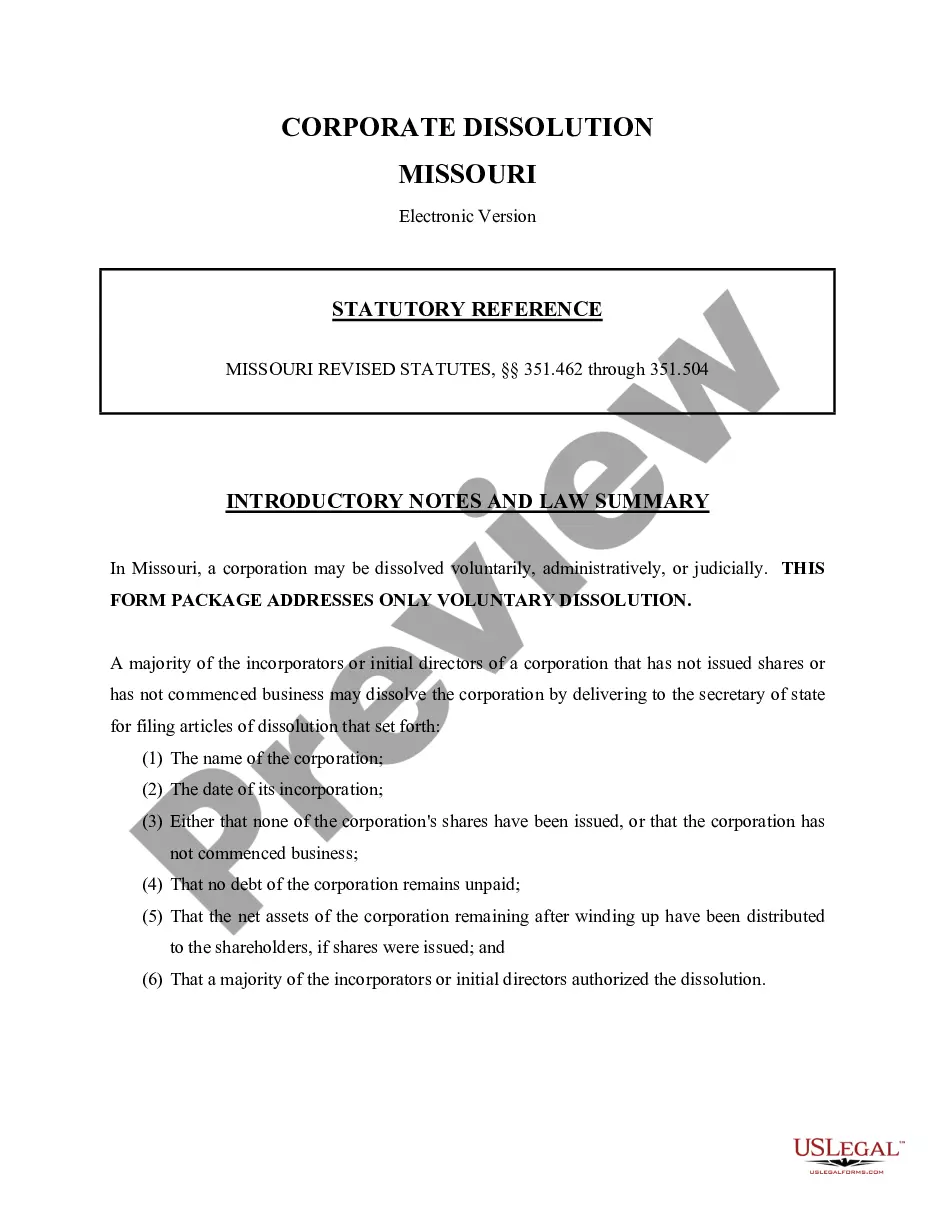
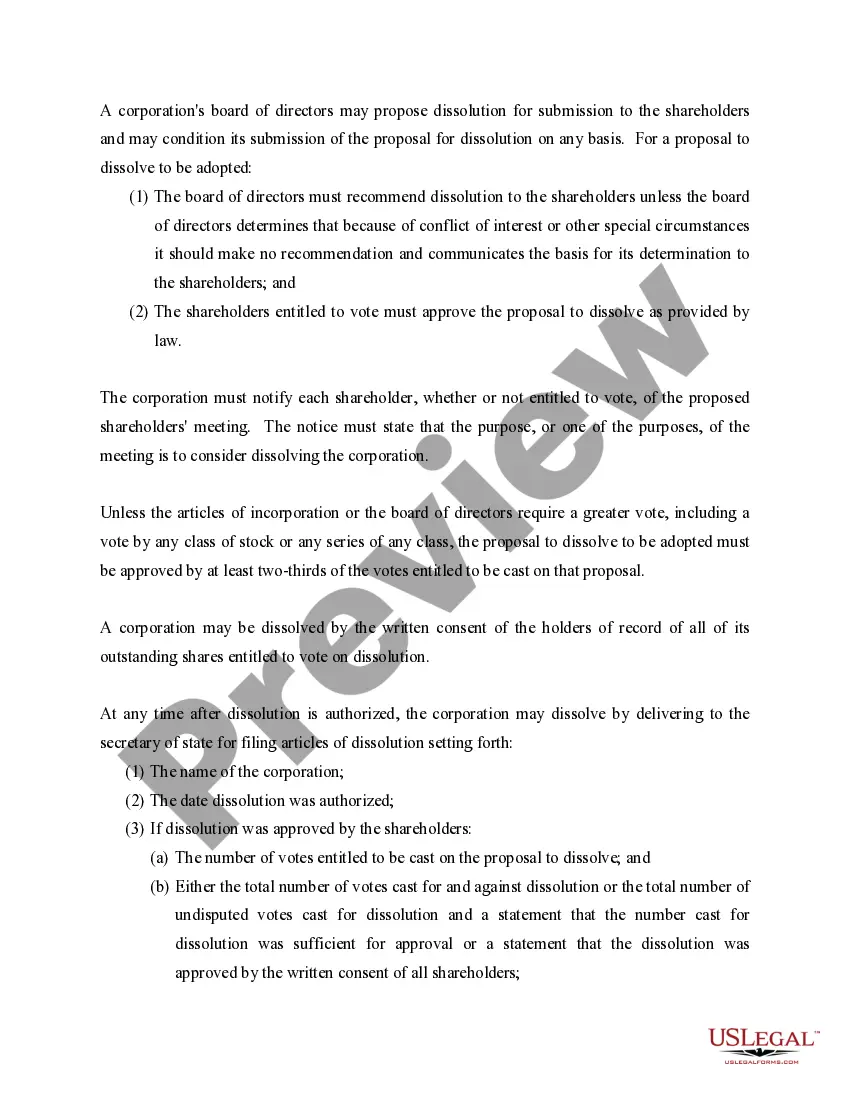
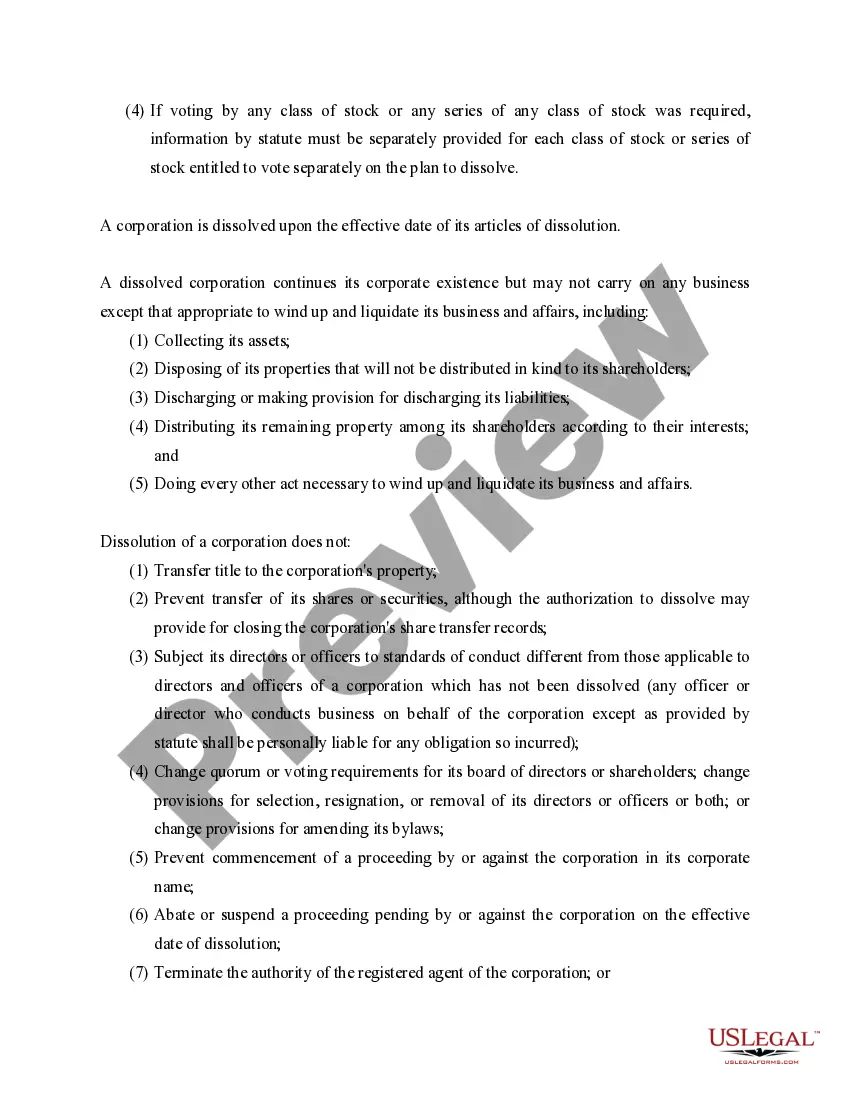
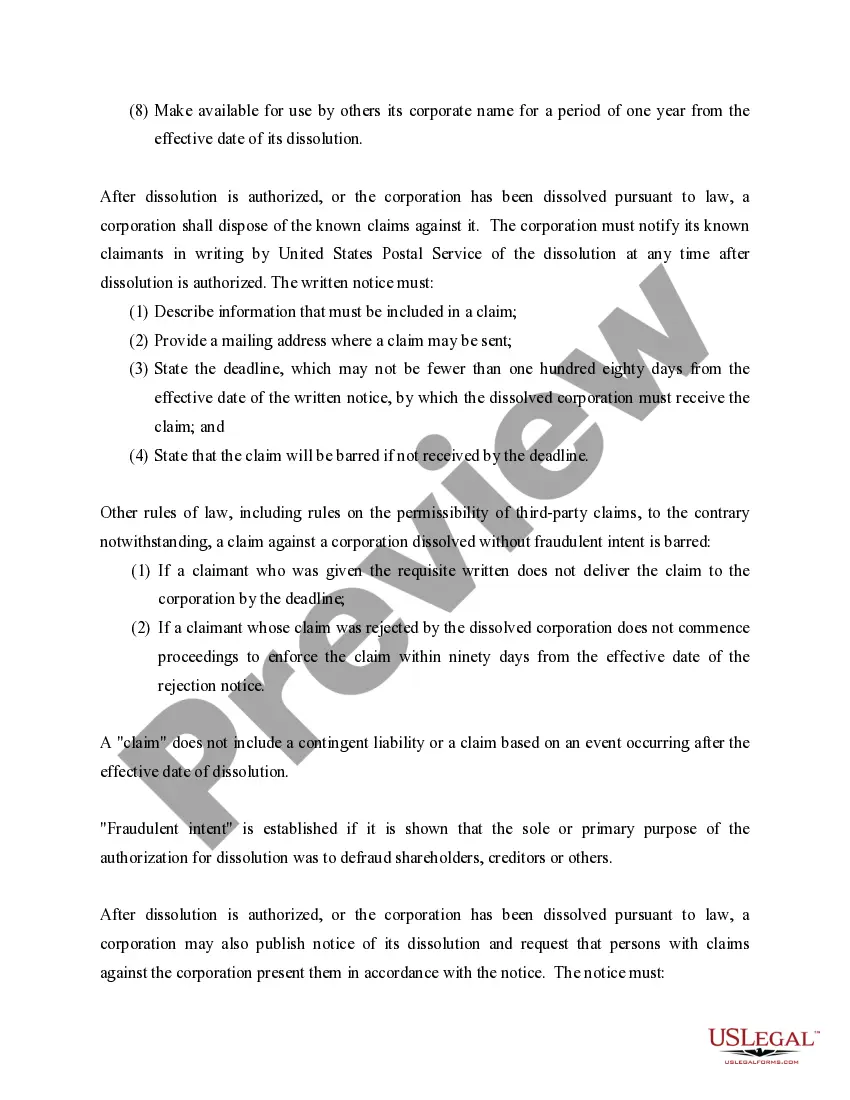
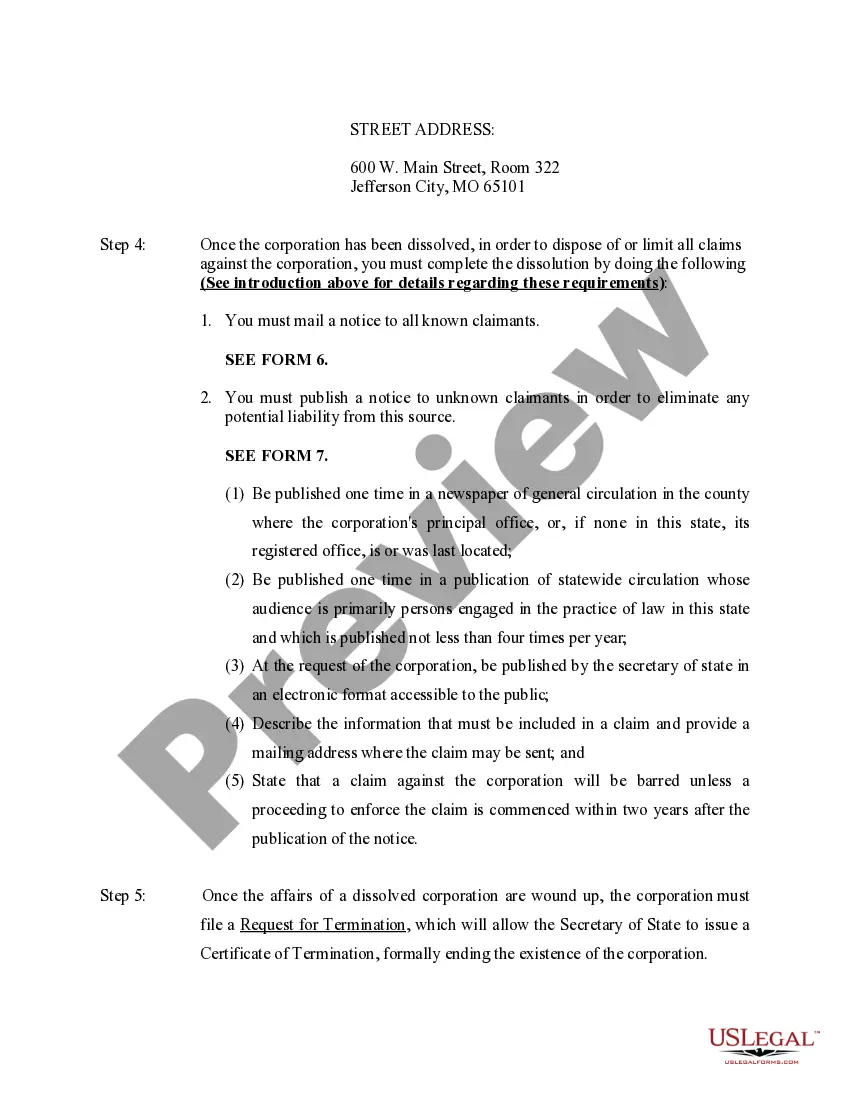
How to fill out Missouri Dissolution Package To Dissolve Corporation?
- If you're already a user, log in to download the required form template from your account. Ensure your subscription is active; renew if necessary.
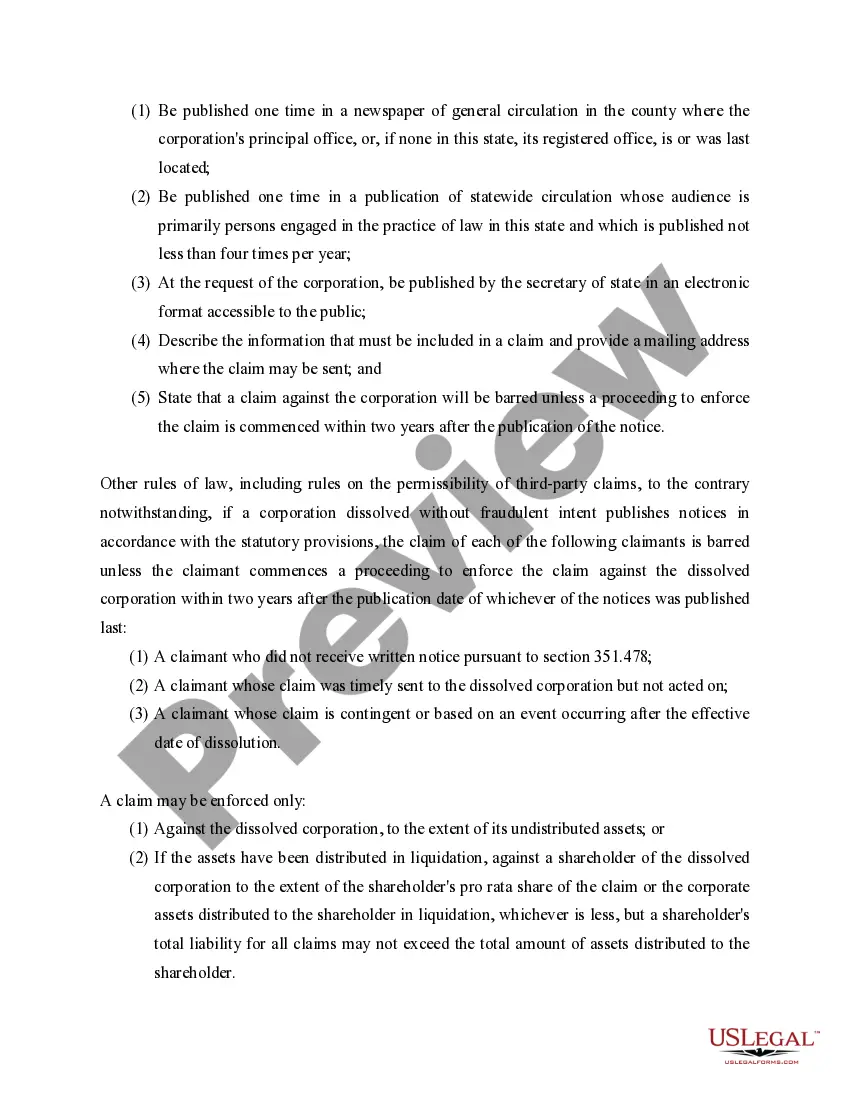
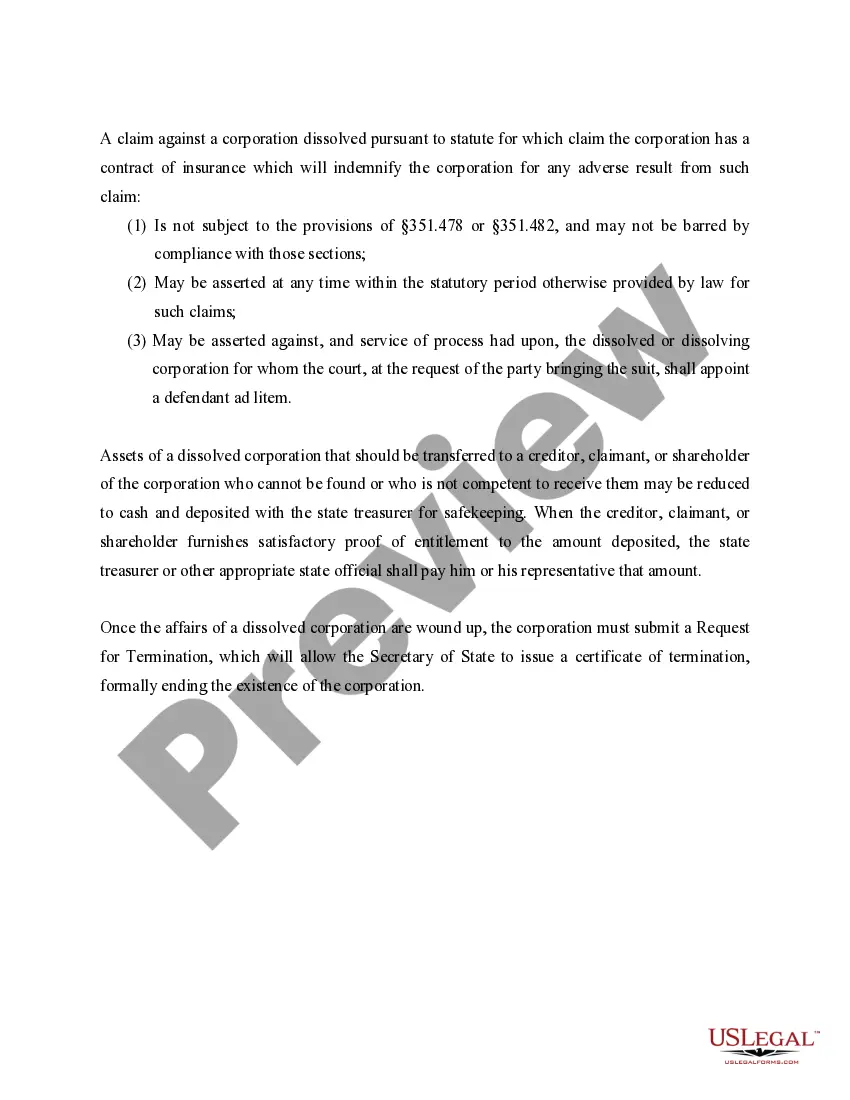
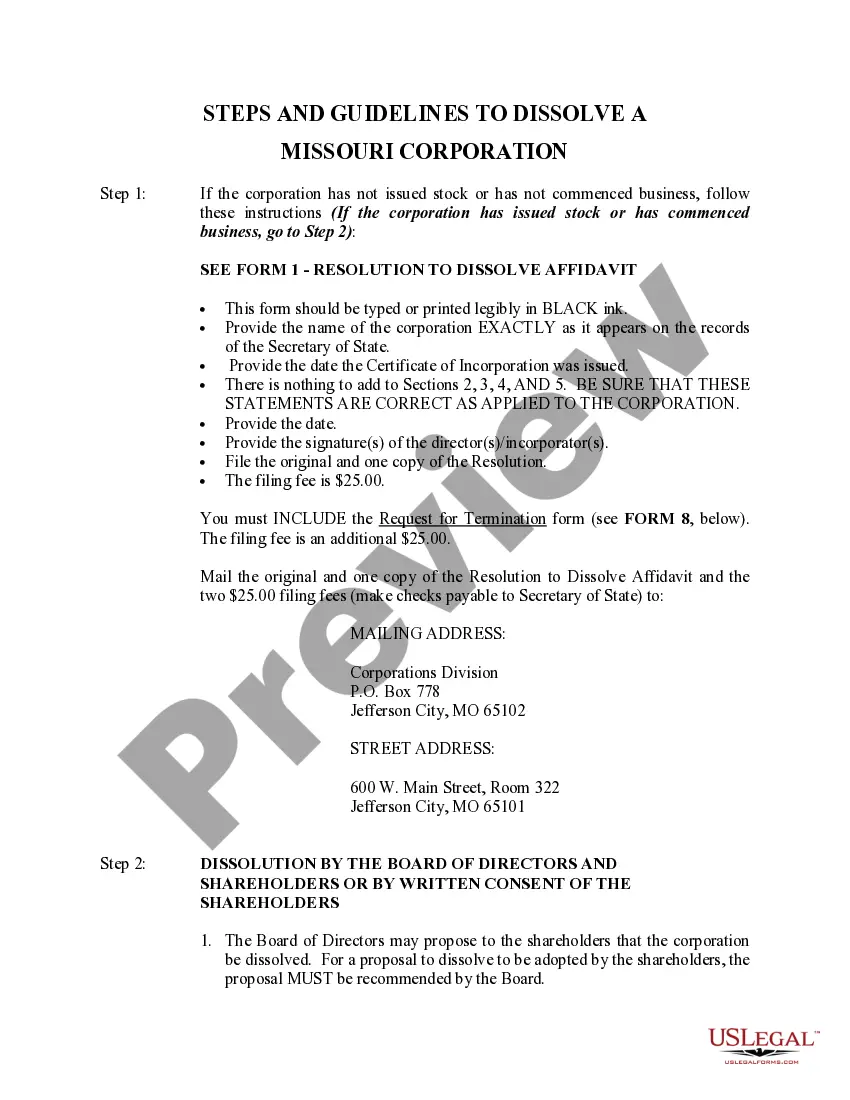
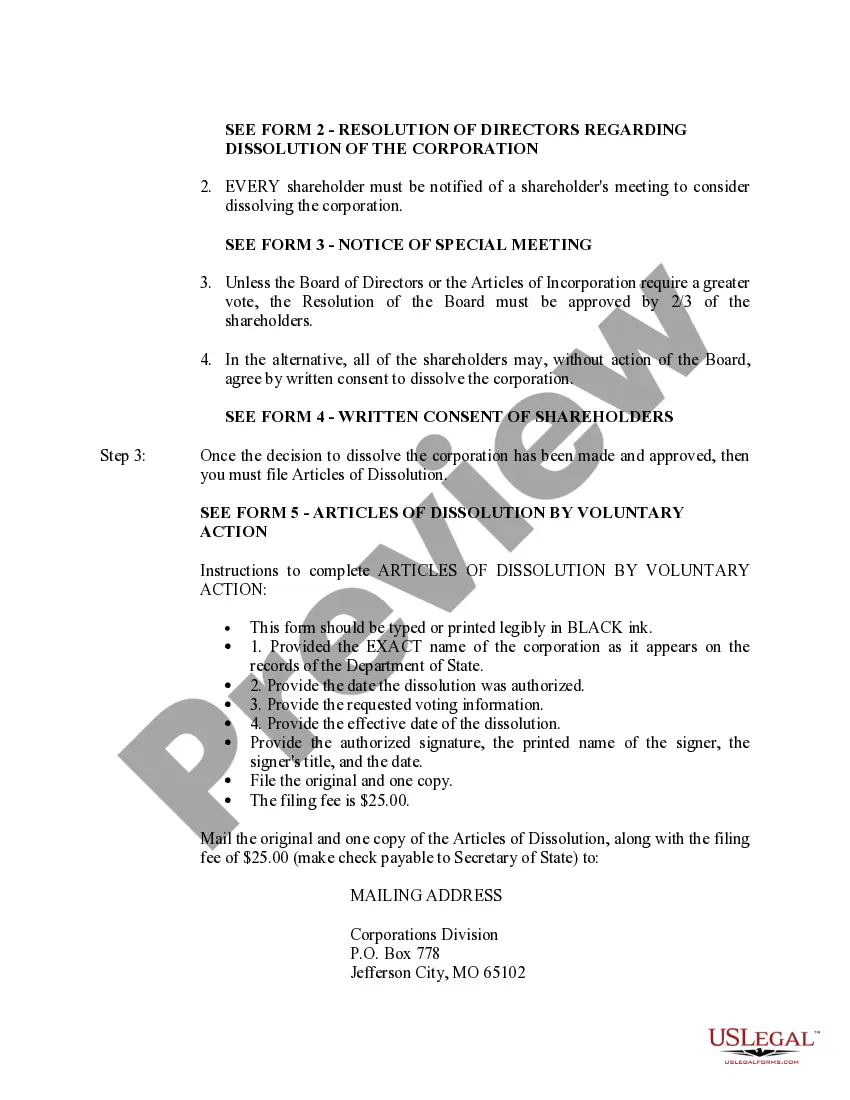
- For first-time users, start by exploring the Preview mode to review the form description and confirm you've selected the correct document for your jurisdiction.
- If you need a different form, utilize the search tab to find the correct template. If it meets your requirements, proceed to the next step.
- Purchase the document by clicking the Buy Now button and selecting your preferred subscription plan. You must create an account to gain access.
- Complete your transaction by entering your payment details, either credit card information or through your PayPal account.
- Download your form to your device to fill it out. You can also access it later through the My Forms section of your profile.
With US Legal Forms, you benefit from a robust collection of legal documents, ensuring you have access to numerous forms at a competitive cost.
Take control of your corporation's dissolution today. Visit US Legal Forms to start your process and ensure you have the legal documentation you need.
Form popularity
FAQ
The dissolution process of a company involves several key steps that must be carefully followed. First, the board typically must approve the dissolution, after which a formal notice must be filed with the state. It's also wise to notify creditors, settle debts, and distribute any remaining assets, which is where platforms like US Legal Forms can assist you in navigating these requirements.
Dissolving a company is not the same as simply closing it down. While both terms imply stopping business activities, dissolution involves a legal process that formally ends the company's existence. Closing might refer to halting operations temporarily or permanently without following the formal steps of dissolution.
Upon the dissolution of a corporation, the assets of the corporation are typically liquidated. All outstanding debts must be settled, and remaining assets are distributed to the shareholders. Following these actions, the corporation will officially cease to exist and will be removed from the state’s records.
When you engage in the dissolution of a corporation, you might encounter various tax consequences. Corporations may need to file final tax returns and settle any outstanding tax liabilities before the dissolution is finalized. Additionally, shareholders may face taxes on distributions made during the dissolution process.
Dissolution of a corporation refers to the formal process of closing a corporation's operations. This process legally terminates the existence of the corporation, allowing it to cease all business activities. It's important to follow the necessary steps to ensure compliance with state laws during this procedure.
To shut down a company, you must follow the formal process of dissolution of corporation in your state. This typically involves filing specific forms with the state authority, notifying creditors, and settling any outstanding debts. Additionally, you may want to consider using platforms like USLegalForms to access necessary documents and guidance for a smooth dissolution process. Properly managing this process can prevent future legal complications.
Yes, you can file Form 966 electronically through the IRS website. This form is essential for the dissolution of corporation, as it notifies the IRS of your intention to dissolve your business. Filing online ensures quicker processing, reducing delays associated with paper submissions. Always ensure you have all required information ready to streamline the process.
To remove yourself from a corporation, you typically need to resign from your position and formally notify the other members. Depending on the corporation's bylaws, you may also need to file amendments with the state, especially if you are a director or officer. The dissolution of a corporation can affect your responsibilities, so it's important to follow each step carefully.
The dissolution of the company usually entails proposing a resolution from the board of directors, filing necessary documents with the state, and notifying all stakeholders involved. Once these steps are completed, the business must address any debts and distribute assets to shareholders. Each state may have specific requirements, so using US Legal Forms can guide you through the unique regulations you need to follow.
The process of dissolution of a company involves several steps, starting with a board resolution to dissolve the business. Next, you need to file articles of dissolution with your state’s Secretary of State. After filing, ensure you handle outstanding debts and distribute any remaining assets. Our platform can provide templates and detailed steps to simplify this process for you.