Quit Claim Deed Form For Tennessee
Description


Get your form ready online
Our built-in tools help you complete, sign, share, and store your documents in one place.
Make edits, fill in missing information, and update formatting in US Legal Forms—just like you would in MS Word.
Download a copy, print it, send it by email, or mail it via USPS—whatever works best for your next step.
Sign and collect signatures with our SignNow integration. Send to multiple recipients, set reminders, and more. Go Premium to unlock E-Sign.
If this form requires notarization, complete it online through a secure video call—no need to meet a notary in person or wait for an appointment.
We protect your documents and personal data by following strict security and privacy standards.

Make edits, fill in missing information, and update formatting in US Legal Forms—just like you would in MS Word.

Download a copy, print it, send it by email, or mail it via USPS—whatever works best for your next step.

Sign and collect signatures with our SignNow integration. Send to multiple recipients, set reminders, and more. Go Premium to unlock E-Sign.

If this form requires notarization, complete it online through a secure video call—no need to meet a notary in person or wait for an appointment.

We protect your documents and personal data by following strict security and privacy standards.
Looking for another form?





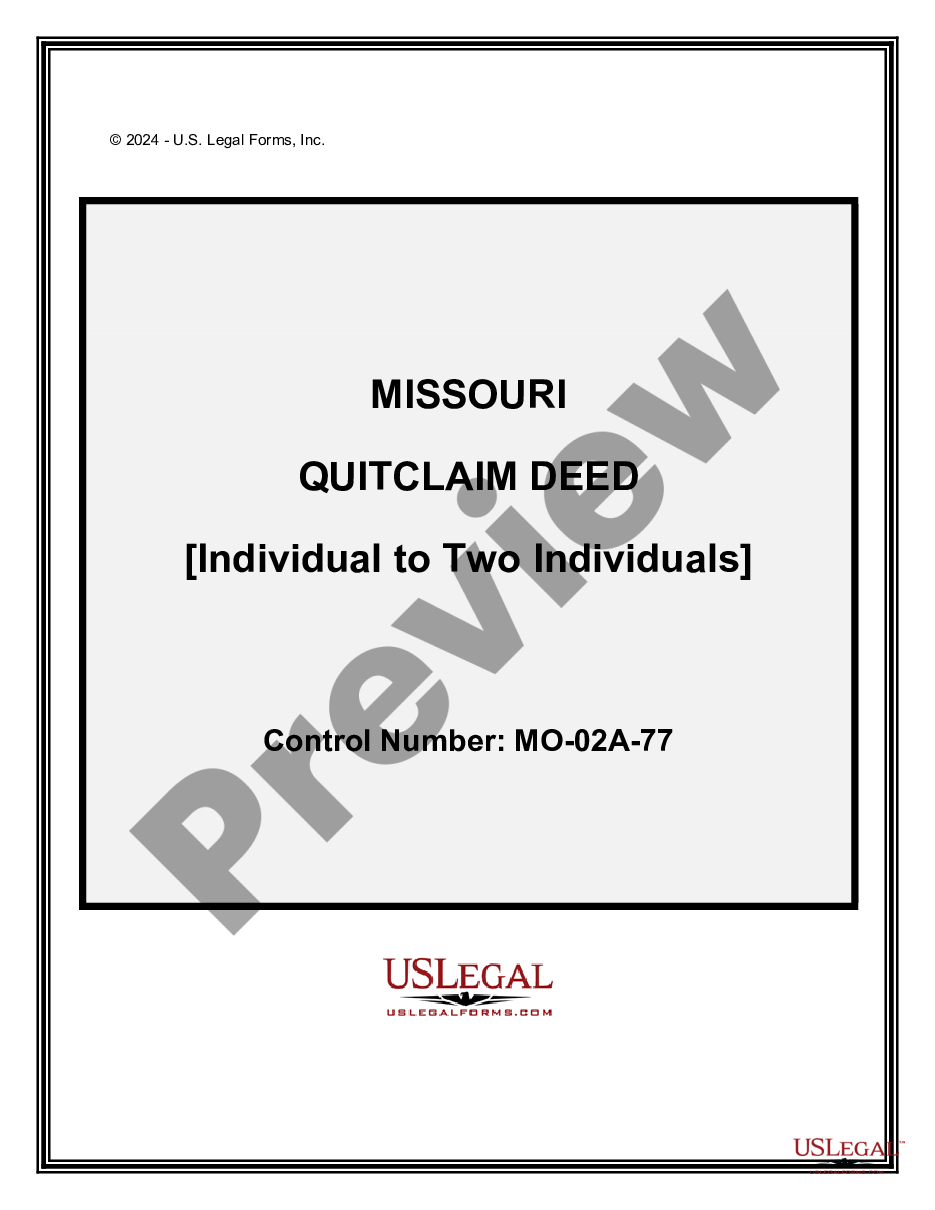
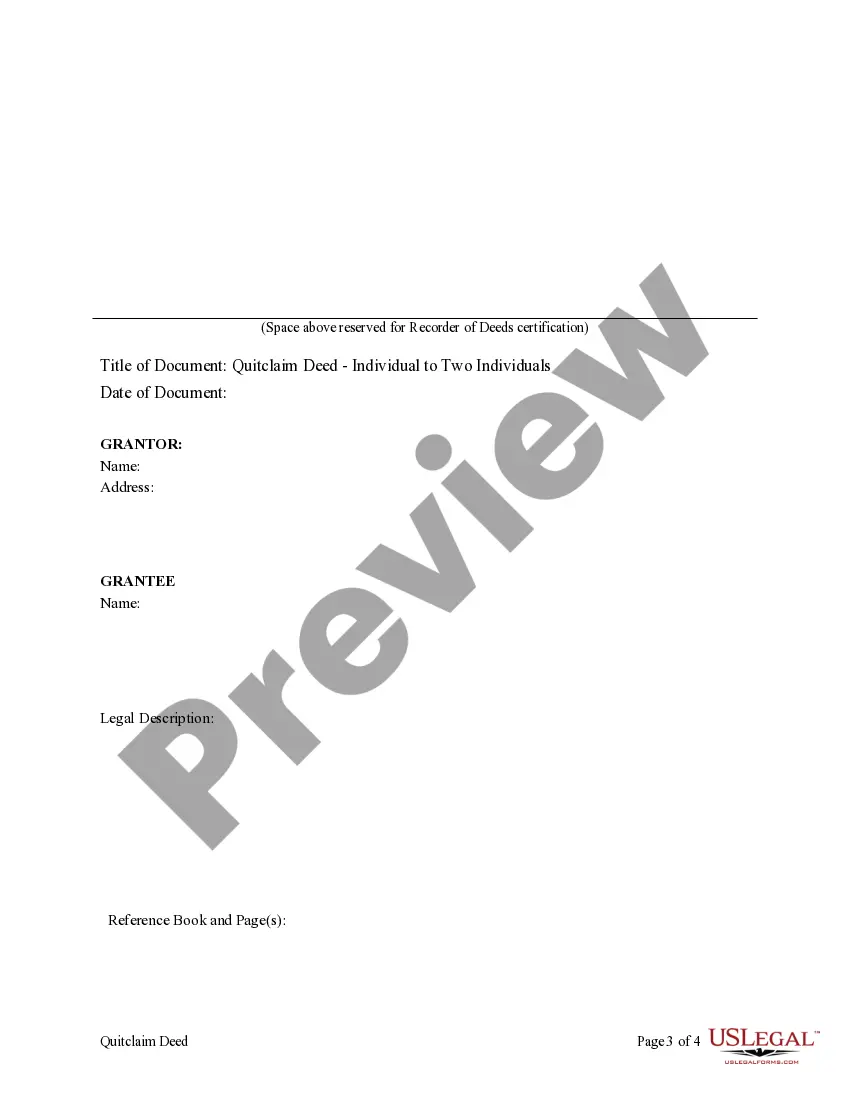
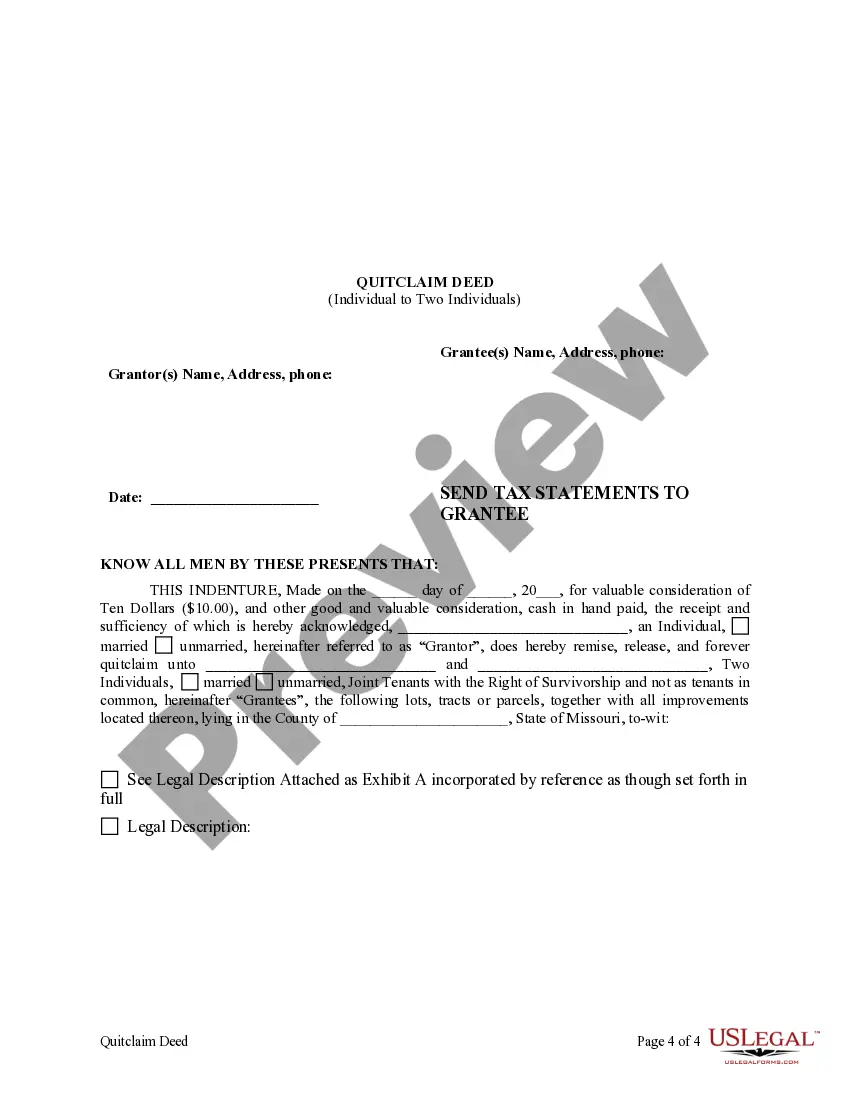
How to fill out Missouri Quitclaim Deed From Individual To Two Individuals In Joint Tenancy?
- If you're a returning user, log in to your account and navigate to the form library to download your required quit claim deed form. Ensure your subscription is active; if not, renew it according to your payment plan.
- For first-time users, start by checking the form preview and description to confirm it suits your requirements and complies with Tennessee local jurisdiction.
- If adjustments are needed, use the Search tab to find an alternative template that matches your criteria.
- Once you have the right form, click the Buy Now button and select a subscription that fits your needs; you’ll need to create an account for full access.
- Complete your purchase by entering your payment details using a credit card or PayPal.
- Finally, download the form to your device. You can also access it later in the My Forms section of your profile.
US Legal Forms stands out with its extensive collection of over 85,000 customizable legal documents, more than any competitor at a similar cost. They also provide access to premium experts who can assist in completing forms, ensuring accuracy and compliance.
With these steps, you're well on your way to securely managing your property transfer. Explore US Legal Forms today and experience the convenience of their services!
Form popularity
FAQ
People usually use a quit claim deed form for Tennessee to transfer property ownership quickly, often among family members or in divorce settlements. It simplifies the process when trust exists between the parties, as it does not require extensive title checks or warranties. This deed provides a straightforward way to convey property without the usual complexities.
To obtain a quit claim deed form for Tennessee, you can find templates online or at local legal offices. You will need to fill out the form with property details and the names of the parties involved. Once completed, submit the form to the local county clerk’s office to make the transfer official.
Yes, you can complete a quit claim deed form for Tennessee on your own, but it is essential to ensure that you follow the state's legal requirements precisely. You need to fill out the form correctly and file it with the county clerk's office. However, working with a legal expert can help you avoid common mistakes and ensure all details are correct.
You can obtain a copy of a quit claim deed form for Tennessee from various sources. Your local county clerk's office is the primary place where you can request copies, as they maintain public records of property transactions. Additionally, you can access resources online through platforms like US Legal Forms, where you can easily download or request the necessary documents to make your process smoother and more efficient.
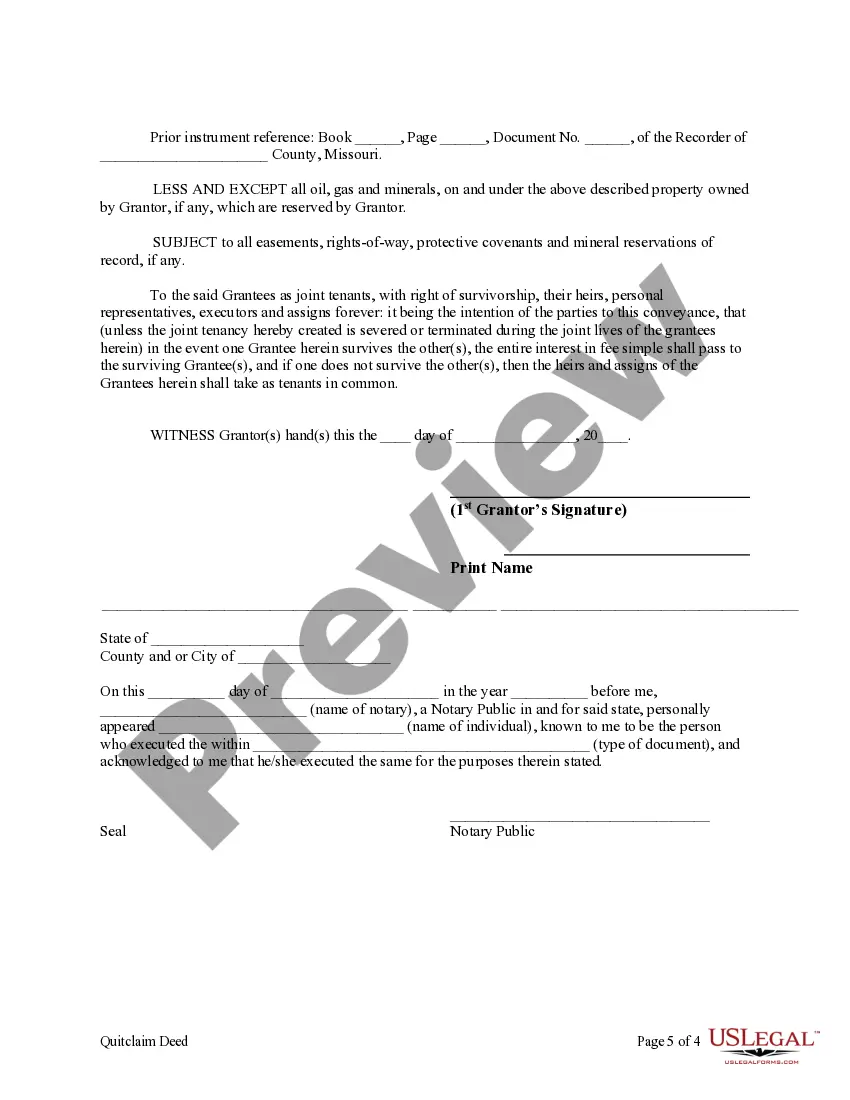
To create a valid quit claim deed form for Tennessee, you must include certain essential elements. First, both the grantor and grantee must be clearly identified along with their addresses. The document must be signed by the grantor in front of a notary public, and it must be recorded at the local county office to ensure it is legally recognized. Ensure that all information is precise to prevent any issues with property transfer.
When you fill out a quit claim deed form, start by selecting the correct template for Tennessee. Provide accurate information for the grantor, grantee, and the property, ensuring you use the legal description. Don't forget to sign and date the form in front of a notary public. By following these steps carefully, you can successfully complete your quit claim deed form for Tennessee.
To properly fill out a quit claim deed, begin by obtaining the appropriate quit claim deed form for Tennessee. Enter the names of the parties involved, along with a complete legal description of the property, including parcel number if available. Additionally, clearly indicate the date of execution and get the deed notarized, which adds credibility to the document. Double-check for any missed details, as these can affect the effectiveness of the deed.
Quit claim deeds are often seen as risky because they offer no warranty on the title being transferred. If the grantor has a clouded title or no legal claim to the property, the grantee may face disputes later. When using a quit claim deed form for Tennessee, it's essential to understand the implications fully. This document provides merely the rights the grantor has, so ensure due diligence before proceeding.
Filling out a quit claim deed form for Tennessee involves a few key steps. First, gather the required details such as the names of the grantor and grantee, the legal description of the property, and the consideration being exchanged. Next, follow the template of the deed form, clearly entering all relevant information. Ensure that all signatures are included and the document is notarized to complete the process.
Yes, a quit claim deed must be notarized in Tennessee to be legally valid. When you prepare your quit claim deed form for Tennessee, ensure that you have a notary present while signing the document. This step helps confirm the identities of the parties involved and adds an official touch to the transfer of property. Without this notarization, the deed may not be accepted by the county register.