Declaratory Judgment Court Without A Lawyer
Description

Get your form ready online
Our built-in tools help you complete, sign, share, and store your documents in one place.
Make edits, fill in missing information, and update formatting in US Legal Forms—just like you would in MS Word.
Download a copy, print it, send it by email, or mail it via USPS—whatever works best for your next step.
Sign and collect signatures with our SignNow integration. Send to multiple recipients, set reminders, and more. Go Premium to unlock E-Sign.
If this form requires notarization, complete it online through a secure video call—no need to meet a notary in person or wait for an appointment.
We protect your documents and personal data by following strict security and privacy standards.

Make edits, fill in missing information, and update formatting in US Legal Forms—just like you would in MS Word.

Download a copy, print it, send it by email, or mail it via USPS—whatever works best for your next step.

Sign and collect signatures with our SignNow integration. Send to multiple recipients, set reminders, and more. Go Premium to unlock E-Sign.

If this form requires notarization, complete it online through a secure video call—no need to meet a notary in person or wait for an appointment.

We protect your documents and personal data by following strict security and privacy standards.
Looking for another form?


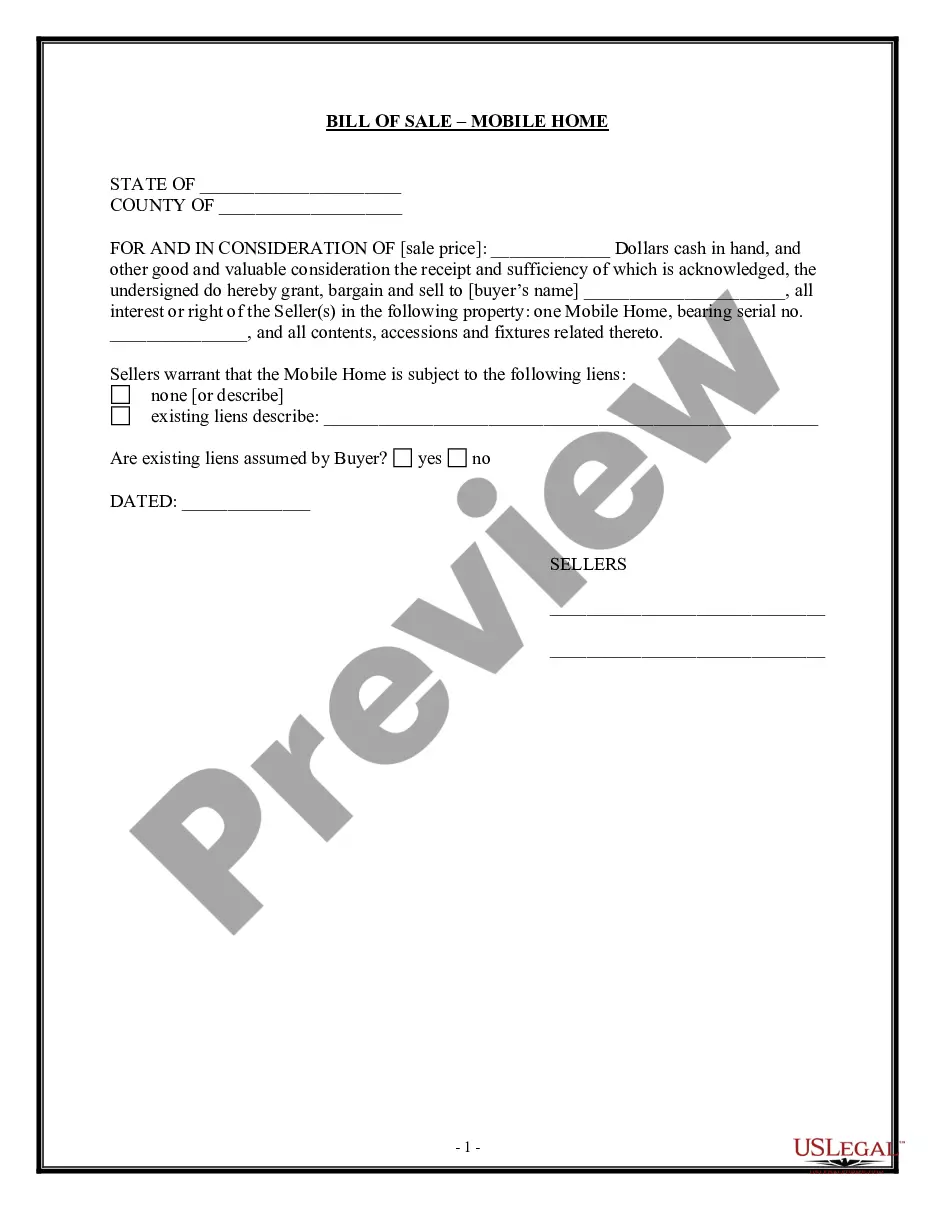




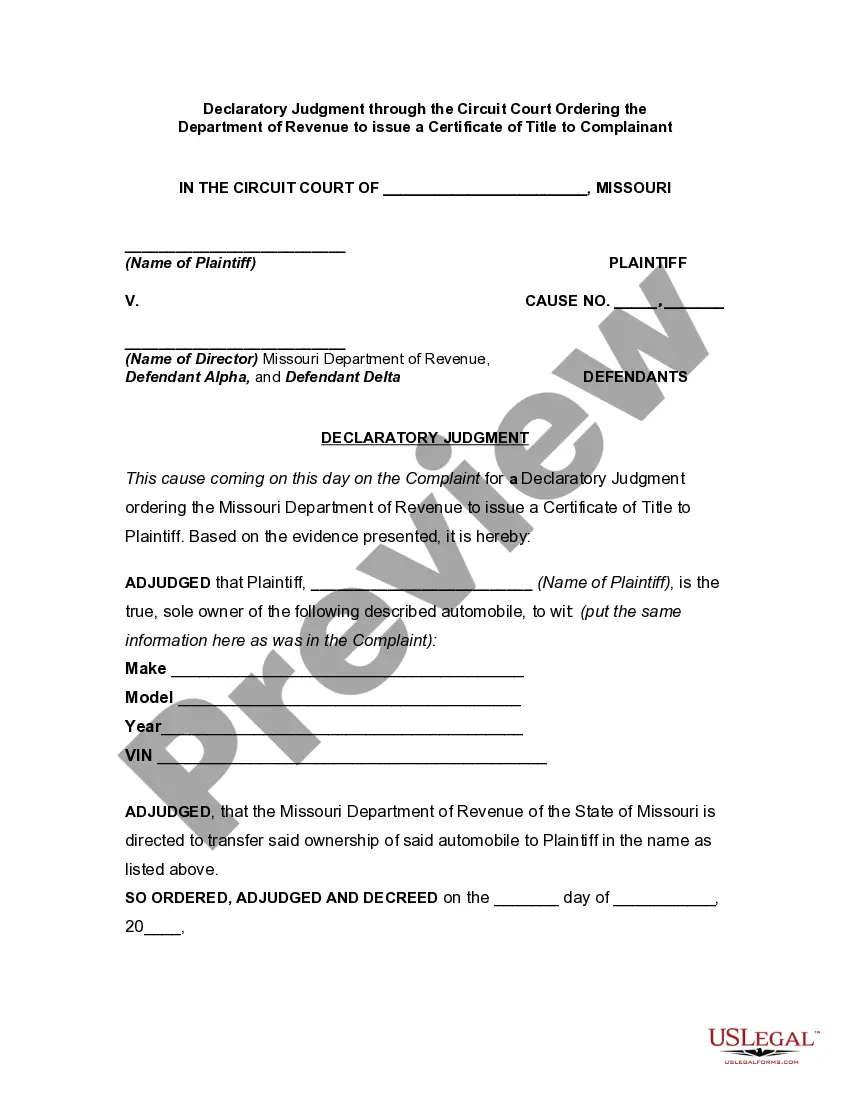
How to fill out Missouri Declaratory Judgment Through The Circuit Court Ordering The Department Of Revenue To Issue A Certificate Of Title To Complainant?
The Declaratory Judgment Court Without A Lawyer displayed on this page is a reusable official template created by qualified attorneys in conformity with federal and local statutes.
For over 25 years, US Legal Forms has supplied individuals, companies, and legal professionals with more than 85,000 verified, state-specific documents for any business or personal situation. It’s the quickest, most straightforward, and most reliable way to acquire the forms you require, as the service assures bank-level data security and anti-malware safeguards.
Utilize the same document again whenever required. Access the My documents tab in your profile to redownload any previously purchased forms. Enroll in US Legal Forms to have verified legal templates for all of life’s circumstances available to you.
- Explore the document you require and assess it.
- Examine the sample you searched for and preview it or review the form description to confirm it meets your requirements. If it does not, utilize the search bar to locate the suitable one. Click Buy Now once you find the template you are seeking.
- Select a pricing plan that fits your needs and create an account. Use PayPal or a credit card for a swift payment. If you already possess an account, Log In and verify your subscription to move forward.
- Select the format you prefer for your Declaratory Judgment Court Without A Lawyer (PDF, Word, RTF) and download the sample to your device.
- Print the template to fill it out manually. Alternatively, employ an online versatile PDF editor to quickly and accurately complete and sign your form with a legally-binding electronic signature.
Form popularity
FAQ
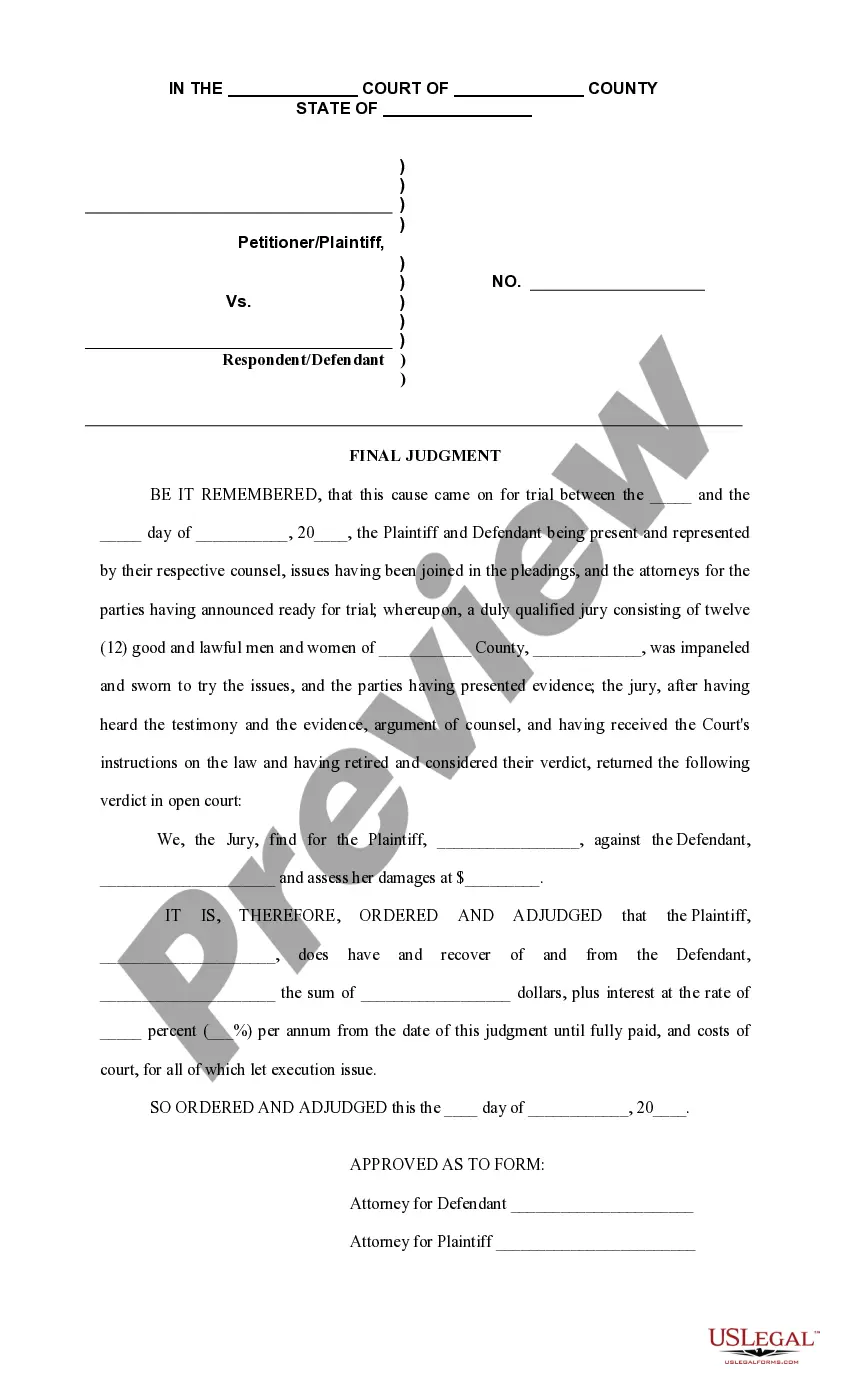
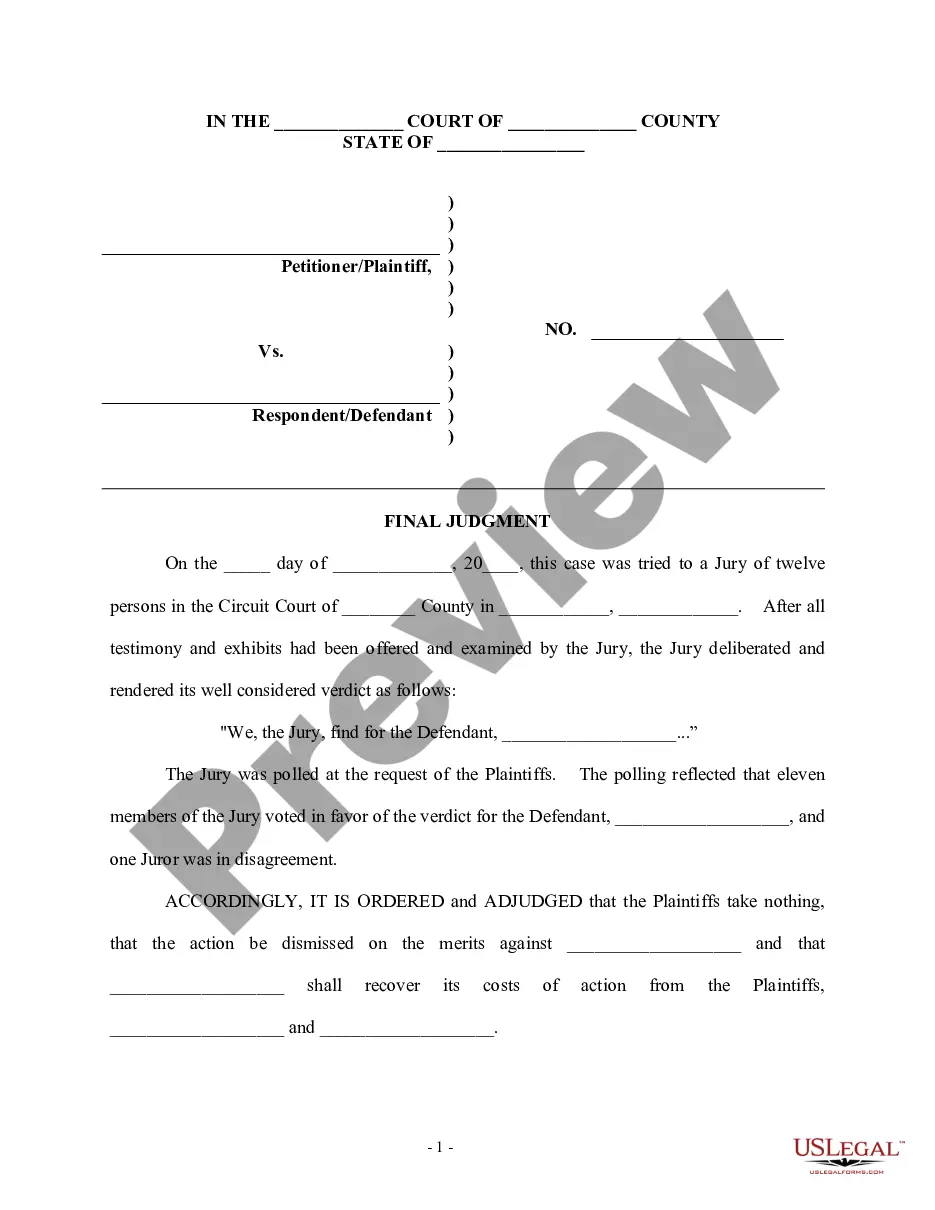
Yes, a declaratory judgment is binding on the parties involved once it is issued by the court. This means that the court’s interpretation or ruling resolves the legal uncertainty in question. Consequently, parties must abide by the court’s decision, thus preventing further disputes over the matter. This process can be navigated at a declaratory judgment court without a lawyer.
Declaratory relief, also commonly known as declaratory judgment or declaration, is a form of discretionary remedy which parties may seek from the court. A declaration is essentially a statement made by the court at the request of a party.
Ing to Section 34, of the Special Relief Act, 1963, any Person entitled to any legal character, or to any right as to any property, may institute a suit against any person denying, or interested to deny, his title to such character or right, and the court may in its discretion make therein a declaration that he ...
For example, a policyholder believes that their denied claim is unjust. As a result, they inform the insurer that they are considering a lawsuit to recover losses. The insurer seeks a declaratory judgment to clarify its rights and obligations with hopes of preventing the lawsuit.
: serving to declare, set forth, or explain. 2. a. : declaring what is the existing law. declaratory statute.
The declaratory judgment clearly states that the right of the plaintiff in an already complicated transaction. Under this, the court declares some existing rights in favor of the plaintiff and it exists only if the plaintiff is denied of his particular rights which he is basically entitled to.