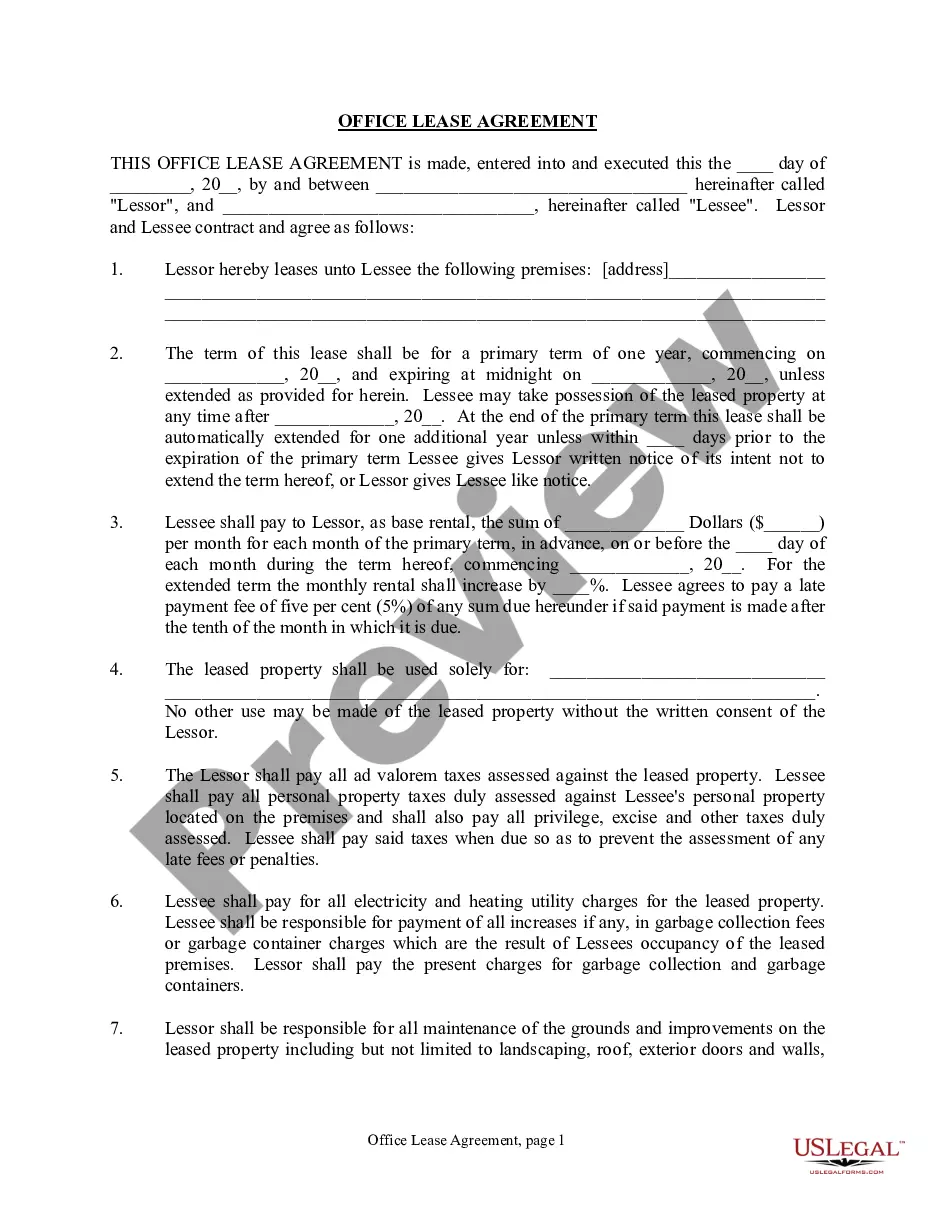
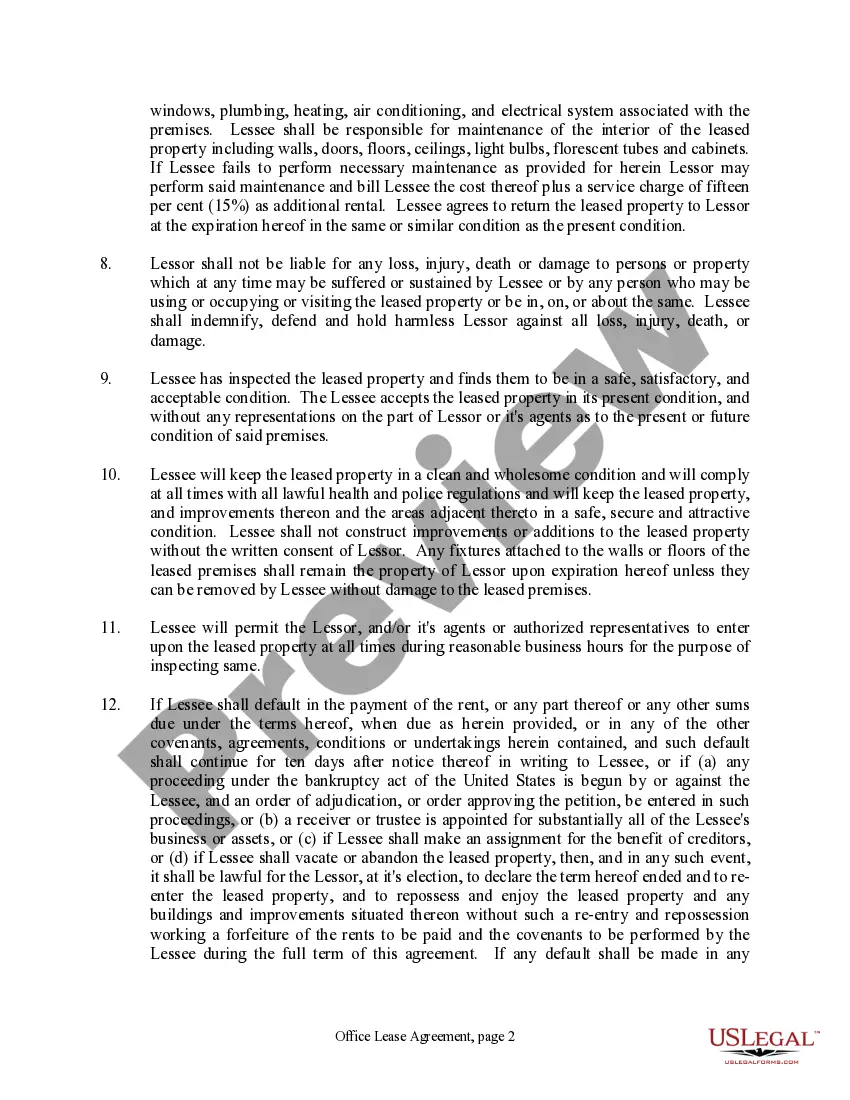
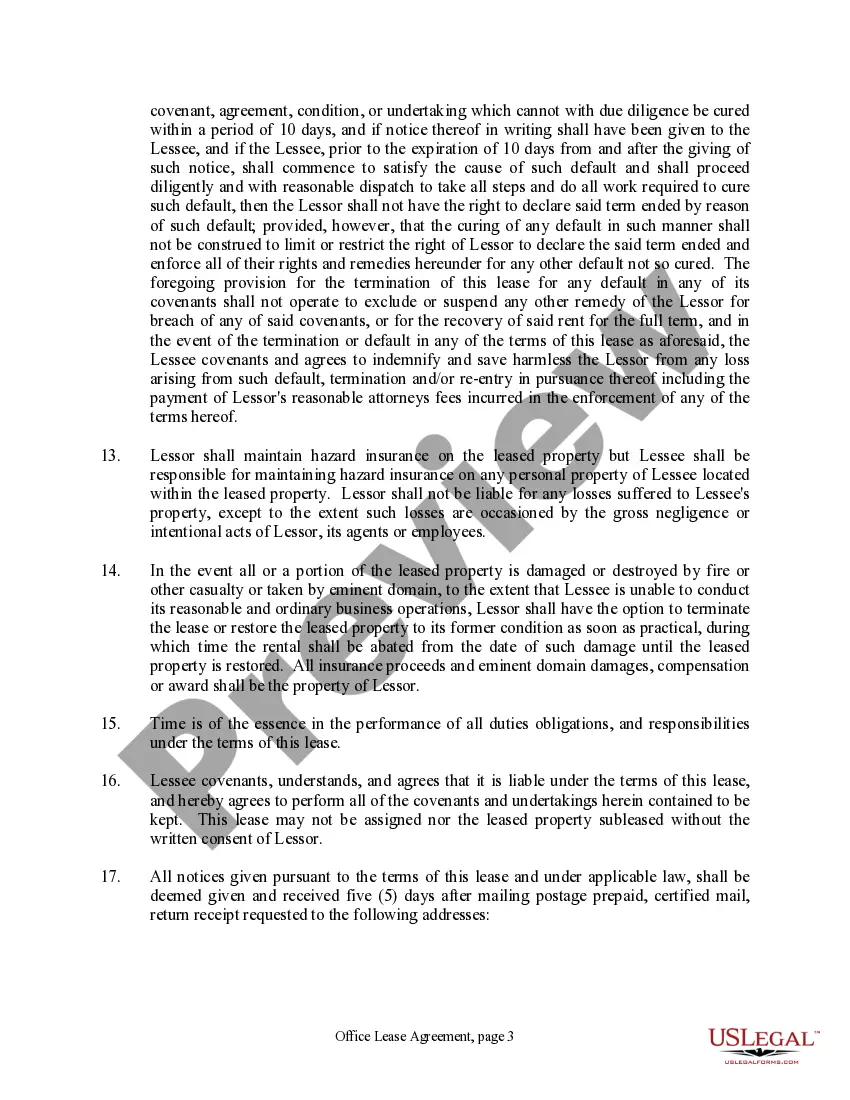
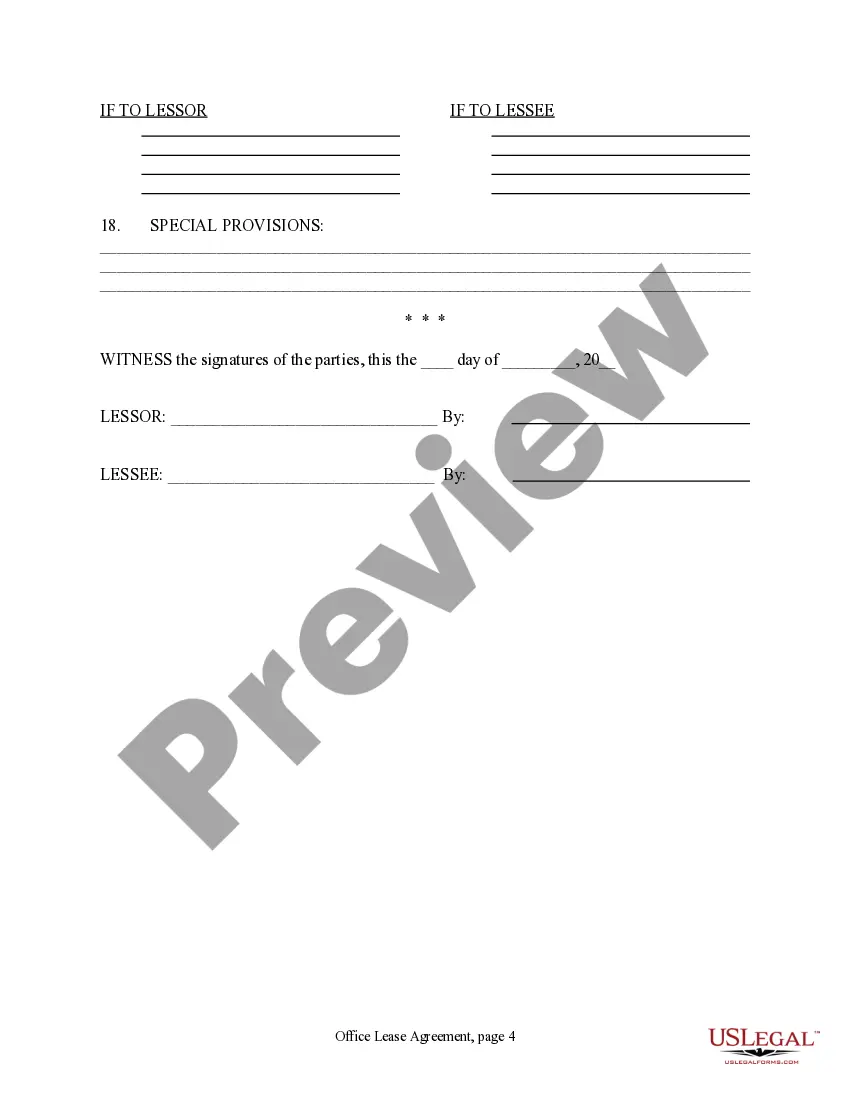
Lease Agreement For Residential Property
Description
Get your form ready online
Our built-in tools help you complete, sign, share, and store your documents in one place.
Make edits, fill in missing information, and update formatting in US Legal Forms—just like you would in MS Word.
Download a copy, print it, send it by email, or mail it via USPS—whatever works best for your next step.
Sign and collect signatures with our SignNow integration. Send to multiple recipients, set reminders, and more. Go Premium to unlock E-Sign.
If this form requires notarization, complete it online through a secure video call—no need to meet a notary in person or wait for an appointment.
We protect your documents and personal data by following strict security and privacy standards.

Make edits, fill in missing information, and update formatting in US Legal Forms—just like you would in MS Word.

Download a copy, print it, send it by email, or mail it via USPS—whatever works best for your next step.

Sign and collect signatures with our SignNow integration. Send to multiple recipients, set reminders, and more. Go Premium to unlock E-Sign.

If this form requires notarization, complete it online through a secure video call—no need to meet a notary in person or wait for an appointment.

We protect your documents and personal data by following strict security and privacy standards.
Looking for another form?








How to fill out Minnesota Office Lease Agreement?
- Log into your US Legal Forms account if you're a returning user. Ensure your subscription is active; otherwise, consider renewing it.
- If you're a new user, start by previewing the lease agreement options available. Make sure to select the template that fits your specific requirements and conforms to local laws.
- If you need to explore additional templates, use the search functionality on the site to find the right lease agreement.
- Once you have the right form, click the 'Buy Now' button and select a subscription plan that suits your needs. Don't forget to create an account to gain access to all resources.
- Proceed to make your payment using your credit card or PayPal account.
- After the purchase confirmation, you can download the lease agreement directly to your device. You can also access it later from the 'My Forms' section in your profile.
Leveraging US Legal Forms allows you to efficiently draft your lease agreement for residential property with a wide selection of over 85,000 customizable legal forms. Users can also consult with premium legal experts for additional guidance.
Don't wait to protect your rental arrangement. Start using US Legal Forms today and ensure your lease agreement is perfectly crafted!
Form popularity
FAQ
Writing your own lease agreement is entirely possible and can be a straightforward task. When doing so, focus on including vital components such as rental terms, obligations, and an outline for the lease agreement for residential property. If you're uncertain about the legality or structure, platforms like USLegalForms offer templates and expert advice to ensure your lease is sound and enforceable.
You can definitely make your own lease agreement for residential property, as long as you comply with state laws. Start by ensuring your lease covers critical areas such as rent amount, duration, responsibilities of both parties, and clauses for damages or termination. For reliable templates and guidance, consider using resources like USLegalForms, which simplifies the process of creating a legally-binding agreement.
Approaching your landlord about a rent-to-own option requires a well-thought-out discussion. Start by expressing your interest in the property and the benefits of a lease agreement for residential property. Present a clear proposal, including your commitment to maintain the property and suggesting terms that would be mutually beneficial, demonstrating how this can lead to a successful arrangement.
While you don't necessarily need a lawyer to write up a lease agreement for residential property, it can be helpful to consult one, particularly for complex situations. A lawyer can offer advice on compliance with state laws and overall fairness of the terms. If you're looking for a straightforward solution, US Legal Forms provides templates that may meet your needs without legal expertise.
Filling out a lease agreement for residential property involves providing details such as the tenant's name, rental amount, and property address. Take your time to read through each section to ensure accuracy and completeness. Using a template from US Legal Forms can streamline this process, offering guidance on what information to include.
Landlords can absolutely create their own leases for residential property. However, it is essential to include standard provisions that address both parties' rights and responsibilities. Utilizing resources like US Legal Forms can provide you with a framework to ensure your lease agreement is compliant and comprehensive.
Yes, you can write your own lease agreement for residential property. It allows you to customize terms that suit your needs; however, you should ensure that it complies with local laws. Using templates from US Legal Forms can help you create a legally sound document that covers all essential elements.
To write a lease proposal for a residential property, start by outlining the key terms such as the rental amount, duration of the lease, and any special conditions. Include details like the property address and the names of the landlord and tenant. Remember, clarity is essential, as it sets the foundation for your lease agreement for residential property.
Yes, you can create a lease agreement for residential property yourself. However, it is important to include all necessary terms to protect both parties involved. A well-drafted lease clearly outlines rent details, duration, and responsibilities. Using a platform like US Legal Forms can help guide you through the process, ensuring that your lease complies with local laws and regulations.
You can tell if a lease is bad by identifying confusing clauses, unreasonable fees, or a lack of tenant protections. Additionally, scrutinize any terms that seem overly biased toward the landlord. A well-drafted lease agreement for residential property should promote fairness for both parties.