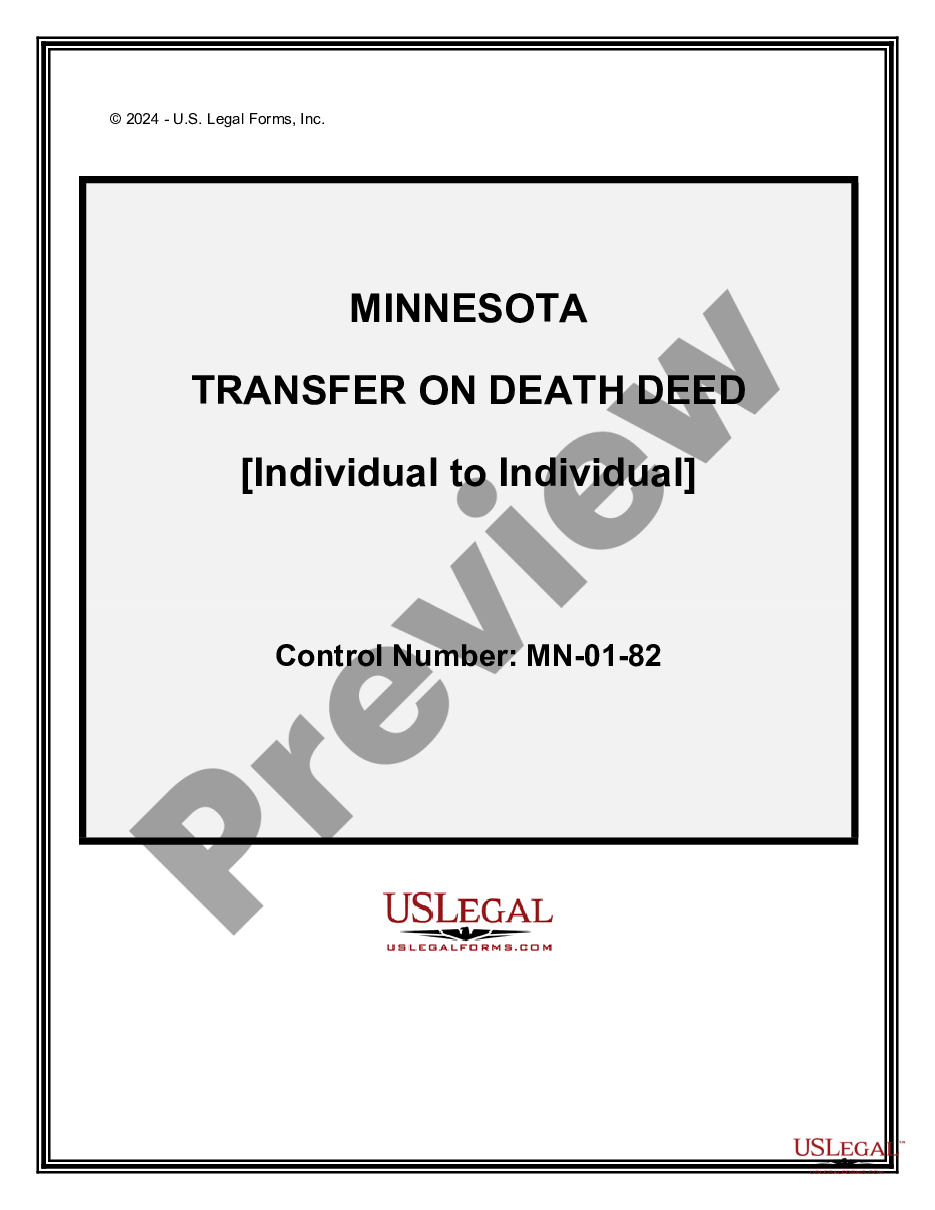
Minnesota Transfer Deed With Property
Description
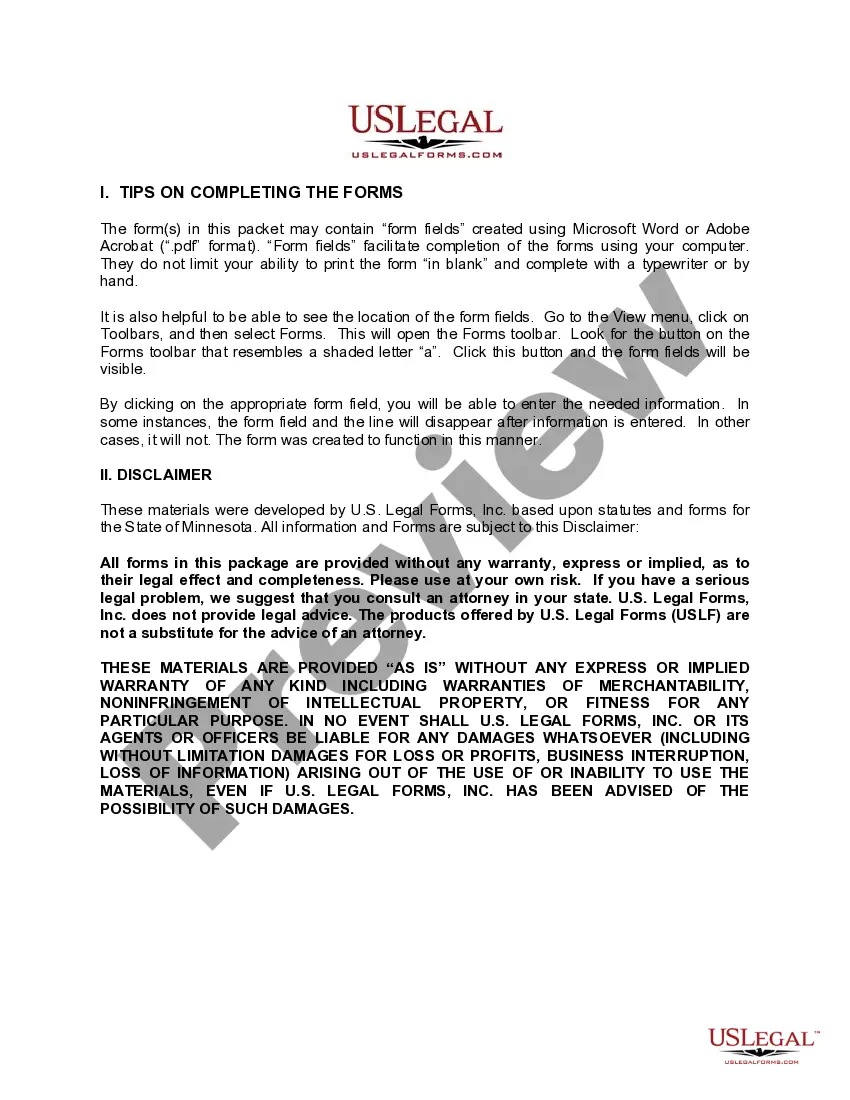

Get your form ready online
Our built-in tools help you complete, sign, share, and store your documents in one place.
Make edits, fill in missing information, and update formatting in US Legal Forms—just like you would in MS Word.
Download a copy, print it, send it by email, or mail it via USPS—whatever works best for your next step.
Sign and collect signatures with our SignNow integration. Send to multiple recipients, set reminders, and more. Go Premium to unlock E-Sign.
If this form requires notarization, complete it online through a secure video call—no need to meet a notary in person or wait for an appointment.
We protect your documents and personal data by following strict security and privacy standards.

Make edits, fill in missing information, and update formatting in US Legal Forms—just like you would in MS Word.

Download a copy, print it, send it by email, or mail it via USPS—whatever works best for your next step.

Sign and collect signatures with our SignNow integration. Send to multiple recipients, set reminders, and more. Go Premium to unlock E-Sign.

If this form requires notarization, complete it online through a secure video call—no need to meet a notary in person or wait for an appointment.

We protect your documents and personal data by following strict security and privacy standards.
Looking for another form?


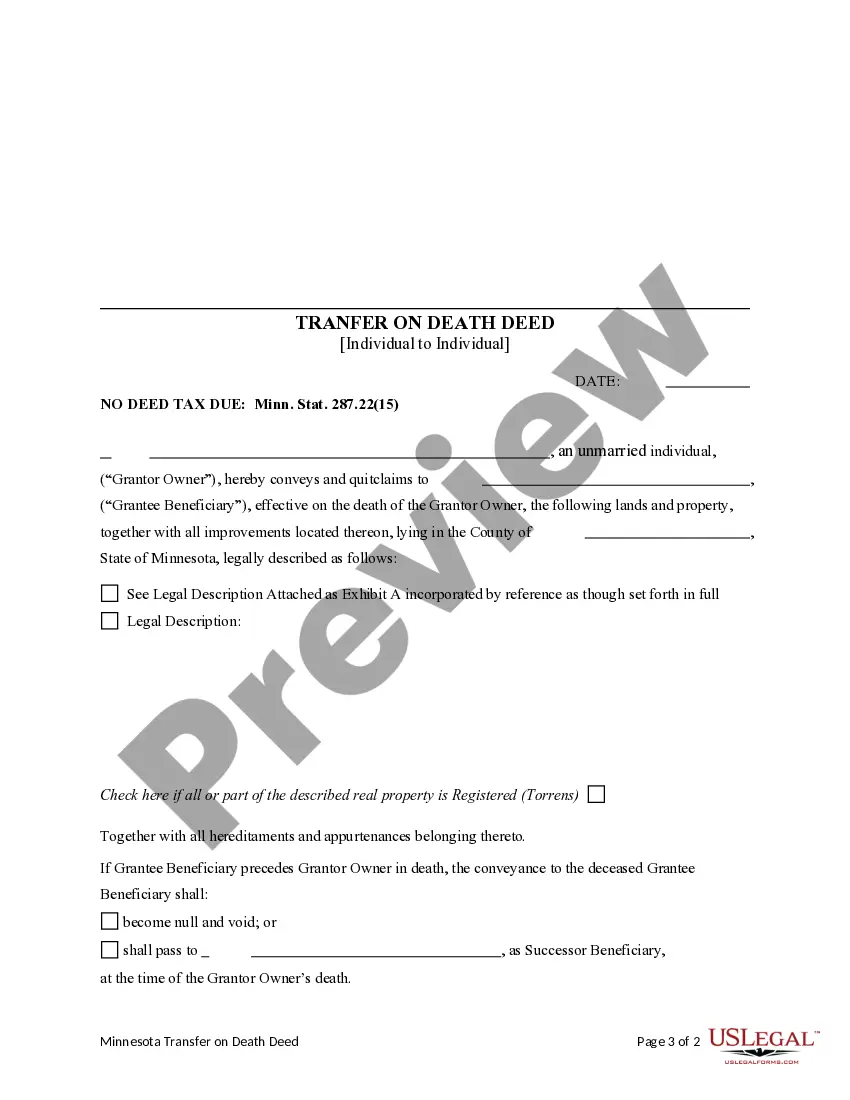
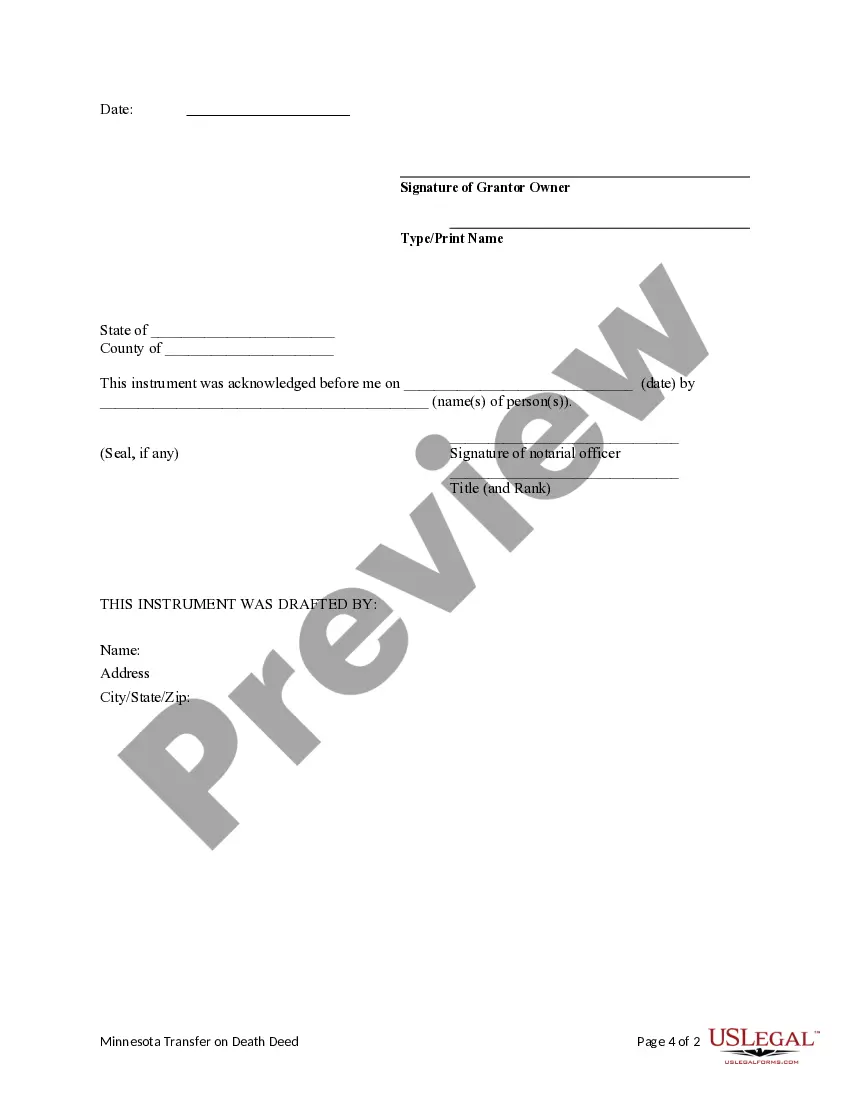
How to fill out Minnesota Transfer On Death Deed - Individual To Individual?
Managing legal papers and activities can be a lengthy addition to your schedule.
Minnesota Transfer Deed With Property and similar forms often necessitate you to search for them and figure out how to fill them out correctly.
Therefore, whether you are addressing financial, legal, or personal issues, possessing a thorough and efficient online directory of forms at your disposal will be extremely beneficial.
US Legal Forms is the premier online resource for legal templates, boasting over 85,000 state-specific forms and a range of tools to assist you in completing your documents swiftly.
Is this your initial time using US Legal Forms? Register and create your account in just a few minutes, and you’ll gain access to the form catalog and Minnesota Transfer Deed With Property. Afterward, follow the steps below to complete your form: Ensure you possess the correct form using the Review feature and reading the form description. Select Buy Now when prepared, and pick the monthly subscription plan that fits you. Click Download, then complete, eSign, and print the form. US Legal Forms has 25 years of experience aiding users in managing their legal documents. Find the form you require today and simplify any process without difficulty.
- Explore the collection of relevant documents available with just one click.
- US Legal Forms provides state- and county-specific forms available for download at any time.
- Protect your document management processes with superior services that enable you to compile any form in a matter of minutes with no extra or concealed charges.
- Simply Log In to your account, locate Minnesota Transfer Deed With Property, and download it immediately from the My documents section.
- You can also retrieve previously saved forms.
Form popularity
FAQ
To fill out a Transfer on Death (TOD) deed, start by writing the names of the property owners and the designated beneficiaries. Include a legal description of the property and ensure the document is signed and notarized. This method provides a straightforward way to transfer a Minnesota transfer deed with property upon the owner's death, and US Legal Forms can provide guidance and templates to help you complete the process accurately.
Transferring ownership of a property in Minnesota requires a formal deed transfer. Begin by preparing a deed, such as a quitclaim deed, that includes all relevant details about the property and parties involved. After signing and notarizing the Minnesota transfer deed with property, file it with the county recorder's office to complete the process. Utilizing resources from US Legal Forms can ensure you have the correct documentation.
To transfer a property deed to someone else, you'll need to prepare the appropriate deed, such as a quitclaim deed. After filling out the necessary information, both you and the new owner must sign the document, usually in front of a notary. Finally, file the Minnesota transfer deed with property at your local county recorder's office to make the transfer official, and consider using US Legal Forms for easy access to templates.
Writing a deed transfer involves creating a legal document that clearly states the names of the grantor and grantee, a description of the property, and the type of transfer. For a Minnesota transfer deed with property, ensure the document is signed in front of a notary and includes the date of transfer. Using templates from US Legal Forms can simplify the process and help you avoid common mistakes.
The best way to transfer ownership of a house often involves using a deed, such as a quitclaim or warranty deed. Each method has its advantages, but for a straightforward Minnesota transfer deed with property, a quitclaim deed is typically sufficient for family transfers. However, it's wise to consult legal guidance or platforms like US Legal Forms to ensure you choose the right approach for your situation.
Common mistakes when using a quitclaim deed include not properly identifying the property, failing to include all owners' names, and neglecting to sign in front of a notary. These errors can lead to complications in transferring a Minnesota transfer deed with property. To avoid these pitfalls, double-check all information and consider using resources like US Legal Forms to ensure accuracy and compliance.
Minnesota's deed tax is calculated based on the consideration for the transfer. The rate for most transfers is 0.33 percent of the purchase price. Minnesota law authorizes Hennepin and Ramsey Counties to charge an additional . 01 percent of consideration.
Transfers of real property must be in writing and notarized. Deeds should be recorded in the county where the property is located.
Disadvantages of a Transfer on Death Deed For example, your property will be subject to probate court if your beneficiary predeceases you and you lack an alternate estate plan. Another disadvantage is if you co-own property under a joint tenancy.
Minnesota's deed tax is calculated based on the consideration for the transfer. The rate for most transfers is 0.33 percent of the purchase price. Minnesota law authorizes Hennepin and Ramsey Counties to charge an additional . 01 percent of consideration.