Mi Divorce Law For Husband
Description
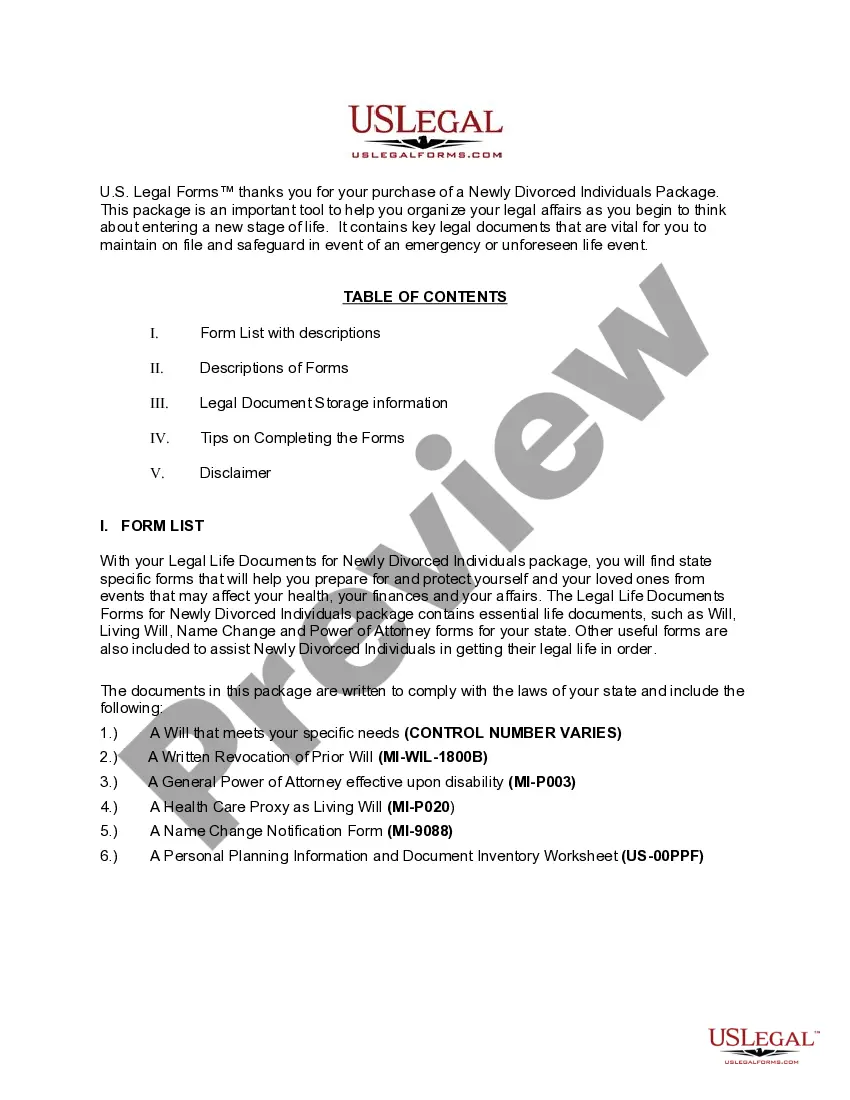
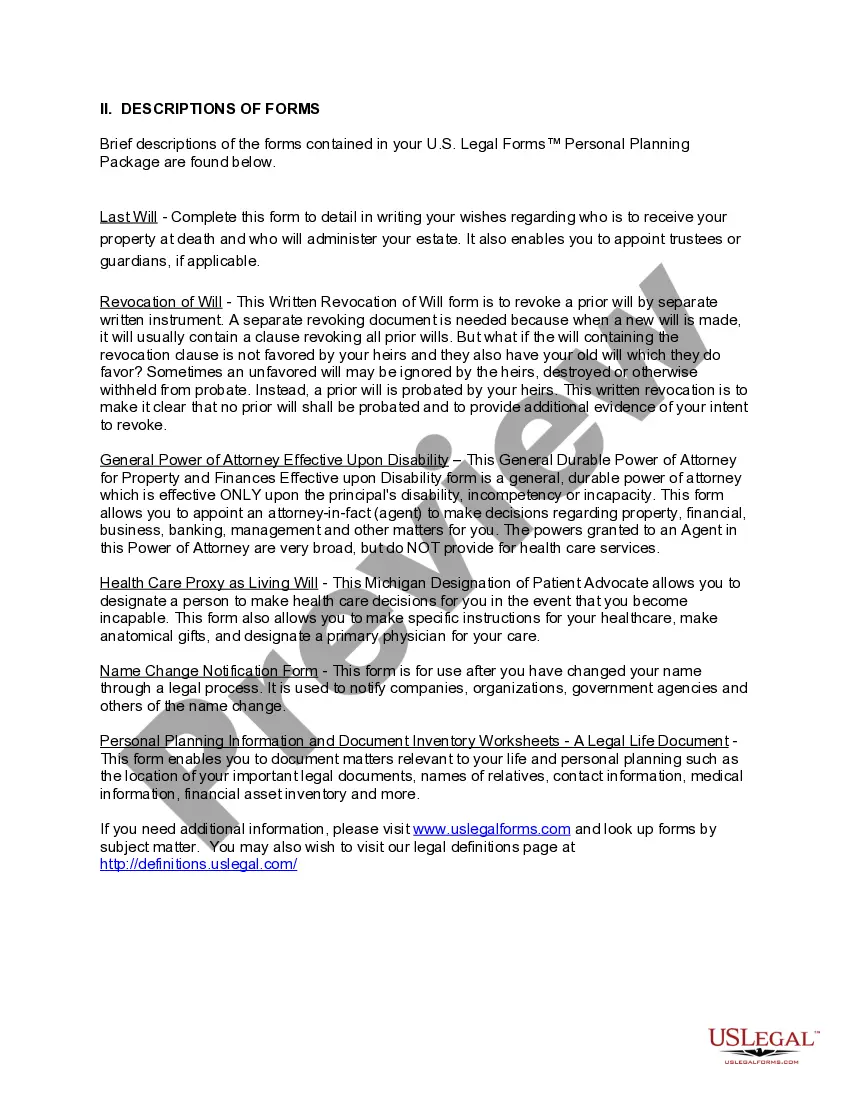

How to fill out Michigan Newly Divorced Individuals Package?
Legal administration can be overwhelming, even for experienced practitioners.
When you are looking for a Mi Divorce Law For Husband and lack the time to devote to finding the appropriate and current version, the procedures can be challenging.
With US Legal Forms, you can.
Access state- or county-specific legal and organizational documents.
If it is your first time using US Legal Forms, create a free account and gain unlimited access to all the platform's benefits. Here are the steps to follow after acquiring the form you need: Validate that it is the correct form by previewing it and reviewing its description. Ensure that the template is accepted in your state or county. Click Buy Now when you are ready. Choose a monthly subscription plan. Select the file format you require, and Download, complete, sign, print, and submit your documents. Enjoy the US Legal Forms web catalog, backed by 25 years of experience and reliability. Transform your daily document management into a simple and user-friendly process today.
- US Legal Forms addresses any needs you may have, from personal to corporate paperwork, all in one location.
- Access a resource library of articles, guidelines, and manuals relevant to your situation and requirements.
- Save time and energy searching for the documents you need, and utilize US Legal Forms’ advanced search and Preview feature to find Mi Divorce Law For Husband and obtain it.
- If you possess a monthly subscription, Log In to your US Legal Forms account, search for the form, and obtain it.
- Check your My documents section to review the documents you have previously downloaded and to organize your folders as desired.
- A comprehensive web form directory could be a game changer for anyone aiming to handle these matters effectively.
- US Legal Forms is a leader in online legal documentation, with over 85,000 state-specific legal forms available to you at any time.
- Utilize sophisticated tools to complete and oversee your Mi Divorce Law For Husband.
Form popularity
FAQ
Does it matter who files for divorce first in Michigan? No, from a legal perspective, it does not matter who files first for divorce in Michigan. However, filing first does present an opportunity for the initiating party to request various orders to the court before your spouse is notified of the divorce proceedings.
To get a divorce in Michigan, at least one spouse must testify that ?there has been a breakdown of the marriage relationship to the extent that the objects of matrimony have been destroyed and there remains no reasonable likelihood that the marriage can be preserved.? This means there has been a serious, permanent, ...
The first step is to file a Complaint for Divorce. The Complaint must also state that the party filing the Complaint has lived in Michigan for 180 days and in the county in which they are filing for 10 days. You will need to sign the Complaint for Divorce.
Marital property gets divided in your divorce. Most property you or your spouse got during your marriage is marital property. If there is a title or deed, it does not matter whose name is on it. It is still marital property unless it was a gift or inheritance.
It's not the age of the couples, it is not how long they have stayed married. What will matter is whether by definition any asset that came in during marriage is a marital asset. If it is a marital asset, you are entitled to half of it when the court equitably divides it. There's no waiting period for your half.