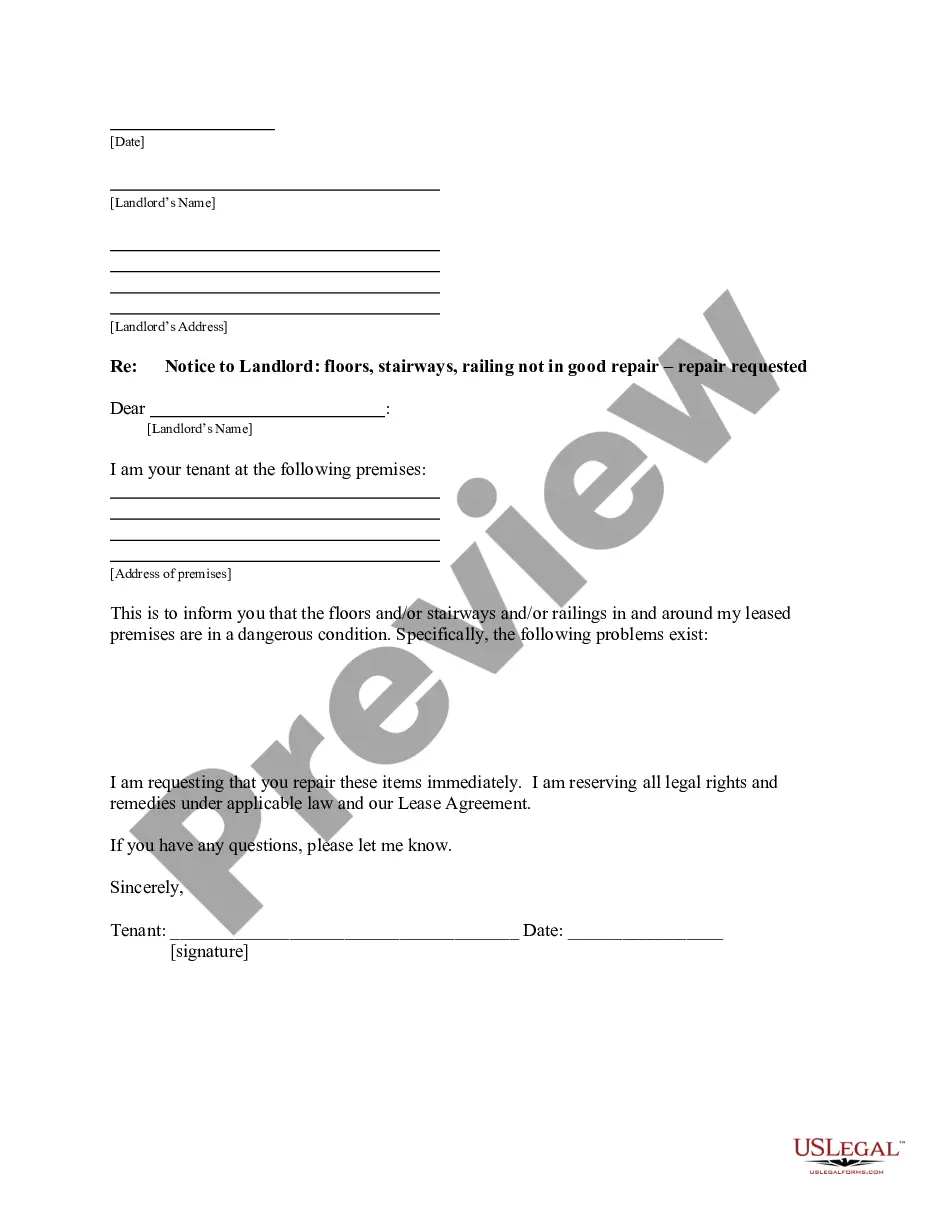
Letter Tenant Landlord With Withholding Rent
Description



Get your form ready online
Our built-in tools help you complete, sign, share, and store your documents in one place.
Make edits, fill in missing information, and update formatting in US Legal Forms—just like you would in MS Word.
Download a copy, print it, send it by email, or mail it via USPS—whatever works best for your next step.
Sign and collect signatures with our SignNow integration. Send to multiple recipients, set reminders, and more. Go Premium to unlock E-Sign.
If this form requires notarization, complete it online through a secure video call—no need to meet a notary in person or wait for an appointment.
We protect your documents and personal data by following strict security and privacy standards.

Make edits, fill in missing information, and update formatting in US Legal Forms—just like you would in MS Word.

Download a copy, print it, send it by email, or mail it via USPS—whatever works best for your next step.

Sign and collect signatures with our SignNow integration. Send to multiple recipients, set reminders, and more. Go Premium to unlock E-Sign.

If this form requires notarization, complete it online through a secure video call—no need to meet a notary in person or wait for an appointment.

We protect your documents and personal data by following strict security and privacy standards.
Looking for another form?
Form popularity
FAQ
In Florida, you may have grounds to withhold rent if a critical amenity, such as air conditioning, is broken and the landlord has not made necessary repairs. It's important to document your communications and provide written notice, often referred to as a 'letter tenant landlord with withholding rent.' Understanding your rights and responsibilities as a tenant is vital, and platforms like uslegalforms can guide you through the process.
Writing a letter to a new tenant involves welcoming them and providing essential details about the rental property. Include information about lease terms, payment procedures, and any rules they should be aware of. A warm and informative tone helps new tenants feel at home. This letter can also serve as a foundation for future discussions, including matters related to the 'letter tenant landlord with withholding rent' if issues occur.
An example letter to a tenant to vacate should include a clear statement of intent and a deadline for moving out. Mention any obligations the tenant has concerning the condition of the property and the return of the security deposit. Use courteous language to maintain a respectful tone throughout, as this letter can relate to potential discussions on the 'letter tenant landlord with withholding rent' if issues arise.
When crafting a letter to a tenant, start by addressing them appropriately and stating the purpose clearly. You may want to discuss upcoming inspections, lease renewals, or any necessary reminders. Ensure that the tone remains professional and considerate to foster a positive relationship. This approach is vital, especially if you need to address topics related to the 'letter tenant landlord with withholding rent.'
When writing a letter for not paying rent, be honest and straightforward. Explain your reasons for withholding rent clearly, while mentioning any repairs or issues with the property that have prompted this decision. It is crucial to reference local laws and your lease agreement as part of your rationale. This letter is significant, especially in discussions around the 'letter tenant landlord with withholding rent' phenomenon.
To write a personal letter to your landlord, start with a polite greeting. Clearly state the purpose of your letter, whether it’s a request or a concern. Provide details about your situation, referring to specific lease terms if necessary. Conclude with a courteous closing, and remember, this letter can be part of a broader conversation about your rights, including the 'letter tenant landlord with withholding rent' topic.
To write a vacate letter to a tenant, include specific details such as the reason for the vacate notice and the exact date the tenant must leave. Clearly outline any expectations regarding the property’s condition upon their departure. This formal communication not only helps set clear boundaries but is also a vital step for legal compliance regarding tenant rights, including any implications of withholding rent.
When composing a formal letter to a tenant, start by addressing them politely and stating your purpose clearly. Provide details regarding any necessary actions they need to take, including timelines and conditions. Make sure to use a professional tone and proper formatting. This structured communication is essential, especially for sensitive matters like withholding rent or addressing lease violations.
To write a 30-day letter, clearly state your intention to terminate the lease and specify the intended move-out date, ensuring it falls 30 days from the date you send the letter. Be sure to include your contact information for follow-up and any relevant details about your deposit. This structured approach will help avoid misunderstandings and ensure all parties are informed. You might want to include how any issues, such as withholding rent, were addressed during your tenancy.
When writing a move out message to your landlord, be polite and concise. Confirm your intended move-out date and express your appreciation for the time spent in the property. You may also want to discuss arrangements for the final walkthrough and return of keys. Consider referencing a template for effective communication that outlines your responsibilities and rights, including relevant information about withholding rent if needed.