Poa Real Estate
Description


Get your form ready online
Our built-in tools help you complete, sign, share, and store your documents in one place.
Make edits, fill in missing information, and update formatting in US Legal Forms—just like you would in MS Word.
Download a copy, print it, send it by email, or mail it via USPS—whatever works best for your next step.
Sign and collect signatures with our SignNow integration. Send to multiple recipients, set reminders, and more. Go Premium to unlock E-Sign.
If this form requires notarization, complete it online through a secure video call—no need to meet a notary in person or wait for an appointment.
We protect your documents and personal data by following strict security and privacy standards.

Make edits, fill in missing information, and update formatting in US Legal Forms—just like you would in MS Word.

Download a copy, print it, send it by email, or mail it via USPS—whatever works best for your next step.

Sign and collect signatures with our SignNow integration. Send to multiple recipients, set reminders, and more. Go Premium to unlock E-Sign.

If this form requires notarization, complete it online through a secure video call—no need to meet a notary in person or wait for an appointment.

We protect your documents and personal data by following strict security and privacy standards.
Looking for another form?




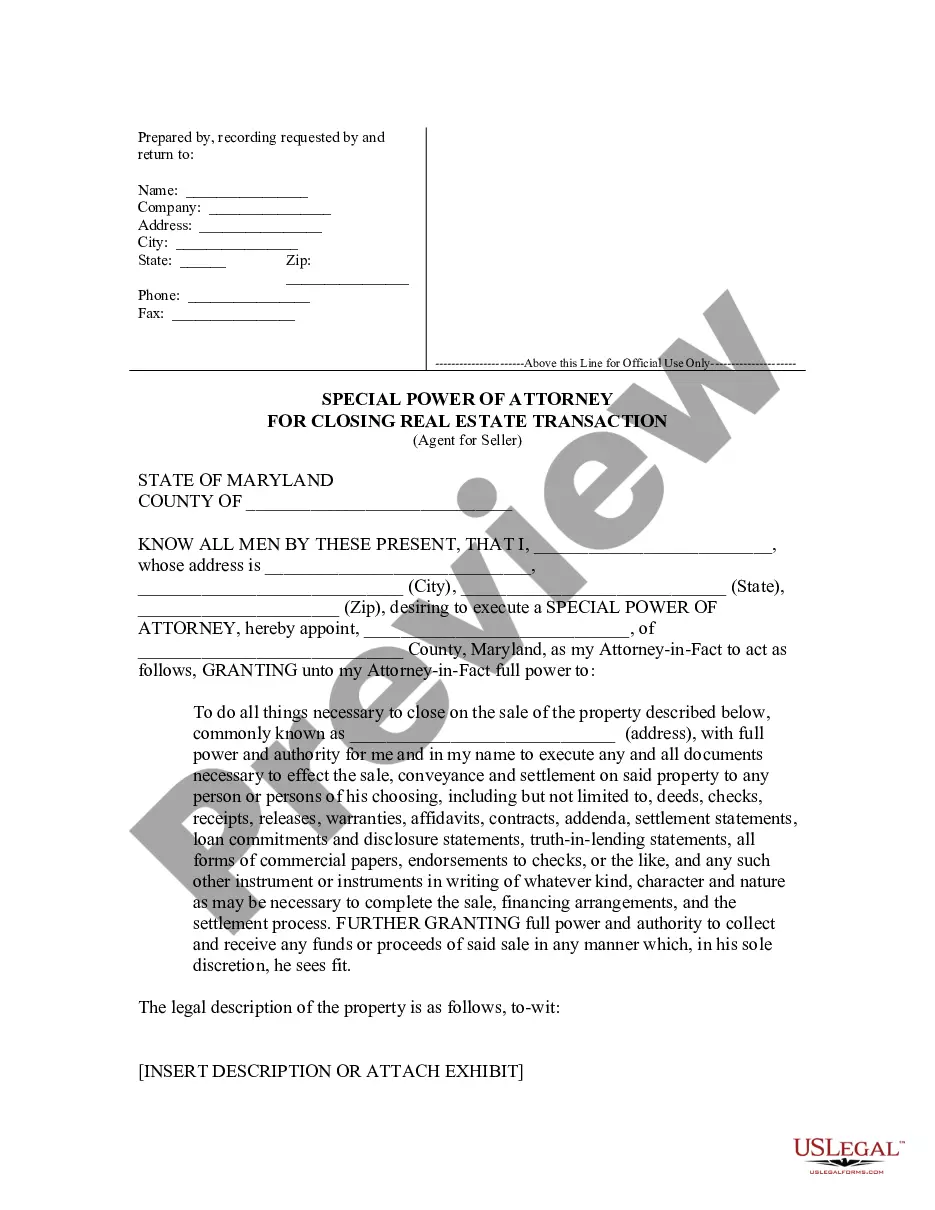
How to fill out Maryland Special Or Limited Power Of Attorney For Real Estate Sales Transaction By Seller?
- Log in to your account on US Legal Forms if you're a returning user. Make sure your subscription is active to access the required forms.
- For first-time users, start by exploring the Preview mode and detailed form descriptions. This ensures you choose a document that meets your specific needs and local jurisdiction.
- If you find any discrepancies in the chosen form, use the Search feature to locate the correct template that suits your requirements.
- Once the appropriate document is selected, click on the Buy Now button and choose a subscription plan that best fits your needs.
- Complete your purchase by entering your payment information, which can either be credit card details or PayPal.
- After purchasing, you can easily download your Poa real estate form and save it on your device. Access it anytime through the My Forms section of your user profile.
In conclusion, US Legal Forms offers a user-friendly approach for obtaining legal documents, especially for Poa real estate purposes. With a vast library of over 85,000 forms and expert assistance available, your legal needs can be managed efficiently.
Get started today by visiting US Legal Forms and take advantage of their comprehensive resources!
Form popularity
FAQ
A POA for a house closing is a document that allows someone to sign the closing paperwork on behalf of the buyer or seller. This is particularly useful if the principal cannot attend the closing in person. Utilizing a POA in PoA real estate transactions ensures smooth closings and adherence to all legal protocols.
In terms of orders, POA often stands for 'Power of Attorney'. This allows an individual to make decisions regarding orders or contracts on behalf of another. When it comes to PoA real estate, this can streamline processes, especially during property negotiations.
In homeowners association contexts, POA usually refers to 'Property Owners Association'. This organization is formed to manage communal interests in real estate developments. Understanding the role of a POA in the homeowners association can help you navigate community rules and requirements effectively.
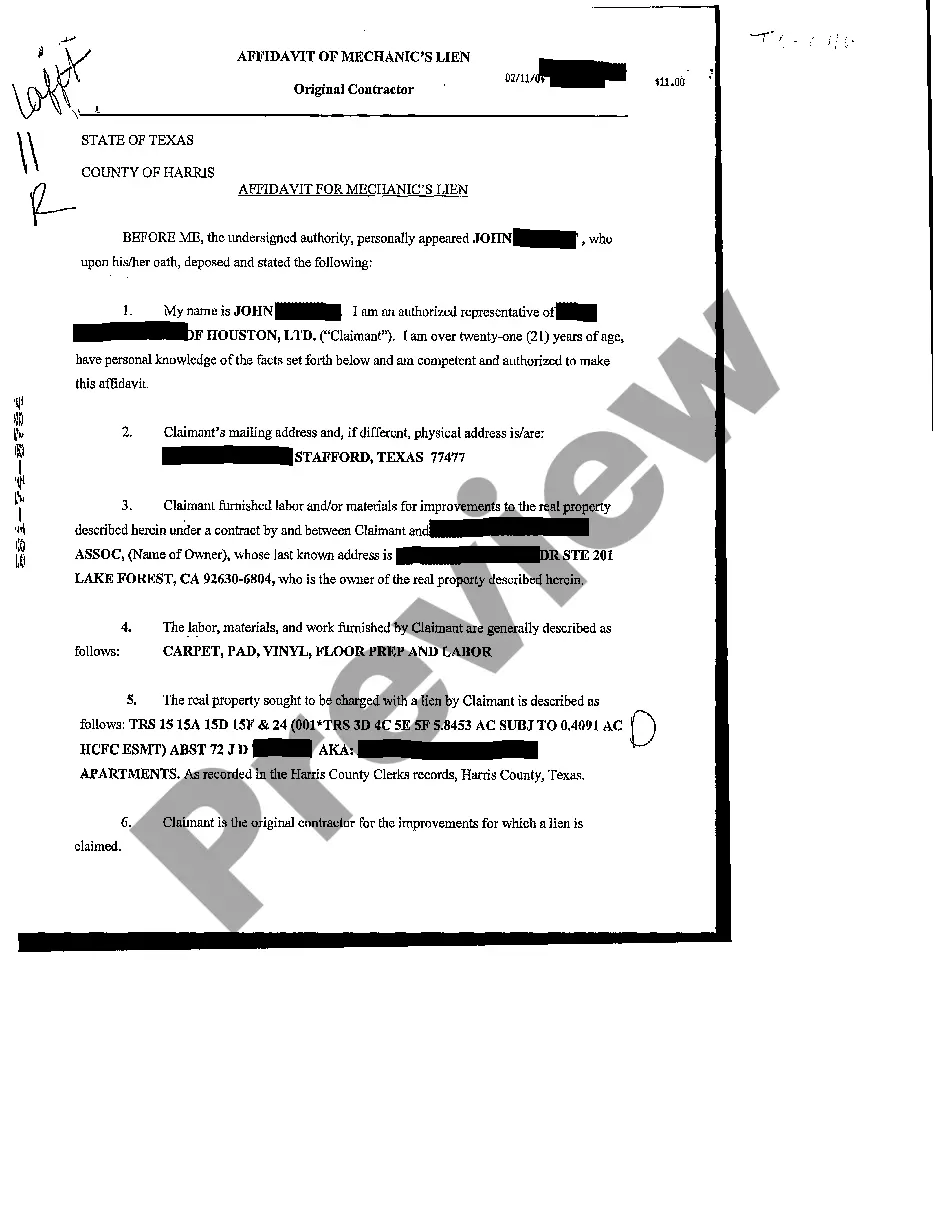
In the context of real estate, POA represents 'Power of Attorney'. This document allows an individual to handle real estate transactions for someone else. Understanding the implications of POA real estate is essential to ensure that property is managed and transferred effectively.
The meaning of POA is 'Power of Attorney'. This document grants someone the authority to make decisions on behalf of another individual. In the realm of PoA real estate, it plays a vital role, especially for those who cannot be present during property transactions.
In real estate, POA can also refer to 'Power of Attorney'. This designation enables someone to manage property matters for another individual. When considering PoA real estate transactions, it is crucial to ensure that the designated agent acts in the best interest of the principal, ensuring successful management and sales.
In payment terms, POA stands for 'Power of Attorney'. This legal document allows one person to act on behalf of another in financial or legal matters. In the context of PoA real estate, a POA can help facilitate property transactions by allowing an agent to sign documents or make decisions in your absence.
Writing a power of attorney letter for property involves stating the principal's name and intention clearly. Specify the powers granted for property management, including selling or leasing. Make sure to sign the letter, and consider using US Legal Forms to ensure all necessary legal language is included. This formality is crucial for real estate legalities.
To fill out a POA check, the attorney-in-fact should write the principal's name on the 'Payable to' line. Next, sign the check with your name, adding 'by principal's name, attorney-in-fact.' Always double-check that the powers granted in the POA are appropriate for the transaction. This helps to securely manage real estate finances.
Filling out a POA form involves providing specific information about both the principal and the attorney-in-fact. You'll need to include names, addresses, and any specific powers the attorney-in-fact will hold. It is advisable to consult resources like US Legal Forms to ensure proper completion. Correctly executed, this form is vital in handling real estate affairs.