Quiet Title Action Maryland Withdraw
Description
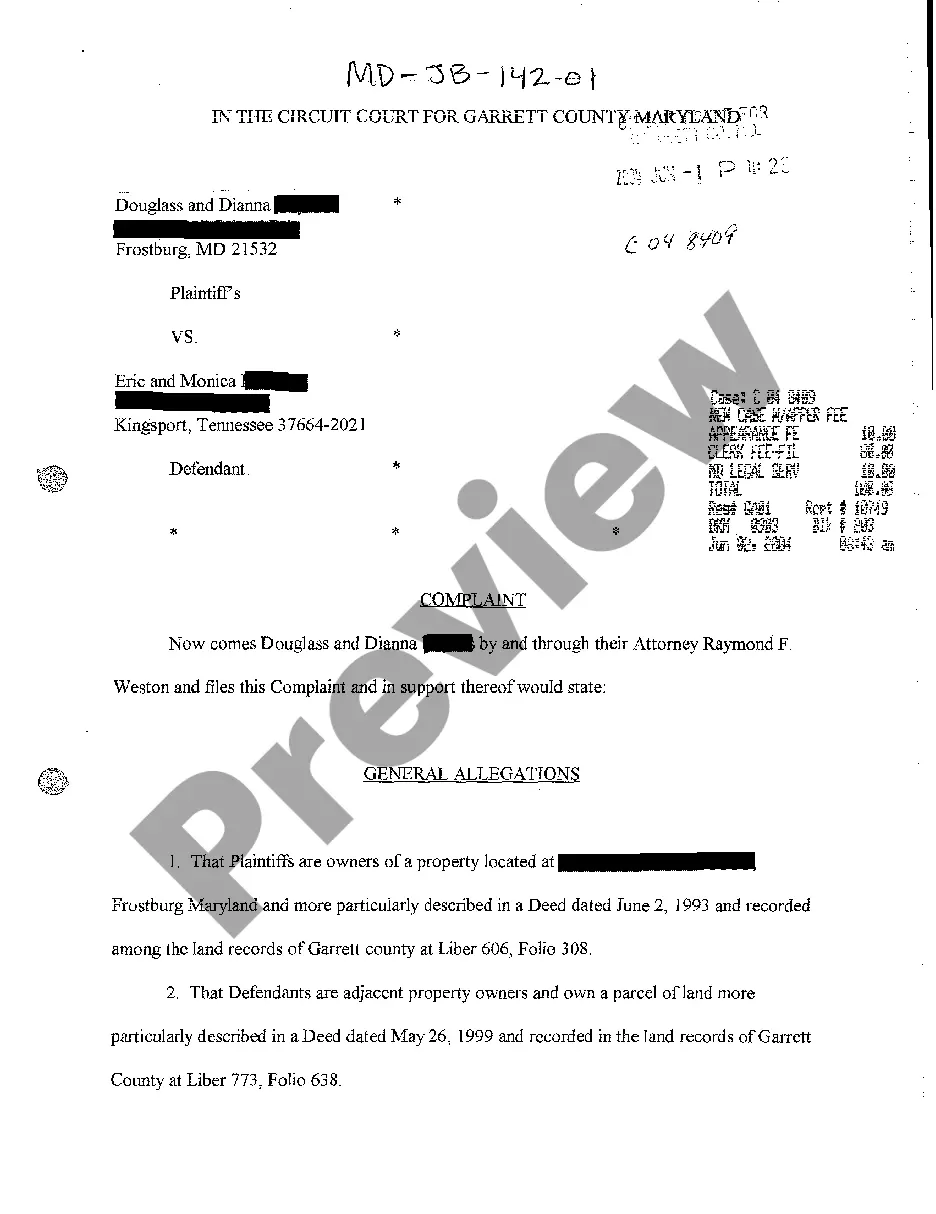
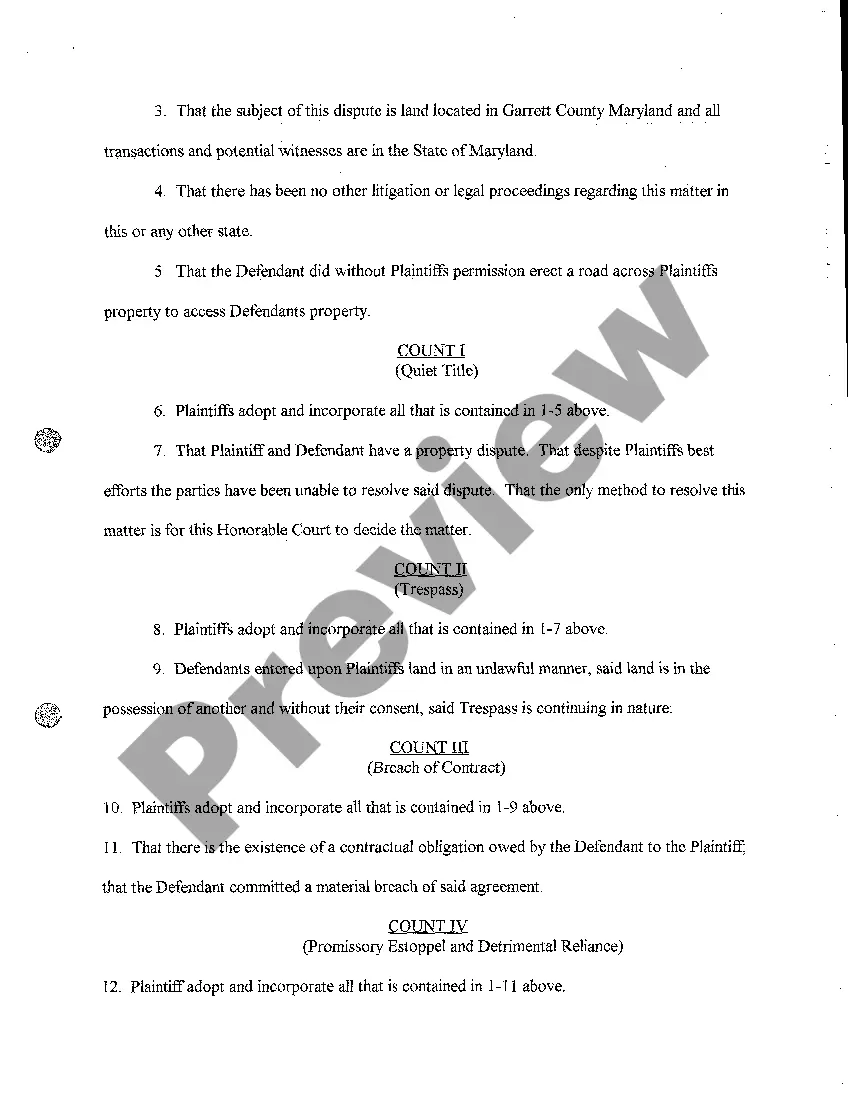
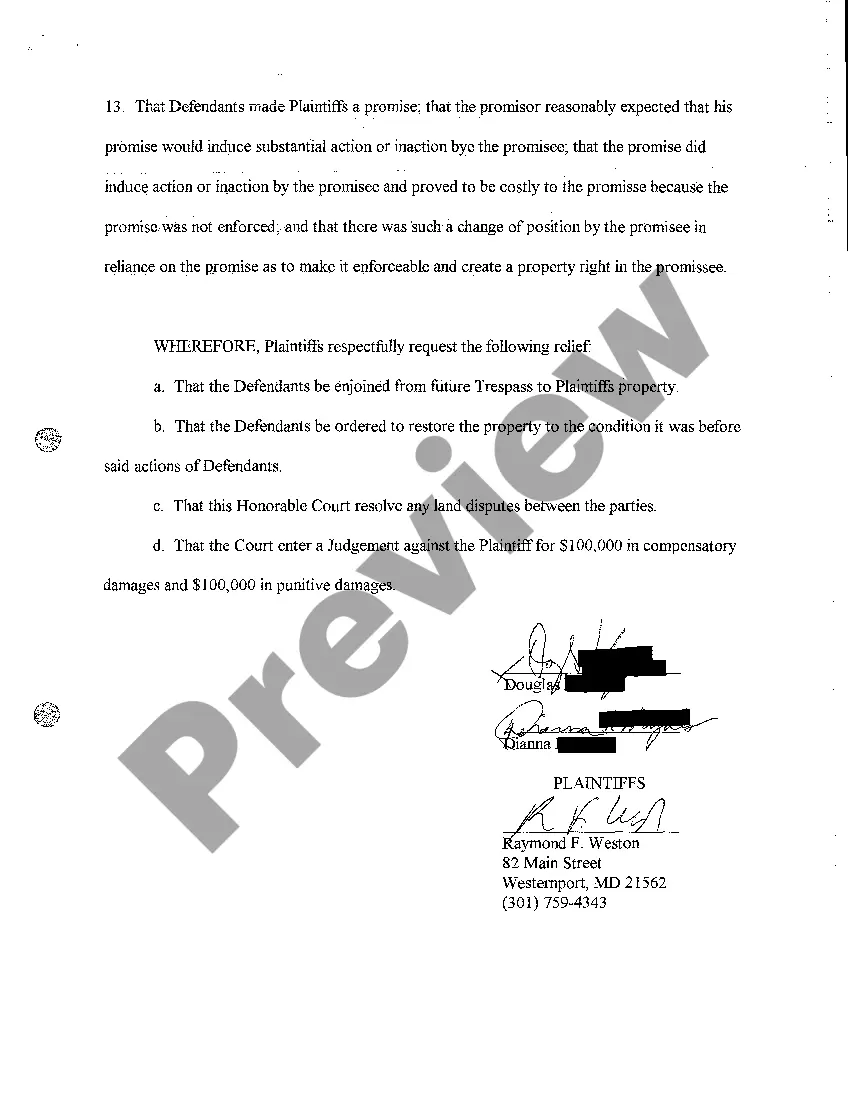
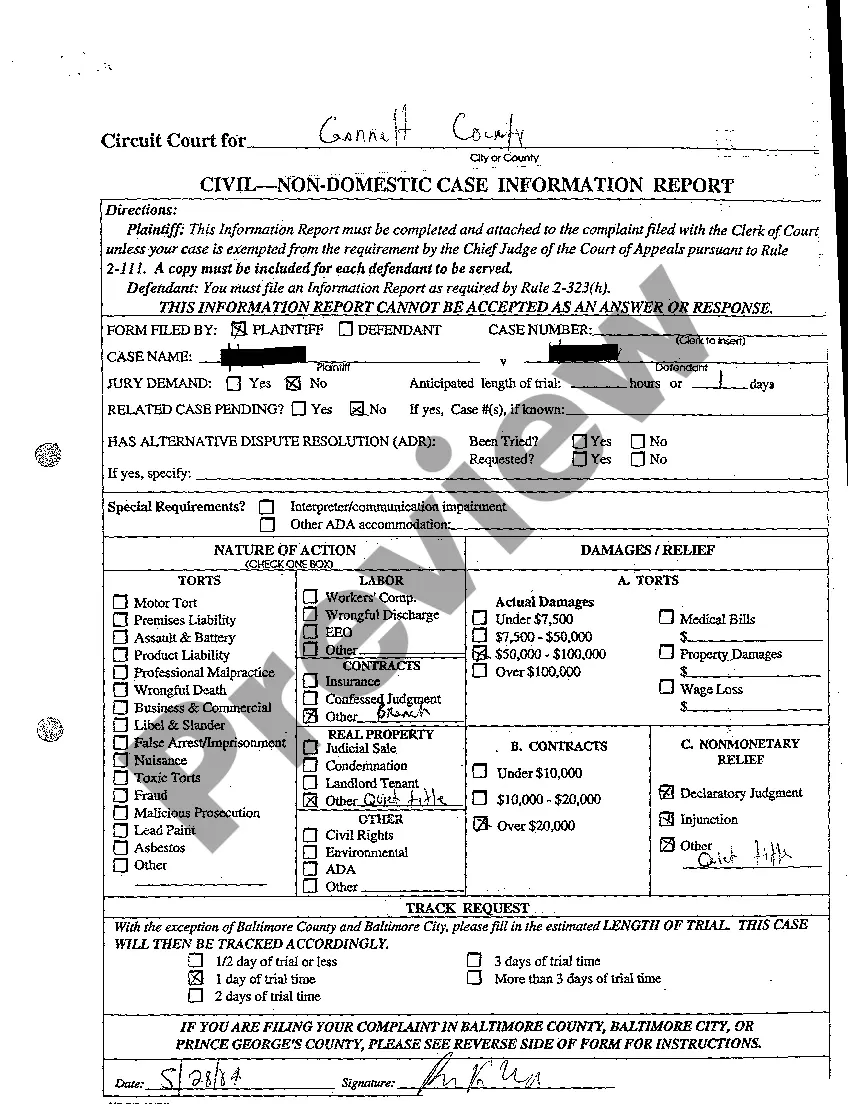
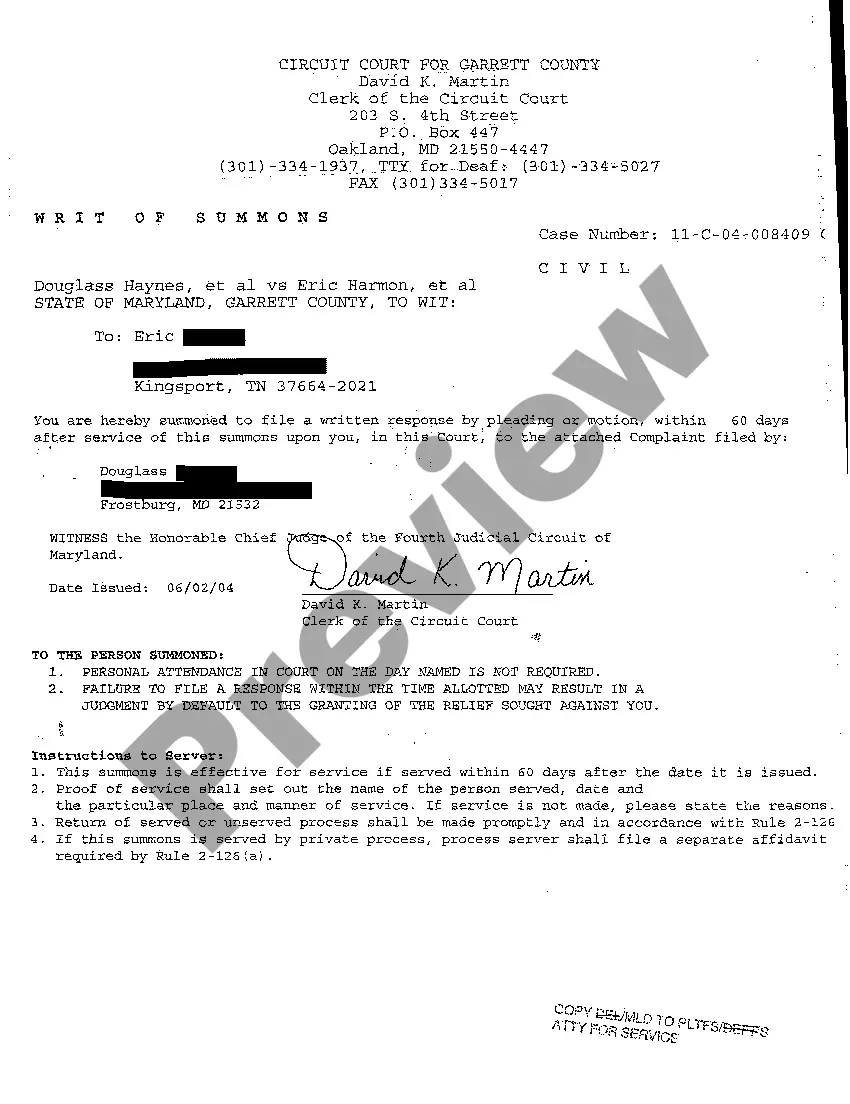
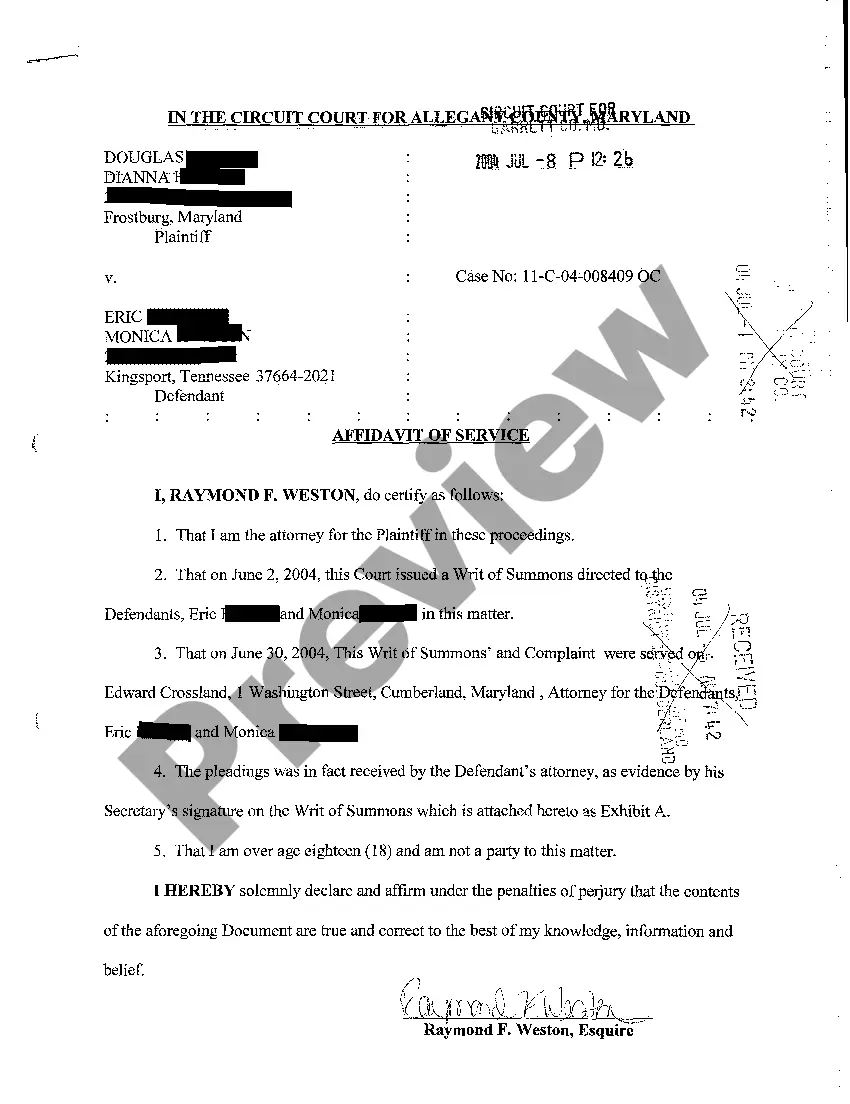
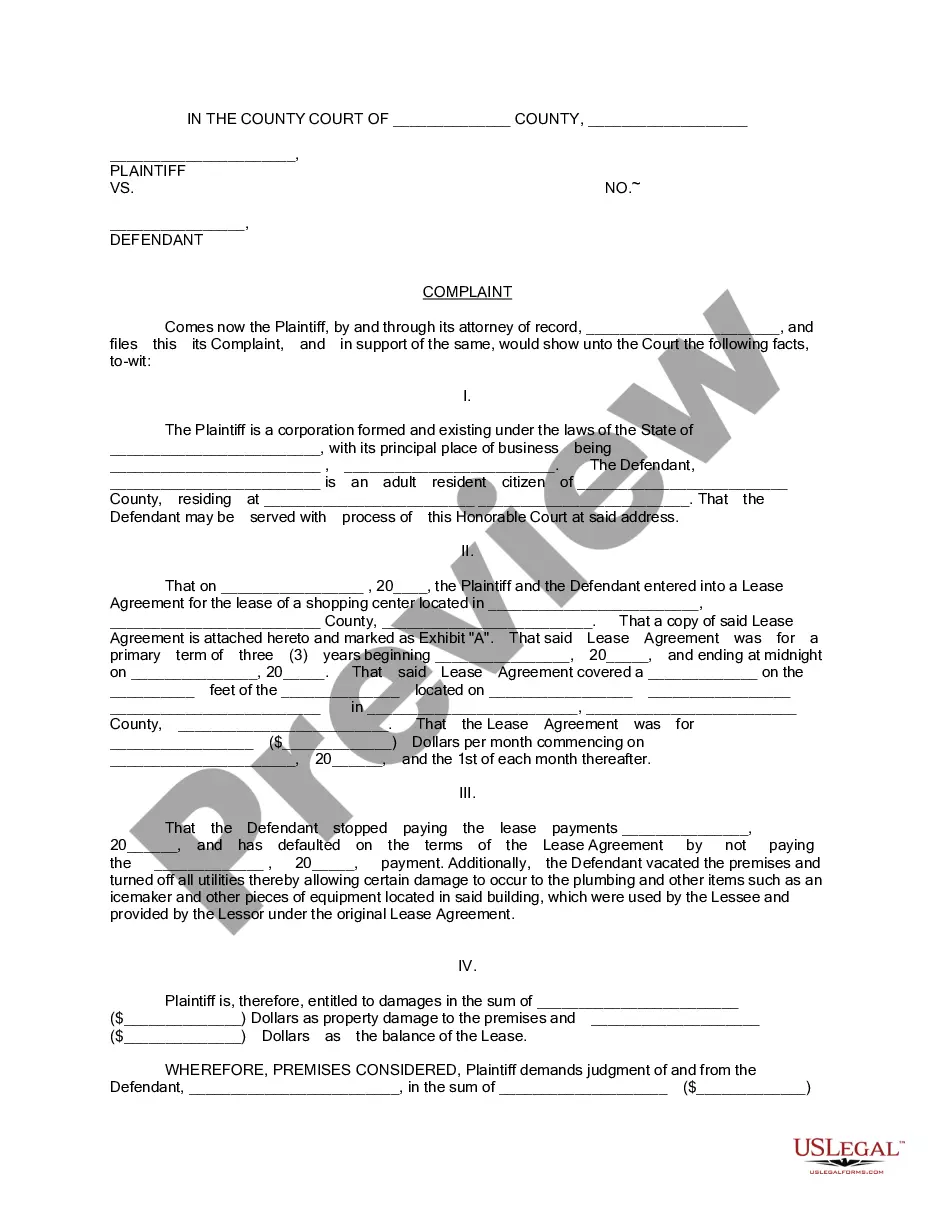
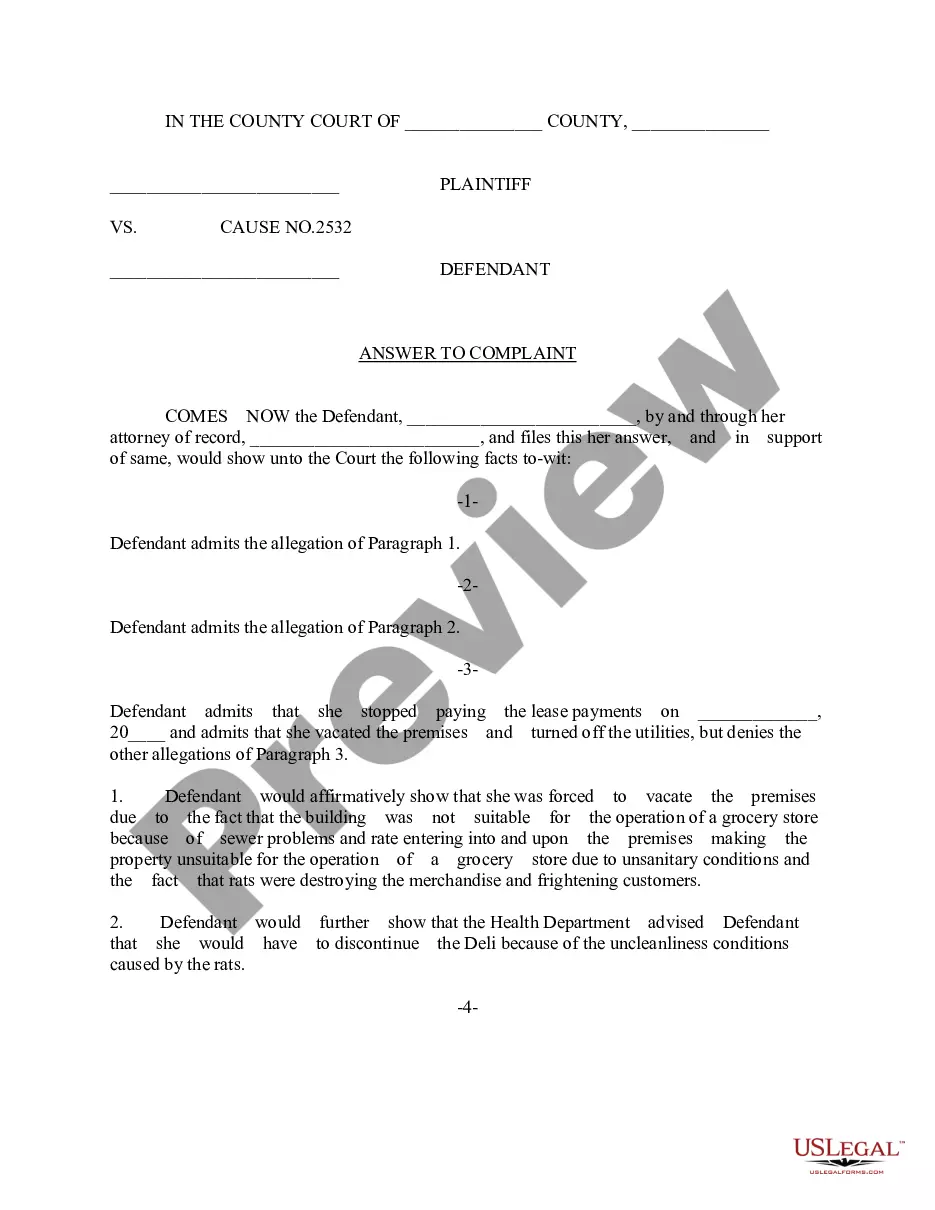
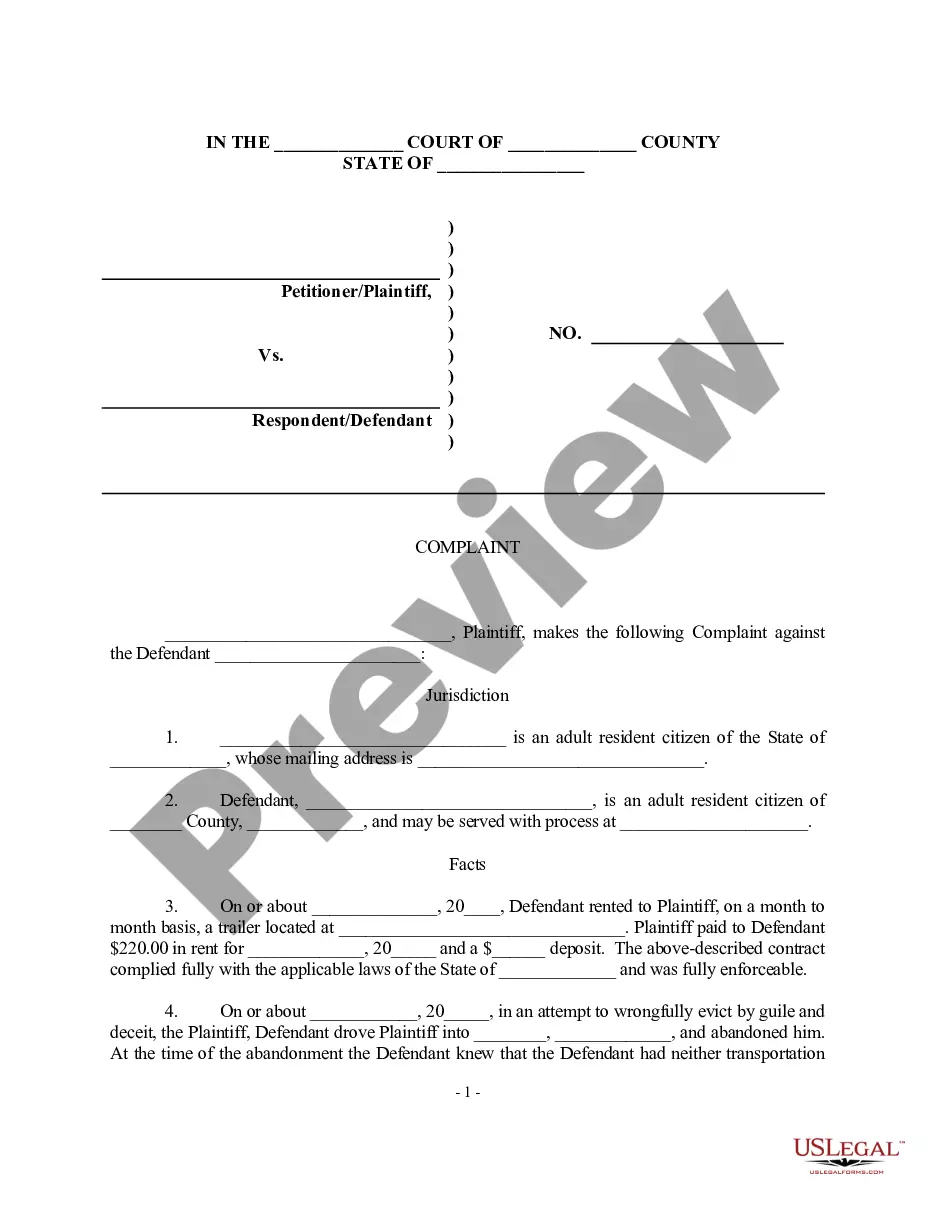








How to fill out Maryland Complaint For Trespass To Property And To Quiet Title?
Legal management can be perplexing, even for the most seasoned professionals.
When you are searching for a Quiet Title Action Maryland Withdraw and don’t have the time to dedicate to finding the correct and up-to-date version, the process can be daunting.
Gain access to a compilation of articles, guides, handbooks, and materials pertinent to your circumstances and needs.
Save time and energy searching for the documents you require, and use US Legal Forms’ advanced search and Preview tool to locate Quiet Title Action Maryland Withdraw and obtain it.
Enjoy the US Legal Forms online library, backed by 25 years of expertise and trustworthiness. Streamline your everyday document management into a straightforward and user-friendly process today.
- If you have a monthly subscription, Log In to your US Legal Forms account, search for the document, and procure it.
- Check your My documents section to review the documents you have previously saved as well as organize your folders as you wish.
- If it’s your first experience with US Legal Forms, create an account and gain unlimited access to all the advantages of the library.
- After accessing the form you require, confirm this is the correct document by previewing and reviewing its description.
- Ensure that the template is accepted in your state or county.
- Click Buy Now when you are prepared.
- Choose a subscription package.
- Locate the desired format, and Download, complete, eSign, print, and send your document.
- Access state- or county-specific legal and business documents.
- US Legal Forms caters to all of your requirements, from personal to business paperwork, all in one place.
- Utilize sophisticated tools to manage and handle your Quiet Title Action Maryland Withdraw.
Form popularity
FAQ
Yes, you can file a quiet title action without a lawyer, but it is advisable to seek legal guidance. The process can be complex, and understanding the legal terms and requirements is crucial for success. If you choose to proceed on your own, resources like USLegalForms can provide the necessary forms and instructions to help you complete your quiet title action in Maryland effectively.
In a quiet title action, the burden of proof lies with the party seeking to establish ownership. You must present clear and convincing evidence to support your claim, which may include records of previous ownership and documentation of any disputes. This requirement ensures that all parties involved have a fair chance to present their case. Consider utilizing USLegalForms to streamline the preparation of your documentation.
To win a quiet title action in Maryland, you must gather sufficient evidence to prove your ownership. This includes showing valid deeds, tax payments, and any other documentation that supports your claim. Additionally, ensure you follow proper court procedures when filing your quiet title action in Maryland. Using resources like USLegalForms can help you navigate this process effectively.
Under Maryland's adverse possession law, an individual must occupy property for at least 20 years before the possibility of ownership.
In one example, First, as one example, the Maryland Court of Appeals has stated that in order to establish quiet title by adverse possession of a specific property the party seeking quiet title is require to show actual possession of the claimed property for the ?statutory period of 20 years? and the possession is ...
To succeed on an adverse possession claim, the claimant's possession of the property must be notorious and obvious to the public. A property cannot be ?possessed? in secret. If someone were to walk by and observe the property, it should be apparent that the claimant is in possession of the property.
In India the concept of Adverse Possession mean that a trespasser or a stranger who comes into possession of the land must be in exclusive and continuous possession and without interruption for a certain period of time typically 12 to 30 consecutive years depending upon the classification of ownership (i.e, Private or ...
It is the legal concept by which a person can come to claim ownership of a parcel of land simply due to their possession of the land for a certain period of years against the interest of another. In Maryland, the person must adversely possess, or occupy, the land for a minimum of 20 years.