Maryland Estate Forms
Description
Get your form ready online
Our built-in tools help you complete, sign, share, and store your documents in one place.
Make edits, fill in missing information, and update formatting in US Legal Forms—just like you would in MS Word.
Download a copy, print it, send it by email, or mail it via USPS—whatever works best for your next step.
Sign and collect signatures with our SignNow integration. Send to multiple recipients, set reminders, and more. Go Premium to unlock E-Sign.
If this form requires notarization, complete it online through a secure video call—no need to meet a notary in person or wait for an appointment.
We protect your documents and personal data by following strict security and privacy standards.

Make edits, fill in missing information, and update formatting in US Legal Forms—just like you would in MS Word.

Download a copy, print it, send it by email, or mail it via USPS—whatever works best for your next step.

Sign and collect signatures with our SignNow integration. Send to multiple recipients, set reminders, and more. Go Premium to unlock E-Sign.

If this form requires notarization, complete it online through a secure video call—no need to meet a notary in person or wait for an appointment.

We protect your documents and personal data by following strict security and privacy standards.
Looking for another form?
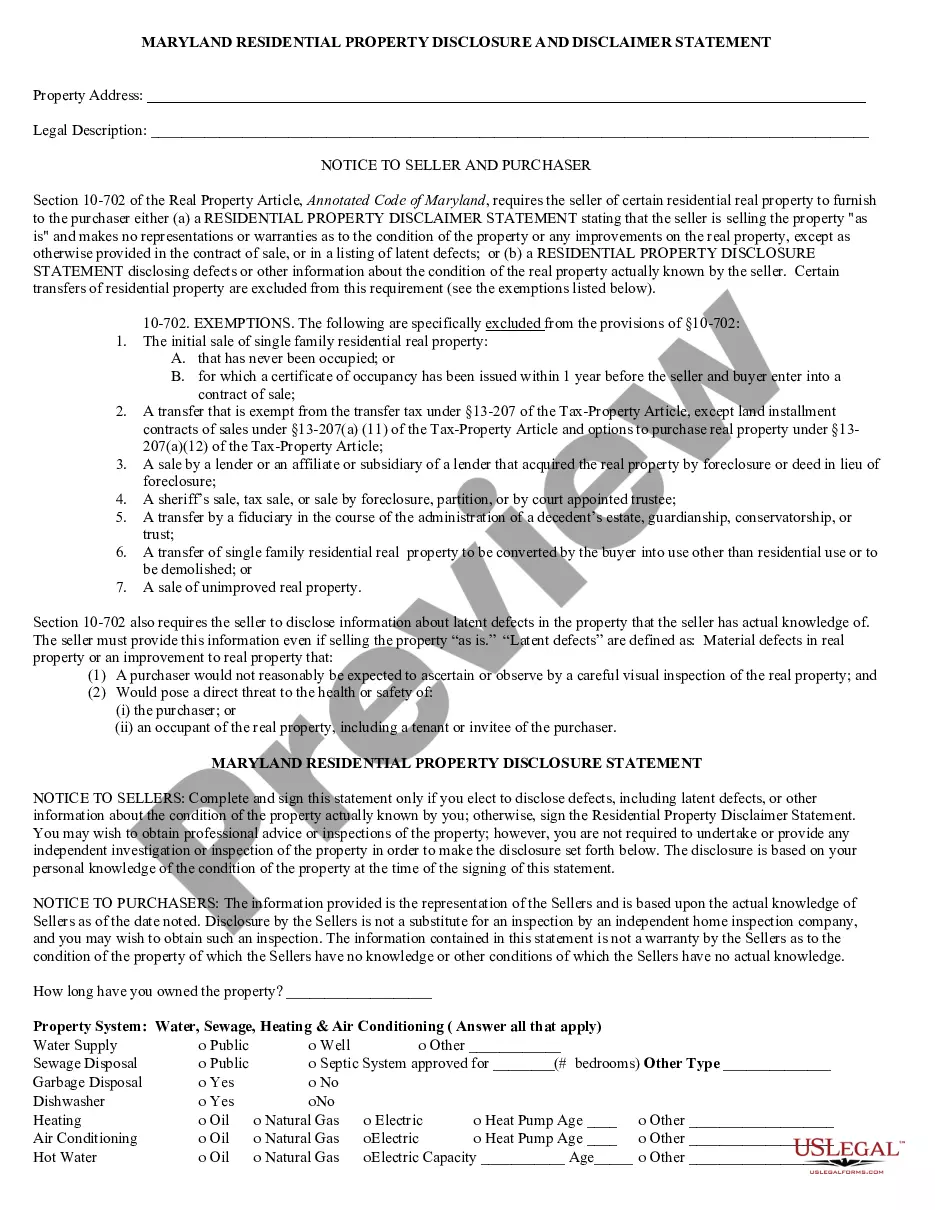
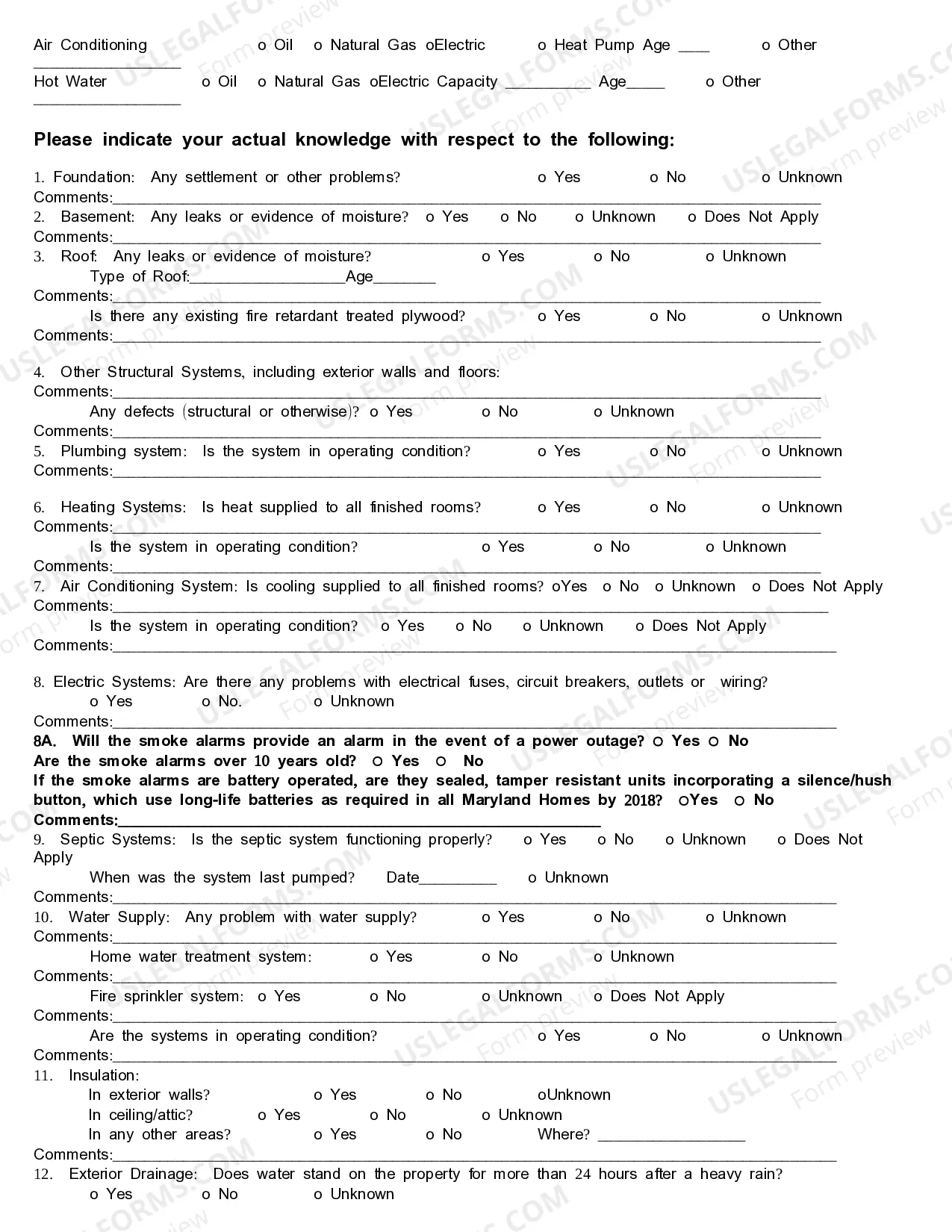
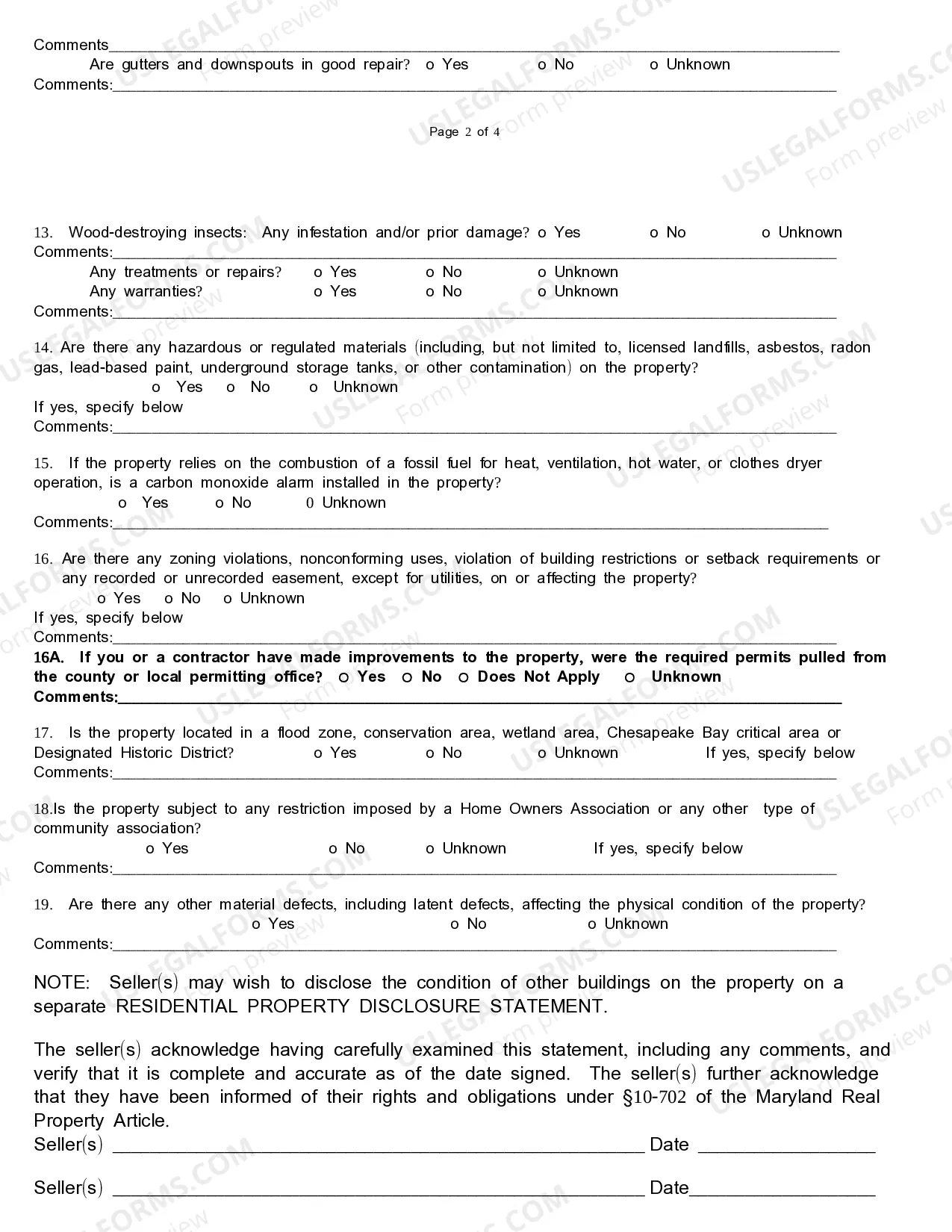
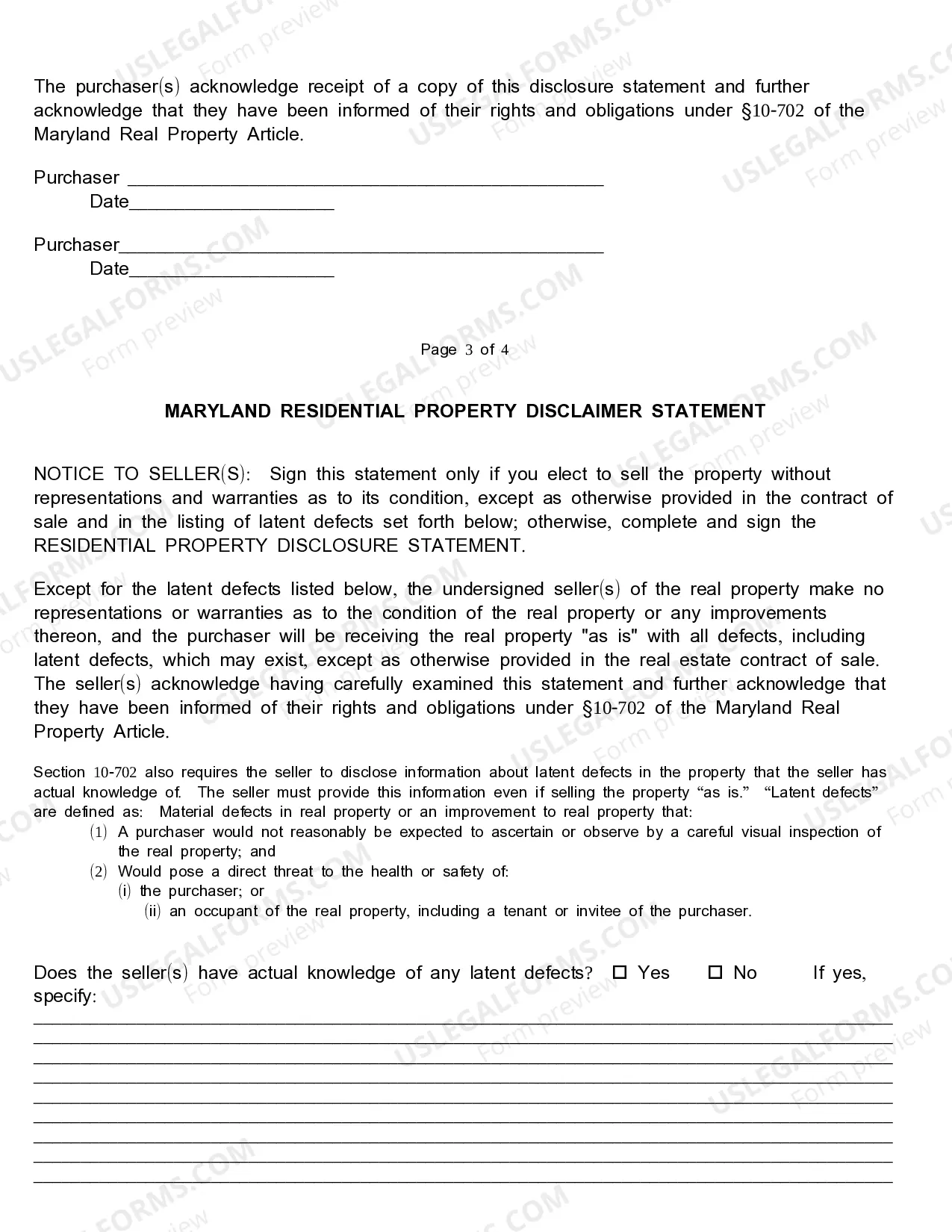
How to fill out Maryland Residential Real Estate Sales Disclosure Statement?
Individuals typically link legal documentation with something intricate that only an expert can manage. In a certain sense, this is accurate, as preparing Maryland Estate Forms necessitates considerable knowledge of subject matter, including state and county statutes.
However, with US Legal Forms, the process has become more user-friendly: pre-made legal documents for any life or business scenario, tailored to state laws, are compiled in a single online repository and are now accessible to all.
US Legal Forms presents over 85,000 current documents categorized by state and area of application, allowing you to search for Maryland Estate Forms or any other specific template in just minutes. Established users with an active subscription must Log In to their account and click Download to access the document. New users must first register for an account and subscribe before downloading any paperwork.
All templates in our collection are reusable: once obtained, they remain saved in your profile, and you can access them whenever necessary through the My documents section. Explore all the benefits of utilizing the US Legal Forms platform. Subscribe today!
- Carefully review the page content to verify it meets your needs.
- Examine the form description or assess it using the Preview feature.
- If the previous template isn't suitable, find another example using the Search bar in the header.
- Once you locate the appropriate Maryland Estate Forms, click Buy Now.
- Choose a subscription plan that aligns with your preferences and financial plan.
- To proceed to the payment page, create an account or Log In.
- Make your payment for the subscription using PayPal or a credit card.
- Select the format for your document and click Download.
- Print your document or upload it to an online editor for quicker completion.
Form popularity
FAQ
To obtain proof of an estate in Maryland, you typically need to file a petition for probate in the Orphans' Court. This will require submitting the necessary Maryland estate forms to verify the validity of the will. Once the court approves the petition, you will receive documents confirming the estate's authenticity. Utilizing our services can simplify this process and ensure you have all the required forms.
In Maryland, an estate must generally be worth $50,000 or more for probate to be required. This amount applies to estates with no real estate. If your estate includes real property, the threshold increases to $100,000. To navigate the probate process effectively, consider using Maryland estate forms available on our platform.
To open a small estate in Maryland, you will primarily need the small estate affidavit and, if applicable, a death certificate. Additionally, you may require other supporting documents based on individual circumstances. Using Maryland estate forms from USLegalForms can ensure that you have the latest forms and information needed to get started with your estate matter efficiently.
In Maryland, the limit for a small estate affidavit is generally set at $50,000 for personal property. This amount can vary, so it’s important to check the most current regulations. If the total value exceeds this limit, you may need to pursue a different estate process. Utilize Maryland estate forms from USLegalForms to confirm your eligibility and navigate the requirements smoothly.
To open an estate account in Maryland, you typically need the death certificate, the small estate affidavit, and identification of the personal representative. Additionally, banks may request a tax ID for the estate. Ensuring that you have the correct Maryland estate forms can make this process faster and smoother. You can find the required templates at USLegalForms to help you prepare everything needed.
In Maryland, estates can generally be classified into three types: small estates, probate estates, and intestate estates. A small estate pertains to simpler cases with fewer assets, while probate estates require court involvement for distribution. Understanding these distinctions is vital, and Maryland estate forms can provide clarity on each type. Consider exploring USLegalForms to find the correct forms for your needs.
A small estate affidavit can be prepared by an individual who is an interested party, like an heir or a personal representative. This person gathers information regarding the deceased's assets and debts to complete the affidavit accurately. Taking advantage of Maryland estate forms from USLegalForms makes this process easier and can help ensure everything is in order.
Yes, you can write your own will in Maryland, and having it notarized is an option, although not required. However, it's crucial that the will meets specific legal requirements established by state law. Using Maryland estate forms can help you understand these requirements and ensure your will is valid. Consider utilizing the resources at USLegalForms for clarity and accuracy.
To open a small estate in Maryland, you must submit a small estate affidavit to the appropriate court. This affidavit includes details about the deceased's assets and debts. Using Maryland estate forms simplifies this process, ensuring you have all necessary information accurately filled in. Visit USLegalForms for user-friendly templates that guide you through each step.
Not all estates must go through probate in Maryland. Estates with a value below $50,000 can often qualify for a simplified process, making it easier for heirs to inherit assets. Understanding the distinction and utilizing Maryland estate forms appropriately can save time and reduce costs. By planning ahead, you can ensure a smoother transition for your loved ones.
