Quiet Enjoyment Maryland For Commercial Lease
Description


Get your form ready online
Our built-in tools help you complete, sign, share, and store your documents in one place.
Make edits, fill in missing information, and update formatting in US Legal Forms—just like you would in MS Word.
Download a copy, print it, send it by email, or mail it via USPS—whatever works best for your next step.
Sign and collect signatures with our SignNow integration. Send to multiple recipients, set reminders, and more. Go Premium to unlock E-Sign.
If this form requires notarization, complete it online through a secure video call—no need to meet a notary in person or wait for an appointment.
We protect your documents and personal data by following strict security and privacy standards.

Make edits, fill in missing information, and update formatting in US Legal Forms—just like you would in MS Word.

Download a copy, print it, send it by email, or mail it via USPS—whatever works best for your next step.

Sign and collect signatures with our SignNow integration. Send to multiple recipients, set reminders, and more. Go Premium to unlock E-Sign.

If this form requires notarization, complete it online through a secure video call—no need to meet a notary in person or wait for an appointment.

We protect your documents and personal data by following strict security and privacy standards.
Looking for another form?
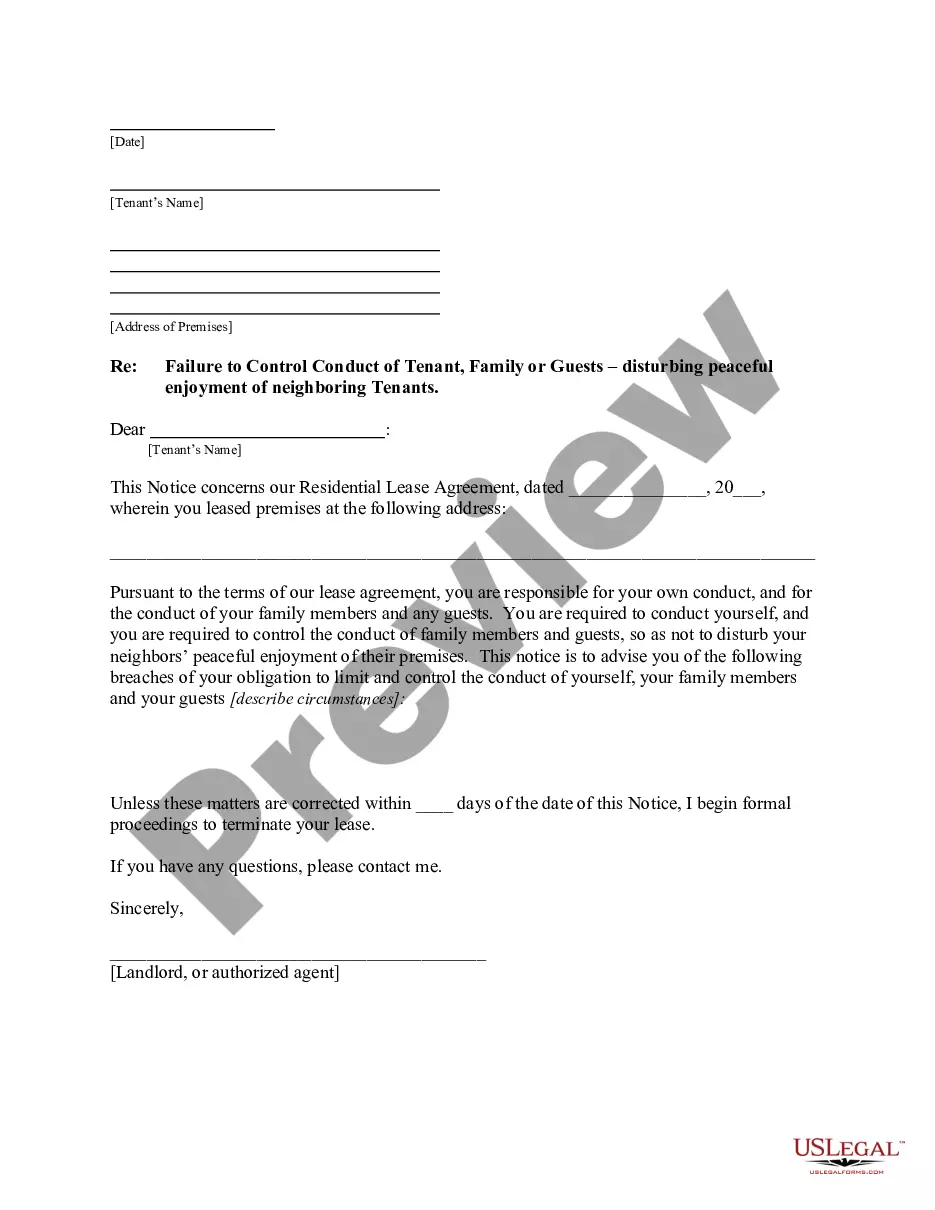
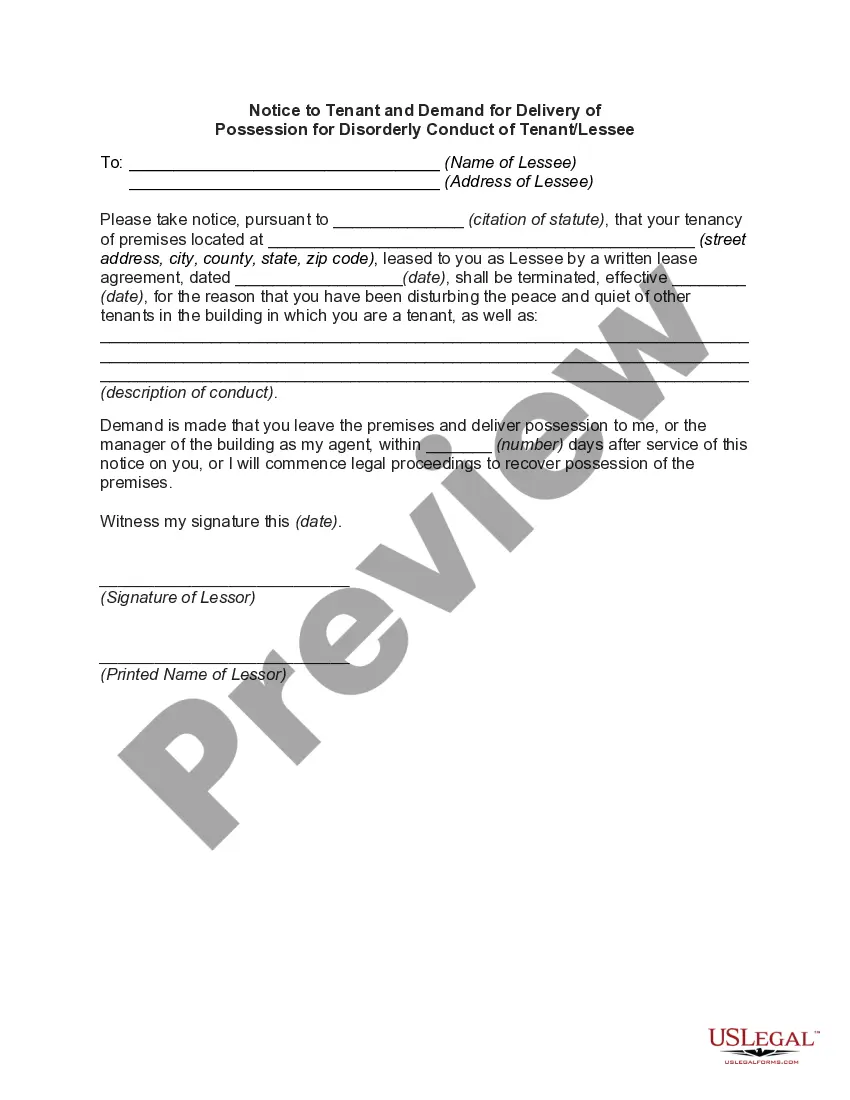
How to fill out Maryland Letter From Landlord To Tenant As Notice To Tenant Of Tenant's Disturbance Of Neighbors' Peaceful Enjoyment To Remedy Or Lease Terminates?
Regardless of whether for commercial interests or personal affairs, everyone eventually has to deal with legal matters at some point in their life.
Filling out legal documents necessitates meticulous focus, beginning with selecting the correct form template.
With an extensive US Legal Forms catalog available, you do not have to waste time searching for the right template online. Utilize the library's intuitive navigation to find the appropriate template for any circumstance.
- Obtain the template you require using the search bar or catalog browsing.
- Review the information of the form to ensure it aligns with your situation, state, and locality.
- Click on the form's preview to examine it.
- If it is the incorrect form, return to the search tool to locate the Quiet Enjoyment Maryland For Commercial Lease sample that you need.
- Acquire the file when it meets your requirements.
- If you have a US Legal Forms account, click Log in to access previously stored files in My documents.
- In case you do not possess an account yet, you can download the form by clicking Buy now.
- Choose the appropriate pricing option.
- Fill out the account registration form.
- Choose your payment method: you can utilize a credit card or PayPal account.
- Select the desired file format and download the Quiet Enjoyment Maryland For Commercial Lease.
- Once downloaded, you can complete the form using editing software or print it out and finish it by hand.
Form popularity
FAQ
Some of the common violations to the covenant of quiet enjoyment include: Entering the rented premises too often or without serving proper notice. Snooping through the tenant's property. Failing to keep disruptive noises, nuisances, or behaviors under control.
If Tenant shall perform all of the covenants and agreements herein required to be performed by Tenant, Tenant shall, subject to the terms of this Lease, at all times during the Lease Term, have peaceful and quiet enjoyment of the Premises against any person claiming by, through or under Landlord.
This right to quiet enjoyment exists in transactions of real estate. However, quiet enjoyment does not just relate to the obvious peace and quiet complaints. It also implies the right to exclude individuals from the premises, to have clean premises, and the right to essential services such as heat and hot water.
For example, where a landlord's construction activities cause dust, debris, and noise to force a tenant to evacuate their leased apartment, an action for breach of covenant of quiet enjoyment can be supported.
Covenant of Quiet Enjoyment (on DC-CV-001, the District Court Complaint form). The Covenant of Quiet Enjoyment means that the landlord must control disturbances to your peaceful enjoyment of the rental property that s/he has the ability and authority to control.