Grandparents Property Rights
Description
Get your form ready online
Our built-in tools help you complete, sign, share, and store your documents in one place.
Make edits, fill in missing information, and update formatting in US Legal Forms—just like you would in MS Word.
Download a copy, print it, send it by email, or mail it via USPS—whatever works best for your next step.
Sign and collect signatures with our SignNow integration. Send to multiple recipients, set reminders, and more. Go Premium to unlock E-Sign.
If this form requires notarization, complete it online through a secure video call—no need to meet a notary in person or wait for an appointment.
We protect your documents and personal data by following strict security and privacy standards.

Make edits, fill in missing information, and update formatting in US Legal Forms—just like you would in MS Word.

Download a copy, print it, send it by email, or mail it via USPS—whatever works best for your next step.

Sign and collect signatures with our SignNow integration. Send to multiple recipients, set reminders, and more. Go Premium to unlock E-Sign.

If this form requires notarization, complete it online through a secure video call—no need to meet a notary in person or wait for an appointment.

We protect your documents and personal data by following strict security and privacy standards.
Looking for another form?








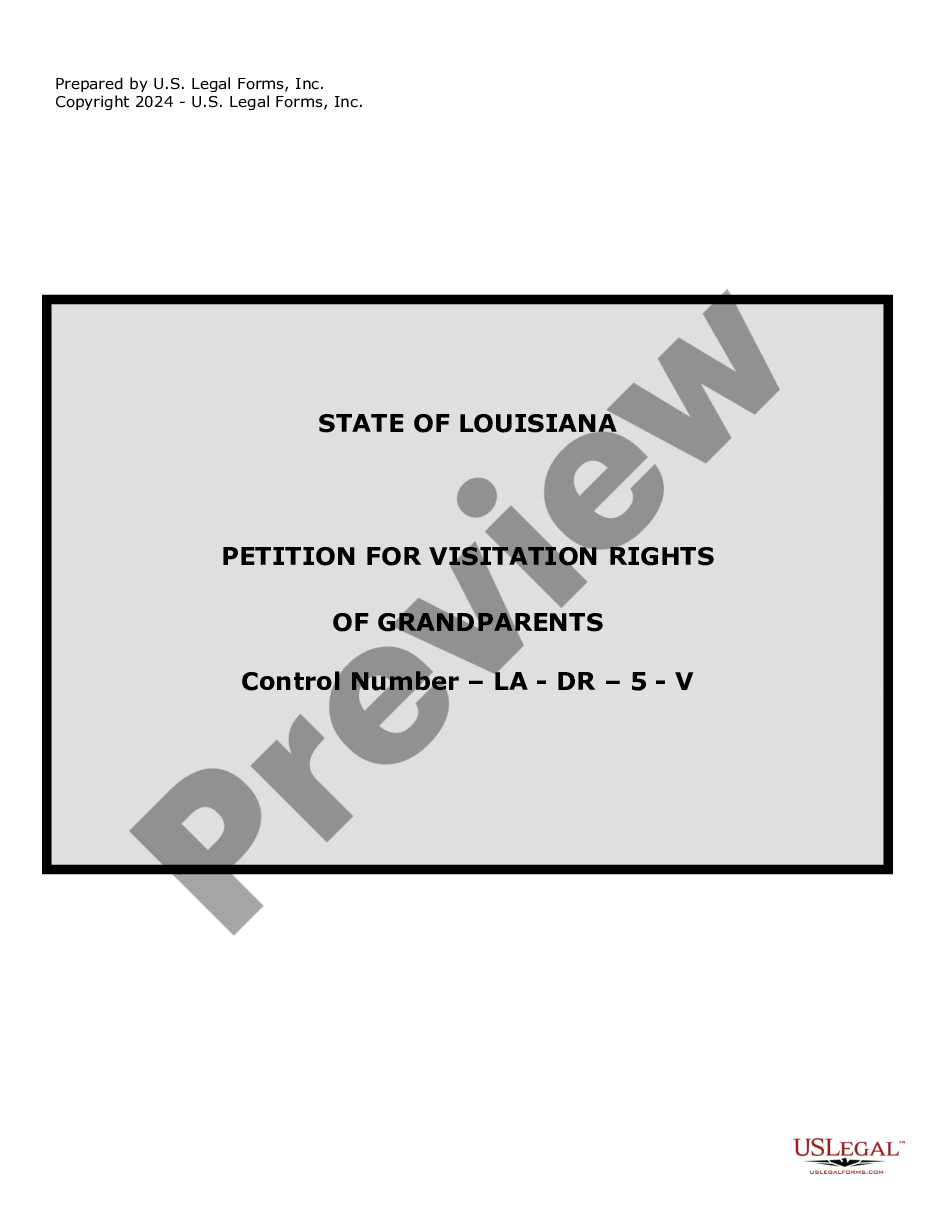
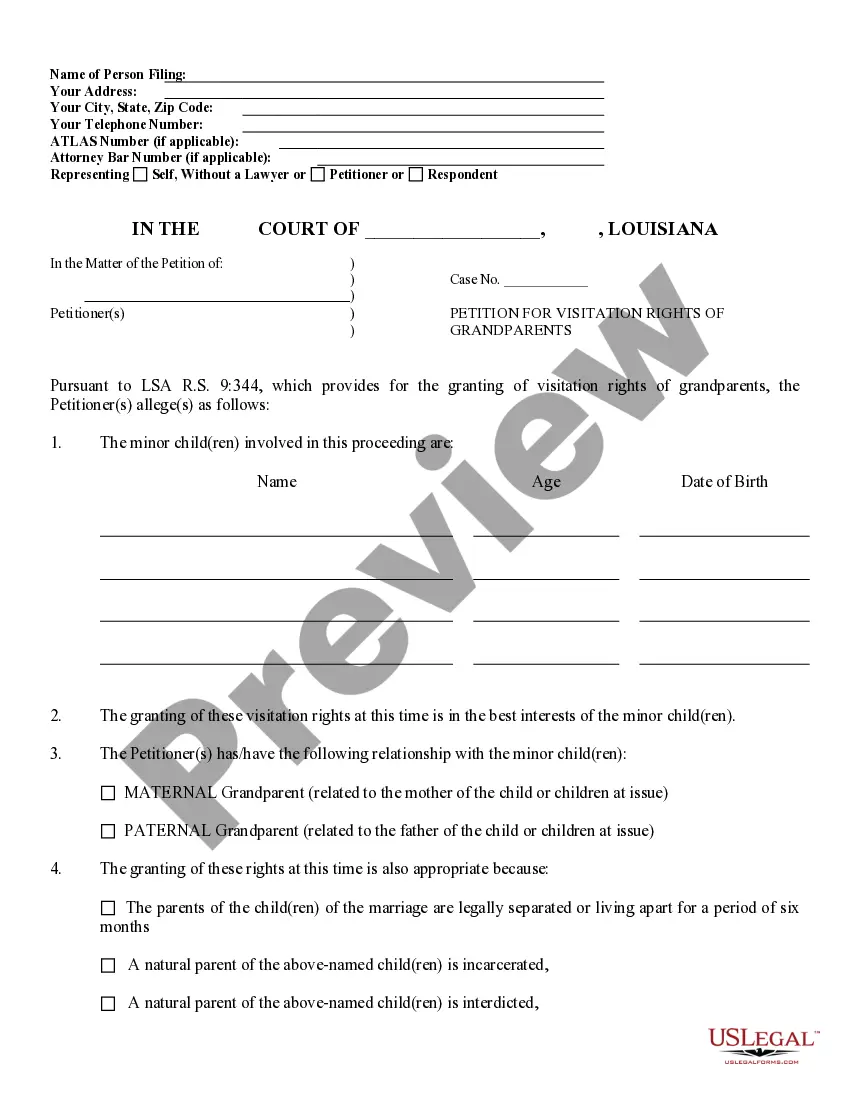
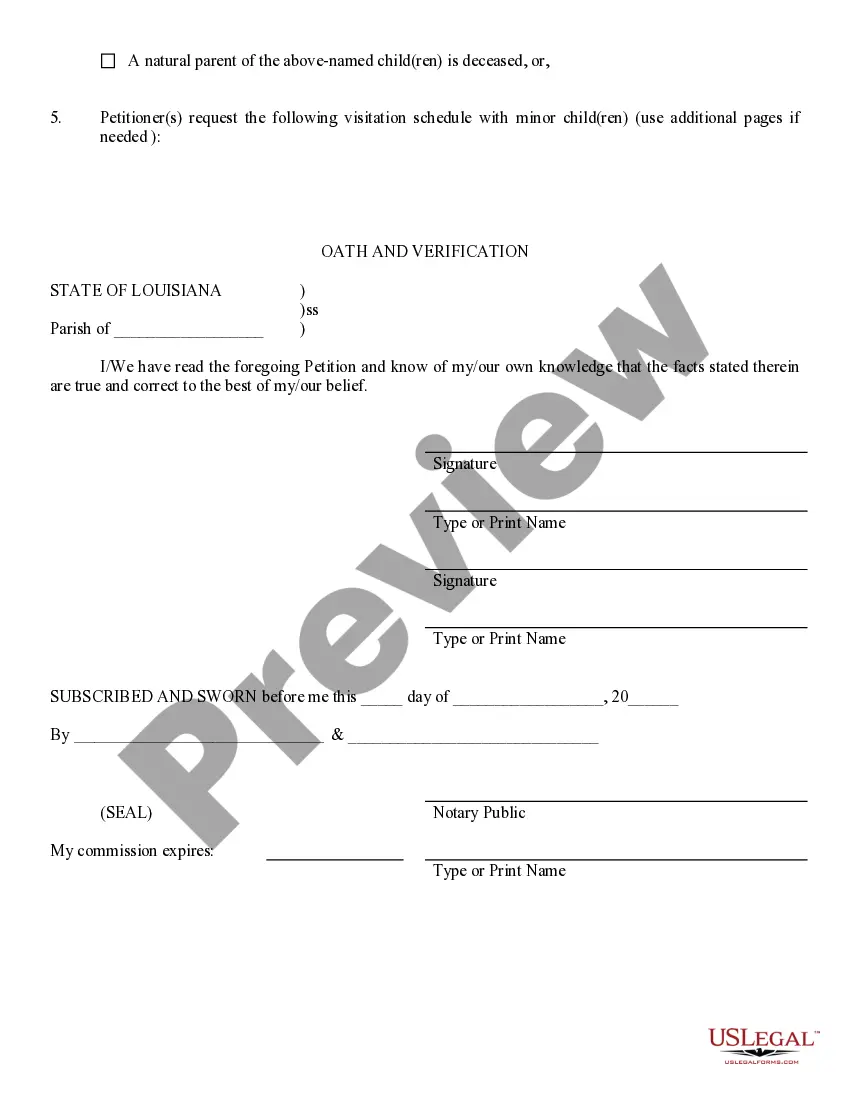
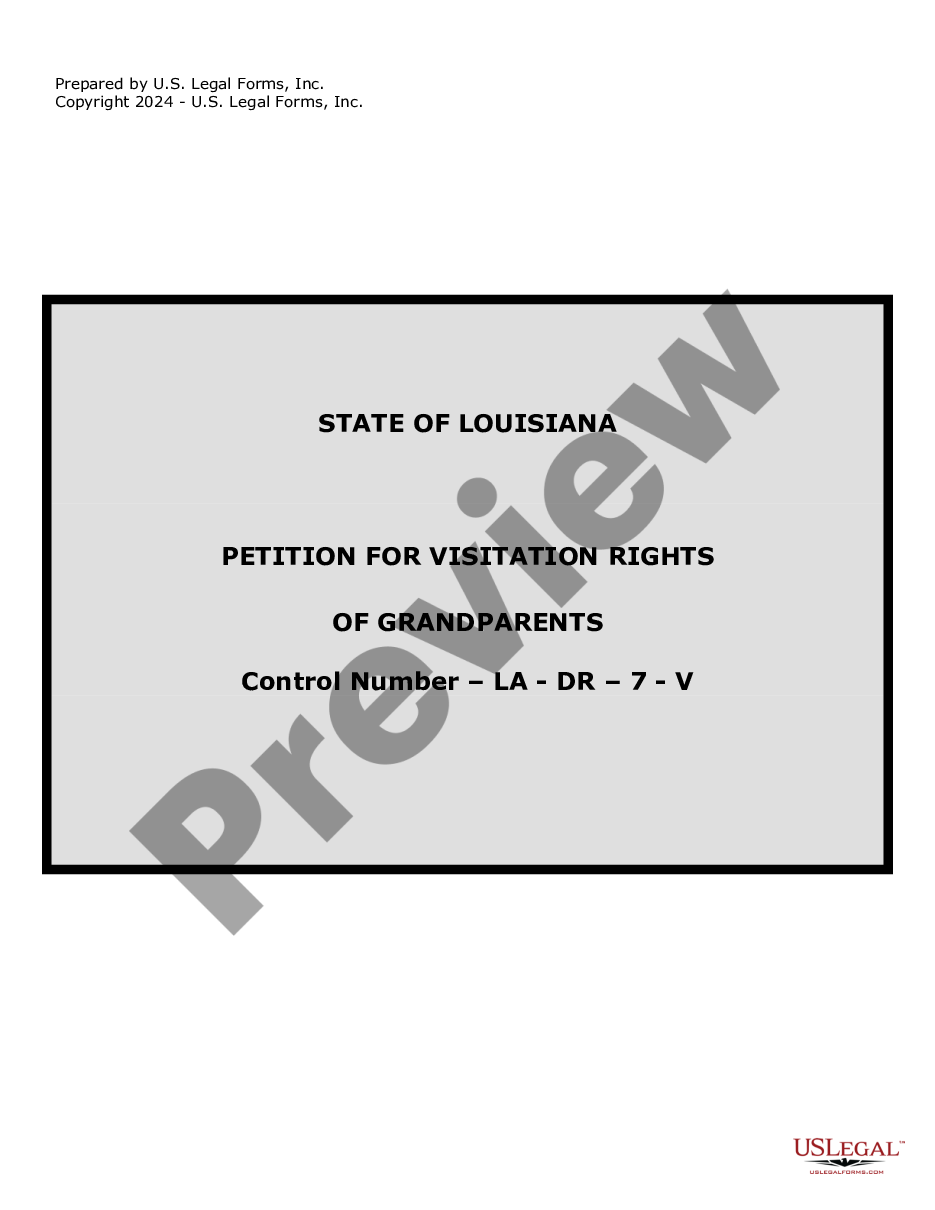
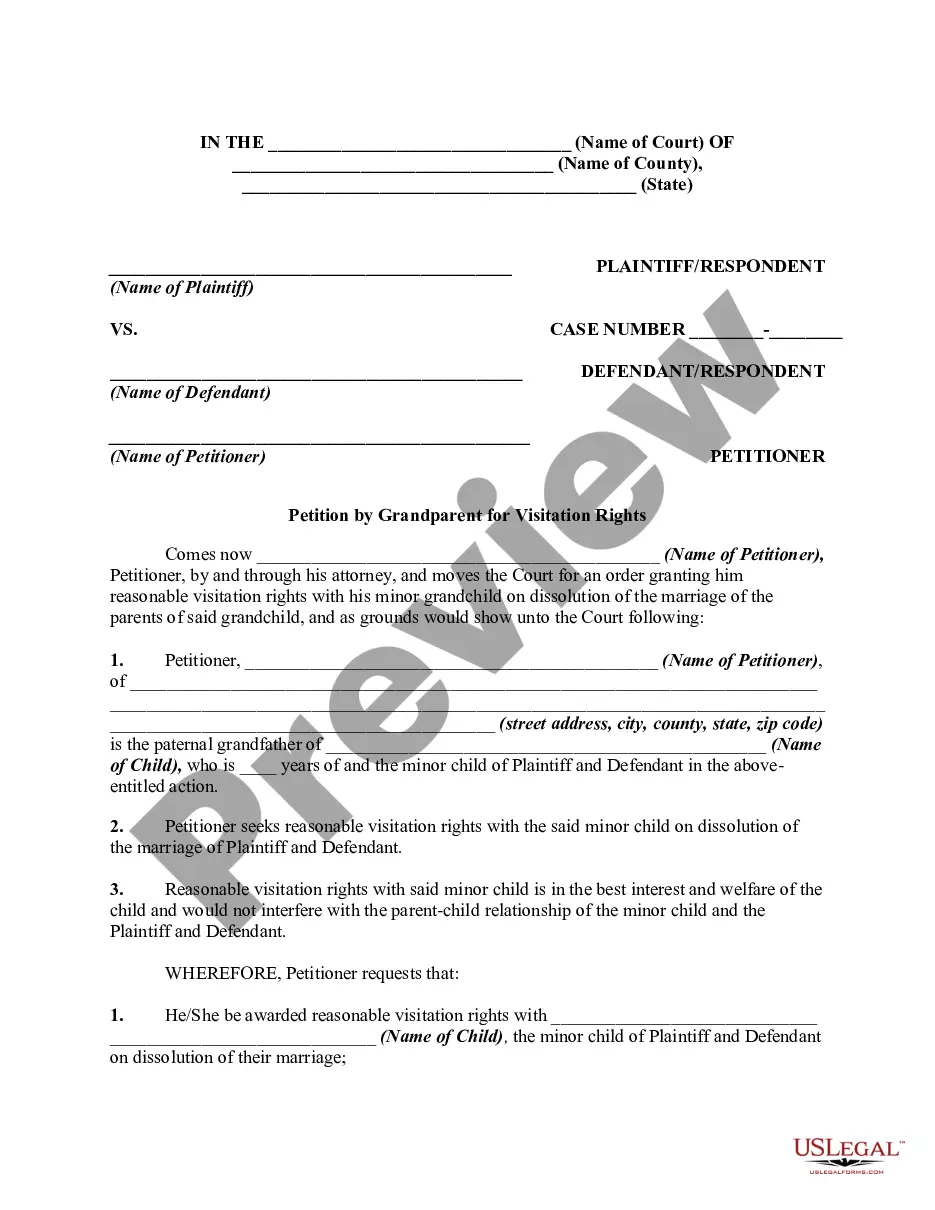
How to fill out Louisiana Petition For Visitation Rights Of Grandparents?
- If you’re a returning user, access your account by clicking here and download your desired form by using the Download button. Ensure your subscription is active; if not, renew it as per your plan.
- For new users, start by exploring available templates. Review the previews and descriptions to confirm they meet your jurisdictional requirements.
- If required, utilize the Search tab to find alternative templates that suit your specific needs, and proceed once you identify the right one.
- Make your selection and click on the Buy Now button to choose your preferred subscription plan. Account registration is necessary to unlock the full library.
- Complete your transaction by entering your payment information, either via credit card or through your PayPal account.
- Finally, download the form and save it on your device for filling out later. You can also access it anytime from the My Forms section.
In conclusion, US Legal Forms facilitates the acquisition of essential legal documents regarding grandparents property rights with ease and speed. With a vast array of templates and expert support, securing your rights has never been simpler.
Explore US Legal Forms today to empower your understanding and actions regarding legal matters!
Form popularity
FAQ
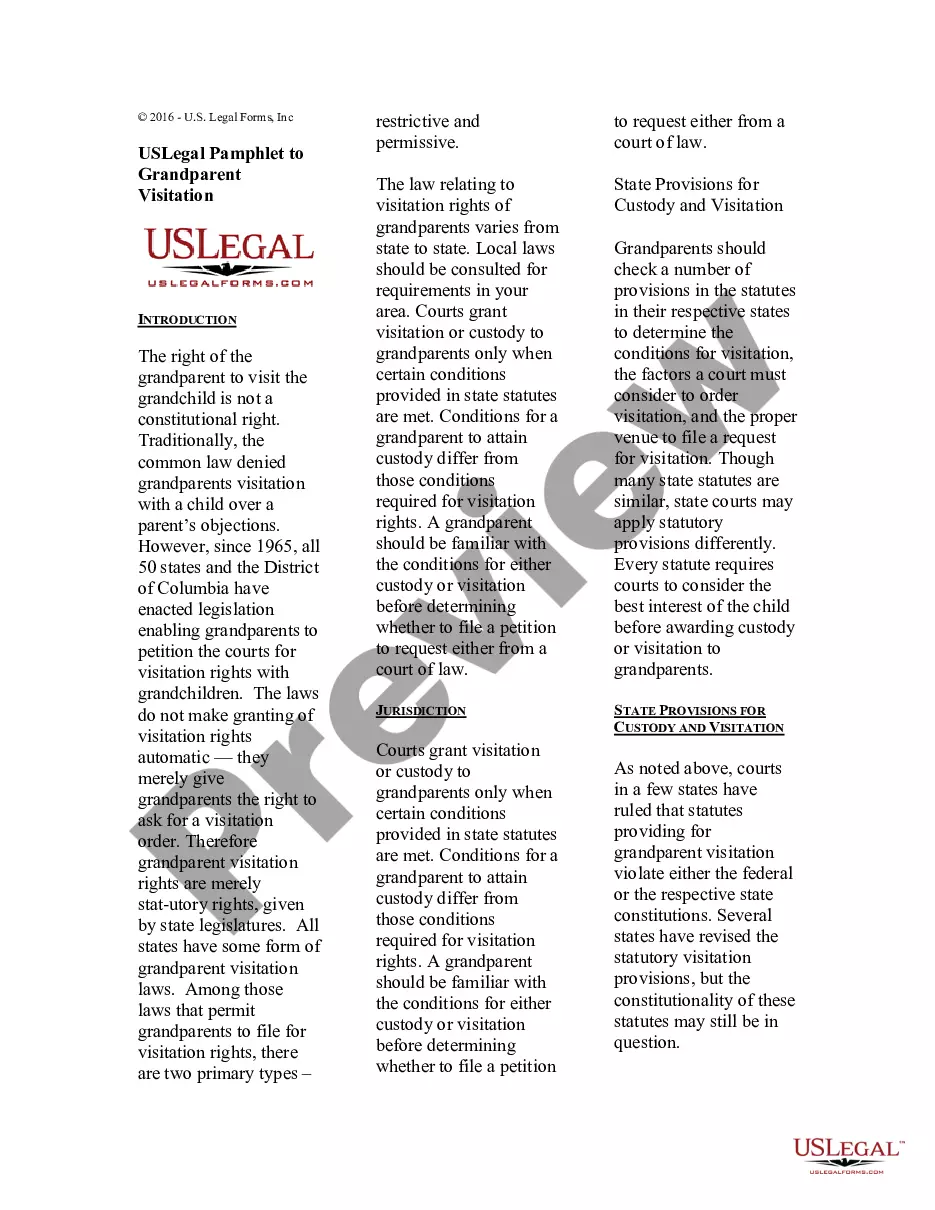
In California, grandparents do have certain property rights, especially when it comes to visitation. If parents are divorced or one parent is deceased, grandparents can file for custody or visitation rights. The law considers the child’s well-being a priority, allowing grandparents to maintain a relationship. For a comprehensive understanding, explore the resources available at US Legal Forms to navigate California's legal landscape.
While as a parent you have rights over your children, grandparents property rights can complicate matters. If your parents pursue legal visitation, you may have to comply with specific state laws. Generally, if they demonstrate a significant bond with your children, the courts may favor visitation arrangements. For personalized guidance, consult US Legal Forms, which provides resources to understand your options.
Yes, Michigan recognizes grandparent property rights under certain circumstances. Grandparents can seek legal visitation or custody if they can prove that it is in the child’s best interest. This applies particularly if parents separate or divorce, as grandparent involvement can be essential for maintaining family bonds. For tailored assistance, consider using the US Legal Forms platform to navigate these laws effectively.
Refusing to return a child can have significant legal implications for grandparents. Such actions may be viewed as a violation of custody agreements or parental rights. If you face a complicated situation surrounding custody or visitation, reaching out to a legal platform like US Legal Forms can offer guidance on navigating grandparents' property rights appropriately.
California recognizes the right of grandparents to seek visitation under certain conditions, especially when parental relationships are strained. To gain access, grandparents must demonstrate that visitation is in the child's best interest. Legal assistance from experts familiar with California laws can provide clarity and support in navigating these rights effectively.
Yes, Nebraska does have provisions that allow for grandparents' rights under specific circumstances. Grandparents can seek visitation rights, especially in cases of divorce or separation among parents. Understanding Nebraska's legal framework can empower grandparents to protect their relationships and establish their property rights.
The difficulty in obtaining grandparents' rights can vary based on individual circumstances and state laws. Generally, proving that visitation is in the child's best interests can be challenging. Engaging with a knowledgeable legal expert can help clarify the specific requirements and increase your chances of successfully asserting your grandparents' property rights.
In Wisconsin, a parent can deny a grandparent visitation, but that decision can be challenged in court. If grandparents can show that visitation serves the child's best interests, they may succeed in obtaining visitation rights. Therefore, it’s important to evaluate your case thoroughly and consider seeking legal support to understand your grandparents' property rights.
Yes, Wisconsin does recognize grandparents' rights under certain circumstances. Grandparents can petition for visitation if it's in the child's best interests and if certain conditions are met, such as when the parents are divorced or there is a significant family conflict. Understanding your rights in conjunction with Wisconsin laws is crucial to navigate this matter effectively.
Yes, parents can make decisions about their children's relationships with grandparents, including limiting contact. However, this can impact the grandparents' property rights, as they may seek legal avenues for visitation. It's essential to consider the child's best interests and the emotional connection they have with their grandparents. Seeking legal advice might clarify your options depending on the situation.