Divorce Law For Muslim In India

Description

Get your form ready online
Our built-in tools help you complete, sign, share, and store your documents in one place.
Make edits, fill in missing information, and update formatting in US Legal Forms—just like you would in MS Word.
Download a copy, print it, send it by email, or mail it via USPS—whatever works best for your next step.
Sign and collect signatures with our SignNow integration. Send to multiple recipients, set reminders, and more. Go Premium to unlock E-Sign.
If this form requires notarization, complete it online through a secure video call—no need to meet a notary in person or wait for an appointment.
We protect your documents and personal data by following strict security and privacy standards.

Make edits, fill in missing information, and update formatting in US Legal Forms—just like you would in MS Word.

Download a copy, print it, send it by email, or mail it via USPS—whatever works best for your next step.

Sign and collect signatures with our SignNow integration. Send to multiple recipients, set reminders, and more. Go Premium to unlock E-Sign.

If this form requires notarization, complete it online through a secure video call—no need to meet a notary in person or wait for an appointment.

We protect your documents and personal data by following strict security and privacy standards.
Looking for another form?
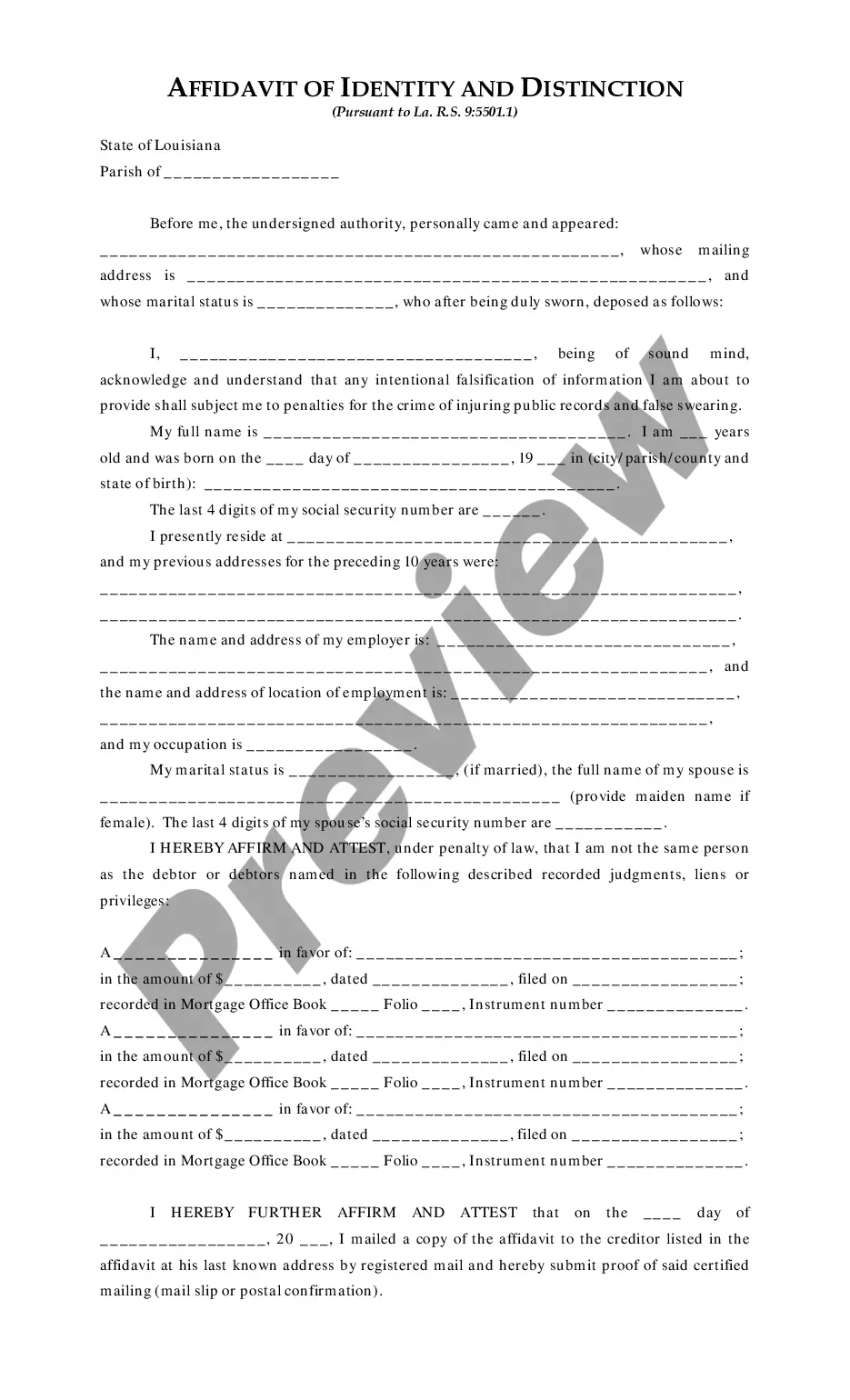
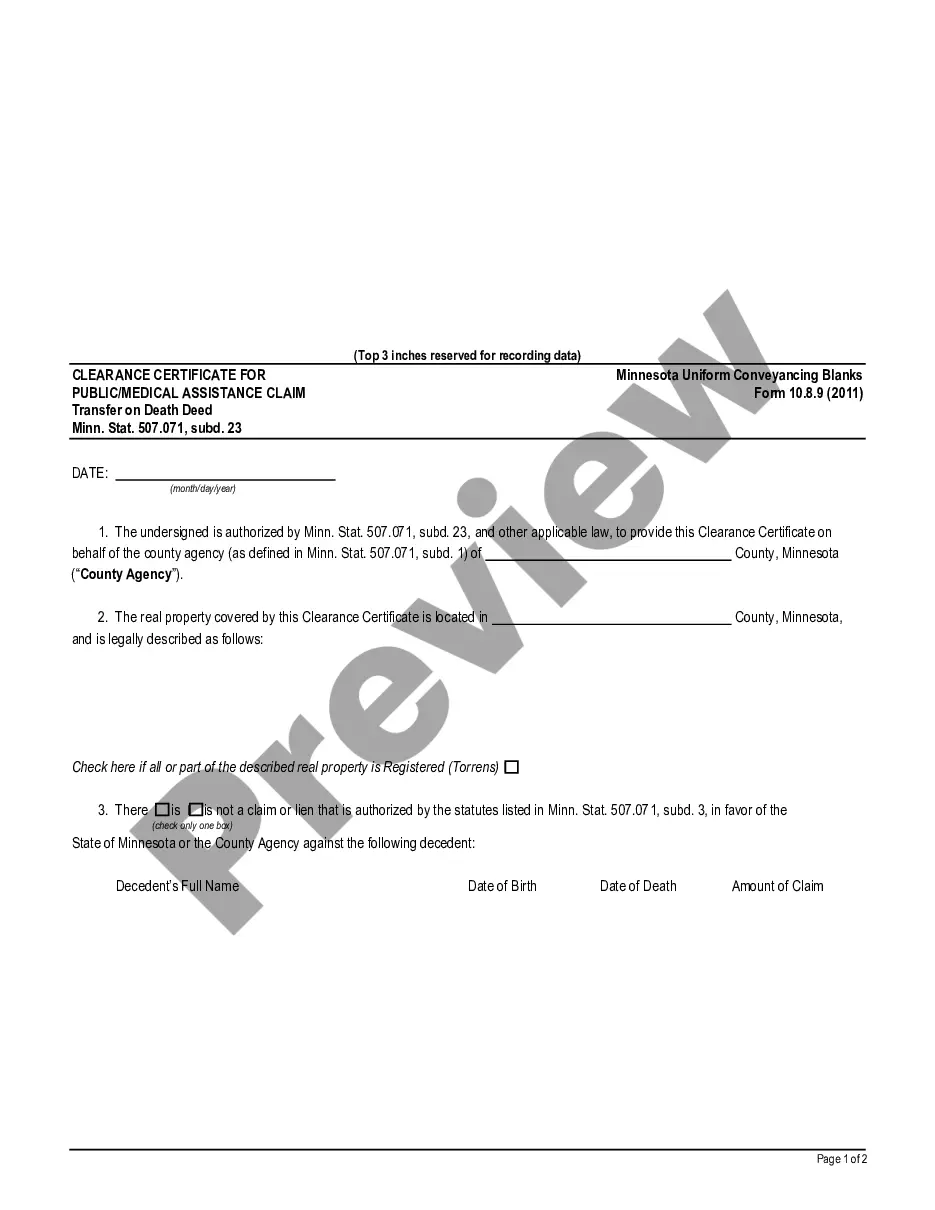


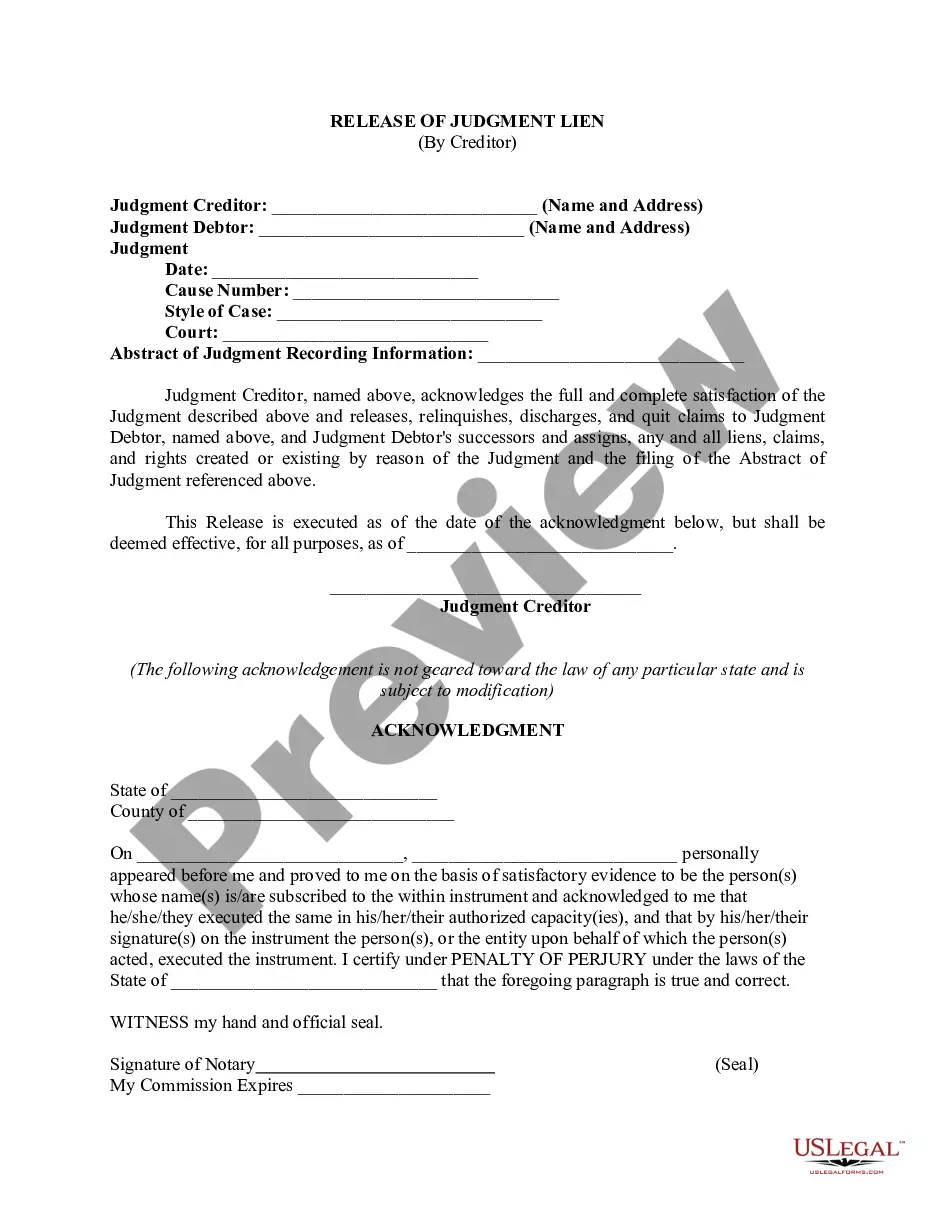


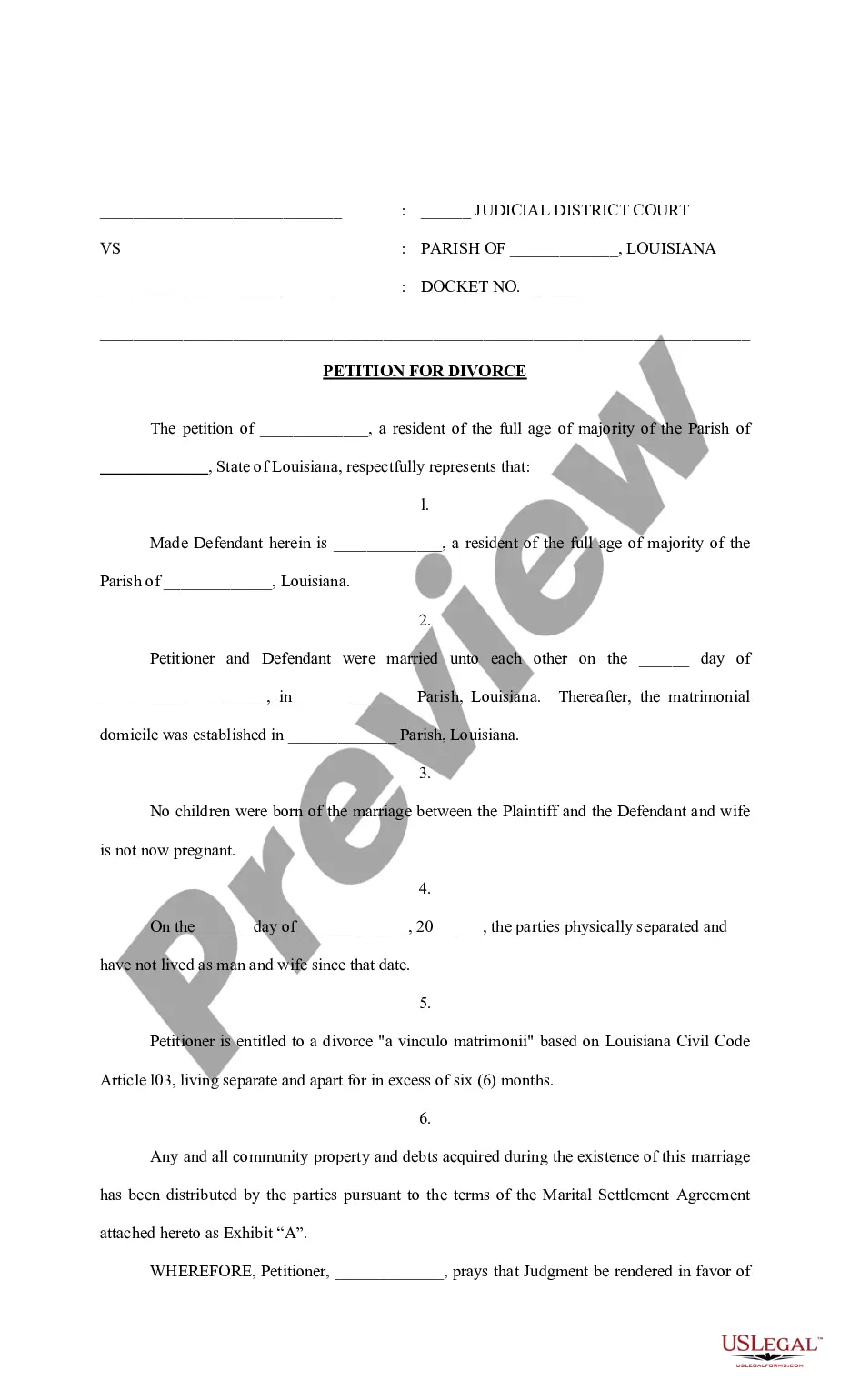
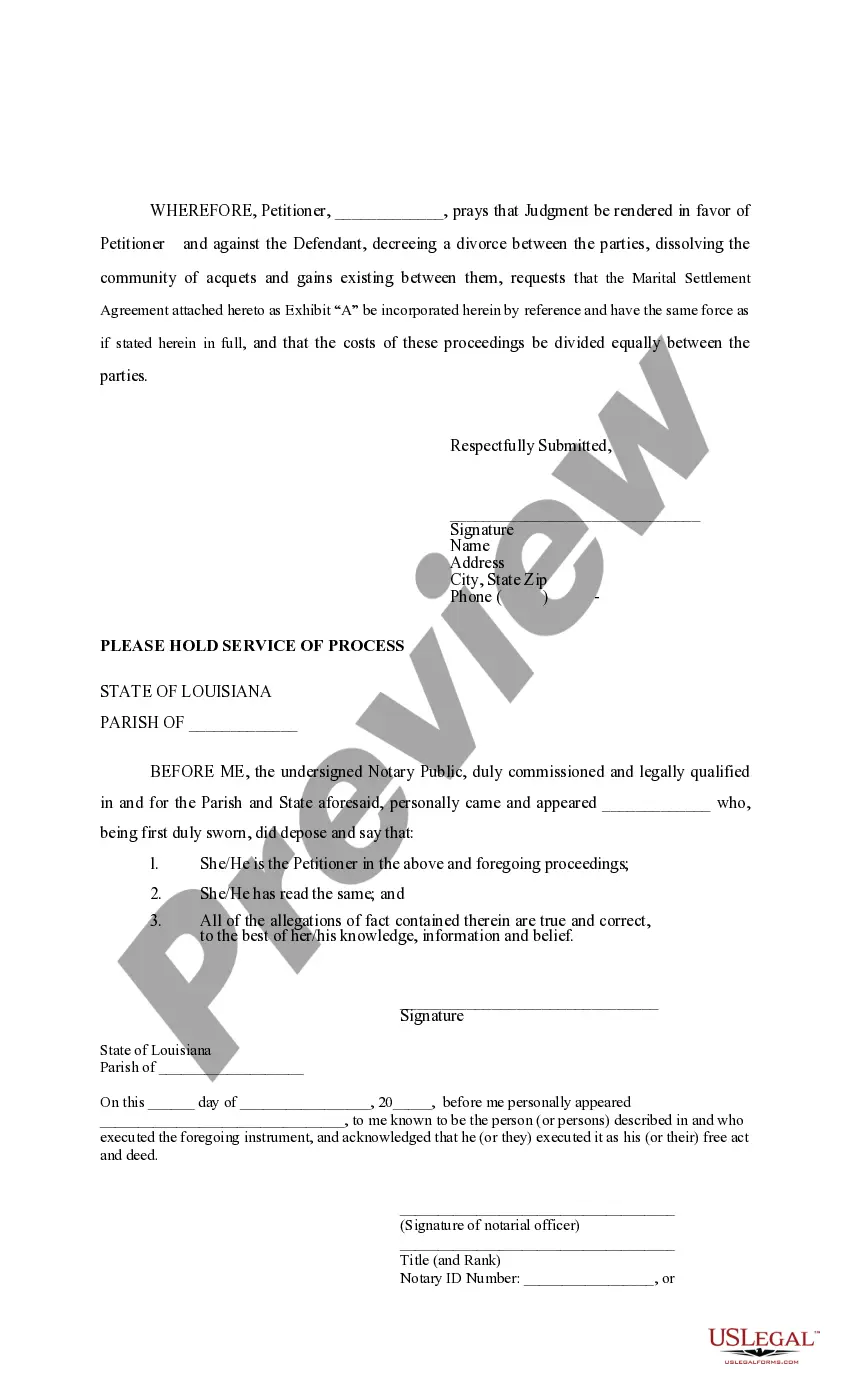
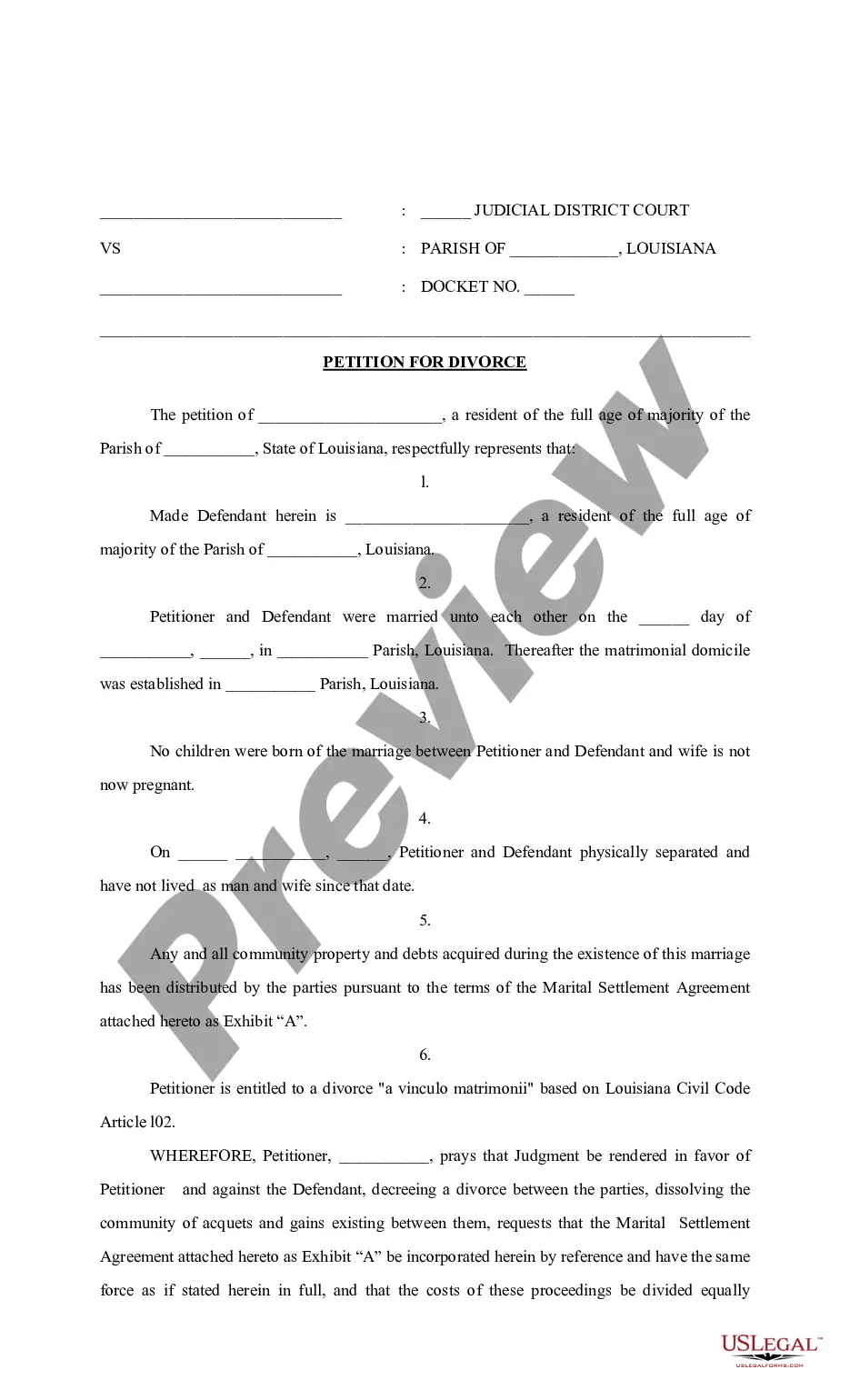
How to fill out Louisiana Petition For Divorce - La. CC Art. 103 - No Children?
Whether for corporate reasons or personal concerns, everyone encounters legal issues at some stage in their life.
Filling out legal documentation requires meticulous care, starting from selecting the correct form template.
Choose the document format you prefer and download the Divorce Law For Muslim In India. Once it is downloaded, you can fill out the form using editing software or print it out and complete it by hand. With a comprehensive US Legal Forms catalog available, you never need to waste time searching for the right template online. Make use of the library’s user-friendly navigation to find the suitable form for any circumstance.
- For example, if you select an incorrect version of the Divorce Law For Muslim In India, it will be rejected upon submission.
- Thus, it is vital to acquire a trustworthy source of legal documents like US Legal Forms.
- If you wish to get a Divorce Law For Muslim In India template, follow these straightforward steps.
- Retrieve the template you require by using the search bar or browsing the catalog.
- Review the form’s specifics to ensure it corresponds to your case, state, and county.
- Click on the preview of the form to view it.
- If it is the incorrect document, return to the search function to find the Divorce Law For Muslim In India example you need.
- Obtain the file if it aligns with your requirements.
- If you already have a US Legal Forms account, simply click Log in to access previously saved documents in My documents.
- If you do not possess an account yet, you can acquire the form by clicking Buy now.
- Select the appropriate pricing option.
- Complete the account registration form.
- Select your payment method: use a credit card or PayPal account.
Form popularity
FAQ
Yes, a Muslim wife can file a divorce petition in India under the Dissolution of Muslim Marriages Act, which empowers women to seek divorce on various grounds. It is crucial for the wife to understand her rights and the legal requirements involved. Getting help from legal experts in divorce law for Muslim in India can facilitate this process and help protect her interests.
To apply for divorce in India for a Muslim, you need to submit a divorce petition under Islamic law or the Dissolution of Muslim Marriages Act. This petition should outline the grounds for divorce and any supporting information relevant to your situation. Utilizing platforms like UsLegalForms can assist you with the necessary forms and provide guidance through each step of the process.
Divorcing in India as a Muslim requires adherence to both Islamic and Indian legal frameworks. You must file a petition in a family court, along with necessary documentation to support your case. Engaging with a lawyer familiar with divorce law for Muslim in India can streamline the process, ensuring that your rights are protected.
To declare divorce in Islam, the husband must use the term 'Talaq' explicitly and must do so during a period of purity. It is essential to follow the mandated waiting period, known as 'Iddah', which allows time for reflection and ensures that the marriage decision is well considered. Understanding these steps can simplify your journey within the divorce law for Muslim in India.
Divorcing a Muslim marriage involves understanding the specific rules of Islamic law, which allow for various methods of divorce. It's advisable to involve a local imam or a family lawyer who specializes in divorce law for Muslim in India to navigate the legalities effectively. This guidance can help both parties reach an amicable resolution.
To arrange an Islamic divorce, the process generally starts with the husband pronouncing 'Talaq' three times, usually over a period of three months. It's important to follow the guidelines set by the Quran to ensure that the divorce is valid. Additionally, seeking counsel from a knowledgeable Islamic scholar can help clarify procedures according to divorce law for Muslim in India.
The three divorces in Islam refer to the types of talaq: talaq e Ahsan, talaq e Hasan, and talaq e Bayin. Each form has unique procedural rules and implications for the couple. It's vital for individuals navigating divorce law for Muslims in India to understand these distinctions to ensure their rights and obligations are met during the divorce process.
Islamic divorce law for Muslims in India recognizes several types of divorce, including talaq, khula, and mubarat. Talaq is the most common form, initiated by the husband, while khula offers the wife a way to initiate divorce. Mubarat involves mutual consent for separation. Each type addresses specific needs and circumstances, providing options for couples seeking resolution.
The Muslim way of divorce typically involves a process dictated by Islamic principles, which guides the couple through the legal requirements under divorce law for Muslims in India. This process often includes a waiting period, known as 'iddah', during which the couple may reconsider their decision. The aim is to ensure fairness and thoughtfulness in dissolving the marriage while respecting Islamic teachings.
Talaq e Ahsan and talaq e Hasan are both forms of divorce recognized in Islamic divorce law for Muslims in India. The key difference lies in the waiting period and process. Talaq e Ahsan involves a single pronouncement of divorce followed by a waiting period, while talaq e Hasan includes three separate pronouncements over time, allowing for potential reconciliation. Understanding these forms is essential for Muslims navigating divorce law in India.