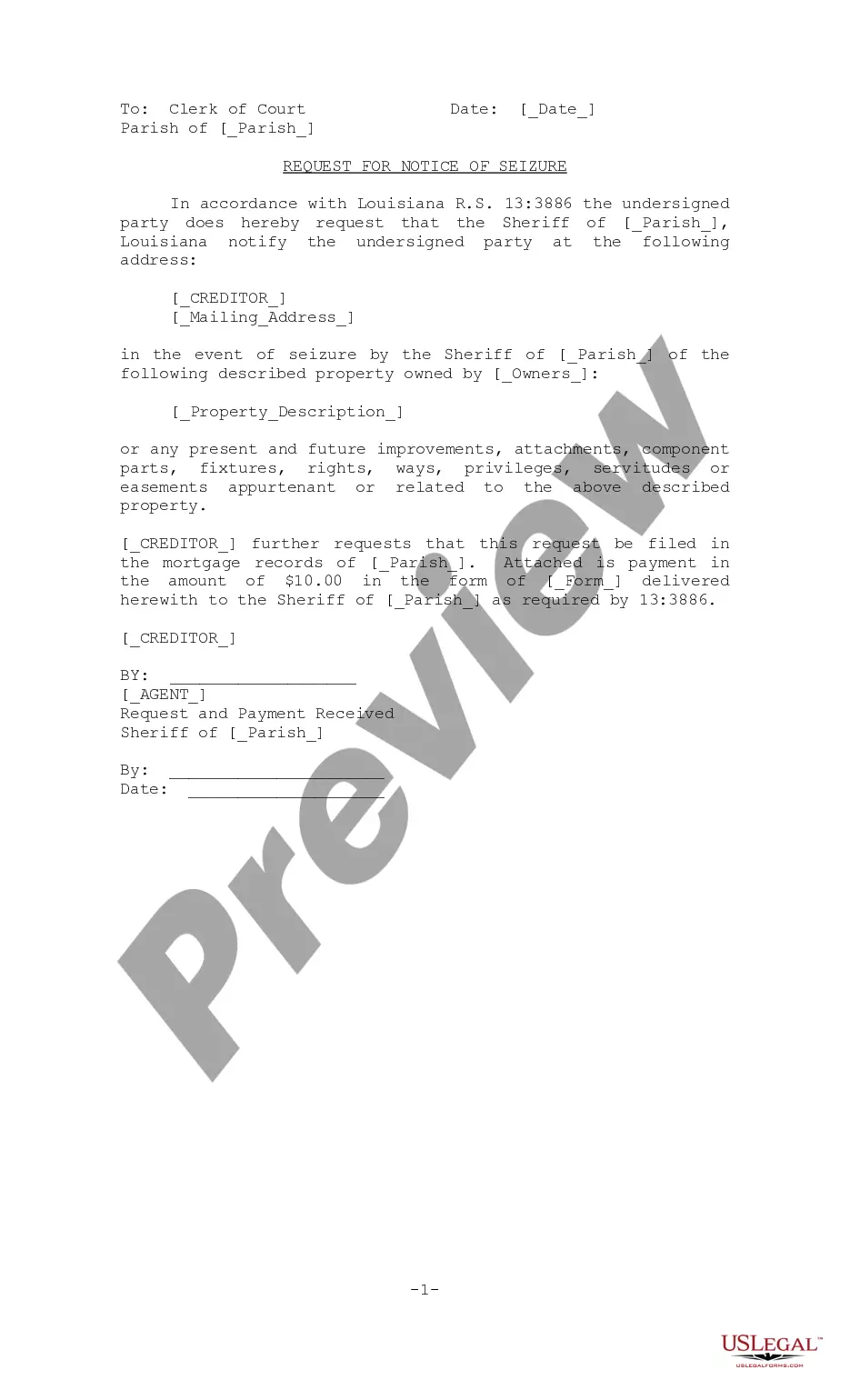
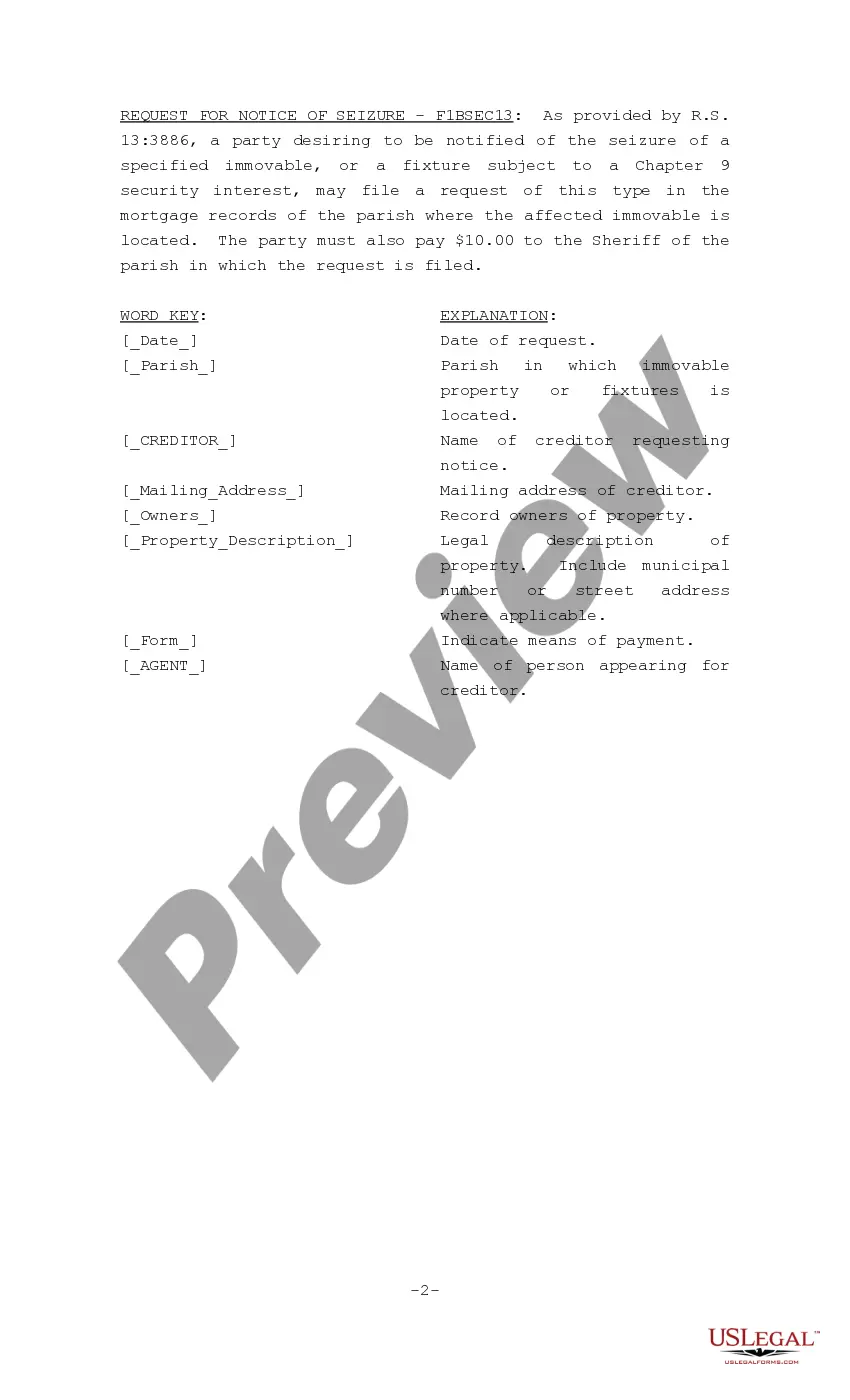
Request For Notice Of Seizure Louisiana
Description
Get your form ready online
Our built-in tools help you complete, sign, share, and store your documents in one place.
Make edits, fill in missing information, and update formatting in US Legal Forms—just like you would in MS Word.
Download a copy, print it, send it by email, or mail it via USPS—whatever works best for your next step.
Sign and collect signatures with our SignNow integration. Send to multiple recipients, set reminders, and more. Go Premium to unlock E-Sign.
If this form requires notarization, complete it online through a secure video call—no need to meet a notary in person or wait for an appointment.
We protect your documents and personal data by following strict security and privacy standards.

Make edits, fill in missing information, and update formatting in US Legal Forms—just like you would in MS Word.

Download a copy, print it, send it by email, or mail it via USPS—whatever works best for your next step.

Sign and collect signatures with our SignNow integration. Send to multiple recipients, set reminders, and more. Go Premium to unlock E-Sign.

If this form requires notarization, complete it online through a secure video call—no need to meet a notary in person or wait for an appointment.

We protect your documents and personal data by following strict security and privacy standards.
Looking for another form?

How to fill out Louisiana Request For Notice Of Seizure?
- If you already have an account with US Legal Forms, log in and ensure your subscription is active before downloading the required form.
- For first-time users, start by reviewing the form description and preview mode to ensure it fits your legal needs and local jurisdiction criteria.
- If necessary, use the Search tab to find additional templates that may be better suited to your situation.
- Select the document you need and click 'Buy Now.' Choose your subscription plan and create an account to access the document library.
- Complete the purchase by providing your payment details through a credit card or PayPal.
- Download the form to your device for completion, and access it later via the My Forms section.
US Legal Forms stands out with its robust collection of over 85,000 legal forms and packages, ensuring you have access to more documents than competitors at a similar cost. This extensive resource empowers both individuals and attorneys to efficiently handle their legal needs.
In conclusion, US Legal Forms simplifies the process of obtaining legal documentation like the 'Request for Notice of Seizure' in Louisiana. Begin your journey today and take advantage of the resources available to ensure your forms are accurate and legally binding.
Form popularity
FAQ
A writ of possession in Louisiana is a court order that allows a landlord or creditor to regain possession of property that is lawfully theirs. This process usually follows a legal judgment in a rental or debt-related case. If you face such a situation, knowing your rights and options can make a significant difference. You can enhance your understanding of these processes by utilizing the resources available when you make a request for notice of seizure Louisiana.
A court order to seize property is a legal document issued by a judge that authorizes the taking of property from a debtor to satisfy a debt. This order is typically granted after a creditor files for collection following a judgment. Understanding the implications of such an order is crucial for anyone involved. You should consider a request for notice of seizure Louisiana to stay informed about any developments related to your property.
A notice of seizure in Louisiana serves as an official document that informs property owners that their assets are subject to seizure due to a legal judgment. It typically follows a court ruling and allows creditors to claim the property in question. If you receive a notice, it is essential to understand your options and rights. An effective way to navigate this situation is to request for notice of seizure Louisiana, ensuring you are aware of any legal proceedings affecting your property.
In Louisiana, the local law enforcement agencies report seizures to the Department of Motor Vehicles (DMV). This can occur when vehicles are involved in legal issues or violations that warrant seizure. If you receive a notice regarding a seizure, it’s essential to send a Request for Notice of Seizure Louisiana to stay informed and protect your interests. uSlegalforms offers valuable resources to guide you through the necessary steps and help you respond correctly.
A seizure letter is an official document that notifies an individual about the seizure of their property. In Louisiana, it's critical to understand the implications of this document, especially if you want to take action. Should you receive a seizure letter, you may need to send a Request for Notice of Seizure Louisiana to ensure your rights are protected. Using uSlegalforms can help simplify the process and provide you with the necessary forms to respond appropriately.
A seizure of your property refers to the act of taking possession of your assets by a legal authority due to unpaid debts or violations of the law. This can occur without your consent, especially if certain legal criteria are met. Once your property is seized, you usually have limited time to contest the action. To better understand your rights and options, consider utilizing a request for notice of seizure in Louisiana through USLegalForms.
A notice of intent to seize is a preliminary document that indicates the government's intention to take your property. This notice provides you with information about the reasons for the intended seizure and how you can contest it. It is an opportunity for you to address any issues before a formal seizure occurs. Using platforms like USLegalForms can help you navigate these situations effectively.
In Louisiana, there are three main exceptions to the general principles of seizure, including exigent circumstances, consent, and plain view. Exigent circumstances allow authorities to act quickly in cases involving immediate danger or evidence destruction. Consent means if someone agrees, law enforcement can search without a warrant. For more information and how these exceptions may impact you, consider filing a request for notice of seizure in Louisiana.
A notice of seizure of property from the DEA indicates that your property has been taken due to alleged involvement in drug-related activities. This notice includes specific details about the property seized and the reasons for the action. It is essential to respond to this notice promptly, as failing to do so can lead to permanent loss of the property. For guidance, you may utilize USLegalForms to manage your response efficiently.
The search and seizure law in Louisiana dictates how law enforcement can legally take possession of property. This law emphasizes your rights and the requirement for authorities to follow due process before seizing your assets. Usually, a warrant is needed unless there are certain exceptions. To understand your rights better, check out the resources available on USLegalForms.