Misdemeanor For Stealing
Description
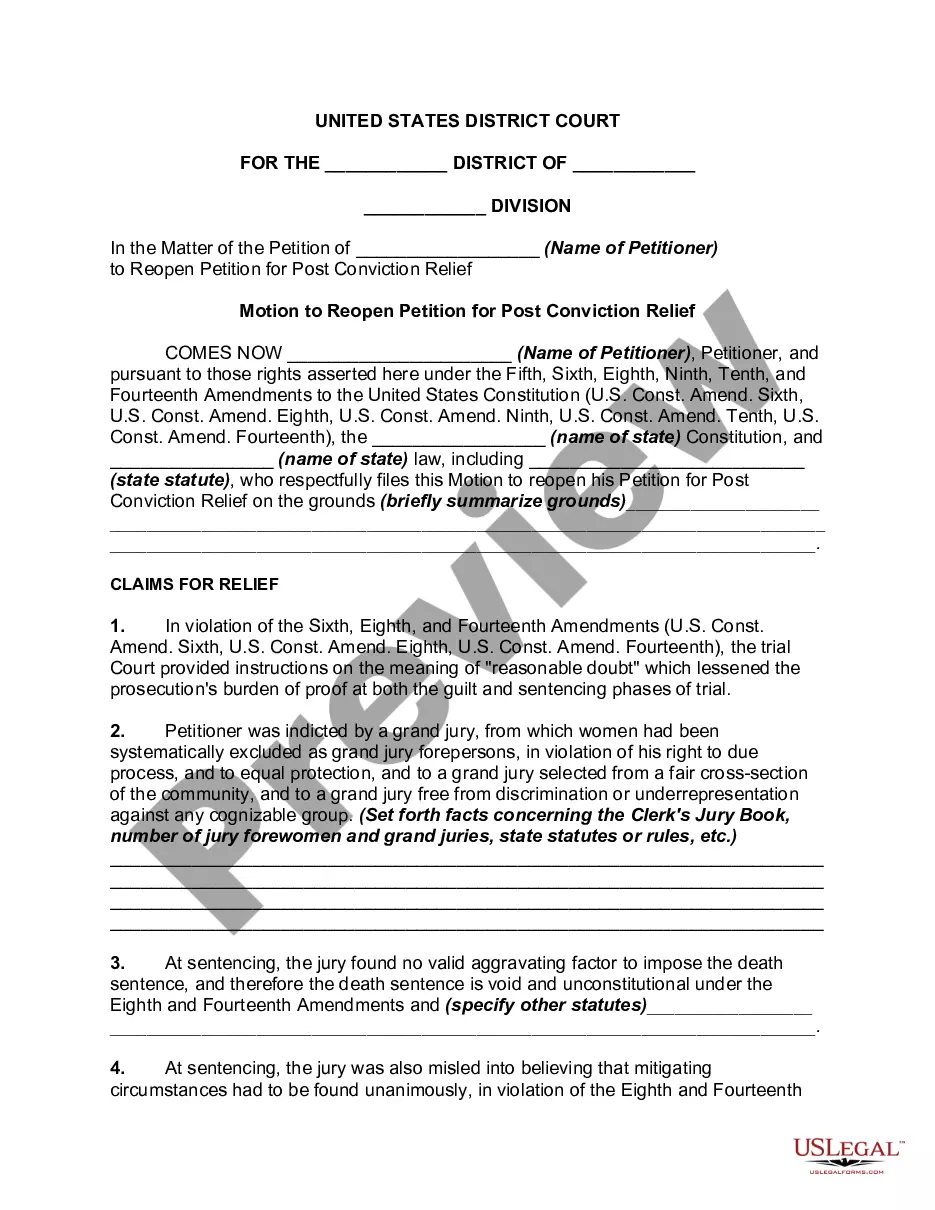
Get your form ready online
Our built-in tools help you complete, sign, share, and store your documents in one place.
Make edits, fill in missing information, and update formatting in US Legal Forms—just like you would in MS Word.
Download a copy, print it, send it by email, or mail it via USPS—whatever works best for your next step.
Sign and collect signatures with our SignNow integration. Send to multiple recipients, set reminders, and more. Go Premium to unlock E-Sign.
If this form requires notarization, complete it online through a secure video call—no need to meet a notary in person or wait for an appointment.
We protect your documents and personal data by following strict security and privacy standards.

Make edits, fill in missing information, and update formatting in US Legal Forms—just like you would in MS Word.

Download a copy, print it, send it by email, or mail it via USPS—whatever works best for your next step.

Sign and collect signatures with our SignNow integration. Send to multiple recipients, set reminders, and more. Go Premium to unlock E-Sign.

If this form requires notarization, complete it online through a secure video call—no need to meet a notary in person or wait for an appointment.

We protect your documents and personal data by following strict security and privacy standards.
Looking for another form?
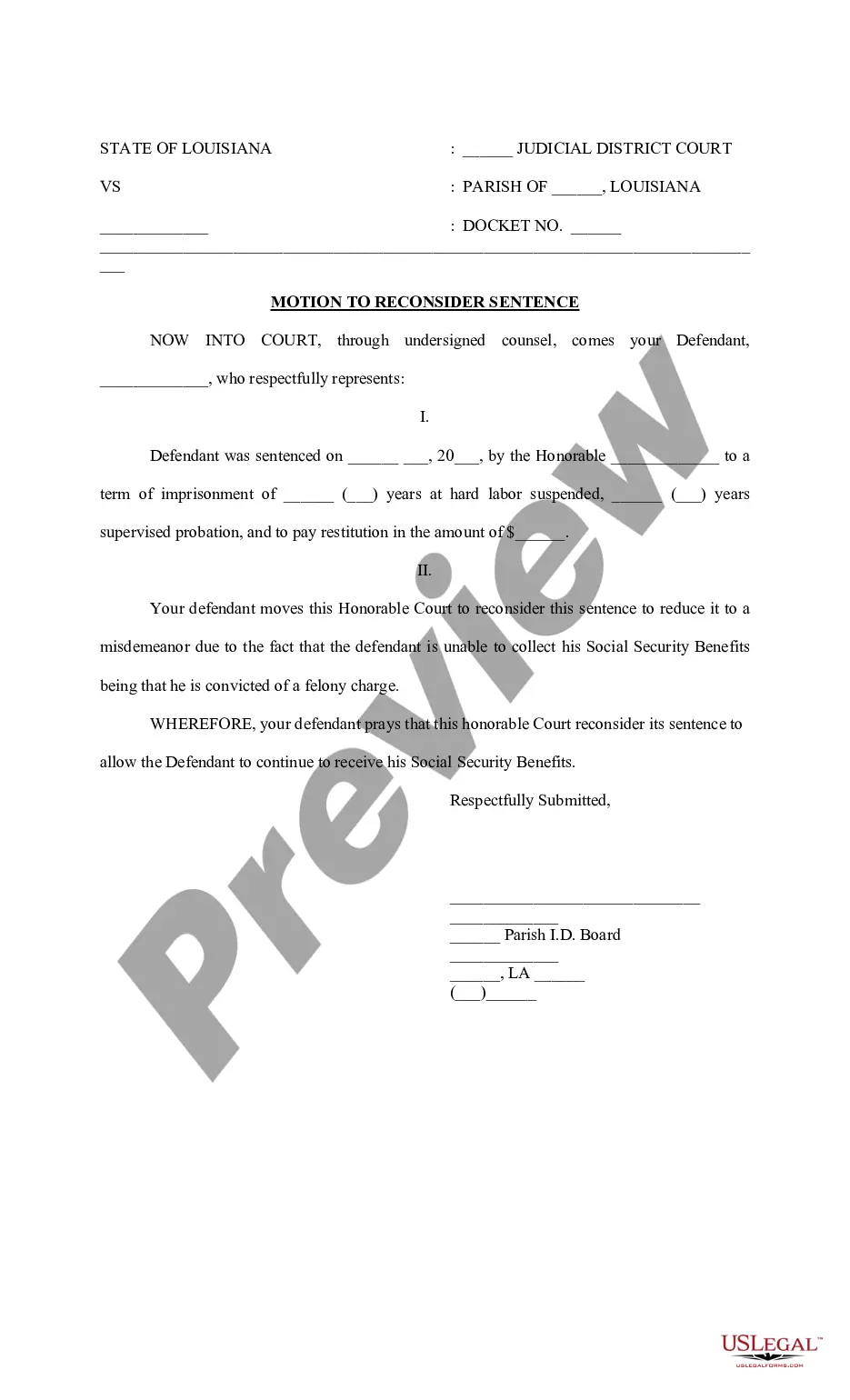
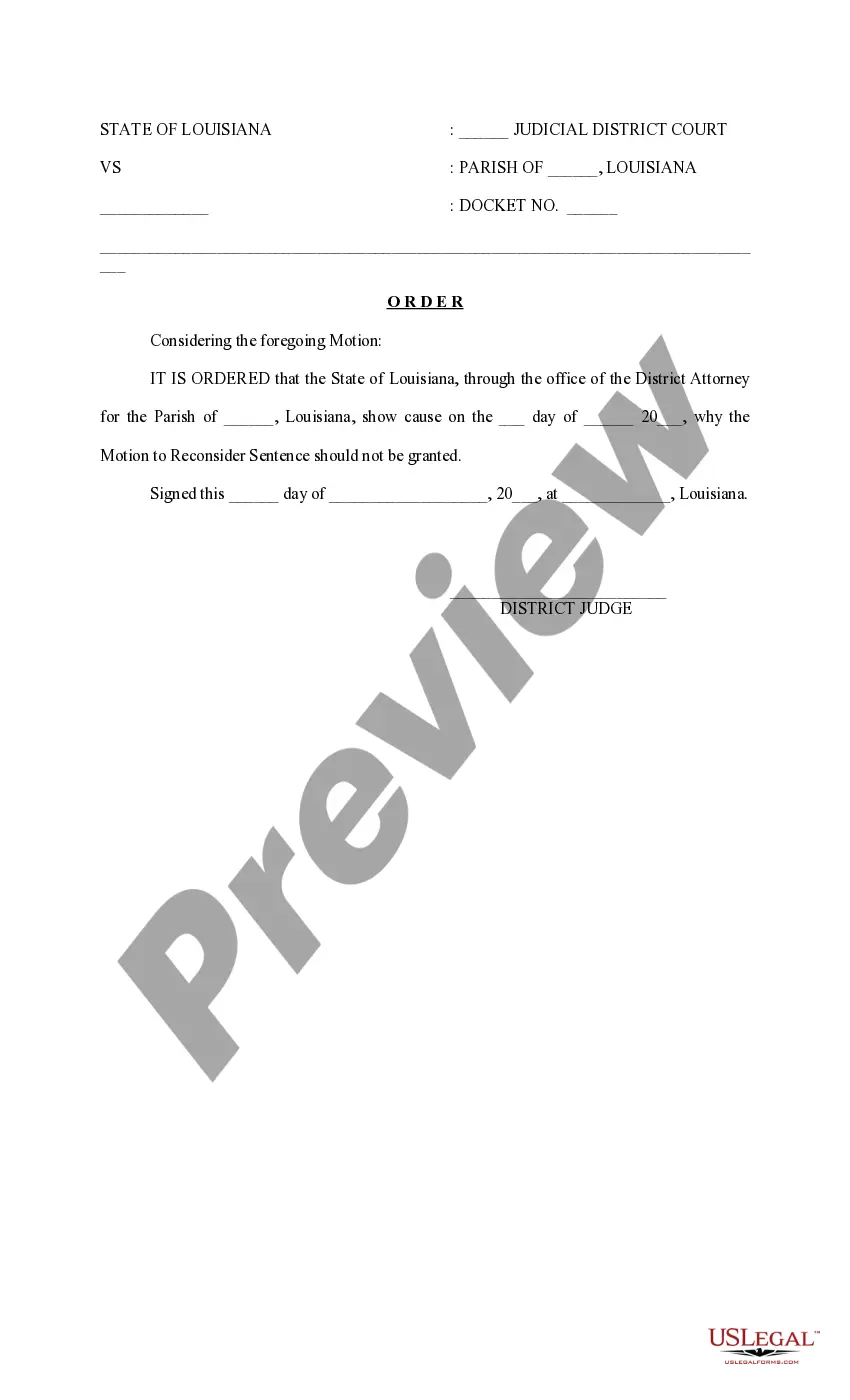
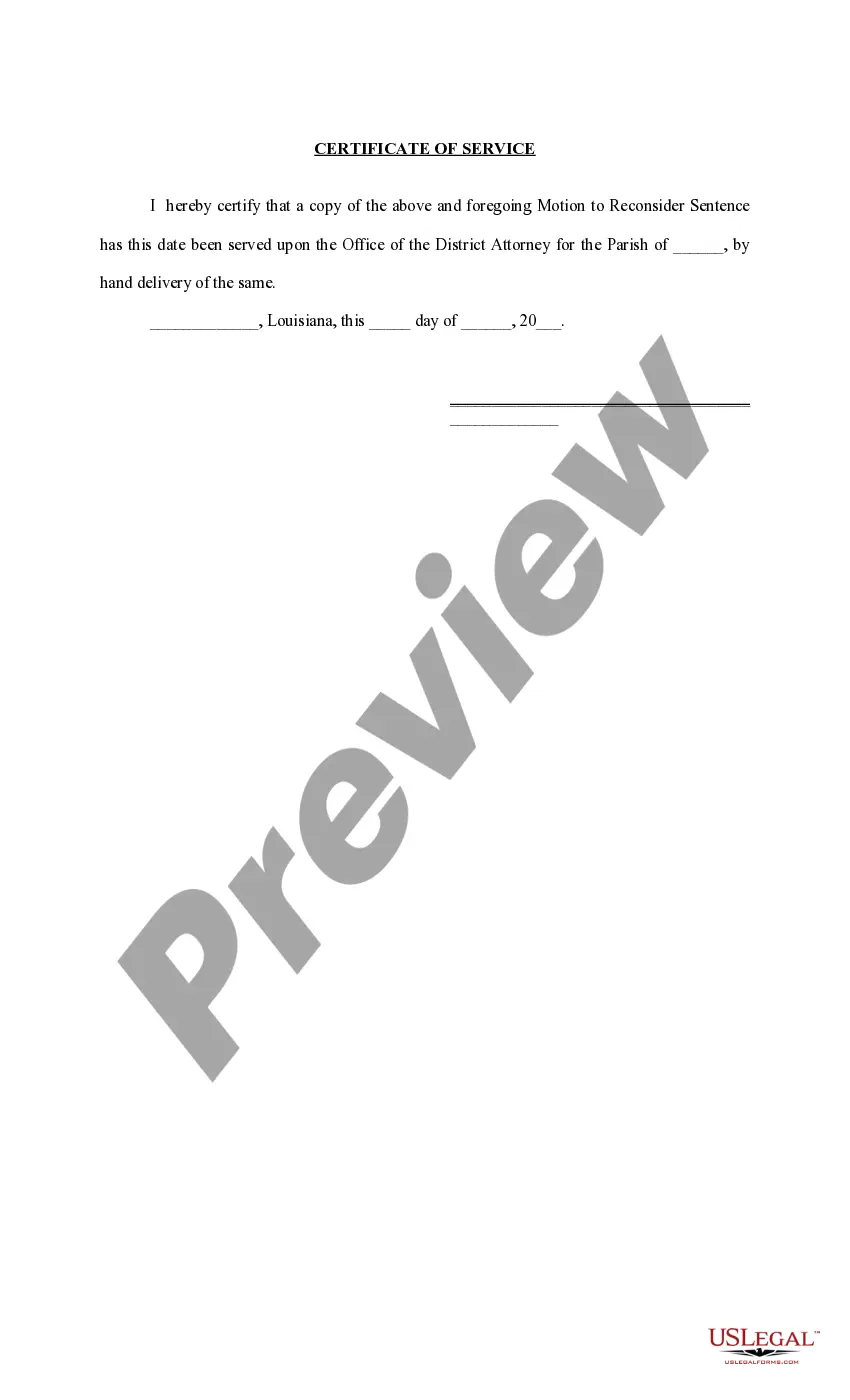
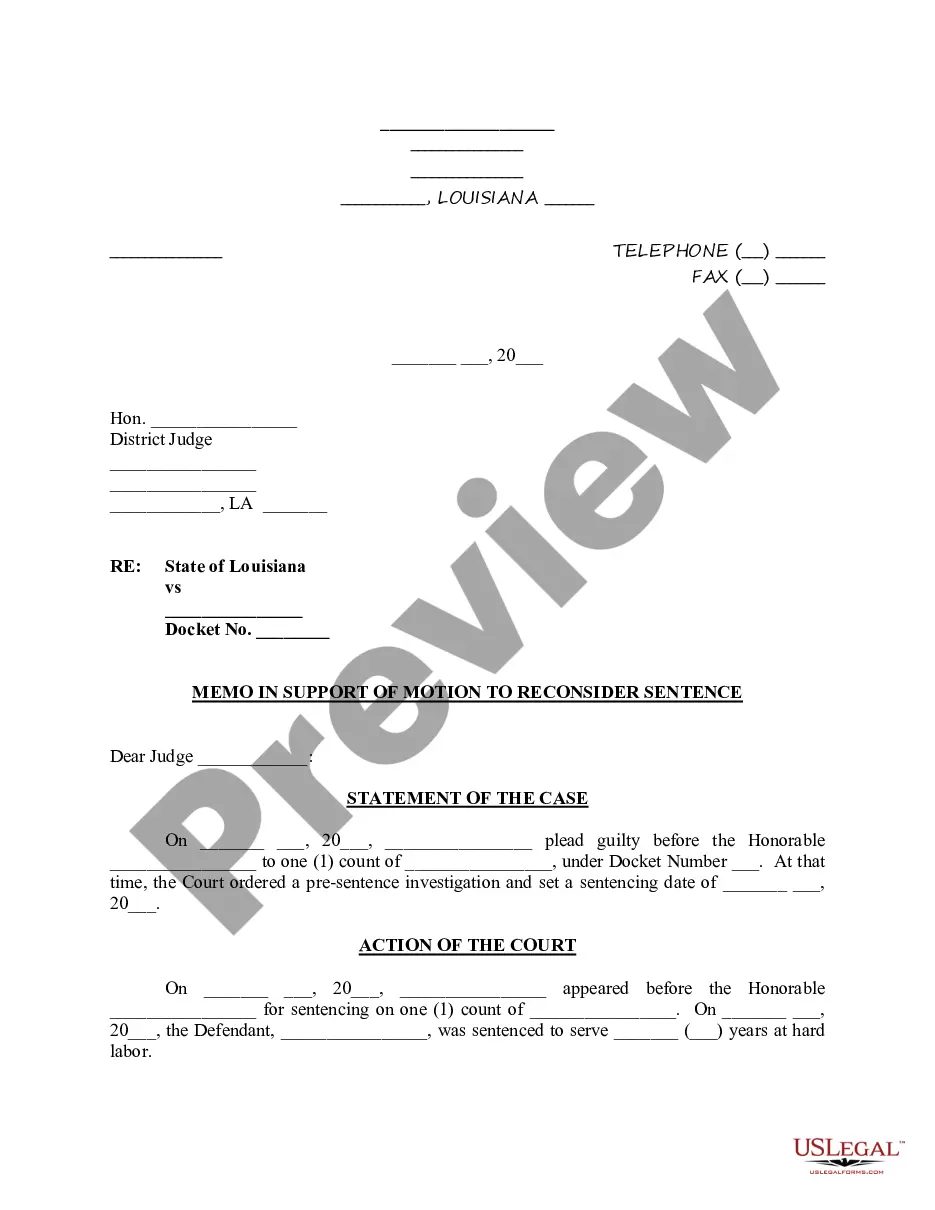
How to fill out Louisiana Motion To Reconsider Sentence Change From Felony To Misdemeanor?
Dealing with legal documents and procedures can often be a lengthy addition to your daily routine.
Misdemeanor for Theft and similar paperwork typically necessitate you to locate them and comprehend how to fill them out properly.
Thus, whether you are managing financial, legal, or personal affairs, possessing a comprehensive and user-friendly online directory of forms readily available will greatly benefit you.
US Legal Forms is the premier online source for legal documents, boasting over 85,000 state-specific forms and a variety of resources to help you handle your paperwork with ease.
Is this your first experience with US Legal Forms? Register and create an account in just a few minutes to gain access to the form repository and Misdemeanor for Theft. Next, follow the instructions below to finalize your form.
- Explore the collection of pertinent documents with just one click.
- US Legal Forms offers state- and county-specific forms available for download at any time.
- Protect your document management processes with a top-notch service that enables you to complete any form in minutes without additional or concealed fees.
- Simply Log In to your account, locate Misdemeanor for Theft and download it immediately from the My documents tab.
- You can also revisit forms that you've downloaded in the past.
Form popularity
FAQ
The most typical punishment for a first-time misdemeanor can vary, but it often includes fines, community service, or short jail time. Usually, first-time offenders may receive probation instead of jail time, especially for a misdemeanor for stealing. This approach allows individuals to avoid a permanent criminal record while still addressing their actions. It's important to understand the potential consequences of a misdemeanor for stealing to make informed decisions.
Writing a misdemeanor involves clearly outlining the charges and the circumstances surrounding them. Begin with a description of the act, such as theft, and specify how it fits the legal definition of a misdemeanor. You can also include relevant laws or statutes that pertain to the misdemeanor for stealing. Being thorough in your written account can help clarify the situation for all parties involved.
To write a report about theft, start by clearly stating the facts of the incident. Include details such as the date, time, and location of the theft, along with a description of the stolen items. Additionally, mention any witnesses and their contact information if available. Writing a detailed report can be crucial when dealing with a misdemeanor for stealing, as it provides clear documentation for law enforcement.
The consequences of stealing can vary significantly, but a misdemeanor for stealing often results in fines, community service, or short-term imprisonment. Depending on the value of the stolen item, you might face harsher penalties, including a criminal record. It’s important to consider how a misdemeanor can affect your future employment opportunities and personal reputation. To navigate the legal implications effectively, consulting platforms like USLegalForms can help you understand your options and rights.
The lowest sentence for misdemeanor for stealing can vary based on the state and the specific circumstances of the case. Generally, a first-time offender may face fines, probation, or a short jail term. It is important to note that judges have discretion in determining the outcome, influenced by factors such as the amount stolen and whether there are prior offenses. Consulting with a legal professional can help navigate these complexities.
When dealing with misdemeanor for stealing, the evidence required may include witness statements, video footage, and any physical items linked to the theft. Receipts or other documentation that supports your claim can also be vital. Ensuring you have this evidence will aid law enforcement and may strengthen your case should it go to court. Remember, the more detailed and organized your evidence is, the better your chance of a successful prosecution.
To press charges for misdemeanor for stealing, you typically need to report the incident to your local law enforcement agency. They will investigate the situation and gather relevant details. You may need to provide your statement and any evidence you have related to the theft. Once they have sufficient information, they can file charges based on the evidence collected.
A misdemeanor for stealing often involves taking property of relatively low value without the owner's consent. For instance, shoplifting an item from a store that costs under a certain amount, like a piece of clothing, can qualify as a misdemeanor theft. This type of offense typically results in less severe penalties compared to felony theft. If you face such charges, using a resource like USLegalForms can help you understand your rights and navigate the legal process.