Title For Lawyer Abbreviation
Description
Get your form ready online
Our built-in tools help you complete, sign, share, and store your documents in one place.
Make edits, fill in missing information, and update formatting in US Legal Forms—just like you would in MS Word.
Download a copy, print it, send it by email, or mail it via USPS—whatever works best for your next step.
Sign and collect signatures with our SignNow integration. Send to multiple recipients, set reminders, and more. Go Premium to unlock E-Sign.
If this form requires notarization, complete it online through a secure video call—no need to meet a notary in person or wait for an appointment.
We protect your documents and personal data by following strict security and privacy standards.

Make edits, fill in missing information, and update formatting in US Legal Forms—just like you would in MS Word.

Download a copy, print it, send it by email, or mail it via USPS—whatever works best for your next step.

Sign and collect signatures with our SignNow integration. Send to multiple recipients, set reminders, and more. Go Premium to unlock E-Sign.

If this form requires notarization, complete it online through a secure video call—no need to meet a notary in person or wait for an appointment.

We protect your documents and personal data by following strict security and privacy standards.
Looking for another form?










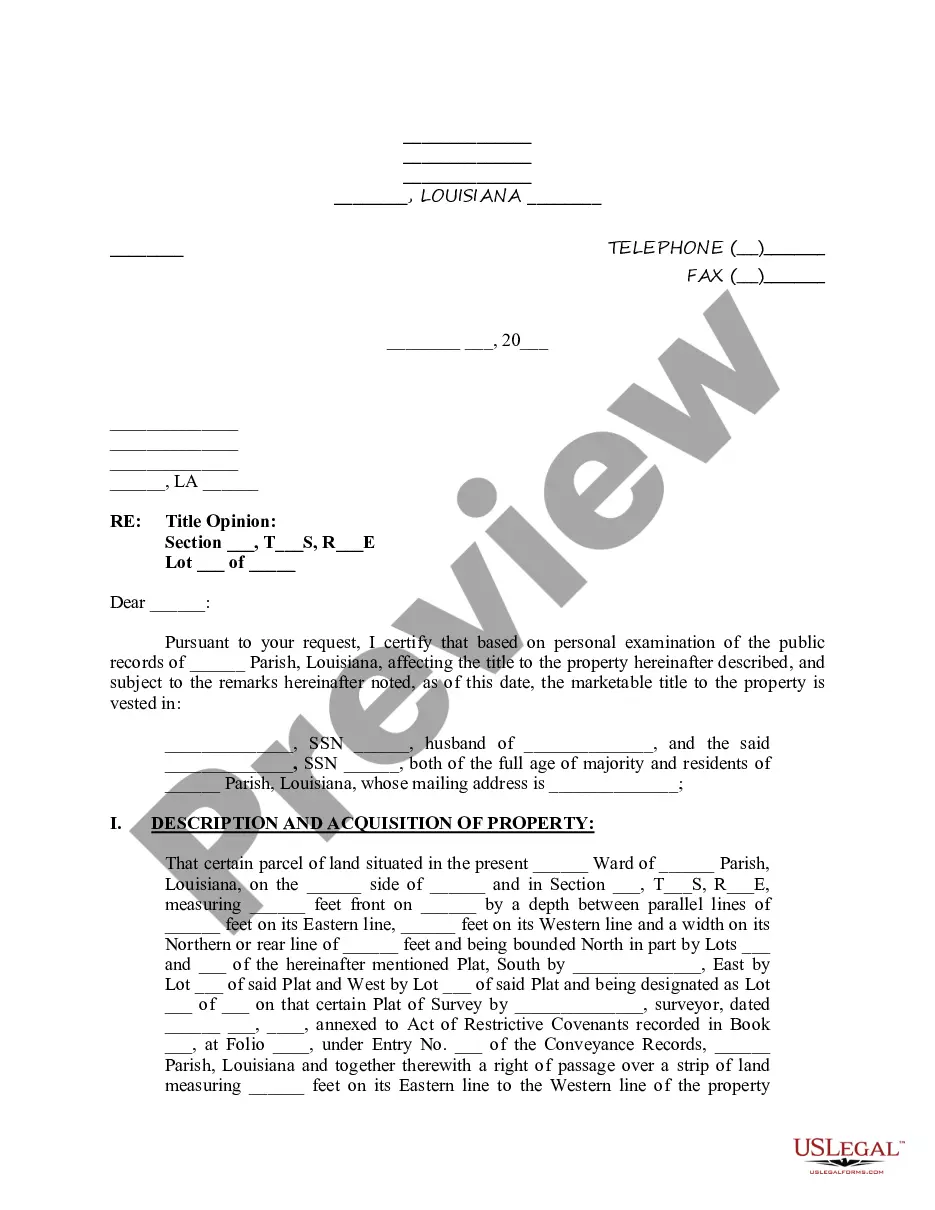
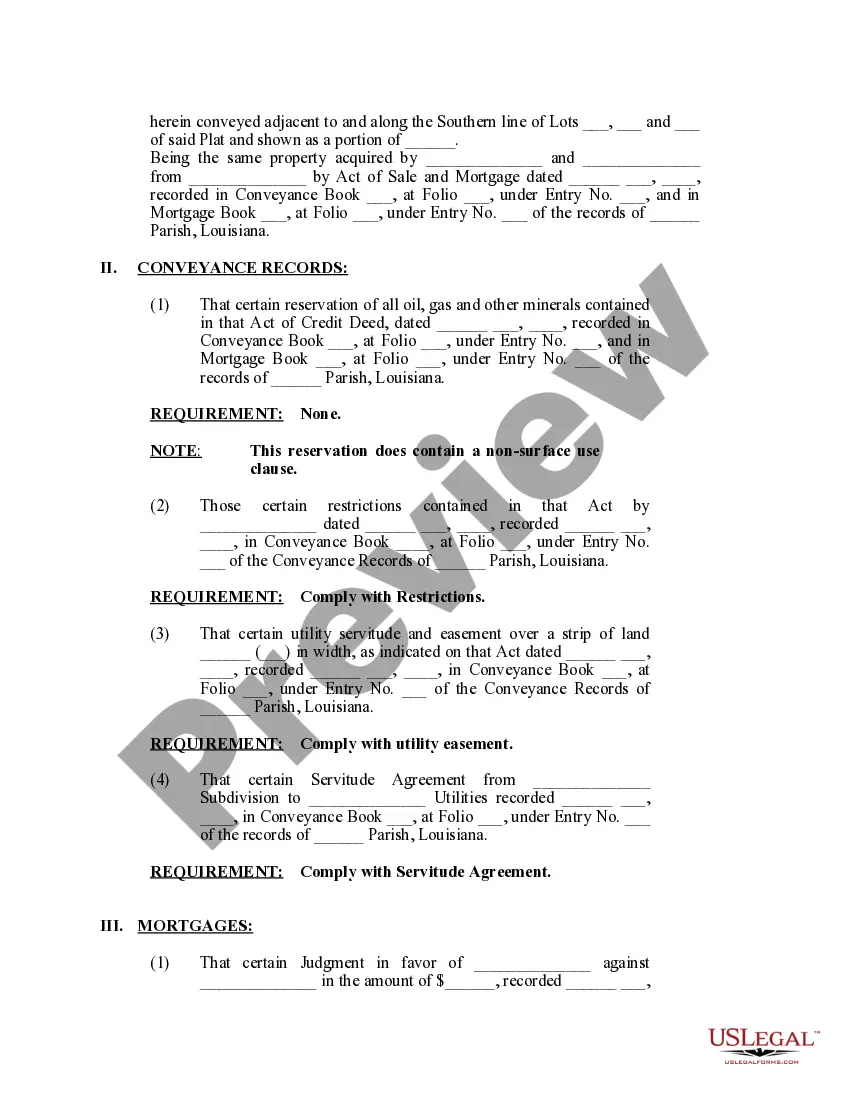
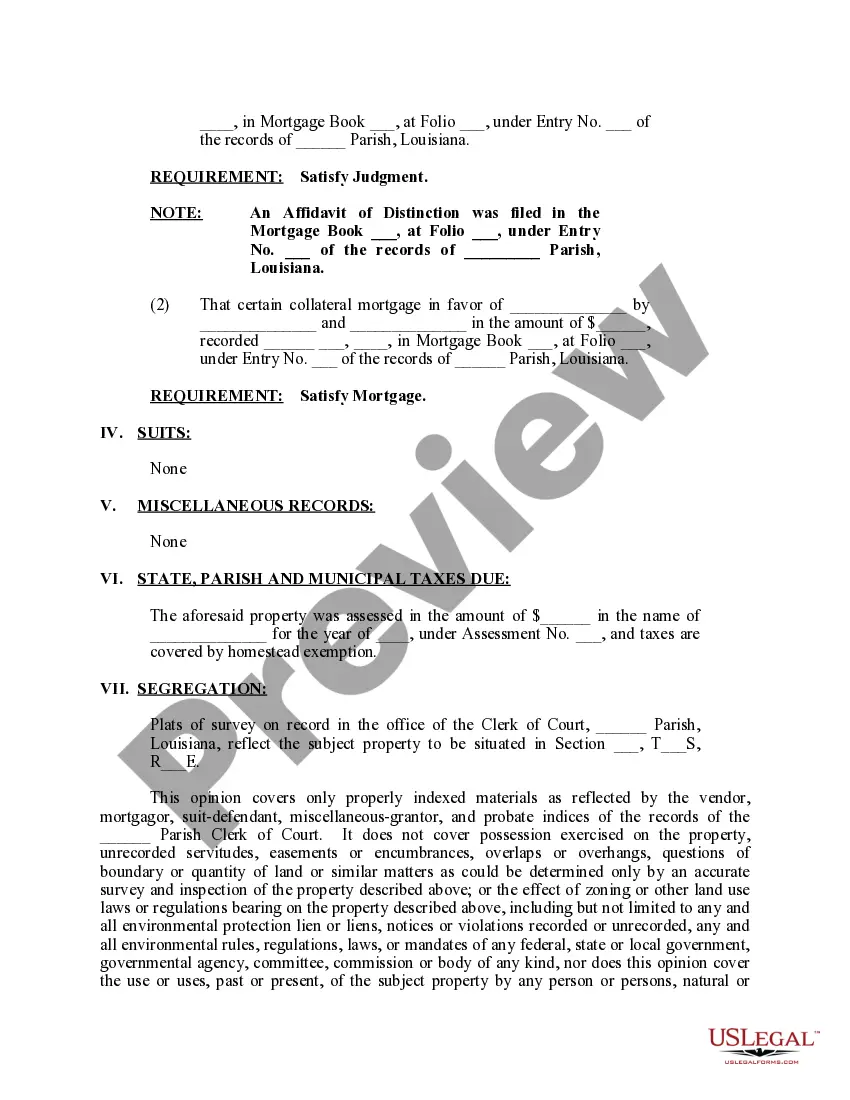
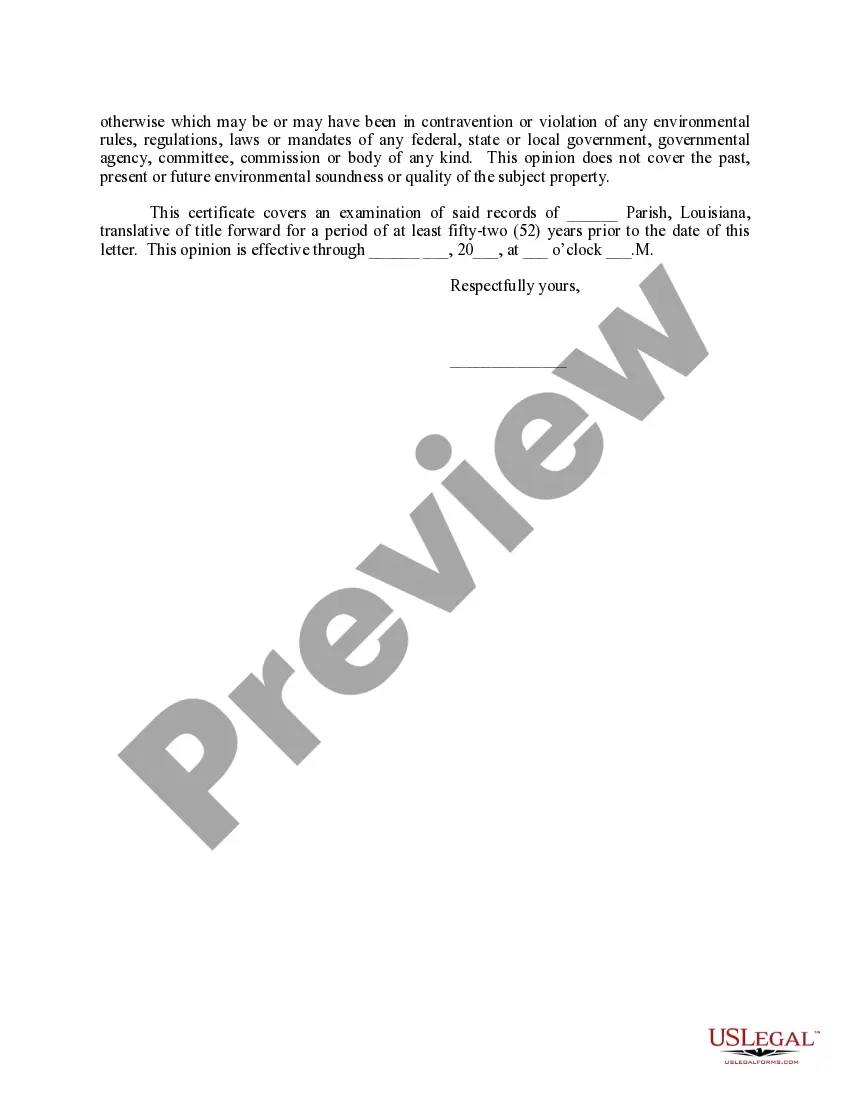
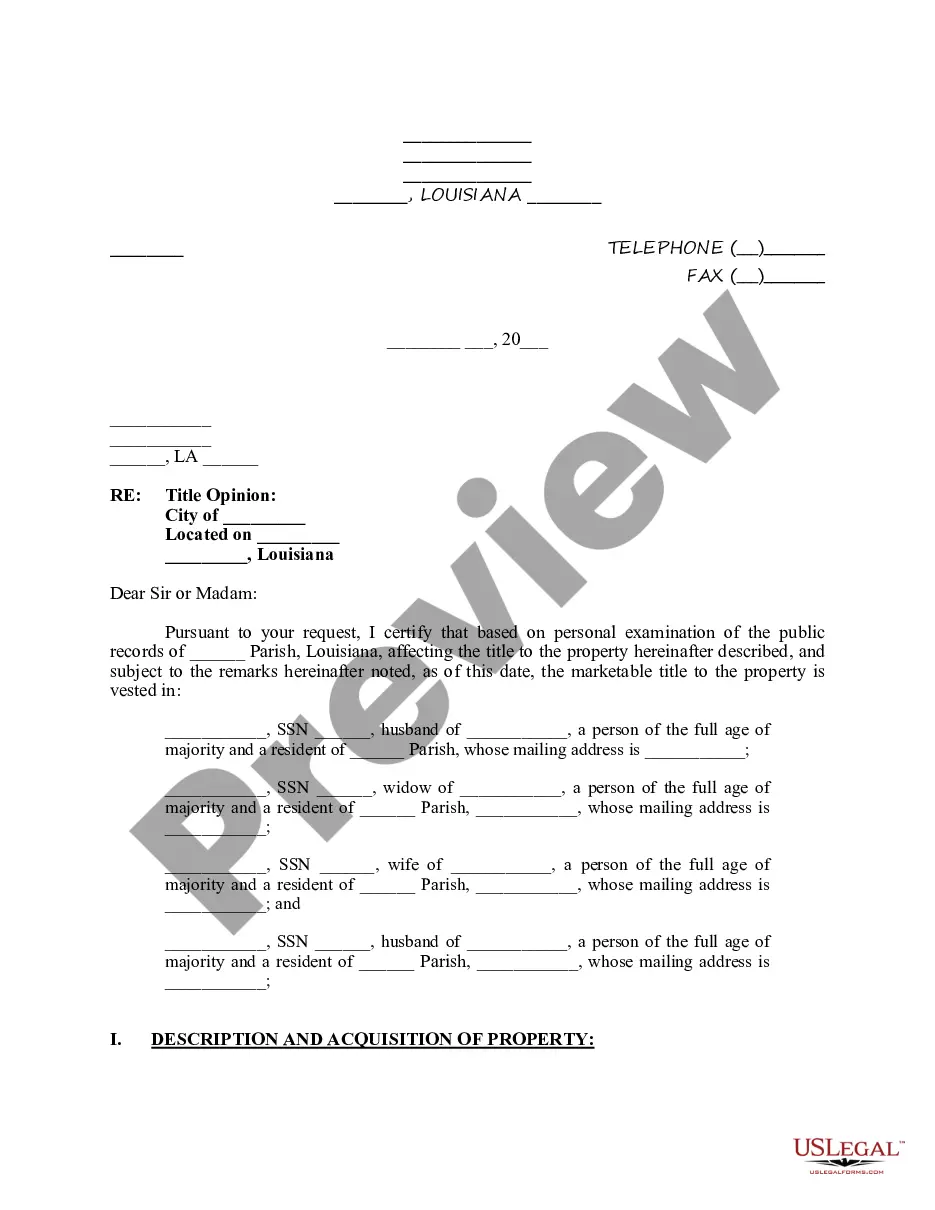
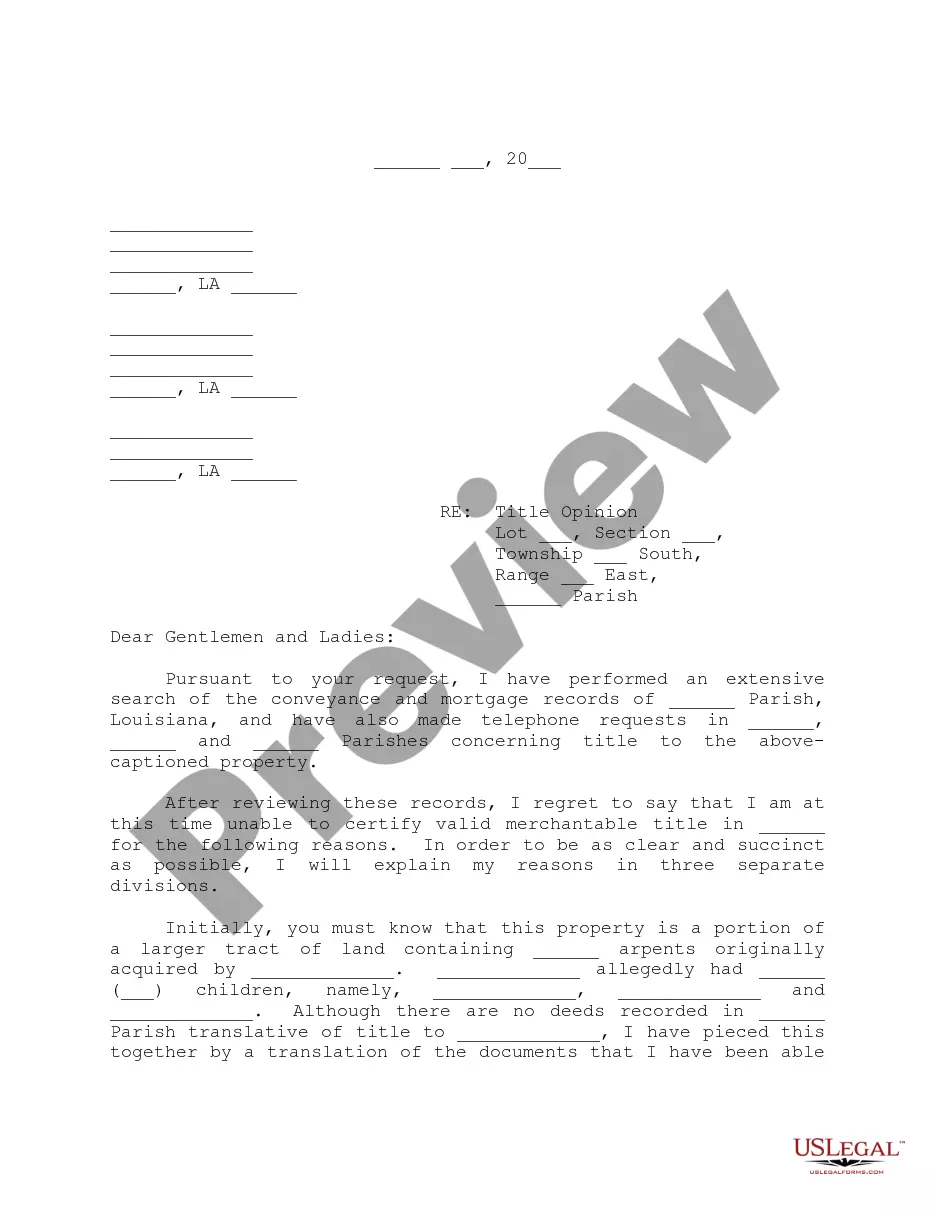
How to fill out Louisiana Title Opinion Of Attorney Letter To Individual?
Obtaining a reliable source for the latest and pertinent legal samples is part of the challenge of managing bureaucracy.
Selecting the appropriate legal documents requires accuracy and carefulness, which clarifies why it is essential to obtain samples of Title For Lawyer Abbreviation solely from reputable sources, such as US Legal Forms. An incorrect template will squander your time and postpone your current situation.
When you have the document on your device, you can modify it using the editor or print it and complete it manually. Eliminate the stress that comes with your legal paperwork. Discover the vast US Legal Forms library where you can locate legal samples, review their applicability to your situation, and download them immediately.
- Utilize the catalog navigation or search bar to locate your template.
- Examine the form’s description to determine if it meets the needs of your state and county.
- Check the form preview, if available, to ensure the template is the one you are looking for.
- Return to the search if the Title For Lawyer Abbreviation does not fulfill your requirements.
- Once you are certain about the form’s applicability, download it.
- If you are a registered user, click Log in to verify and access your chosen templates in My documents.
- If you do not have an account yet, click Buy now to acquire the template.
- Choose the pricing plan that aligns with your preferences.
- Proceed to register to complete your acquisition.
- Finalize your transaction by selecting a payment method (credit card or PayPal).
- Select the file format for downloading Title For Lawyer Abbreviation.
Form popularity
FAQ
A lawyer can be referred to by several titles, but the most common one is 'Attorney' or 'Attorney at Law'. In addition, many lawyers use the abbreviation 'Esq' to indicate their legal status. It is important to use the correct title for lawyer abbreviation to show respect for their profession. For those seeking to learn more about legal titles, US Legal Forms offers a variety of resources and templates that can enhance your understanding.
The common 3 letter abbreviation for lawyers is 'Esq', which stands for 'Esquire'. This title is often used in the United States to denote a licensed attorney. It signifies a legal professional who has completed the necessary education and passed the bar exam. If you are looking for more information about the title for lawyer abbreviation, US Legal Forms can provide resources and forms to help you understand legal titles better.
To write a lawyer's title correctly, you should include the appropriate abbreviation followed by the lawyer's name. For example, you might write 'John Smith, Esq.' It's crucial to ensure accuracy when using a title for lawyer abbreviation, as this reflects the lawyer's credentials. For more assistance in drafting legal documents, USLegalForms provides user-friendly templates and guidance.
The official title for a lawyer is often 'Attorney' or 'Counsel.' However, depending on their qualifications and the jurisdiction, they may also use titles like 'Esquire.' Understanding these titles helps in identifying the professional standing of the lawyer. USLegalForms offers insights and templates that can clarify the various titles for lawyer abbreviation.
A lawyer abbreviation is typically referred to as a legal title or designation. These abbreviations signify an attorney's qualifications and role in the legal field. For instance, 'JD' stands for Juris Doctor, while 'LLM' indicates a Master of Laws. If you're unsure about which title for lawyer abbreviation to use, consider consulting legal resources available on USLegalForms.
A lawyer's title is often abbreviated using common designations like 'Esq.' for Esquire. This abbreviation indicates that the individual is a licensed attorney. It's important to use the correct title for lawyer abbreviation to maintain professionalism in legal documents. If you need more guidance on legal titles, platforms like USLegalForms can provide useful resources.
Using Esq, or Esquire, in Written Communication The term esquire, or the abbreviation Esq., gets used most frequently in written legal communications. It offers a sign that you have communicated directly with an attorney rather than a legal assistant, paralegal, or someone else within the office.
In the United States, esquire (often shortened to Esq.) is a title of courtesy, given to a lawyer and commonly appended to his/her surname (e.g., John Smith, Esq. or John Smith, Esquire) when addressing the lawyer in written form.
JD can go after a lawyer's name, but it is usually only used in academic settings. Even though a legal degree is a doctorate, you do not usually address law degree holders as "doctor." Lawyers do not normally put Esq. after their name and many attorneys consider it old-fashioned.
(Esquire)? "Esq." or "Esquire" is an honorary title that is placed after a practicing lawyer's name. Practicing lawyers are those who have passed a state's (or Washington, D.C.'s) bar exam and have been licensed by that jurisdiction's bar association.