Louisiana Will Testament Without A Will
Description
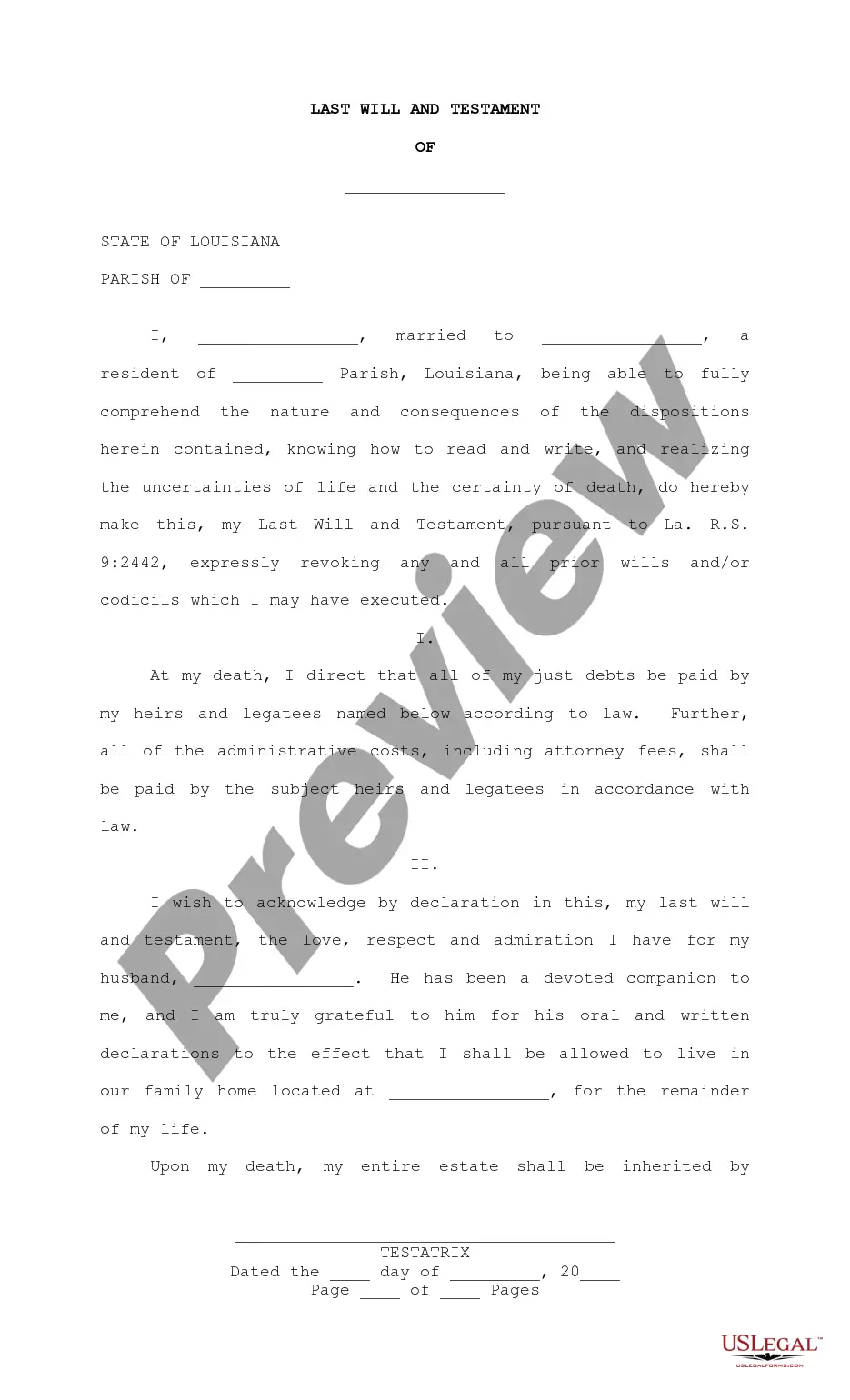
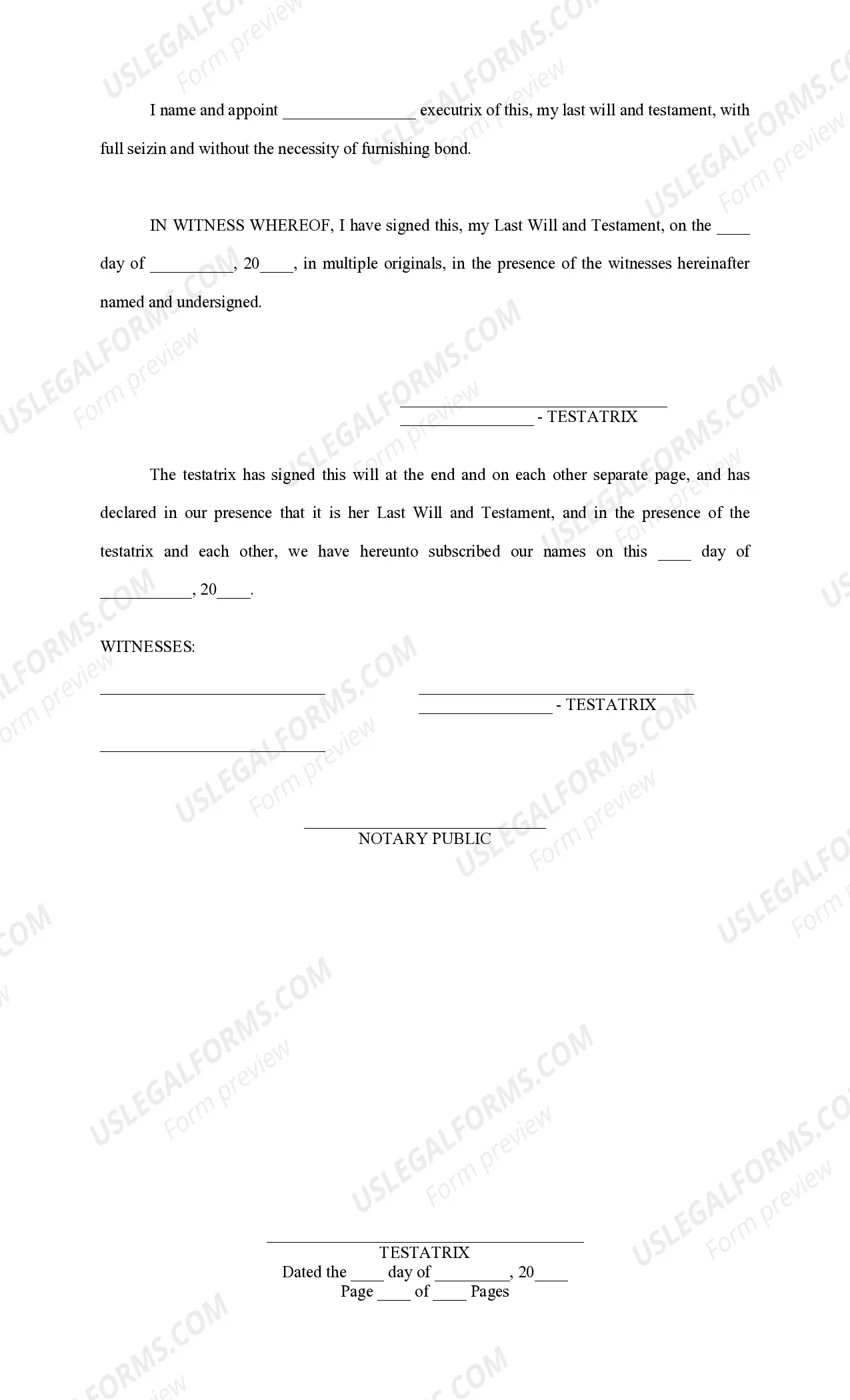







How to fill out Louisiana Last Will And Testament, Spouse, No Children?
It’s obvious that you can’t become a law professional immediately, nor can you grasp how to quickly prepare Louisiana Will Testament Without A Will without the need of a specialized background. Creating legal forms is a time-consuming venture requiring a certain training and skills. So why not leave the creation of the Louisiana Will Testament Without A Will to the professionals?
With US Legal Forms, one of the most extensive legal template libraries, you can access anything from court documents to templates for internal corporate communication. We know how crucial compliance and adherence to federal and state laws are. That’s why, on our website, all templates are location specific and up to date.
Here’s start off with our platform and get the document you need in mere minutes:
- Find the document you need by using the search bar at the top of the page.
- Preview it (if this option available) and read the supporting description to figure out whether Louisiana Will Testament Without A Will is what you’re searching for.
- Start your search again if you need any other form.
- Register for a free account and select a subscription option to purchase the form.
- Choose Buy now. Once the payment is through, you can get the Louisiana Will Testament Without A Will, fill it out, print it, and send or mail it to the designated individuals or entities.
You can re-access your forms from the My Forms tab at any time. If you’re an existing customer, you can simply log in, and locate and download the template from the same tab.
No matter the purpose of your forms-be it financial and legal, or personal-our platform has you covered. Try US Legal Forms now!
Form popularity
FAQ
Form a last will in Louisiana Witnesses: At least two people must sign a declaration signifying that they have witnessed the testator signing the will or declaring the document to be his will. This must be done in the presence of a notary. Writing: A Louisiana will must be in writing to be valid.
Louisiana's intestate rules distribute a deceased person's assets to various relatives, beginning with the children and spouse and extending to other descendants, ancestors, and descendants of ancestors.
While this usually makes the will probate process a little more difficult and costly, a handwritten will can be valid in Louisiana. Although you can write your own will, the Louisiana Civil Code is often confusing in this area.
Create an olographic will. Olographic wills have different execution requirements than notarial wills, but they must comply with Louisiana law. Olographic wills must be entirely handwritten, dated, and signed at the end of the document.
The general requirements for a valid Will are usually as follows: (a) the document must be written (meaning typed or printed), (b) signed by the person making the Will (usually called the ?testator? or ?testatrix?, and (c) signed by two witnesses who were present to witness the execution of the document by the maker ...