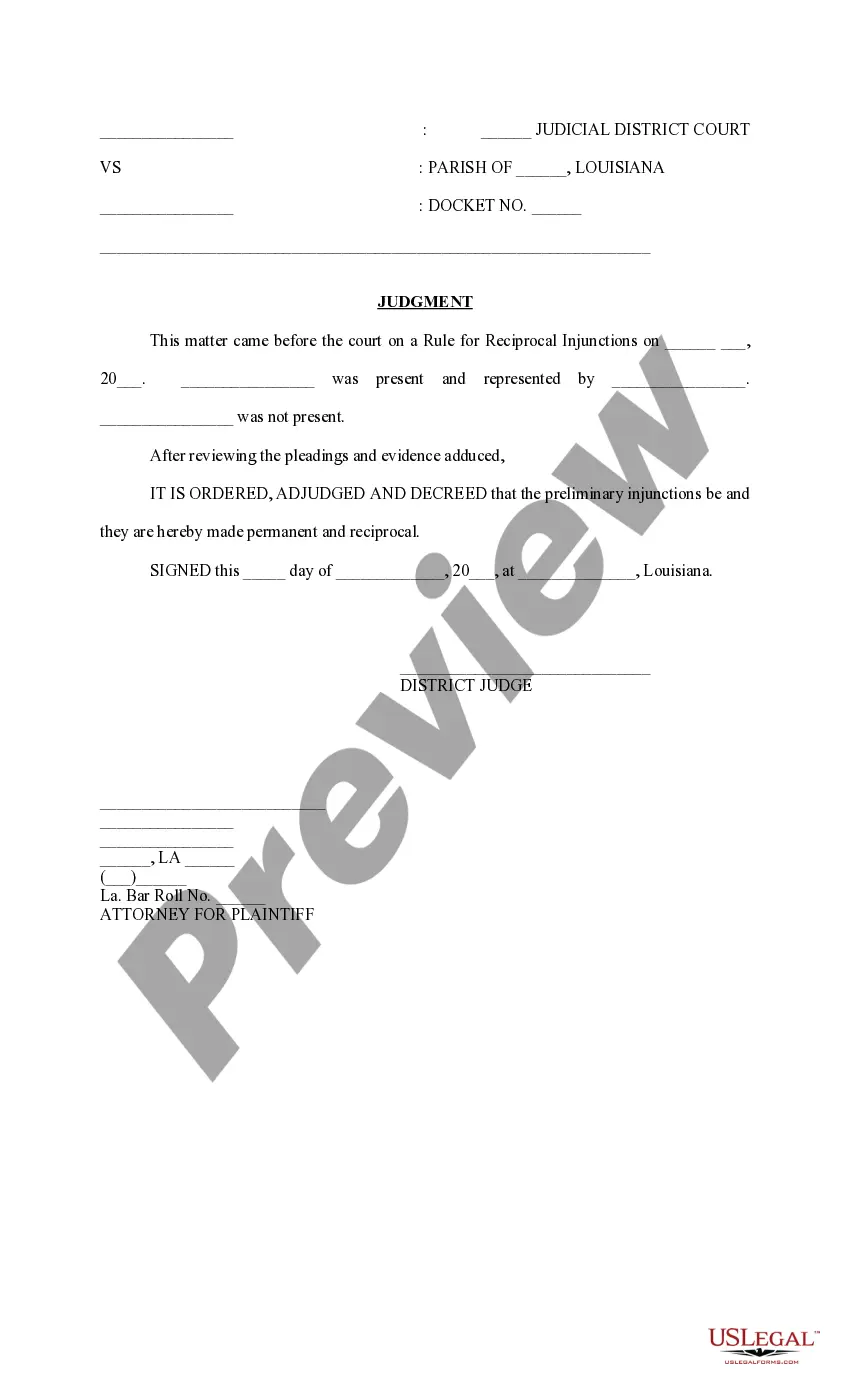
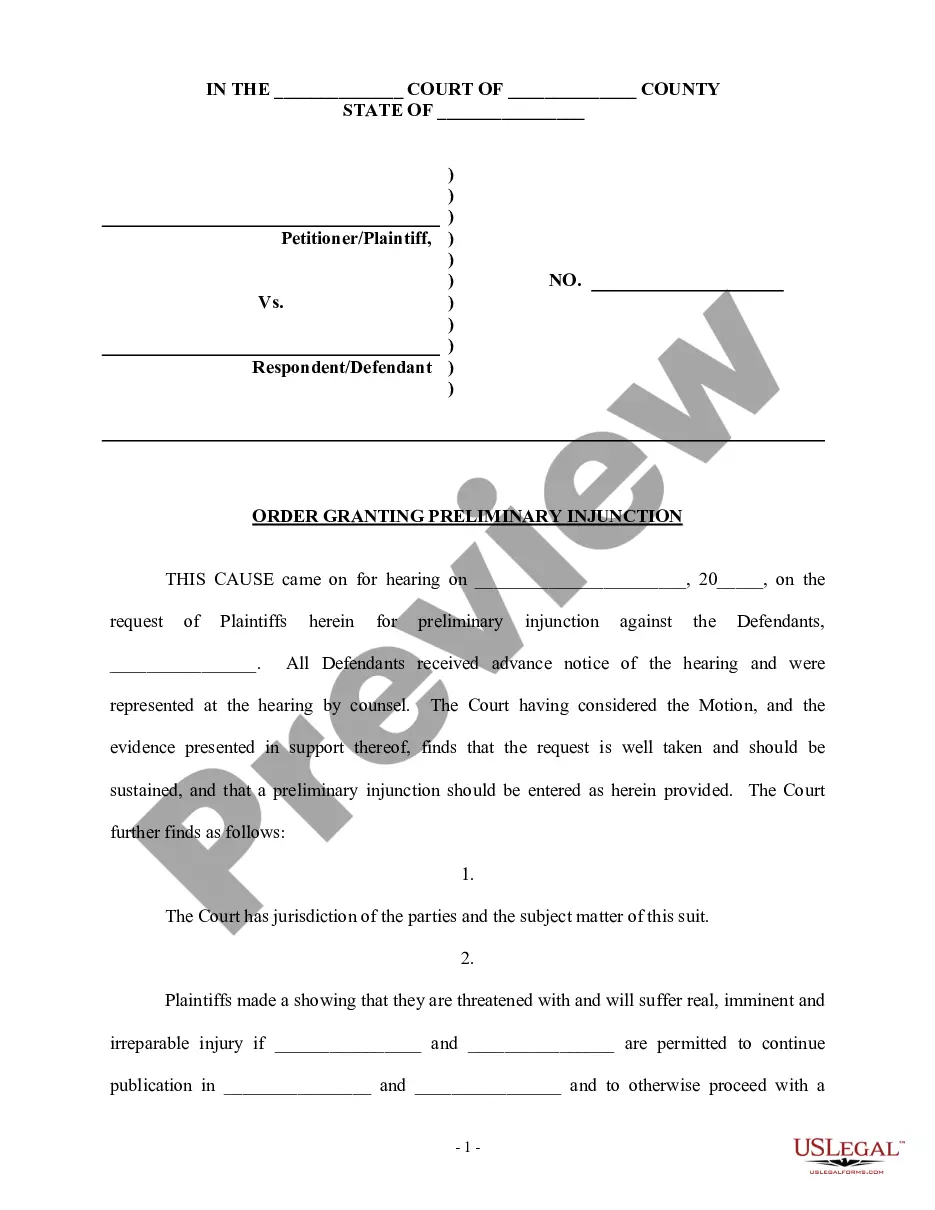
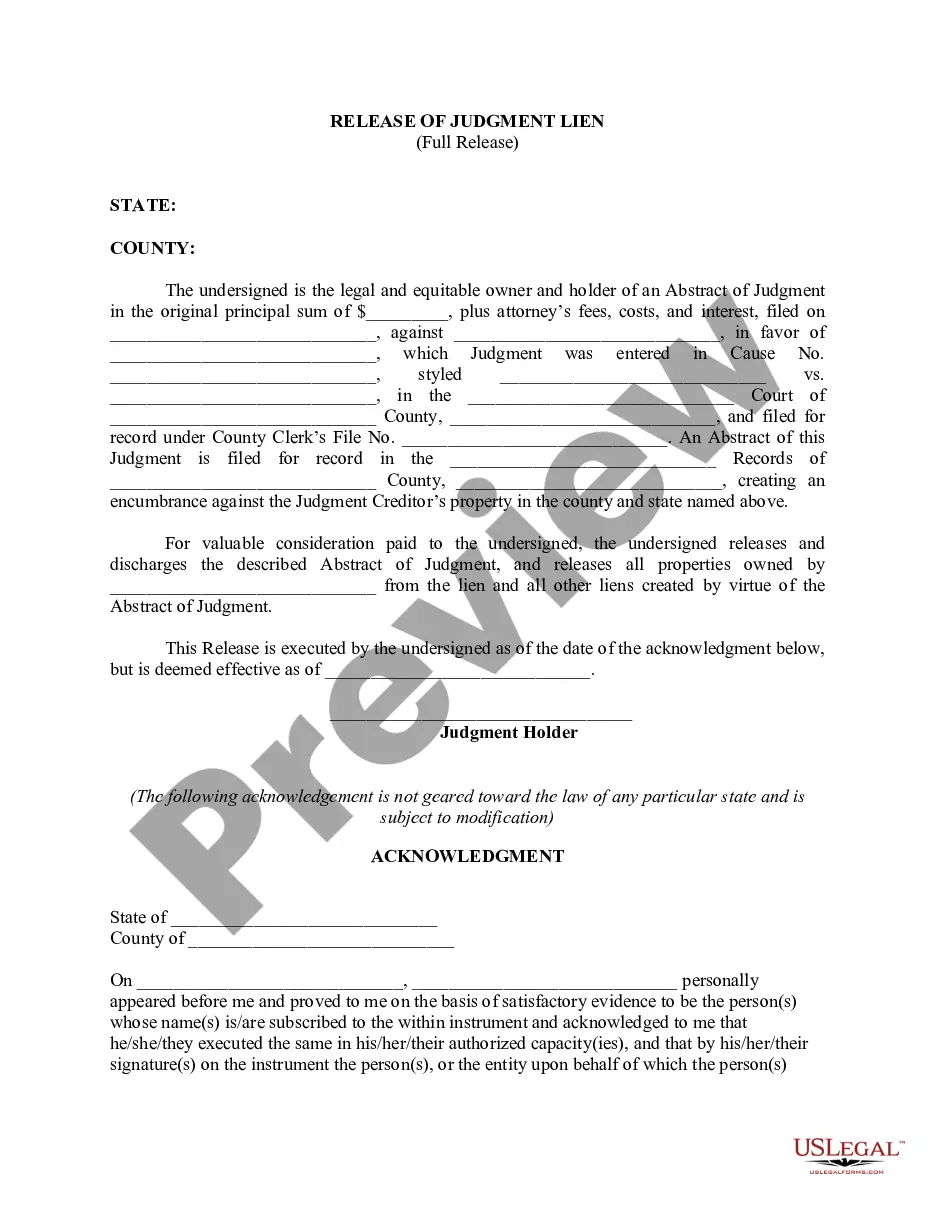
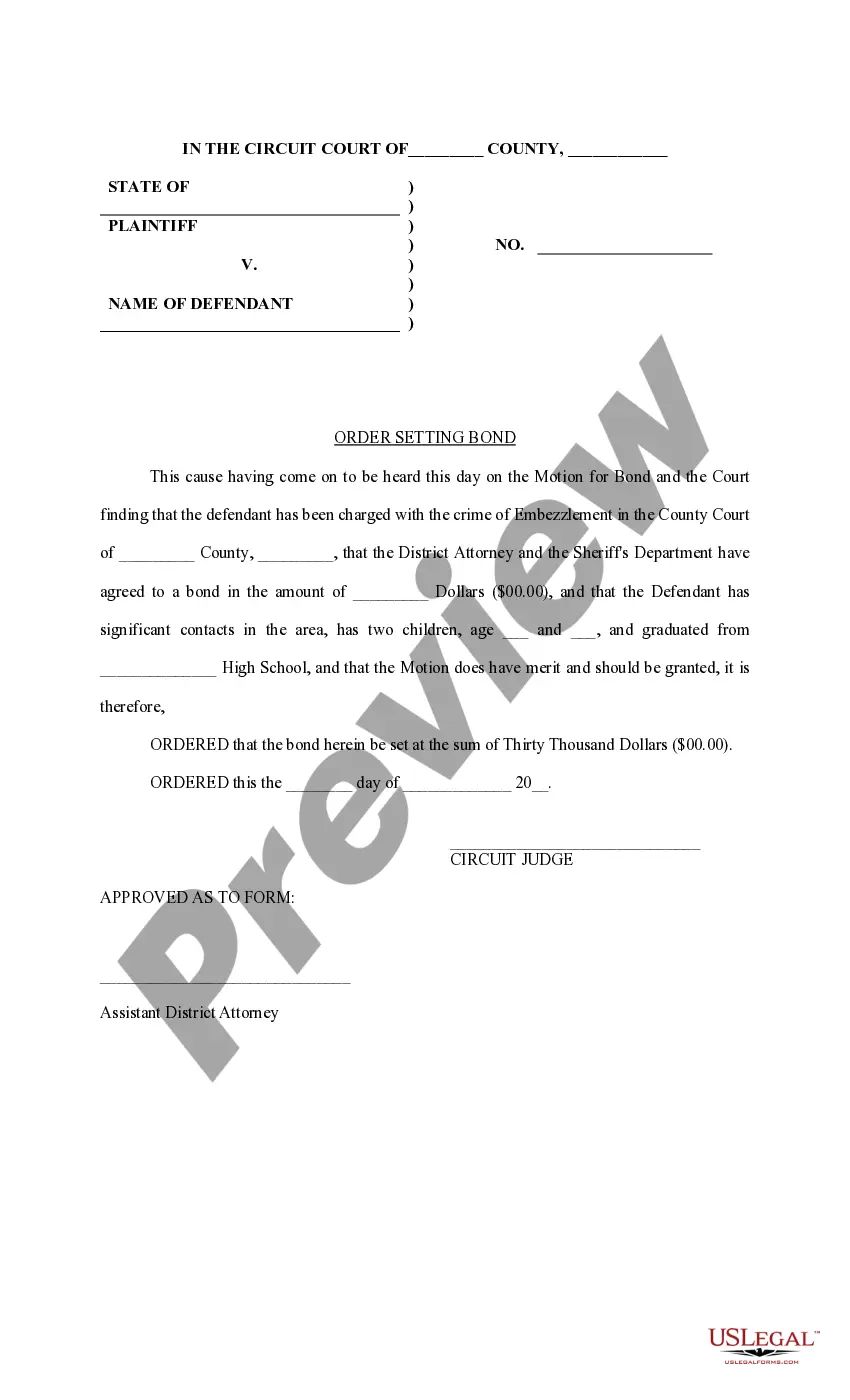
Injunction Without Seeking Declaration
Description
Get your form ready online
Our built-in tools help you complete, sign, share, and store your documents in one place.
Make edits, fill in missing information, and update formatting in US Legal Forms—just like you would in MS Word.
Download a copy, print it, send it by email, or mail it via USPS—whatever works best for your next step.
Sign and collect signatures with our SignNow integration. Send to multiple recipients, set reminders, and more. Go Premium to unlock E-Sign.
If this form requires notarization, complete it online through a secure video call—no need to meet a notary in person or wait for an appointment.
We protect your documents and personal data by following strict security and privacy standards.

Make edits, fill in missing information, and update formatting in US Legal Forms—just like you would in MS Word.

Download a copy, print it, send it by email, or mail it via USPS—whatever works best for your next step.

Sign and collect signatures with our SignNow integration. Send to multiple recipients, set reminders, and more. Go Premium to unlock E-Sign.

If this form requires notarization, complete it online through a secure video call—no need to meet a notary in person or wait for an appointment.

We protect your documents and personal data by following strict security and privacy standards.
Looking for another form?

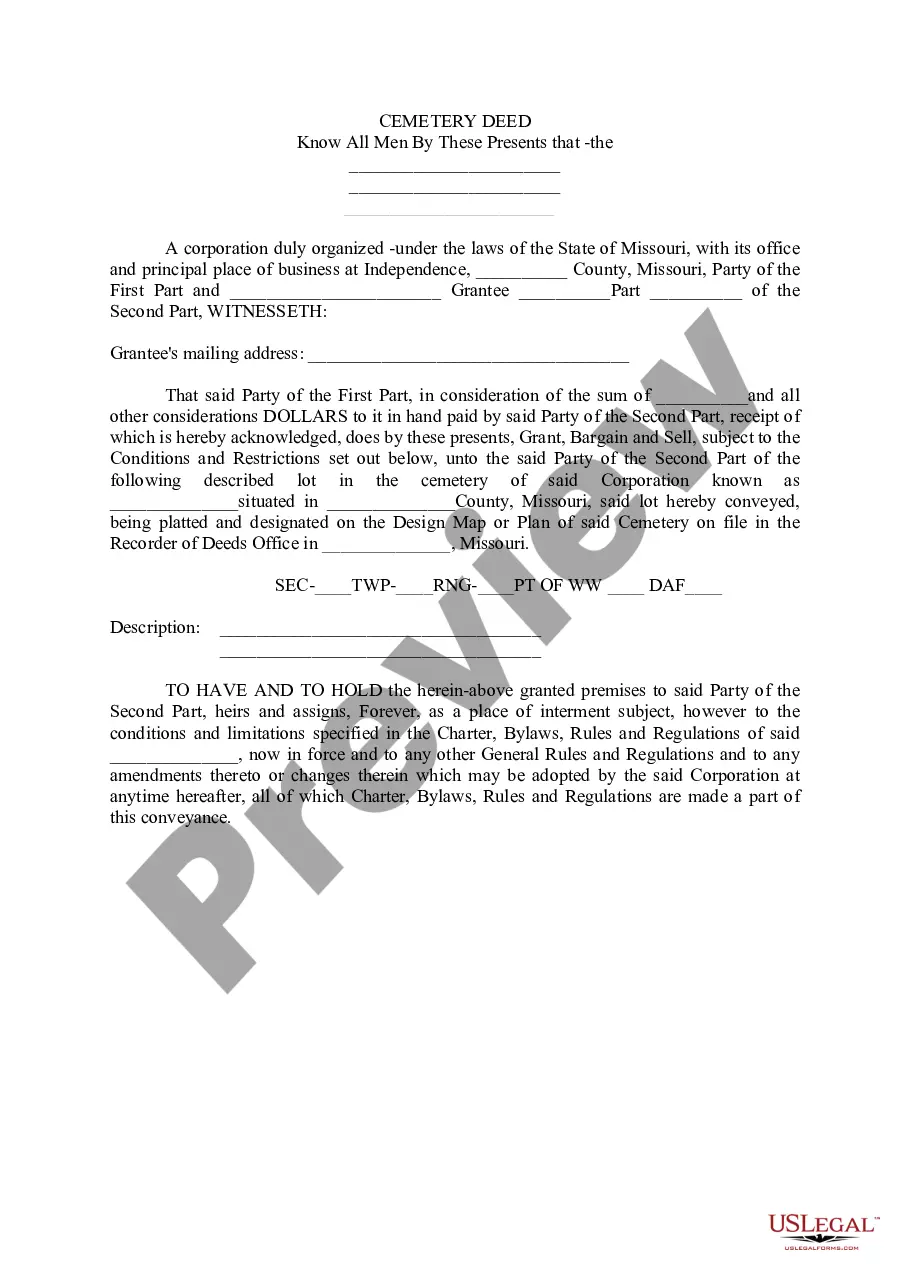
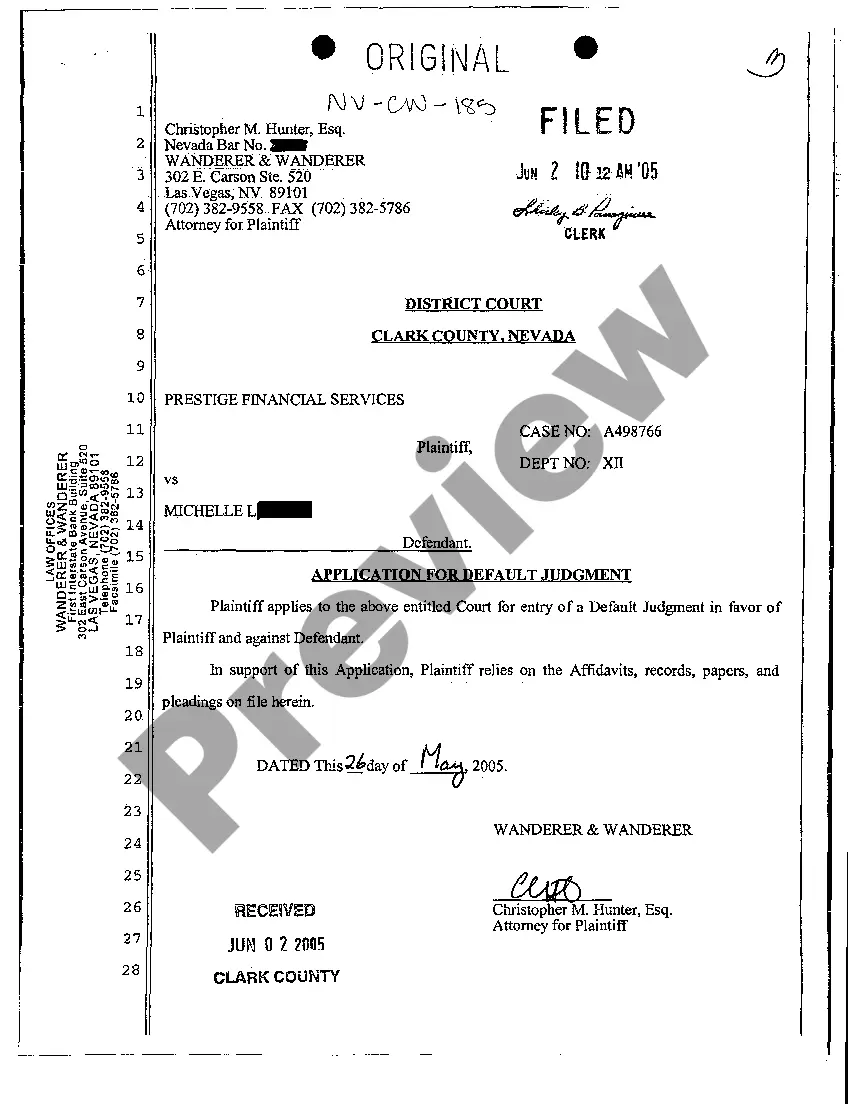
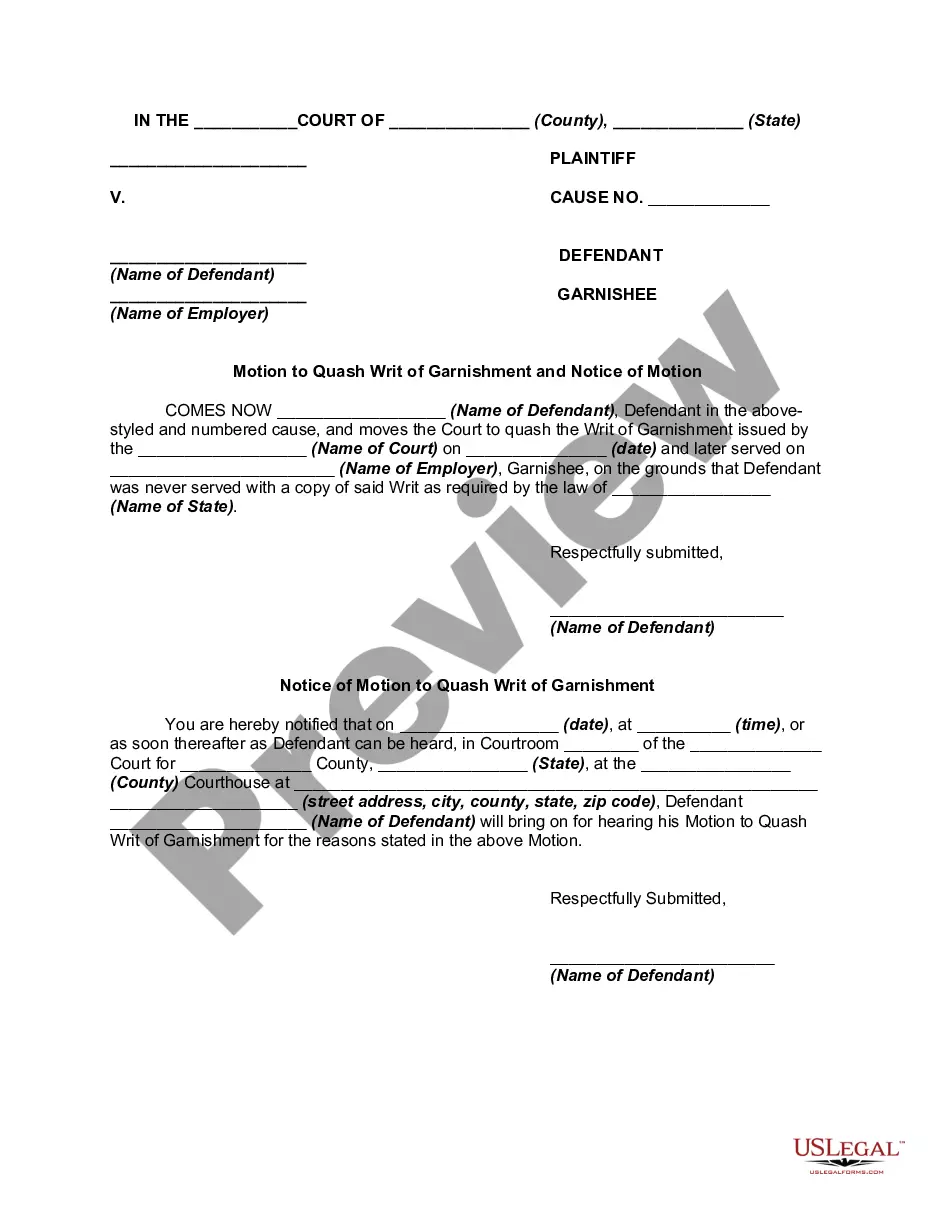
How to fill out Louisiana Judgment On Rule For Reciprocal Injunctions?
It’s clear that you cannot instantly become a legal expert, nor can you swiftly learn how to draft an Injunction Without Seeking Declaration without possessing a specialized skill set.
Compiling legal documents is a lengthy endeavor that necessitates specific education and expertise. So why not entrust the creation of the Injunction Without Seeking Declaration to the specialists.
With US Legal Forms, featuring one of the largest libraries of legal templates, you can discover various documents ranging from court papers to templates for internal corporate correspondence.
If you need a different form, start your search again.
Create a free account and select a subscription plan to purchase the form. Click Buy now. Once the transaction is complete, you can download the Injunction Without Seeking Declaration, fill it out, print it, and either send it or mail it to the required individuals or entities.
- We understand the significance of compliance with federal and state laws and regulations.
- That's why all forms on our website are location-specific and current.
- Begin utilizing our platform to acquire the document you need in just minutes.
- Search for the document you require using the search bar at the top of the page.
- Preview it (if this option is available) and review the accompanying description to determine if Injunction Without Seeking Declaration is what you need.
Form popularity
FAQ
To support your request for an injunction, you should gather evidence that clearly illustrates the need for immediate relief. This may include contracts, emails, photographs, or other documents that demonstrate your claims. Additionally, witness testimonies can provide critical context to your situation. Having robust evidence will enhance your chances of obtaining an injunction without seeking declaration.
The requirements for an injunction generally involve demonstrating a legal right, showing that you will suffer irreparable harm without the injunction, and proving that the balance of equities favors your request. You must also illustrate that the injunction serves the public interest. Meeting these requirements is essential to successfully seek an injunction without seeking declaration. Consulting with legal experts can help clarify these requirements.
The four factors that courts typically consider when deciding on an injunction include the likelihood of success on the merits, the potential for irreparable harm, the balance of hardships between the parties, and the public interest. Each factor plays a vital role in determining whether to grant an injunction. Understanding these factors can help you prepare a more persuasive argument. Utilizing resources like USLegalForms can provide valuable insights into your specific needs.
When seeking an injunction, you need to provide evidence that substantiates your claims and demonstrates potential harm. This can include witness statements, documents, or expert testimony that illustrate the urgency of your situation. The evidence must clearly support your argument for why an injunction without seeking declaration is necessary. Organizing your evidence effectively can strengthen your case significantly.
The standard of proof for an injunction typically requires you to show a likelihood of success on the merits of your case. This means you must present compelling evidence that supports your claims. Courts often assess whether irreparable harm will occur without the injunction, emphasizing the need for strong documentation. Understanding these standards is crucial when seeking an injunction without seeking declaration.
To obtain an injunction order, you must file a petition with the court outlining your request. You need to demonstrate that you face immediate harm without the injunction. Additionally, you should provide a clear legal basis for your request, making it essential to articulate why an injunction without seeking declaration is necessary. It’s advisable to consult with legal professionals to navigate this process effectively.
State as briefly as possible the facts showing that each plaintiff is entitled to the injunction or other relief sought. State how each defendant was involved and what each defendant did that caused the plaintiff harm or violated the plaintiff's rights, including the dates and places of that involvement or conduct.
To seek a permanent injunction, the plaintiff must pass the four-step test: (1) that the plaintiff has suffered an irreparable injury; (2) that remedies available at law, such as monetary damages, are inadequate to compensate for the injury; (3) that the remedy in equity is warranted upon consideration of the balance ...
The party seeking a preliminary injunctive relief must demonstrate: (1) irreparable injury in the absence of such an order; (2) that the threatened injury to the moving party outweighs the harm to the opposing party resulting from the order; (3) that the injunction is not adverse to public interest; and (4) that the ...
Ramakrishna Reddy (supra), which finally settles that whenever title is disputed, suit for injunction must be accompanied by a prayer for declaration of title.