Motion For Discovery Example With Motion To Dismiss
Description
Get your form ready online
Our built-in tools help you complete, sign, share, and store your documents in one place.
Make edits, fill in missing information, and update formatting in US Legal Forms—just like you would in MS Word.
Download a copy, print it, send it by email, or mail it via USPS—whatever works best for your next step.
Sign and collect signatures with our SignNow integration. Send to multiple recipients, set reminders, and more. Go Premium to unlock E-Sign.
If this form requires notarization, complete it online through a secure video call—no need to meet a notary in person or wait for an appointment.
We protect your documents and personal data by following strict security and privacy standards.

Make edits, fill in missing information, and update formatting in US Legal Forms—just like you would in MS Word.

Download a copy, print it, send it by email, or mail it via USPS—whatever works best for your next step.

Sign and collect signatures with our SignNow integration. Send to multiple recipients, set reminders, and more. Go Premium to unlock E-Sign.

If this form requires notarization, complete it online through a secure video call—no need to meet a notary in person or wait for an appointment.

We protect your documents and personal data by following strict security and privacy standards.
Looking for another form?









How to fill out Louisiana Motion For Discovery?
Creating legal documents from the ground up can occasionally be a bit daunting.
Some situations may require extensive research and significant financial investment.
If you’re looking for a simpler and more affordable method to generate Motion For Discovery Example With Motion To Dismiss or any other documentation without unnecessary complications, US Legal Forms is always here to assist you.
Our digital library of over 85,000 current legal forms encompasses nearly every facet of your financial, legal, and personal affairs.
Before you proceed to download the Motion For Discovery Example With Motion To Dismiss, be sure to follow these guidelines: Review the form preview and descriptions to verify you are selecting the right form. Ensure the chosen template adheres to your state and county regulations. Select the appropriate subscription plan to access the Motion For Discovery Example With Motion To Dismiss. Download the document, then fill it in, validate, and print it. US Legal Forms boasts an impeccable reputation and over 25 years of experience. Join us today and make form filling a breeze!
- With just a couple of clicks, you can quickly obtain state- and county-compliant templates carefully crafted by our legal professionals.
- Utilize our platform whenever you require dependable and trustworthy services to easily locate and download the Motion For Discovery Example With Motion To Dismiss.
- If you’re a returning user and have previously registered with us, simply Log In to your account, choose the form and download it right away or re-download it any time later in the My documents section.
- If you don’t have an account, that’s not a problem. Setting it up is quick and easy, allowing you to browse the catalog.
Form popularity
FAQ
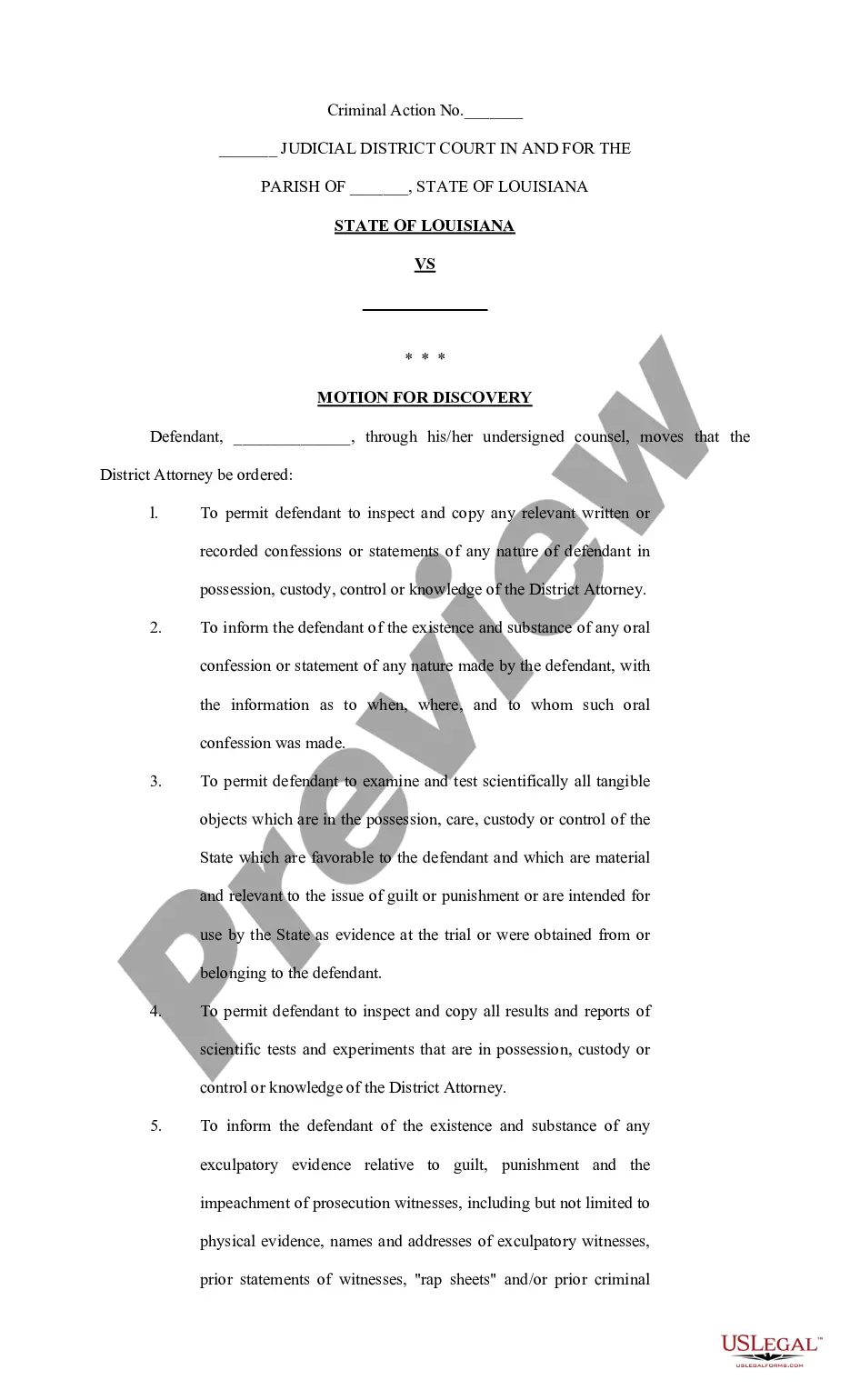
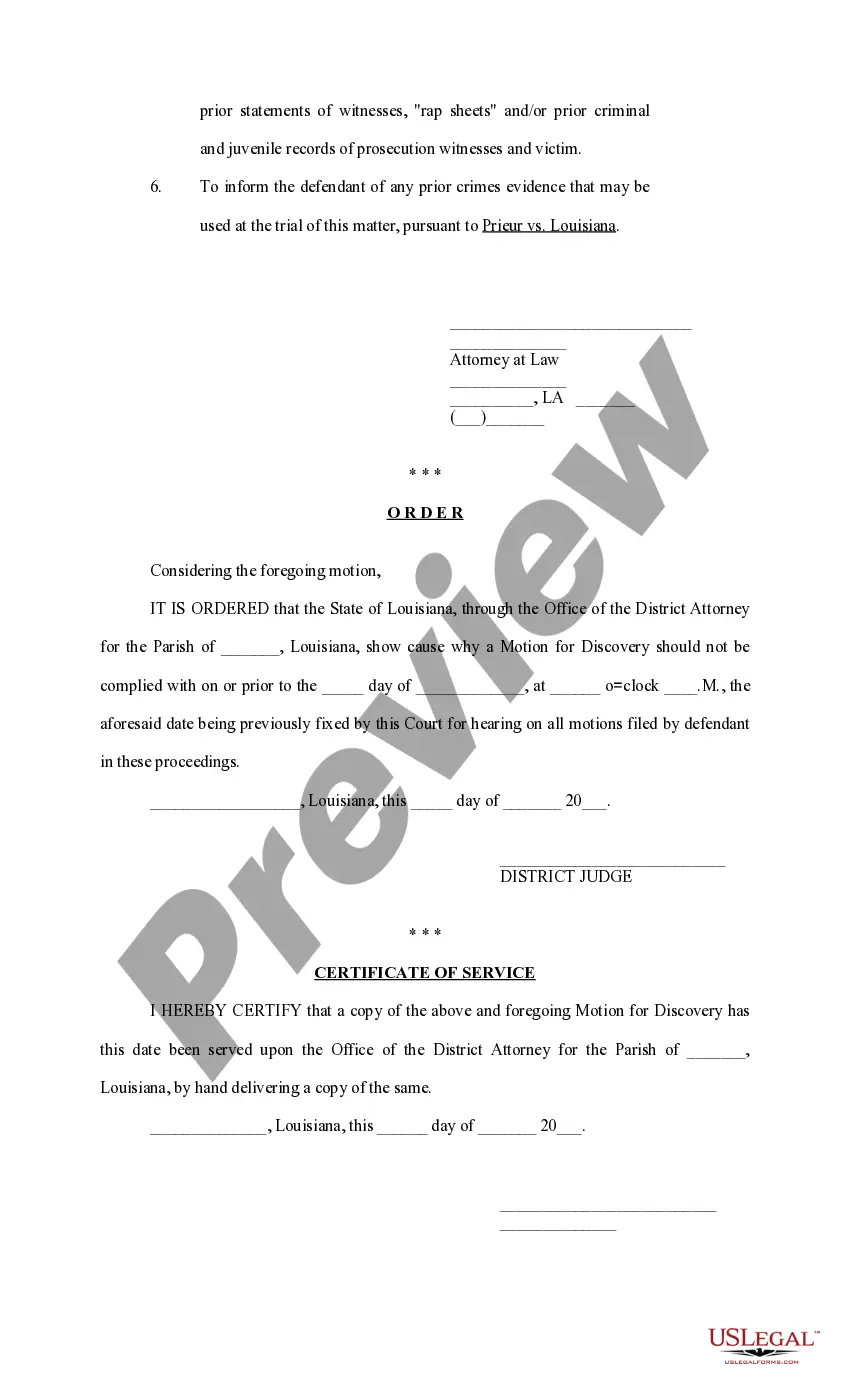
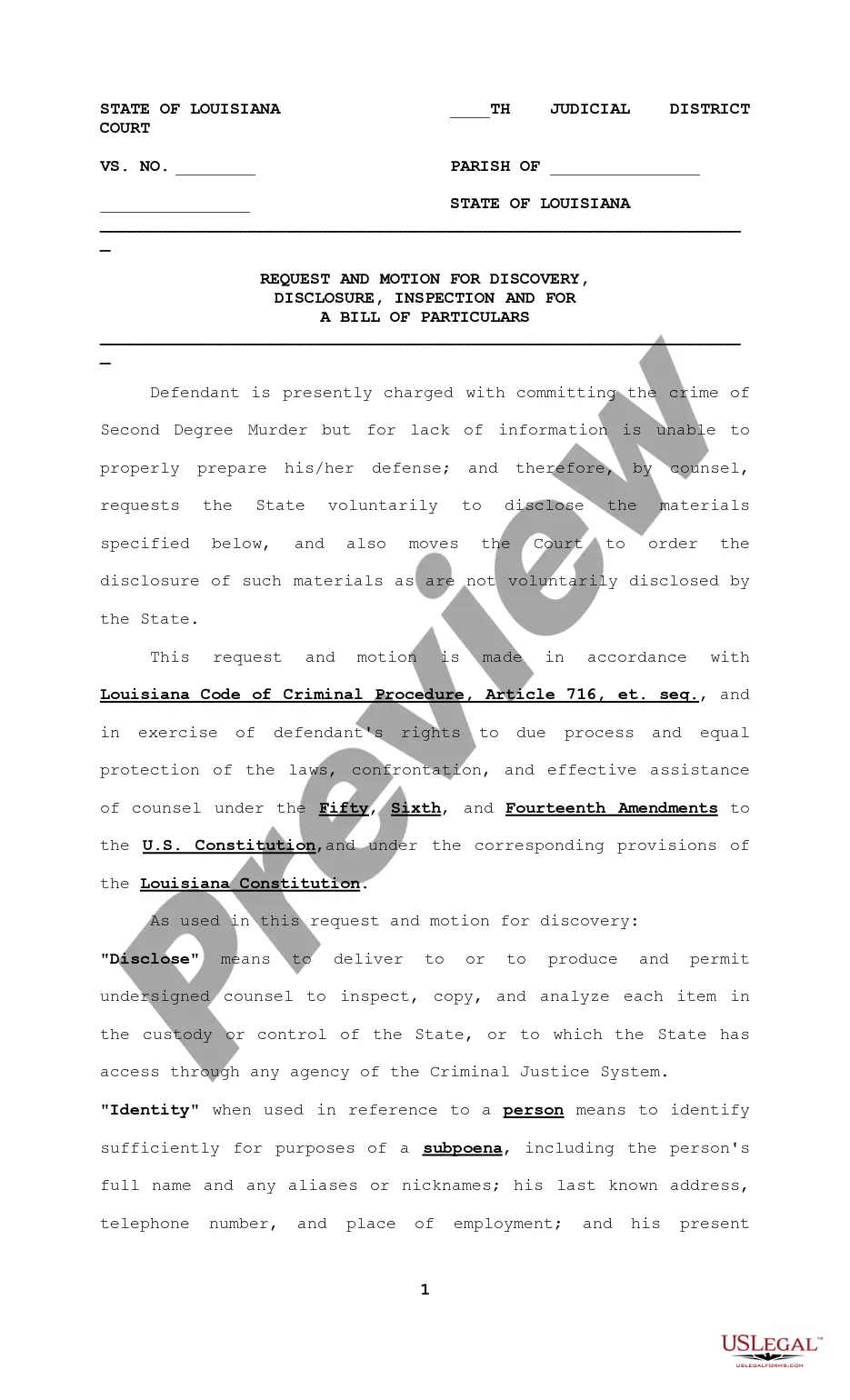
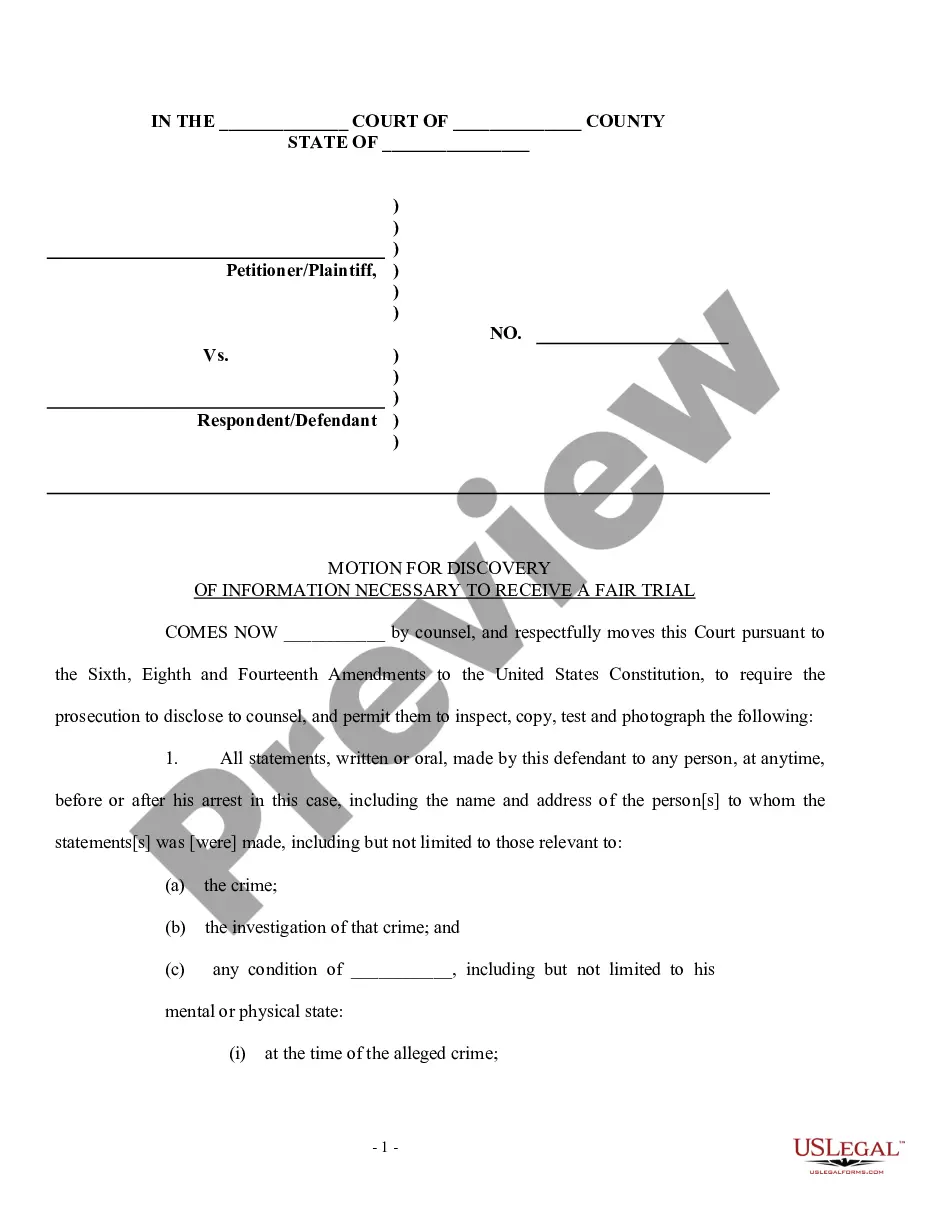
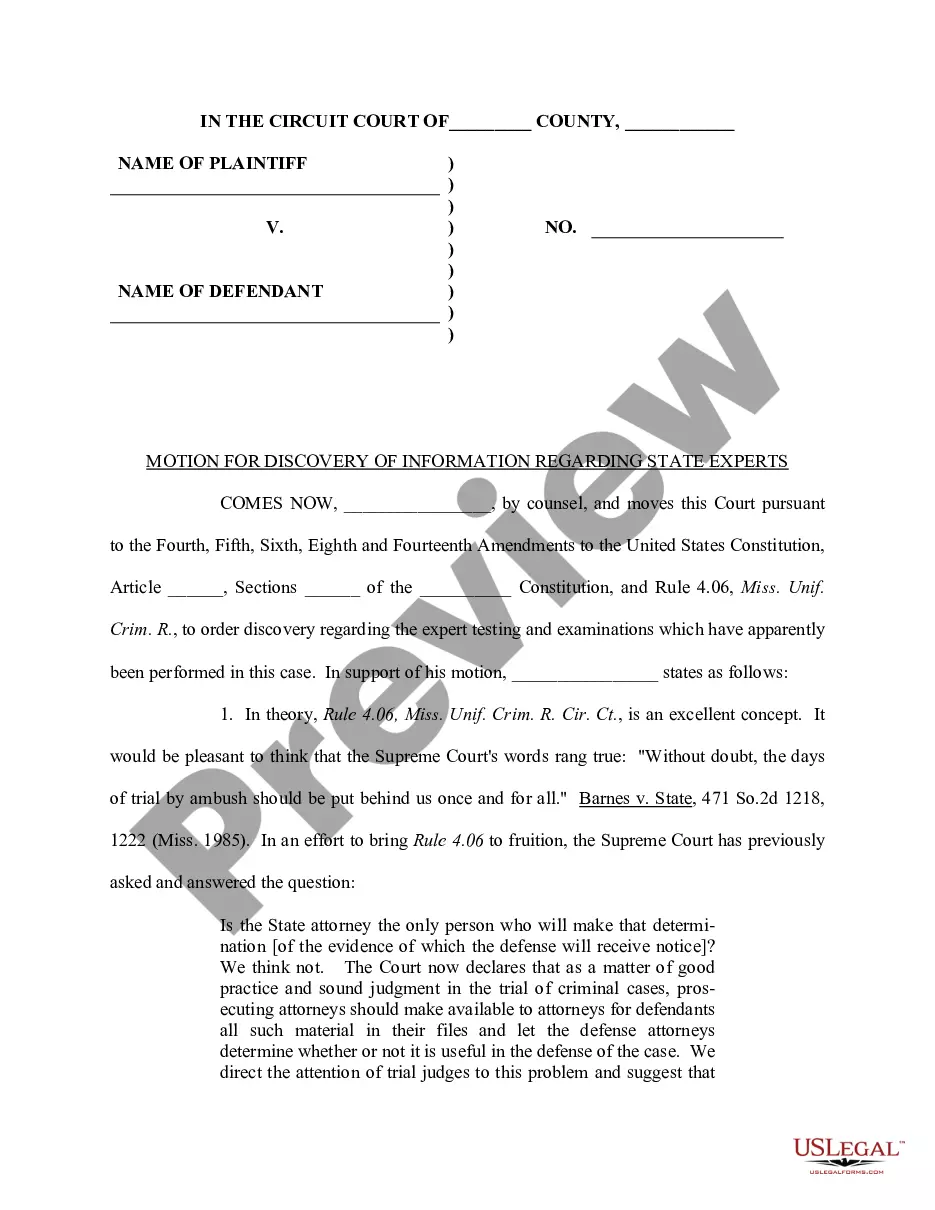
Writing a motion to dismiss involves presenting your arguments in a straightforward and organized manner. Begin with an introduction that outlines the legal basis for your motion, followed by detailed explanations. Incorporate relevant laws and precedents to support your claims, enhancing your motion's strength. For guidance, you can consult a motion for discovery example with motion to dismiss, which can provide insights into effective structure and content.
Filling out a motion to dismiss form requires you to include specific details about your case. Start by clearly stating the reasons for the dismissal, using examples relevant to your situation. Then, include your name, the case number, and the court's contact information. Using a motion for discovery example with motion to dismiss can help clarify your points.
Yes, a case can be dismissed during the discovery phase if valid grounds exist. For instance, if the evidence obtained during discovery indicates that the case lacks merit, a party can file a motion to dismiss. Utilizing a motion for discovery example with motion to dismiss can help clarify the rationale for this action. It is crucial to assess available evidence carefully before making this decision.
Discovery motions include requests for production of documents, interrogatories, and motions to compel. These motions facilitate the exchange of information between parties, ensuring both sides have the evidence necessary for their cases. Incorporating examples of motions for discovery can help clarify your position when filing a motion to dismiss. Understanding these motions can enhance your litigation strategy.
Writing a successful motion to dismiss requires clarity, precision, and strong legal arguments. Begin by clearly stating the grounds for your motion, supported by legal precedents and facts. You should also incorporate relevant elements from any applicable motion for discovery example with motion to dismiss to demonstrate your reasoning. A well-structured document enhances your chances of a favorable ruling.
A motion to dismiss is not considered a discovery motion; rather, it serves a different purpose in litigation. While discovery motions request specific evidence or information, a motion to dismiss seeks to resolve the case or claims without proceeding to trial. Understanding this distinction is important, as it can guide your strategy in dealing with motions and the discovery process.
Yes, you can file a motion to dismiss during the discovery phase of litigation. In fact, many parties use this strategy to narrow the issues or eliminate claims before extensive costs arise. However, it is essential to base your motion on valid grounds that are evident from the information available at that time. Timely and well-supported motions can streamline the legal process.
Proper grounds for a motion to dismiss can include lack of jurisdiction, failure to state a claim, or improper service. Other factors may also apply, depending on the specifics of each case. It's important to clearly articulate these grounds in your motion, especially when considering a motion for discovery example with motion to dismiss. Effective preparation enhances the chances of success.
Discovery is a crucial phase that allows parties to gather evidence and understand each other's positions. It can significantly impact a motion, including a motion to dismiss, by providing essential information about the case. For example, if new evidence emerges during discovery, it might support or undermine the reasons for filing a motion to dismiss. Thus, understanding the interplay between discovery and motion filings is essential.