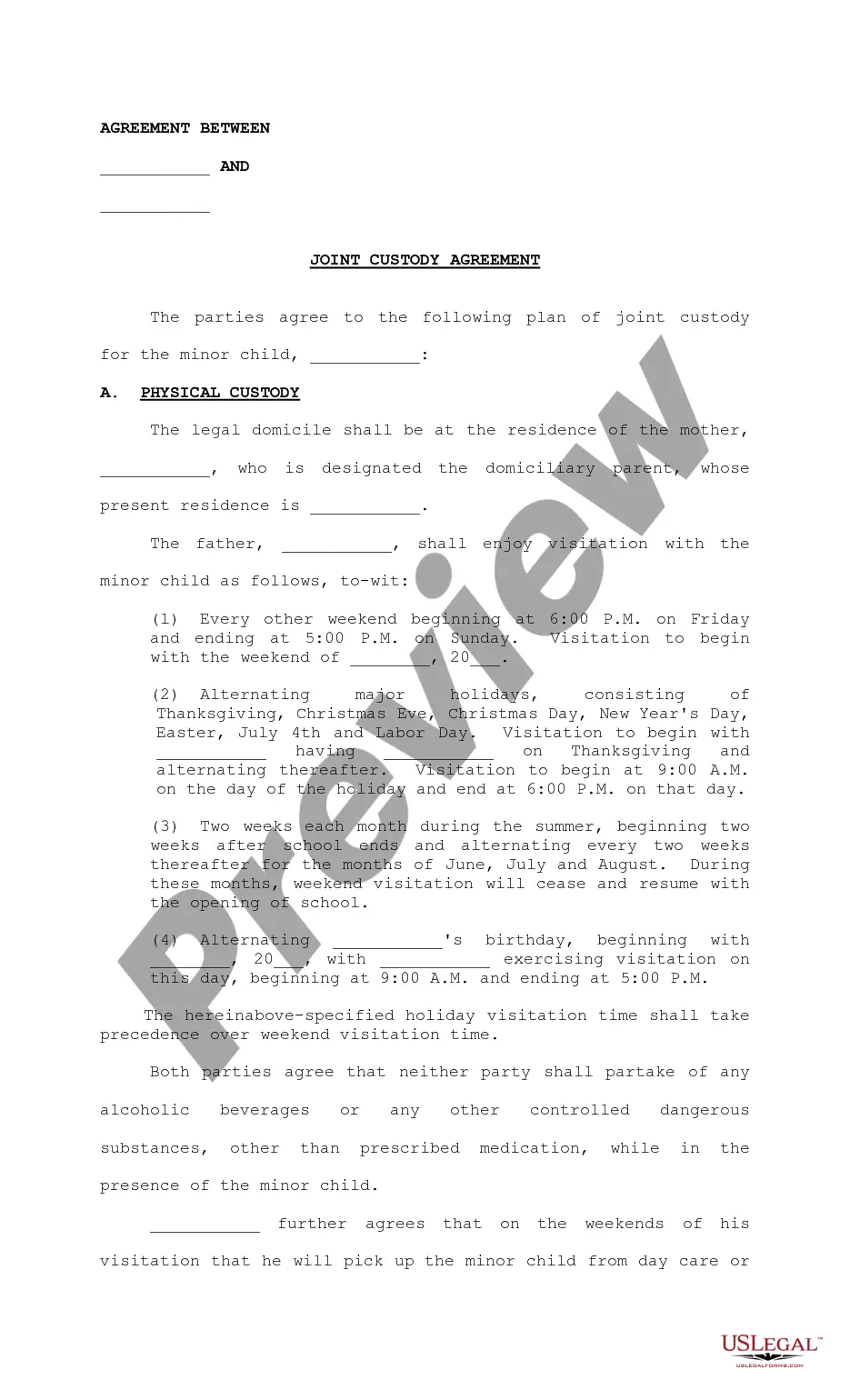
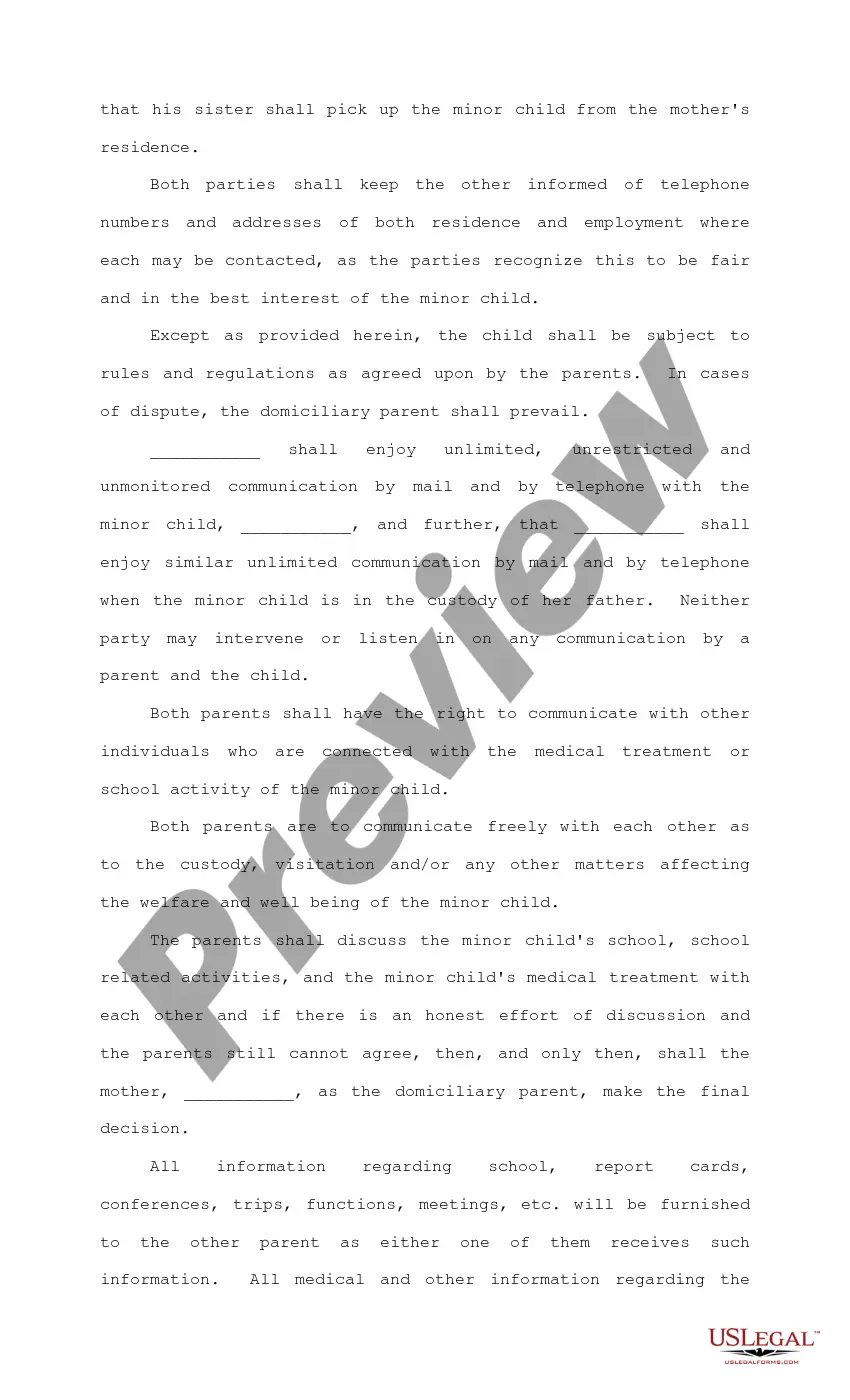
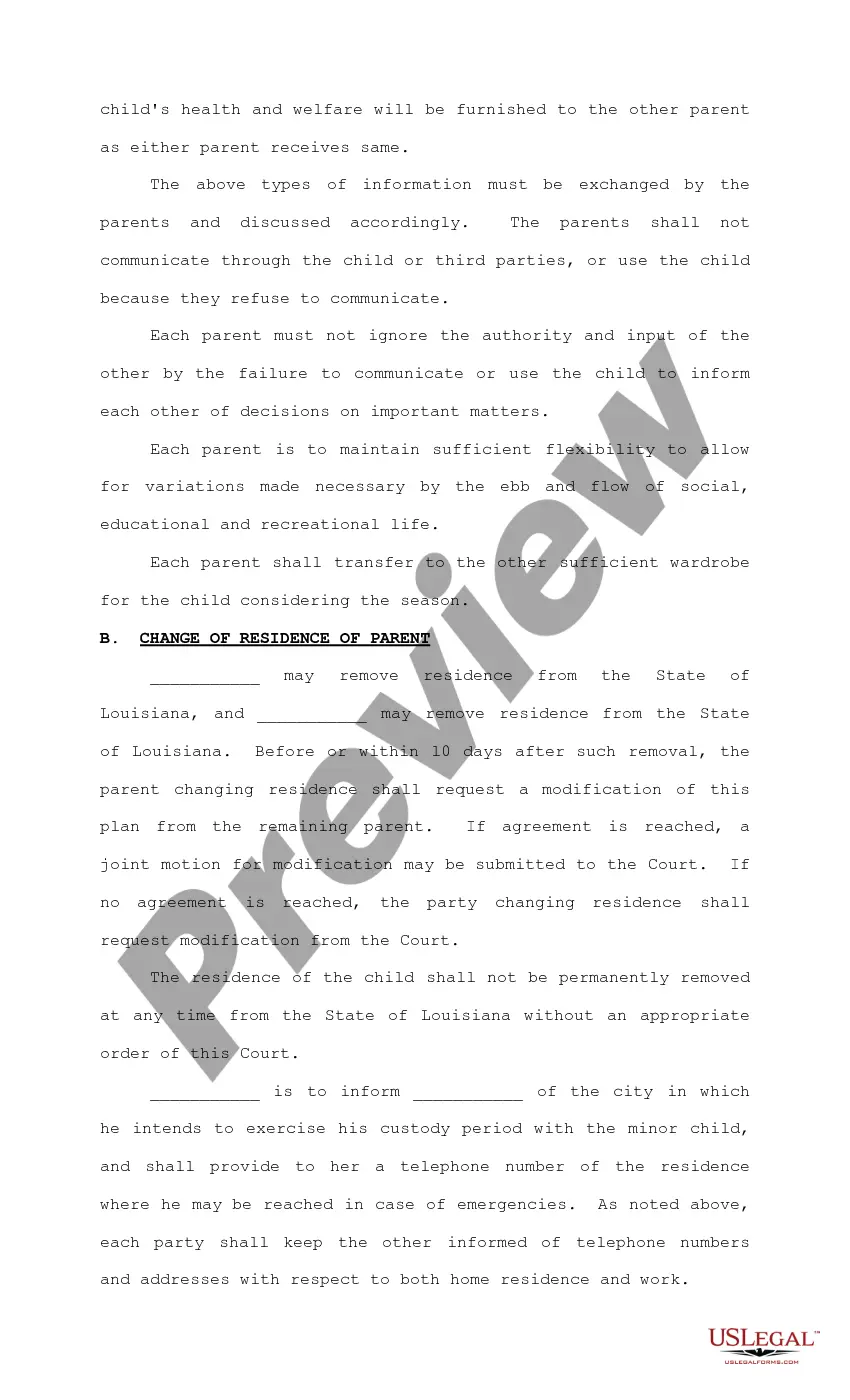
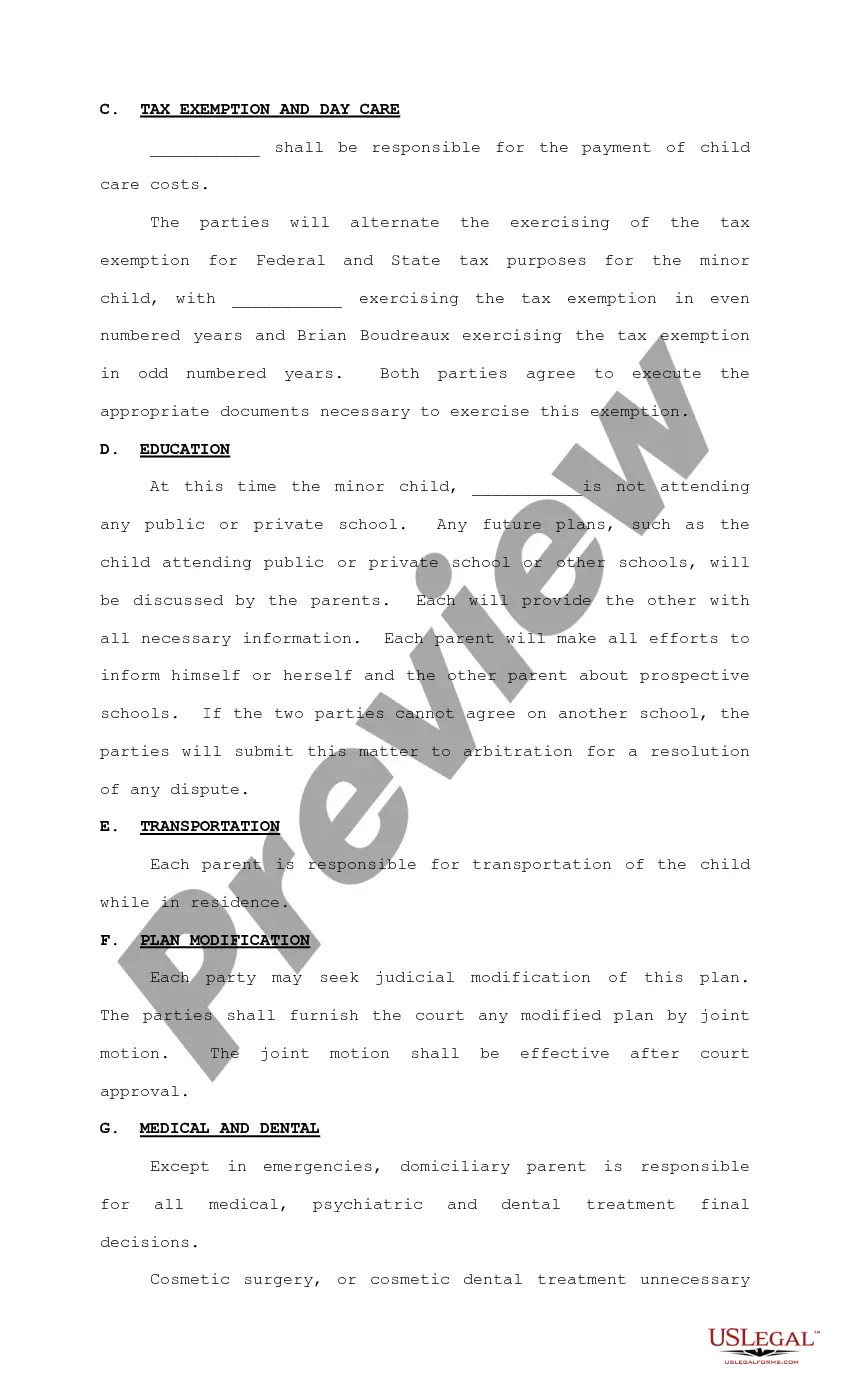
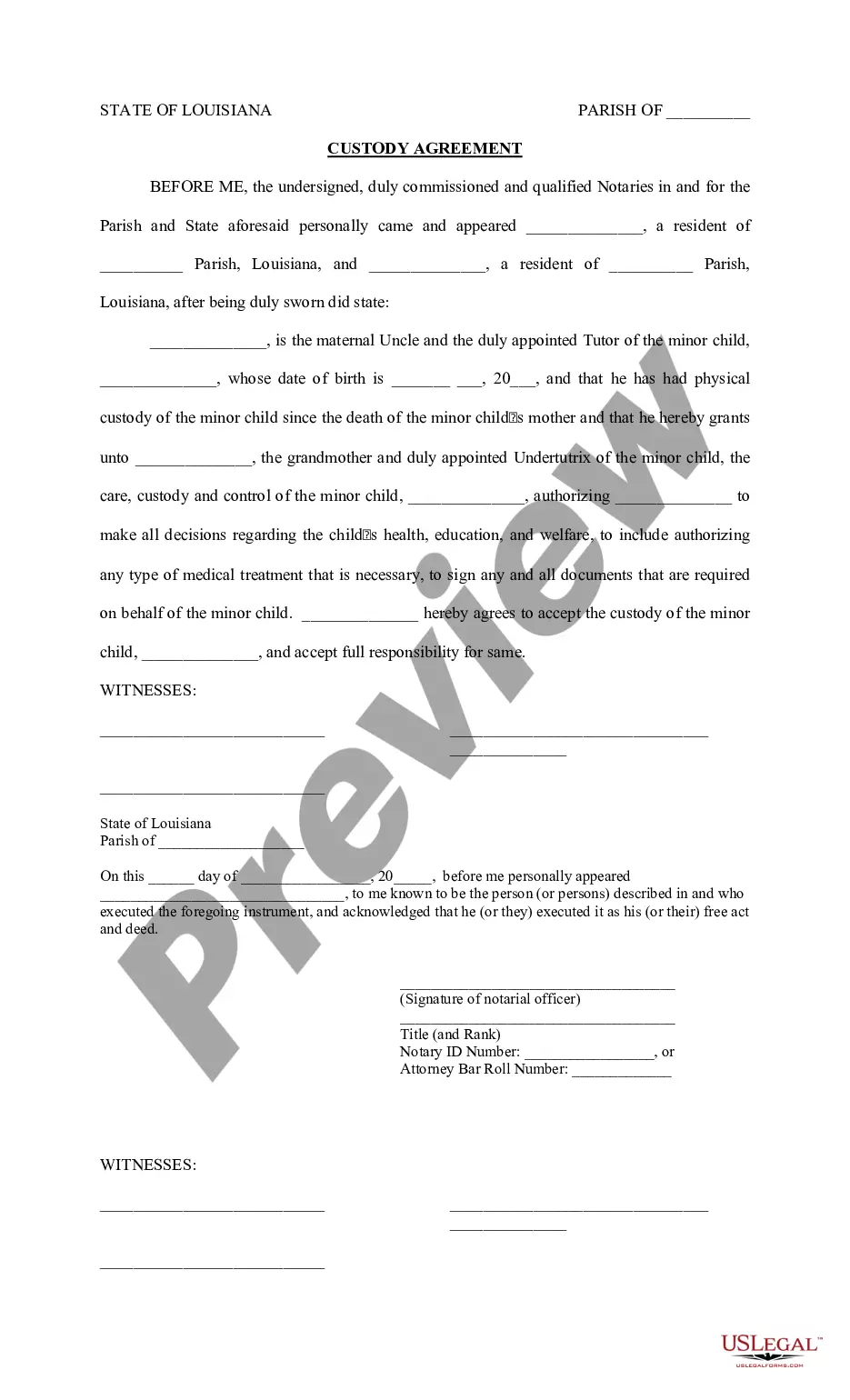
Louisiana Custody With A Child
Description
Get your form ready online
Our built-in tools help you complete, sign, share, and store your documents in one place.
Make edits, fill in missing information, and update formatting in US Legal Forms—just like you would in MS Word.
Download a copy, print it, send it by email, or mail it via USPS—whatever works best for your next step.
Sign and collect signatures with our SignNow integration. Send to multiple recipients, set reminders, and more. Go Premium to unlock E-Sign.
If this form requires notarization, complete it online through a secure video call—no need to meet a notary in person or wait for an appointment.
We protect your documents and personal data by following strict security and privacy standards.

Make edits, fill in missing information, and update formatting in US Legal Forms—just like you would in MS Word.

Download a copy, print it, send it by email, or mail it via USPS—whatever works best for your next step.

Sign and collect signatures with our SignNow integration. Send to multiple recipients, set reminders, and more. Go Premium to unlock E-Sign.

If this form requires notarization, complete it online through a secure video call—no need to meet a notary in person or wait for an appointment.

We protect your documents and personal data by following strict security and privacy standards.
Looking for another form?


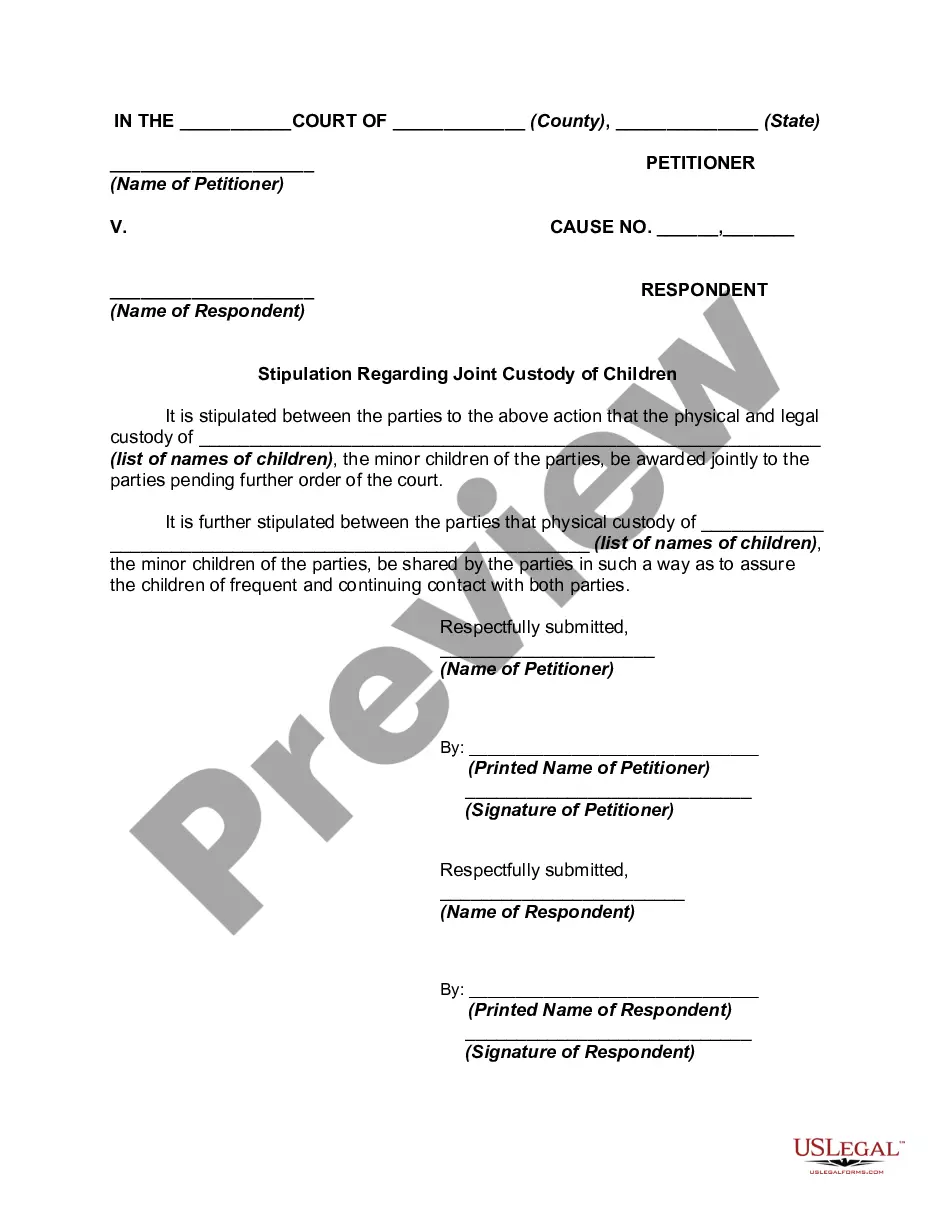
How to fill out Louisiana Joint Custody Agreement?
Regardless of whether for commercial aims or personal matters, everyone must handle legal circumstances at some stage in their existence.
Completing legal documents requires meticulous attention, starting with selecting the appropriate form template.
Select the document format you desire and download the Louisiana Custody With A Child. Once it is downloaded, you can fill out the form using editing software or print it and complete it manually. With a vast US Legal Forms catalog available, you do not need to waste time searching for the appropriate sample online. Utilize the library’s easy navigation to find the right form for any situation.
- For instance, if you choose an incorrect version of the Louisiana Custody With A Child, it will be rejected once you submit it.
- It is, therefore, vital to have a reliable source of legal documents like US Legal Forms.
- If you need to acquire a Louisiana Custody With A Child template, follow these straightforward steps.
- Locate the sample you require using the search bar or catalog navigation.
- Review the form’s description to ensure it suits your case, state, and area.
- Click on the form’s preview to inspect it.
- If it is the wrong document, return to the search feature to find the Louisiana Custody With A Child sample you need.
- Download the template if it fulfills your requirements.
- If you already have a US Legal Forms account, simply click Log in to access previously saved documents in My documents.
- If you do not have an account yet, you may acquire the form by clicking Buy now.
- Select the correct pricing option.
- Complete the profile registration form.
- Choose your payment method: use a credit card or PayPal account.
Form popularity
FAQ
In Louisiana, the judge gives parents equal time, i.e., shared custody, if it's in the best interests of the child and possible for the parents. (The exception is when parents agree not to have shared custody.) An equal time schedule for an older child could involve alternating weeks.
One major factor that the judge will consider is the livelihood and capability of each parent to provide for their kids. This may not be a problem if both parents are well-off. Still, the judge will analyze their ability to provide all the necessities, including food, education, and even a safe environment to live in.
At a custody trial, the Court will hear evidence on the issue of what is in the best interest of the child and ultimately make a custody determination. At the hearing, the court will consider a variety of factors, such as the child's age, health, and relationship with each parent.
While joint custody may be favored by the Louisiana court system, it does not mean, however, that both parents will exercise equal physical time with the children. In the majority of cases, one parent will be designated as the domiciliary parent, while the other will have specific or reasonable visitation rights.
Many parents aim for shared or joint custody. Each potential custody arrangement involves its own unique set of legal challenges, and it is important to work with an attorney to find out which arrangement is best for your situation.