Louisiana Motion Consolidate For Discovery Purposes
Description
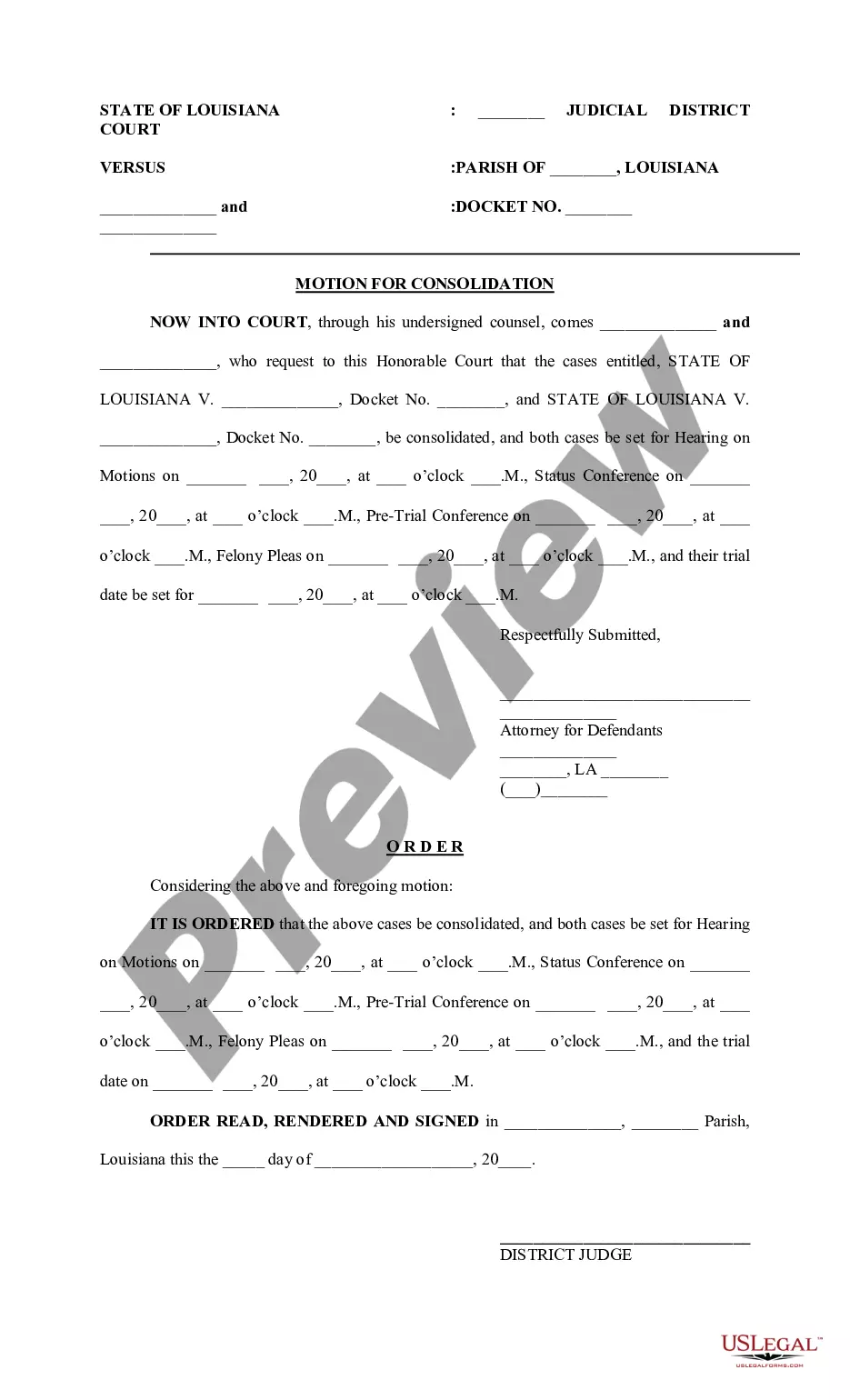
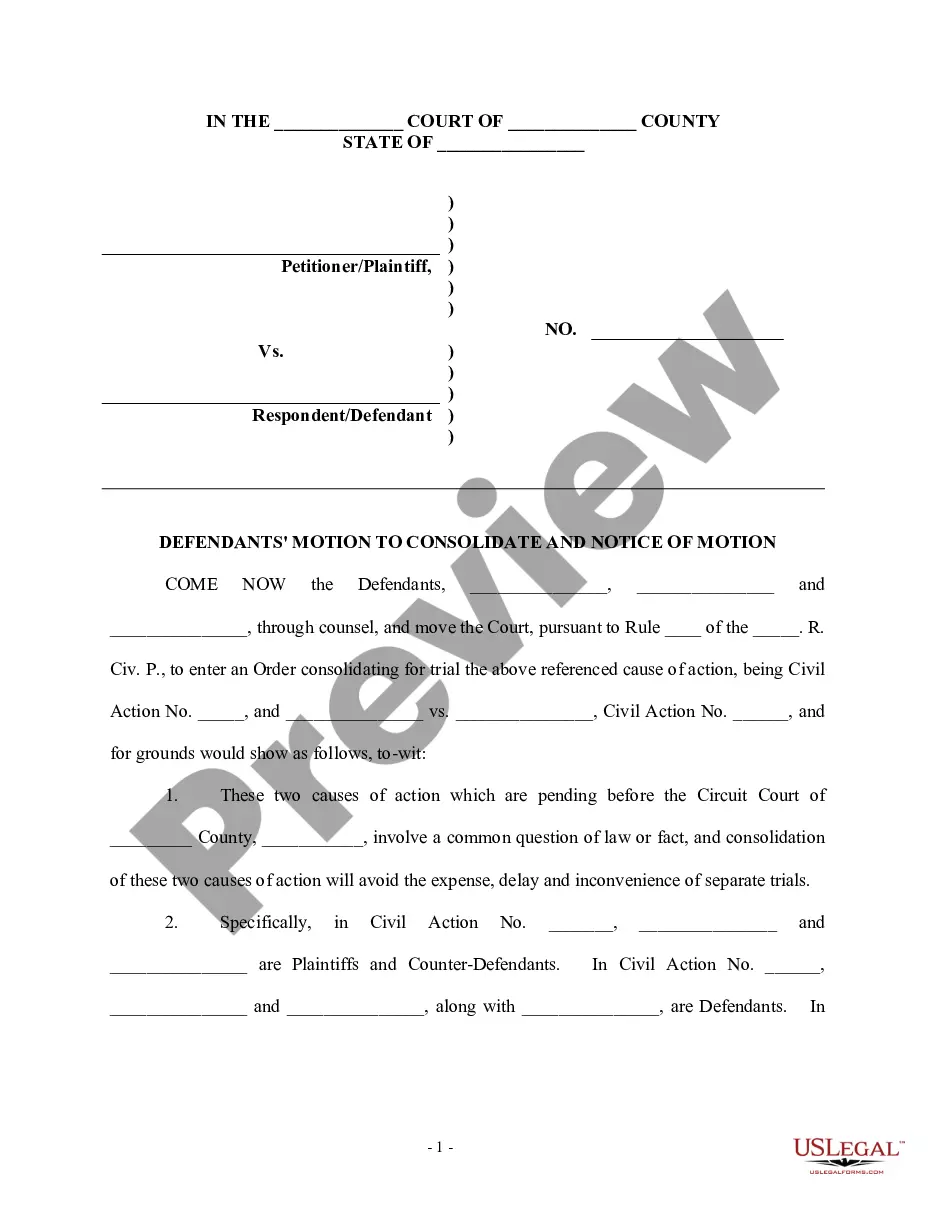
Get your form ready online
Our built-in tools help you complete, sign, share, and store your documents in one place.
Make edits, fill in missing information, and update formatting in US Legal Forms—just like you would in MS Word.
Download a copy, print it, send it by email, or mail it via USPS—whatever works best for your next step.
Sign and collect signatures with our SignNow integration. Send to multiple recipients, set reminders, and more. Go Premium to unlock E-Sign.
If this form requires notarization, complete it online through a secure video call—no need to meet a notary in person or wait for an appointment.
We protect your documents and personal data by following strict security and privacy standards.

Make edits, fill in missing information, and update formatting in US Legal Forms—just like you would in MS Word.

Download a copy, print it, send it by email, or mail it via USPS—whatever works best for your next step.

Sign and collect signatures with our SignNow integration. Send to multiple recipients, set reminders, and more. Go Premium to unlock E-Sign.

If this form requires notarization, complete it online through a secure video call—no need to meet a notary in person or wait for an appointment.

We protect your documents and personal data by following strict security and privacy standards.
Looking for another form?







Form popularity
FAQ
A motion to compel in Louisiana is a formal request made to the court, asking it to order a party to comply with discovery requests. This motion is essential when one party fails to provide necessary information or documents. By filing a Louisiana motion consolidate for discovery purposes, you can address these issues more efficiently. For assistance with this process, USLegalForms provides valuable templates and information.
In Louisiana, the discovery rule allows parties in a legal case to obtain information from each other before trial. This process is crucial for gathering evidence and building a strong case. Understanding the discovery rule can help you effectively use a Louisiana motion consolidate for discovery purposes to streamline your case. If you have questions about how to navigate this rule, consider using resources like USLegalForms for guidance.
A motion to continue a trial in Louisiana allows a party to request a delay in the trial date due to various valid reasons. This might include needing more time to gather evidence or if there are conflicting schedules. When dealing with complex cases, especially those requiring a Louisiana motion consolidate for discovery purposes, such motions can ensure all parties are adequately prepared, ultimately leading to a more favorable outcome.
A 701 motion in Louisiana is a request made to the court to provide a specific type of relief, especially regarding evidence admissibility. Specifically, it is often filed to consolidate cases, which can include motions consolidate for discovery purposes. Understanding the workings of a 701 motion can significantly benefit your case by streamlining processes and reducing unnecessary delays.
The 60 day rule in Louisiana refers to the requirement that parties involved in legal proceedings must file certain motions within 60 days of receiving notice of filing an opposing motion. This rule is particularly relevant when considering a Louisiana motion consolidate for discovery purposes. By adhering to this timeline, you ensure your case progresses efficiently and comply with local court rules.
A prohibited substitution in Louisiana refers to a situation where a party attempts to replace another in a legal proceeding without proper authorization. This can disrupt the litigation process and lead to complications. If you find yourself facing this issue, a Louisiana motion consolidate for discovery purposes can provide clarity and help ensure that your case moves forward smoothly.
Louisiana is known for having some unusual laws that might seem silly. Some of these outdated laws reflect historical practices or customs that no longer apply today. However, understanding these laws can be essential for navigating legal matters, particularly when filing a Louisiana motion consolidate for discovery purposes to simplify complex litigation.
A motion to substitute in Louisiana serves to replace one party with another in legal proceedings. This can be necessary for various reasons, including changes in parties due to legal circumstances. The process can be complex, but leveraging a Louisiana motion consolidate for discovery purposes simplifies the discovery phase when multiple parties are involved in similar claims.
A motion to substitute party in Louisiana occurs when a party to a lawsuit needs to be replaced due to reasons like death, incapacity, or change in status. This motion ensures that the legal proceedings continue without disruption. Utilizing a Louisiana motion consolidate for discovery purposes can assist in managing the discovery phase of a newly substituted party.
Yes, Louisiana has a discovery rule that outlines how parties collect evidence before trial. This process allows both sides to prepare their cases effectively. A Louisiana motion consolidate for discovery purposes can help streamline this process when multiple cases involve similar facts or legal issues.
