Judgment On Without Prejudice
Description
Get your form ready online
Our built-in tools help you complete, sign, share, and store your documents in one place.
Make edits, fill in missing information, and update formatting in US Legal Forms—just like you would in MS Word.
Download a copy, print it, send it by email, or mail it via USPS—whatever works best for your next step.
Sign and collect signatures with our SignNow integration. Send to multiple recipients, set reminders, and more. Go Premium to unlock E-Sign.
If this form requires notarization, complete it online through a secure video call—no need to meet a notary in person or wait for an appointment.
We protect your documents and personal data by following strict security and privacy standards.

Make edits, fill in missing information, and update formatting in US Legal Forms—just like you would in MS Word.

Download a copy, print it, send it by email, or mail it via USPS—whatever works best for your next step.

Sign and collect signatures with our SignNow integration. Send to multiple recipients, set reminders, and more. Go Premium to unlock E-Sign.

If this form requires notarization, complete it online through a secure video call—no need to meet a notary in person or wait for an appointment.

We protect your documents and personal data by following strict security and privacy standards.
Looking for another form?
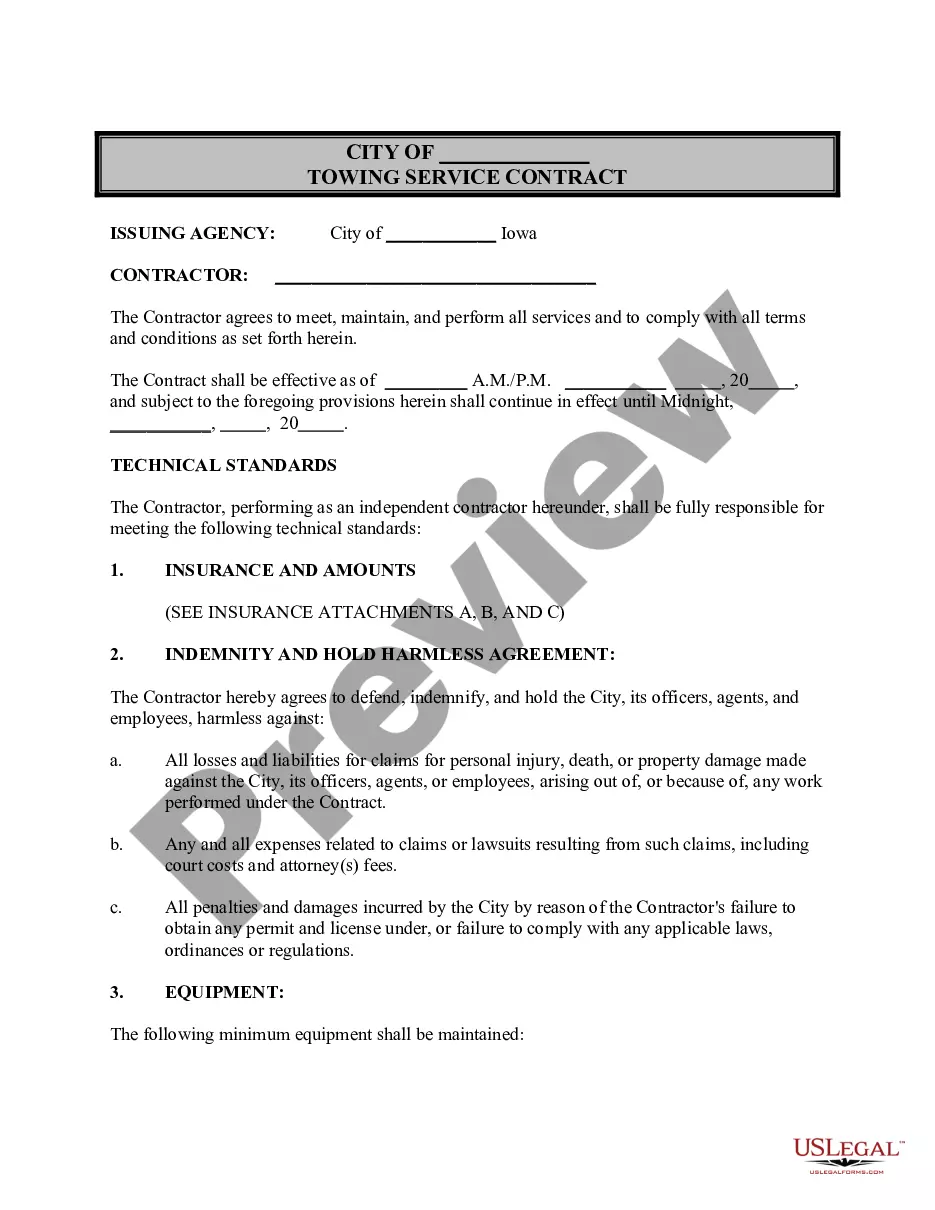







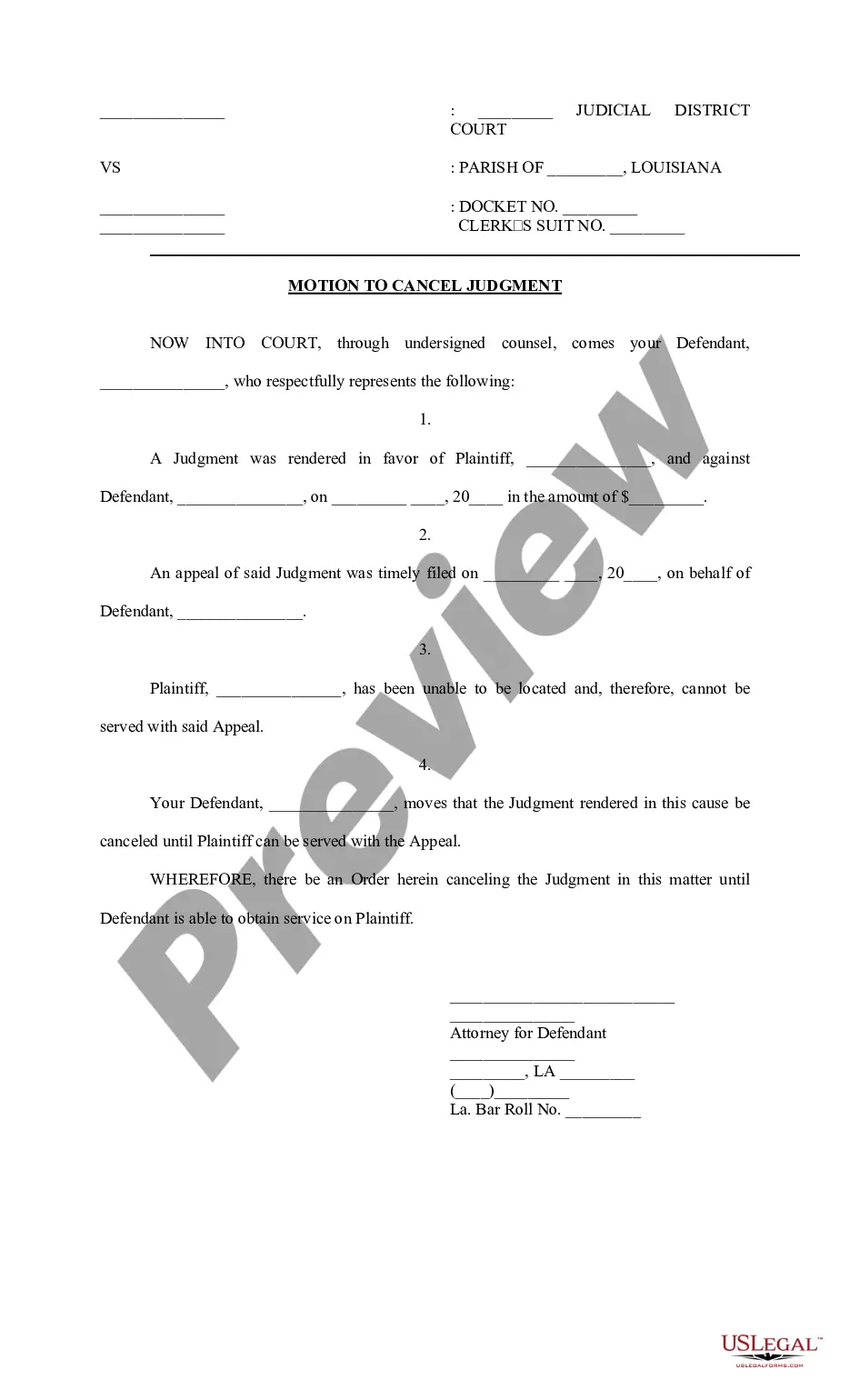
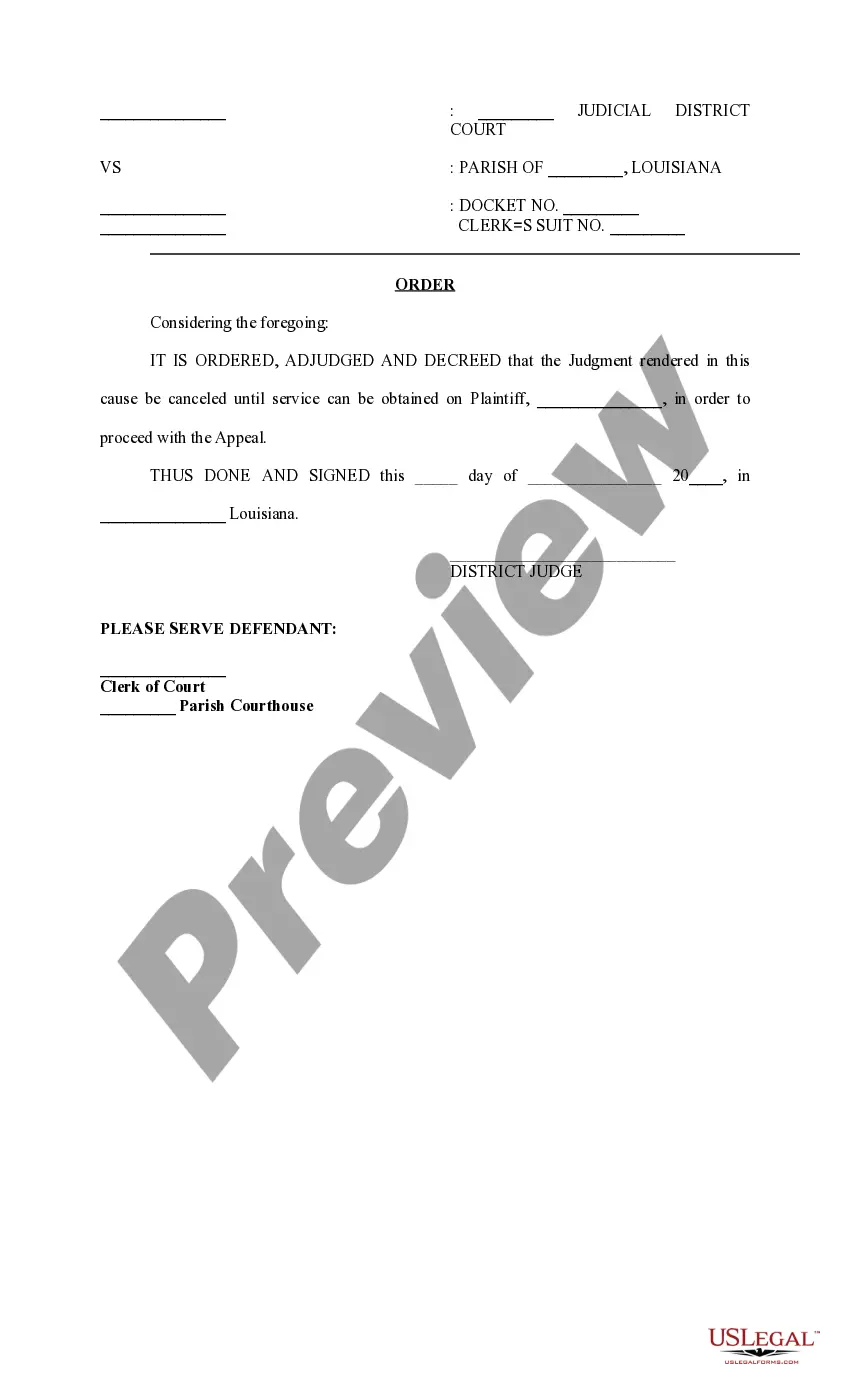
How to fill out Louisiana Motion To Cancel Judgment, With Order?
It’s well-known that you cannot become a legal expert instantly, nor can you learn to swiftly draft Judgment On Without Prejudice without a specific background.
Drafting legal documents is a lengthy process that necessitates particular education and expertise. So why not entrust the creation of the Judgment On Without Prejudice to the experts.
With US Legal Forms, one of the largest legal document collections, you can locate everything from court papers to templates for internal corporate correspondence. We recognize how crucial compliance and adherence to federal and local laws and regulations are. That’s why, on our platform, all templates are region-specific and current.
Select Buy now. Once the transaction is finished, you can access the Judgment On Without Prejudice, fill it out, print it, and send or post it to the designated individuals or organizations.
You can revisit your forms from the My documents tab at any time. If you’re an existing client, simply Log In, and find and download the template from the same tab.
- Begin with our platform and obtain the form you need in just minutes.
- Find the form you require using the search bar at the top of the page.
- Preview it (if this option is available) and review the accompanying description to determine if Judgment On Without Prejudice is what you’re looking for.
- Restart your search if you need any other template.
- Create a free account and choose a subscription plan to purchase the form.
Form popularity
FAQ
The phrase ?without prejudice? means that, even though the current case may be dismissed by the court, you can file another family law case if you wish to in the future.
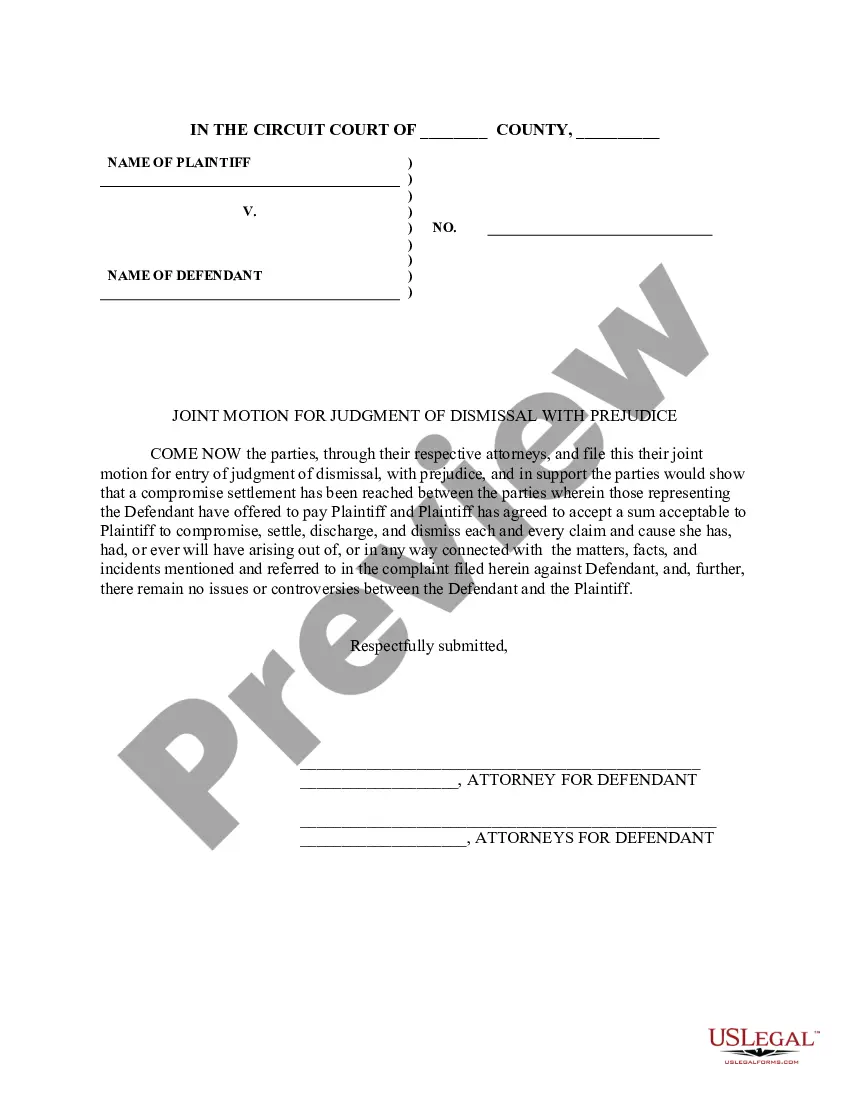
?With prejudice? means that you cannot re-file your case ever. ?Without prejudice? means that you can re-file your case at a later date (as long as you are still within the statute of limitations).
A: A judge can dismiss a case without prejudice if they detect legal errors that prevent the case from going forward. However, dismissing the case without prejudice allows the two sides to correct those errors and re-file the case.
Dismissal without prejudice means that the judge dismissed the plaintiff's or prosecutor's case without damaging their right to have their matter heard in court later. A prosecutor may ask to withdraw the case against a person to have more time to make a case stronger, find more evidence or question other witnesses.