Attorney Seeking For Defending Client
Description
Get your form ready online
Our built-in tools help you complete, sign, share, and store your documents in one place.
Make edits, fill in missing information, and update formatting in US Legal Forms—just like you would in MS Word.
Download a copy, print it, send it by email, or mail it via USPS—whatever works best for your next step.
Sign and collect signatures with our SignNow integration. Send to multiple recipients, set reminders, and more. Go Premium to unlock E-Sign.
If this form requires notarization, complete it online through a secure video call—no need to meet a notary in person or wait for an appointment.
We protect your documents and personal data by following strict security and privacy standards.

Make edits, fill in missing information, and update formatting in US Legal Forms—just like you would in MS Word.

Download a copy, print it, send it by email, or mail it via USPS—whatever works best for your next step.

Sign and collect signatures with our SignNow integration. Send to multiple recipients, set reminders, and more. Go Premium to unlock E-Sign.

If this form requires notarization, complete it online through a secure video call—no need to meet a notary in person or wait for an appointment.

We protect your documents and personal data by following strict security and privacy standards.
Looking for another form?









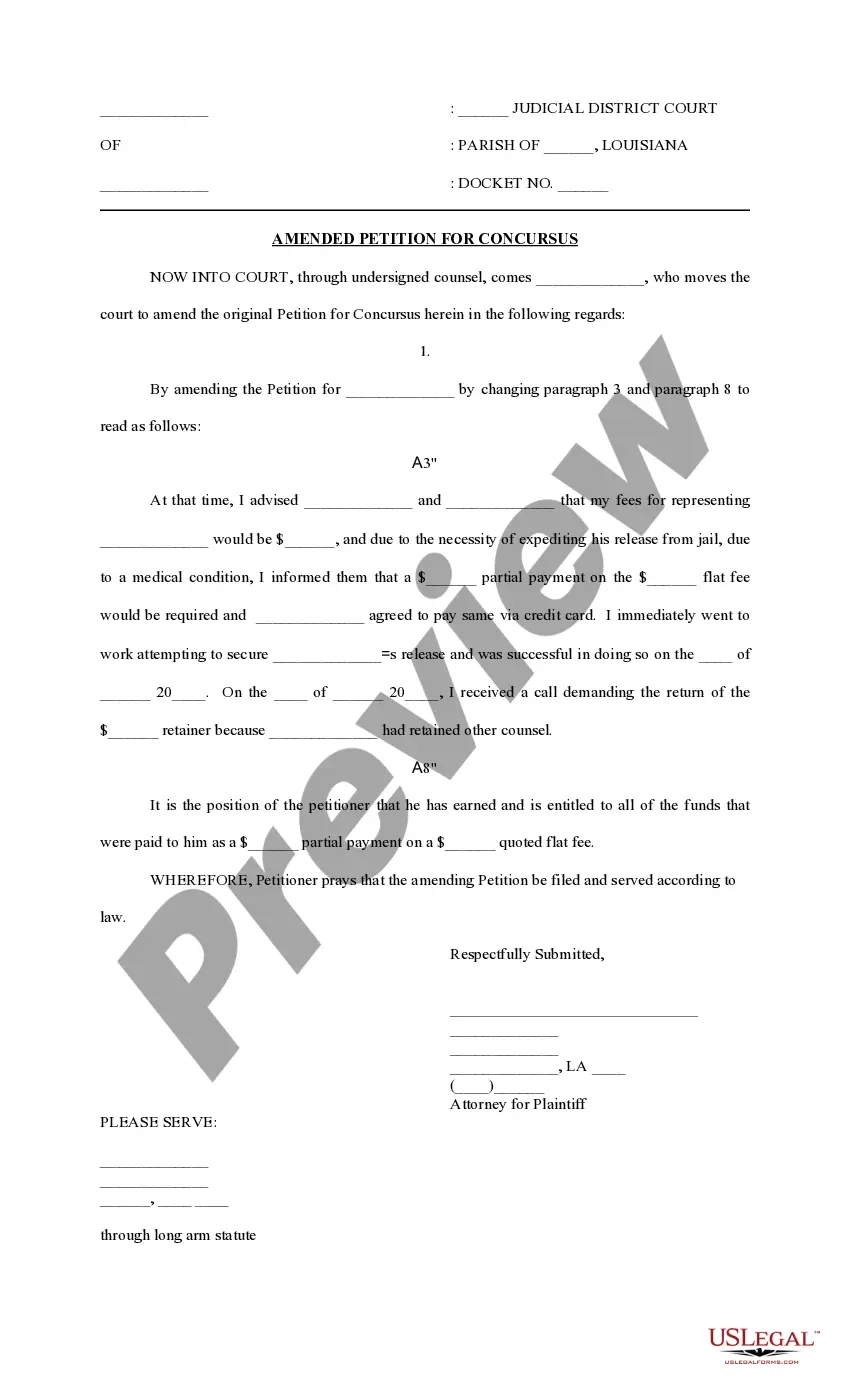
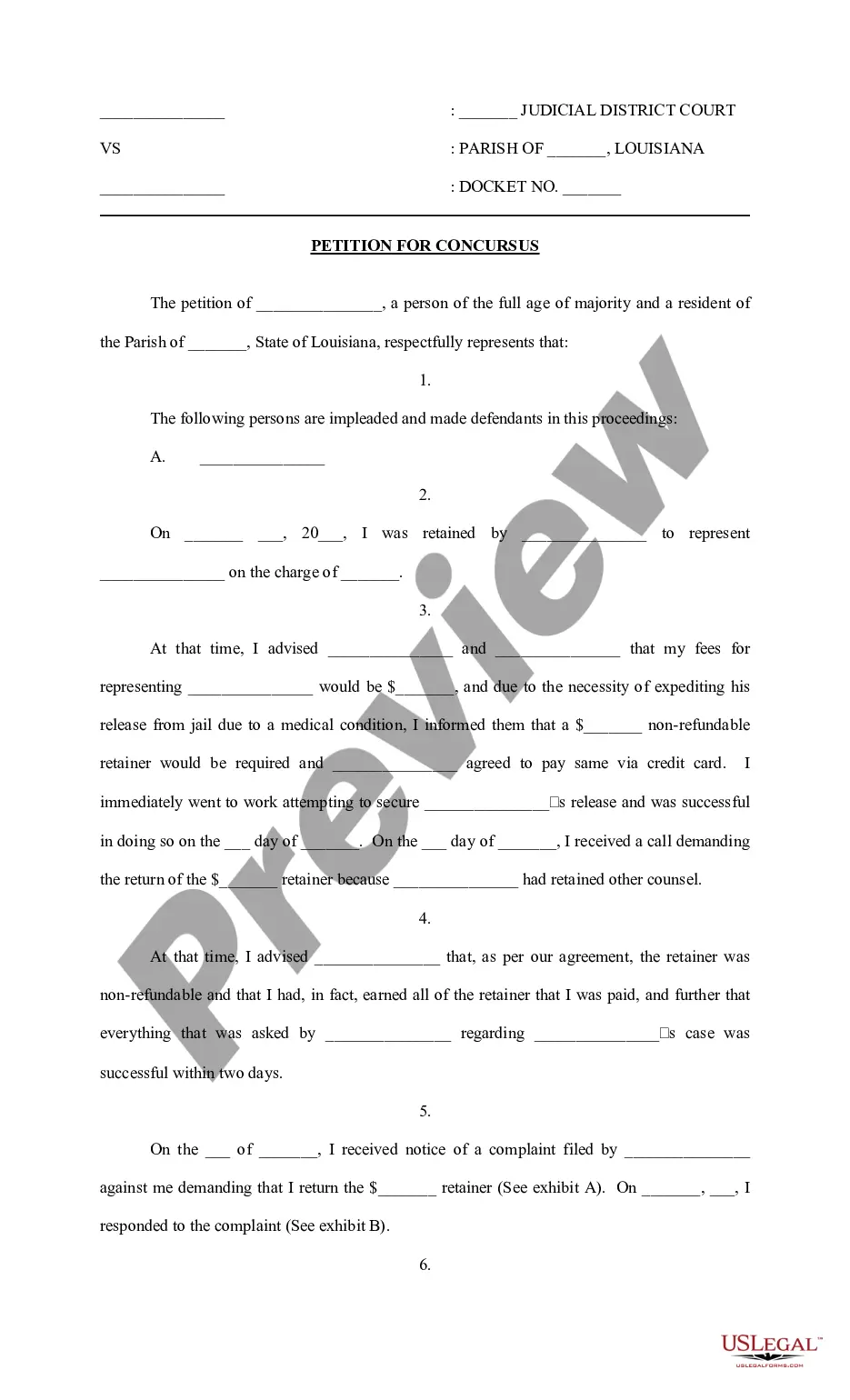
How to fill out Louisiana Amended Petition For Concursus By Attorney Seeking Fees?
- Log into your existing US Legal Forms account by clicking here, and ensure your account subscription is active.
- Examine the Preview mode along with the form description to verify that you've selected the appropriate document matching your jurisdiction's specifications.
- If necessary, utilize the Search function to find alternative templates that meet your requirements. Proceed only when you've found a suitable form.
- Purchase your chosen document by clicking the 'Buy Now' button, then select the subscription plan that best fits your needs, ensuring to create an account for access.
- Complete the purchase by providing your payment information using a credit card or your PayPal account.
- Download the required form to your device. You can access it again anytime via the My Forms menu.
By following these straightforward steps, attorneys can effectively harness the capabilities of US Legal Forms to create precise and legally sound documents. Their extensive library ensures that you have access to more forms than competitors, enhancing your legal practice.
Start simplifying your legal documentation today with US Legal Forms. Access the library now and ensure the best defense for your clients!
Form popularity
FAQ
The defending lawyer is often called a defense attorney. This lawyer plays a vital role in the legal system, representing clients accused of crimes and working towards their acquittal or a fair sentence. If you're an individual in need of legal assistance, consider consulting with an attorney seeking for defending a client to discuss your situation.
Common slang for defense attorneys includes terms like 'defense counsel' or simply 'defenders.' Though slang may vary regionally, it reflects the informal way people talk about lawyers who specialize in defending clients. When seeking representation, remember that an attorney seeking for defending a client works tirelessly to safeguard your legal rights.
Criminal defense lawyers are often simply referred to as defense attorneys. Their role is to represent individuals accused of crimes, ensuring their rights are protected during legal proceedings. An attorney seeking for defending a client in criminal cases focuses on building a strong case and exploring all available options to achieve a favorable outcome.
A lawyer in the military is typically referred to as a Judge Advocate or JAG officer. They play a crucial role in advising military personnel on legal matters and representing them in court. If you are an individual in the military seeking the best legal defense, an attorney seeking for defending a client in this capacity can help navigate the complexities of military law.
Yes, a lawyer can refuse to defend a client under certain circumstances, particularly if the case conflicts with their ethical obligations or personal beliefs. For instance, an attorney seeking for defending a client may decline representation if the client refuses to be truthful or engages in illegal activities. In such cases, it is important for lawyers to adhere to professional standards.
The person that a lawyer defends is commonly referred to as the defendant. When an attorney seeking for defending a client takes on a case, their responsibility centers around advocating for the defendant's legal rights throughout the legal process, ensuring they receive a fair trial.
It is rare, but there are instances where a defense lawyer may have to withdraw from a case if they believe a client is lying or hiding evidence. Additionally, ethical obligations may lead an attorney seeking for defending a client to provide evidence against them if it violates the law. In most cases, a defense lawyer's main goal remains to protect their client’s rights and interests.
A lawyer can decline to represent someone for several reasons, including personal beliefs or a perceived lack of merit in the case. Attorneys also decline cases if they feel they cannot provide strong representation. If you need legal assistance, look for an attorney seeking for defending client who demonstrates genuine interest in your situation and goals. This can lead to a more productive partnership.
Yes, a lawyer can choose not to defend a client based on various factors. This might include ethical dilemmas or the client’s unwillingness to follow legal advice. When selecting an attorney seeking for defending client, it is vital to ensure compatibility in objectives and trust. Such alignment fosters a more successful attorney-client relationship.
While a lawyer aims to advocate for their client, they must also adhere to legal and ethical standards. If a client's wishes compromise legality or ethics, the lawyer might need to advise against it. An attorney seeking for defending client must navigate these situations carefully, ensuring the client understands the potential consequences of their choices.