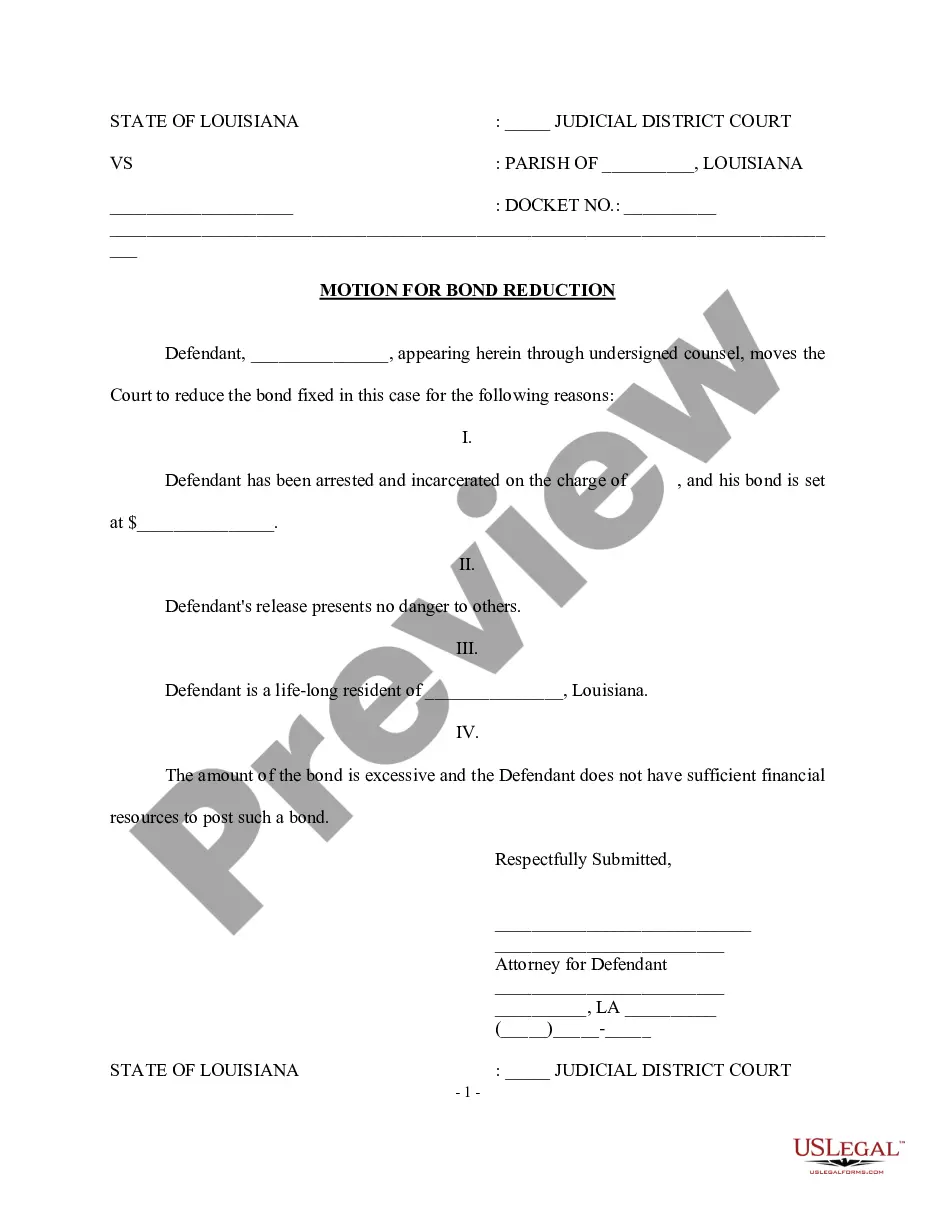
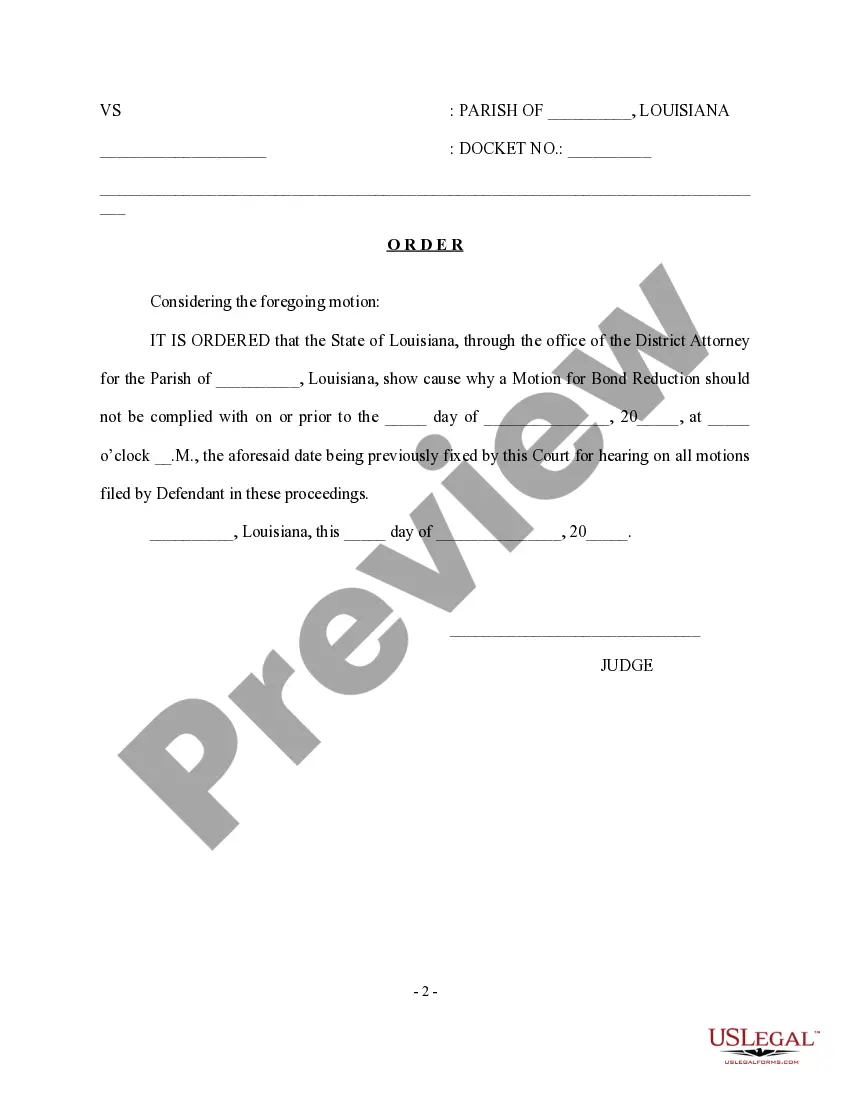
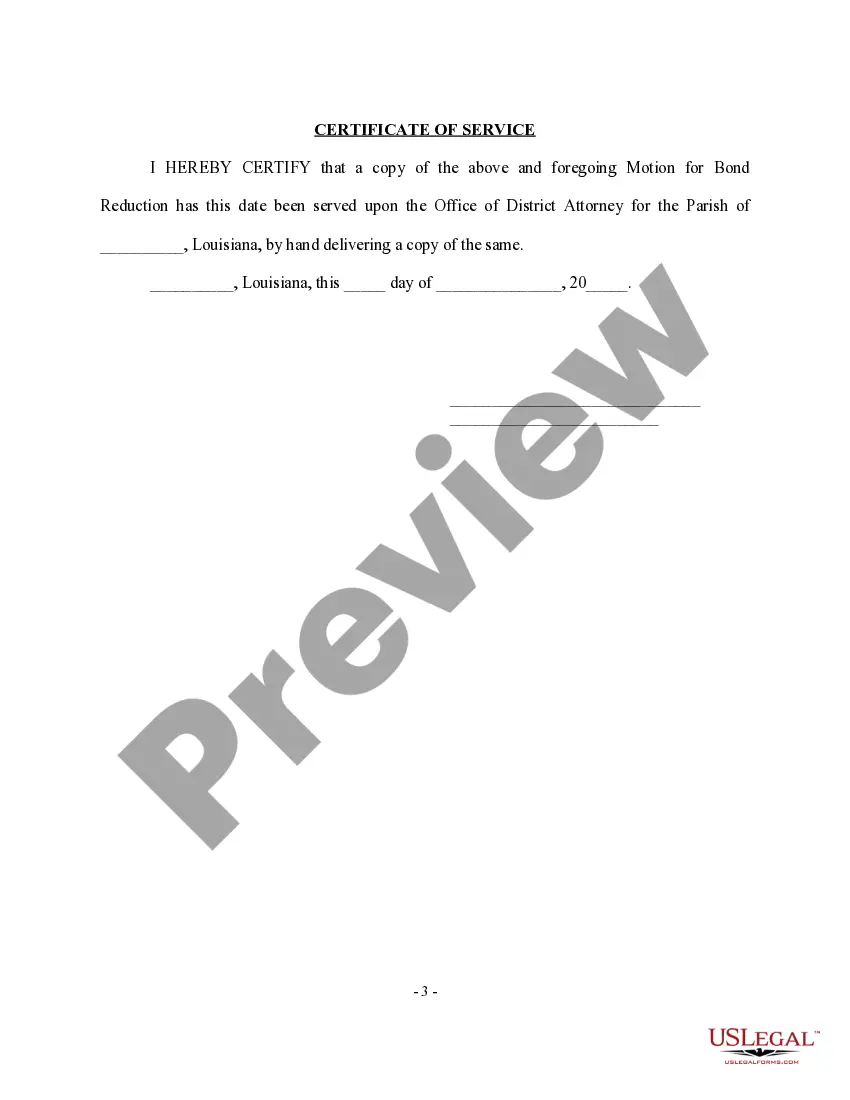
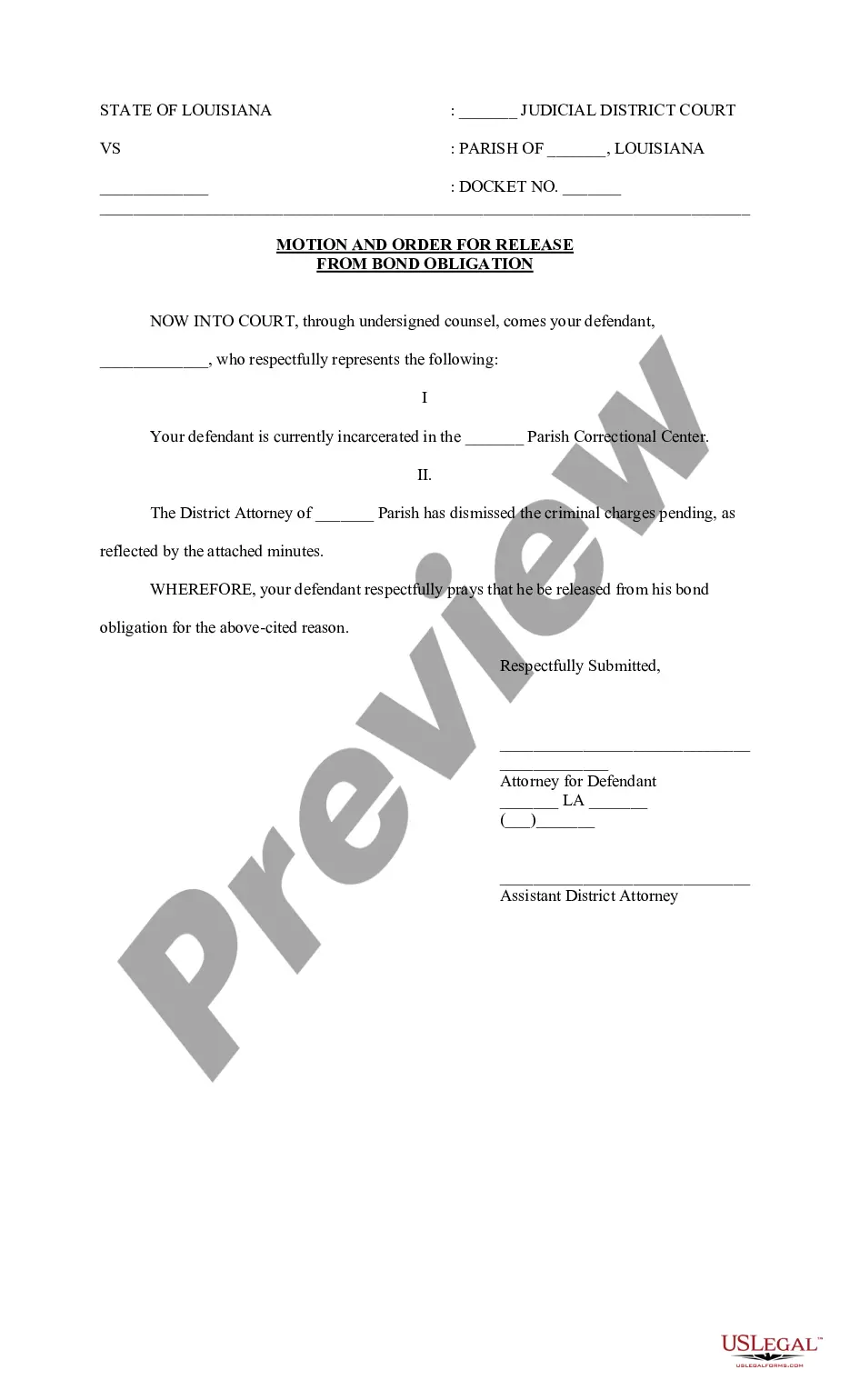
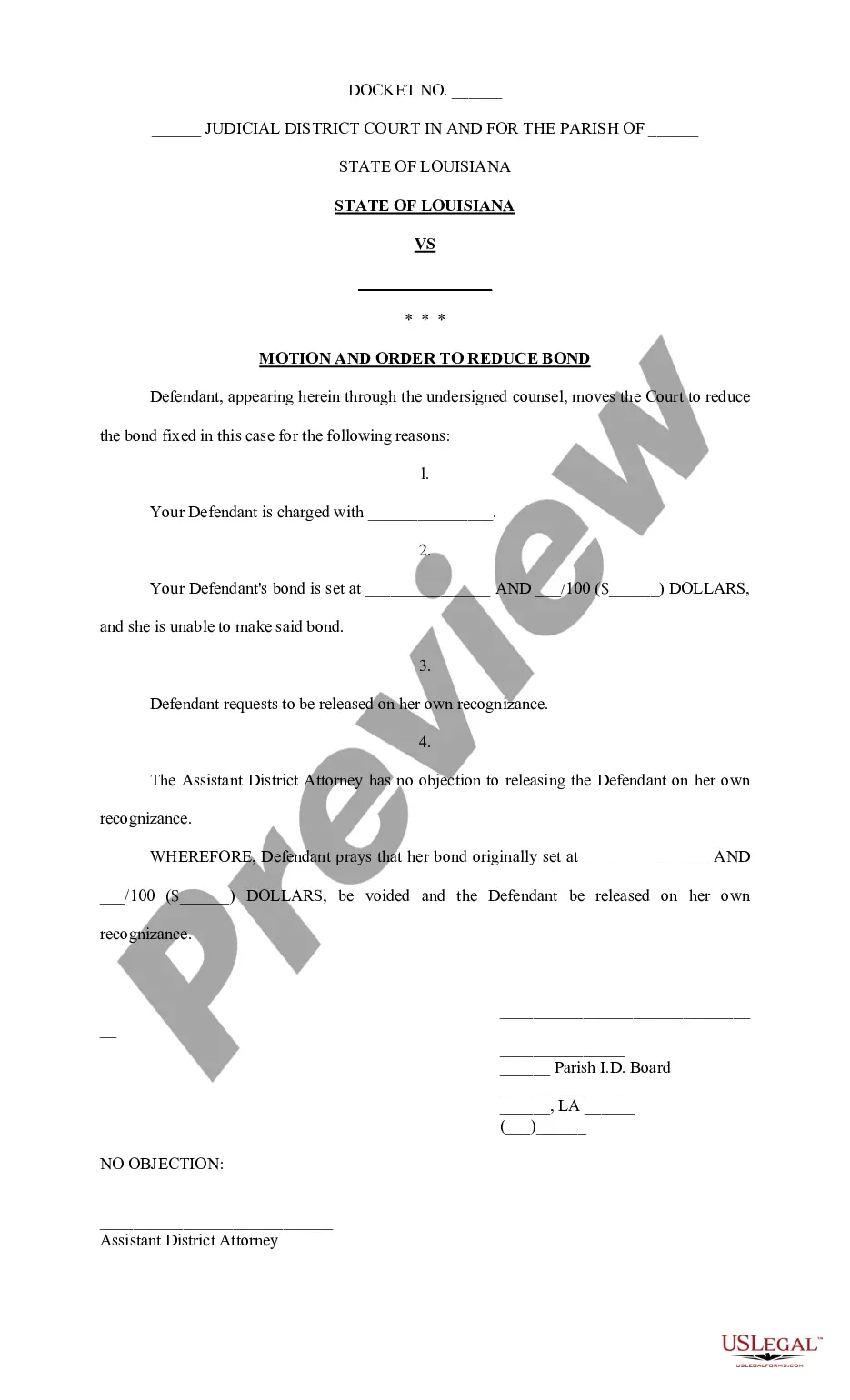
Motion For Bond Reduction Form Texas
Description
Get your form ready online
Our built-in tools help you complete, sign, share, and store your documents in one place.
Make edits, fill in missing information, and update formatting in US Legal Forms—just like you would in MS Word.
Download a copy, print it, send it by email, or mail it via USPS—whatever works best for your next step.
Sign and collect signatures with our SignNow integration. Send to multiple recipients, set reminders, and more. Go Premium to unlock E-Sign.
If this form requires notarization, complete it online through a secure video call—no need to meet a notary in person or wait for an appointment.
We protect your documents and personal data by following strict security and privacy standards.

Make edits, fill in missing information, and update formatting in US Legal Forms—just like you would in MS Word.

Download a copy, print it, send it by email, or mail it via USPS—whatever works best for your next step.

Sign and collect signatures with our SignNow integration. Send to multiple recipients, set reminders, and more. Go Premium to unlock E-Sign.

If this form requires notarization, complete it online through a secure video call—no need to meet a notary in person or wait for an appointment.

We protect your documents and personal data by following strict security and privacy standards.
Looking for another form?
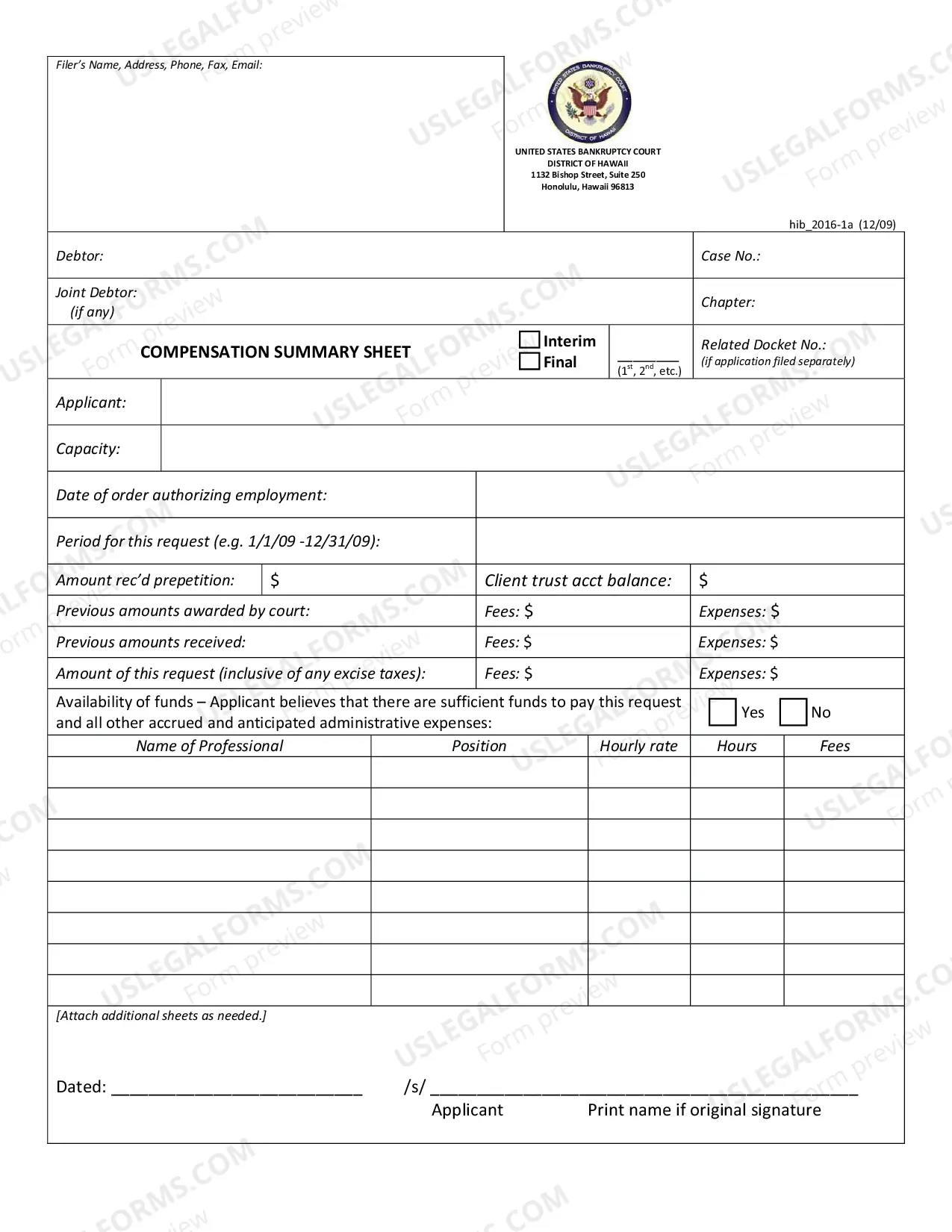



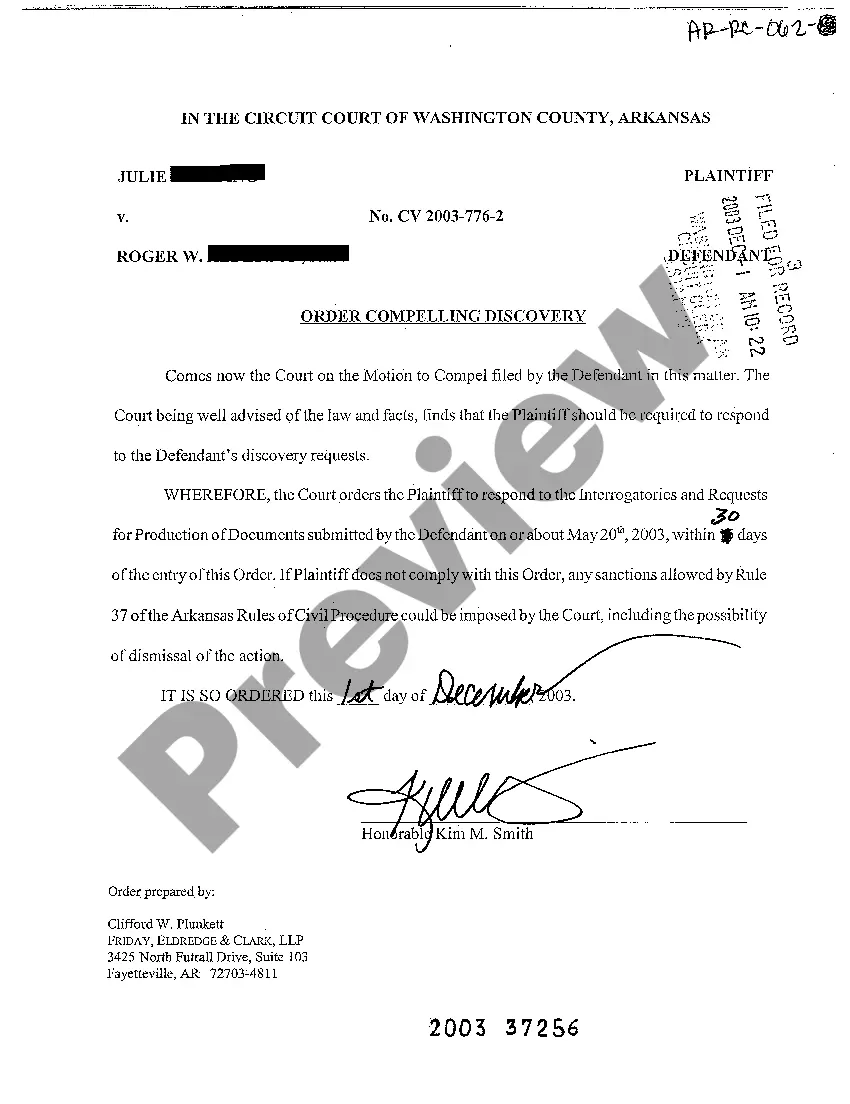
How to fill out Louisiana Motion For Bond Reduction And Order?
Handling legal paperwork and procedures can be a lengthy addition to your entire day.
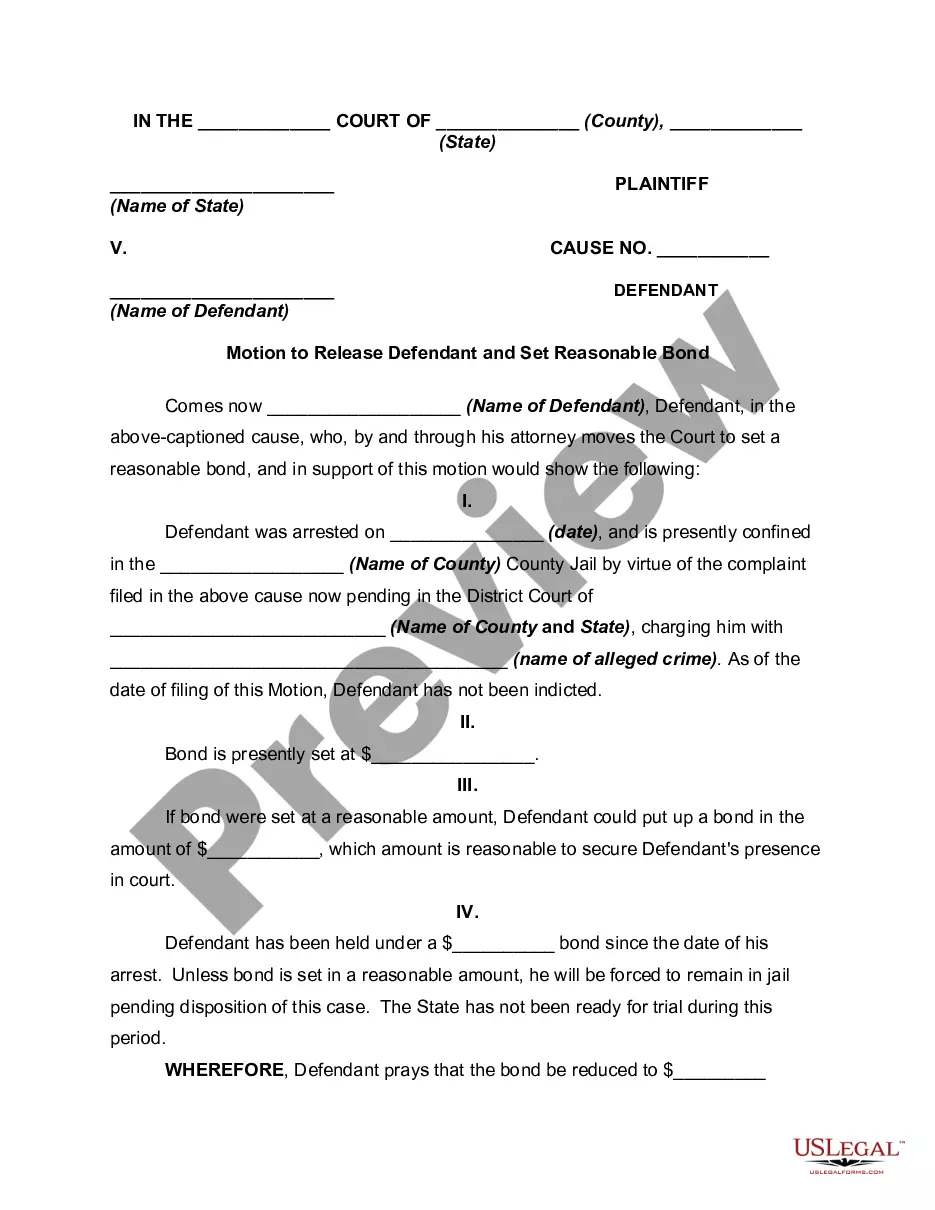
Motion For Bond Reduction Form Texas and similar forms frequently necessitate you to search for them and comprehend the best method to fill them out efficiently.
For that reason, whether you are managing financial, legal, or personal affairs, having a comprehensive and user-friendly online directory of forms readily available will be beneficial.
US Legal Forms is the premier online platform for legal templates, offering over 85,000 state-specific forms and various tools to help you complete your documents effortlessly.
Simply Log In to your account, locate Motion For Bond Reduction Form Texas and obtain it immediately in the My documents section. You can also retrieve forms you have previously downloaded.
- Browse the collection of relevant documents accessible to you with just a single click.
- US Legal Forms supplies you with state- and county-specific forms available for download at any time.
- Streamline your document management processes using a high-quality service that enables you to prepare any form within minutes without additional or concealed charges.
Form popularity
FAQ
Bail jumping and failure to appear is a Class A Misdemeanor in Texas, and it is a form of violating bond conditions. If convicted, you could be sentenced to a year in jail, a $4,000 fine, or both. If you jumped bail for a felony offense, the crime is a third-degree felony.
How Does a Defendant Get a Bond Reduction? The bottom line is that you will need to get an attorney to accomplish this for you. Only an attorney can coordinate an agreed reduction with the District Attorney's Office or get you a bond hearing in front of a district judge.
A criminal defense attorney can file a bond modification motion which asks the court to reduce the bail amount. There is no guarantee that the amount will be reduced, but a skilled attorney will be able to argue the facts of the case in your favor and give you a fighting chance.
If you believe your bail is set too high, your attorney can petition for a bail reduction. A hearing will be scheduled, during which your attorney will remind the court of the unconstitutionality of excessive bail and explain why the bail set for you rises to this level.
If you are so foolish as to violate any of the terms of your bond, the court will revoke your bail (set aside your bond), and you will be jailed until your case is resolved. Aside from costing both money and your personal freedom, it may also jeopardize your ability to mount a defense.