Tenant Landlord Failure For Sale
Description


Get your form ready online
Our built-in tools help you complete, sign, share, and store your documents in one place.
Make edits, fill in missing information, and update formatting in US Legal Forms—just like you would in MS Word.
Download a copy, print it, send it by email, or mail it via USPS—whatever works best for your next step.
Sign and collect signatures with our SignNow integration. Send to multiple recipients, set reminders, and more. Go Premium to unlock E-Sign.
If this form requires notarization, complete it online through a secure video call—no need to meet a notary in person or wait for an appointment.
We protect your documents and personal data by following strict security and privacy standards.

Make edits, fill in missing information, and update formatting in US Legal Forms—just like you would in MS Word.

Download a copy, print it, send it by email, or mail it via USPS—whatever works best for your next step.

Sign and collect signatures with our SignNow integration. Send to multiple recipients, set reminders, and more. Go Premium to unlock E-Sign.

If this form requires notarization, complete it online through a secure video call—no need to meet a notary in person or wait for an appointment.

We protect your documents and personal data by following strict security and privacy standards.
Looking for another form?






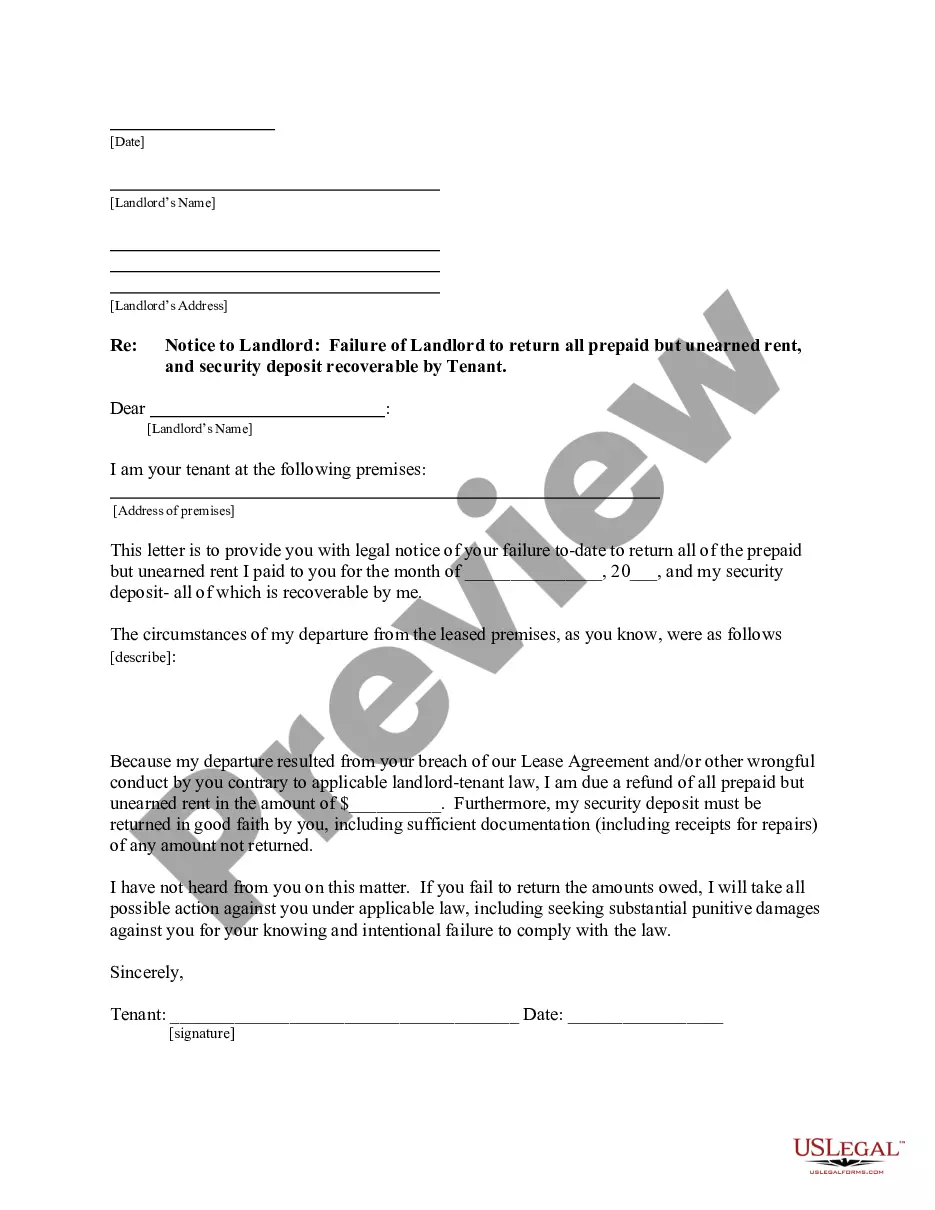
How to fill out Louisiana Letter From Tenant To Landlord For Failure Of Landlord To Return All Prepaid And Unearned Rent And Security Recoverable By Tenant?
- Log in to your US Legal Forms account or create a new one if this is your first visit.
- Use the Preview mode and carefully read the form descriptions to select the one that fits your specific situation.
- In case you need an alternative template, utilize the Search tab to find the appropriate form that meets your local jurisdiction requirements.
- Click the Buy Now button and select your preferred subscription plan to gain access to the extensive library of forms.
- Complete your purchase using your credit card or PayPal, and ensure all payment details are entered correctly.
- Download your chosen template onto your device and access it in the My Forms section whenever necessary.
In conclusion, US Legal Forms provides an intuitive platform for acquiring essential legal documents, empowering individuals and professionals alike. With an expansive library and expert assistance, you can rest assured that you’ll have the right forms to handle any tenant-landlord situation effectively. Don't hesitate—get started today to simplify your legal processes!
Form popularity
FAQ
Breaking a lease without penalty is possible in Massachusetts but often depends on specific circumstances. If you can prove that the property is uninhabitable or that there has been a breach of contract by your landlord, you may have grounds for termination. In cases of tenant landlord failure for sale, consider seeking legal advice, and use resources like uslegalforms to properly document your situation and minimize penalties.
Getting out of a lease early in Massachusetts often requires negotiation with your landlord. You might be able to find a mutual agreement, especially if tenant landlord failure for sale affects the property. Utilizing platforms such as uslegalforms can provide you with the necessary documents to negotiate or formally terminate your lease without facing adverse consequences.
In Massachusetts, once a house is sold, tenants typically receive a 30-day notice to vacate if the new owner plans to move in. However, under certain circumstances, such as tenant landlord failure for sale, this timeline may differ. Always check the lease and consult with legal resources to ensure you are following the correct procedures for your situation.
Dealing with a bad tenant can be challenging, but there are steps you can take. First, review your lease agreement to understand the terms and any grounds for eviction. If necessary, utilize legal services for landlords that guide you through the eviction process, especially in tenant landlord failure for sale situations. It’s crucial to document all issues and maintain communication to address problems directly whenever possible.
In Texas, if your landlord fails to fix issues that affect your living conditions, you have several options for recourse. You can report the landlord to local housing authorities or even undertake repairs yourself and deduct the costs from your rent. Understanding these actions can mitigate risks associated with tenant landlord failure for sale.
If a landlord defaults on a mortgage, the lender may initiate foreclosure proceedings, which can complicate your rental situation. This may lead to changes in property ownership or even eviction for tenants. Staying informed about your rights can help you navigate the potential impacts of tenant landlord failure for sale.
Addressing an irresponsible landlord involves documenting any issues and communicating your concerns directly. If they fail to make necessary repairs or resolve problems, consult local housing laws and consider taking legal action. This proactive approach may help prevent tenant landlord failure for sale and foster better tenant-landlord relationships.
Yes, you can sue your landlord after moving out, particularly if you believe they violated your lease agreement or damaged your security deposit. It's important to document any issues you encountered while renting. Understanding your rights can prevent tenant landlord failure for sale and empower you in legal disputes.
A tenant that won't leave is often referred to as a holdover tenant. This label applies to individuals who remain in the property after their lease term has expired. Navigating these situations can lead to tenant landlord failure for sale, making it essential for landlords to know their rights.
Dealing with a deadbeat tenant typically requires clear communication about expectations and responsibilities. If they continue to miss payments, consider offering a payment plan or a final notice before eviction. Remember, addressing these issues early can help prevent tenant landlord failure for sale.