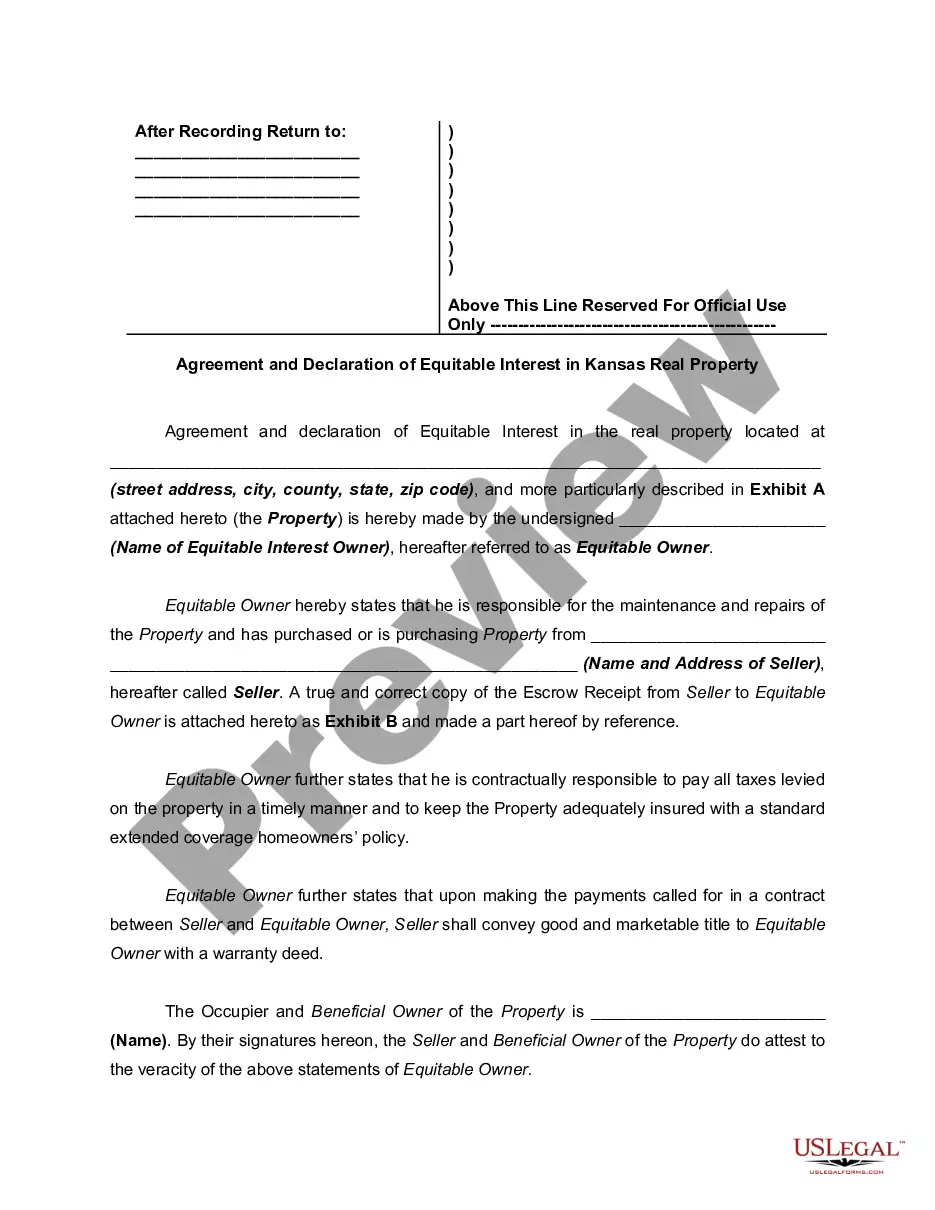
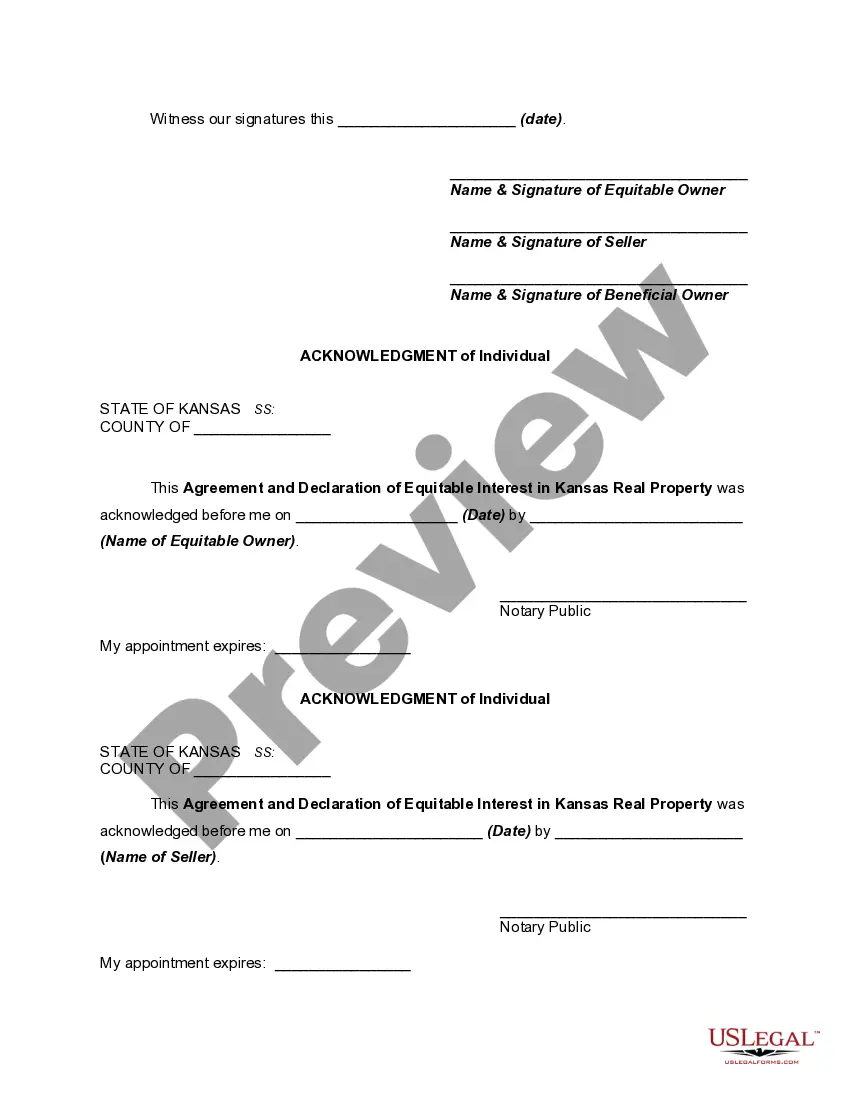
Kansas In Property With County
Description

Get your form ready online
Our built-in tools help you complete, sign, share, and store your documents in one place.
Make edits, fill in missing information, and update formatting in US Legal Forms—just like you would in MS Word.
Download a copy, print it, send it by email, or mail it via USPS—whatever works best for your next step.
Sign and collect signatures with our SignNow integration. Send to multiple recipients, set reminders, and more. Go Premium to unlock E-Sign.
If this form requires notarization, complete it online through a secure video call—no need to meet a notary in person or wait for an appointment.
We protect your documents and personal data by following strict security and privacy standards.

Make edits, fill in missing information, and update formatting in US Legal Forms—just like you would in MS Word.

Download a copy, print it, send it by email, or mail it via USPS—whatever works best for your next step.

Sign and collect signatures with our SignNow integration. Send to multiple recipients, set reminders, and more. Go Premium to unlock E-Sign.

If this form requires notarization, complete it online through a secure video call—no need to meet a notary in person or wait for an appointment.

We protect your documents and personal data by following strict security and privacy standards.
Looking for another form?









How to fill out Agreement And Declaration Of Equitable Interest In Kansas Real Property?
Handling legal documents and procedures can be a lengthy addition to your schedule.
Kansas In Property With County and similar forms generally necessitate that you locate them and figure out how to fill them out accurately.
For this reason, whether you are managing financial, legal, or personal issues, utilizing a comprehensive and user-friendly online repository of forms available will be beneficial.
US Legal Forms is the leading online platform for legal documents, featuring over 85,000 state-specific forms and a range of tools to help you complete your paperwork effortlessly.
Is this your first time using US Legal Forms? Sign up and create an account in just a few minutes, and you’ll gain access to the document library and Kansas In Property With County. Then, follow the steps outlined below to complete your document: Ensure you have identified the correct form using the Review feature and examining the form description. Click Buy Now when ready, and choose the subscription plan that suits your requirements. Click Download and then fill out, sign, and print the document. US Legal Forms boasts 25 years of experience assisting users in managing their legal documents. Locate the form you need today and streamline any process without breaking a sweat.
- Explore the collection of relevant documents accessible to you with just one click.
- US Legal Forms provides you with state- and county-specific documents available for download at any time.
- Protect your document management tasks with a reliable service that enables you to create any form within minutes at no extra or hidden charge.
- Simply Log In to your account, search for Kansas In Property With County, and download it instantly from the My documents section.
- You can also access previously saved documents.
Form popularity
FAQ
County property in Kansas counts as any asset owned by the county, including land, buildings, and infrastructure like roads. These properties are maintained for public use and benefit the local population. They might also include government offices and community centers. Recognizing what falls under county property can enhance your understanding of local governance and resource allocation.
County property in Kansas typically includes land and buildings owned by the county government. This can range from parks and libraries to public offices and facilities. These properties serve the community and are funded through local taxes. Knowing what constitutes county property can help you understand how your tax dollars are utilized.
In Kansas, personal property tax applies to tangible items that are not classified as real estate. This tax is assessed annually based on the value of the personal property you own. The county appraises these items, and you are responsible for reporting them correctly. Familiarizing yourself with the tax process can help you avoid unexpected liabilities.
The three main types of property in Kansas include real property, personal property, and intellectual property. Real property refers to land and any structures on it, while personal property encompasses movable items like vehicles and furniture. Intellectual property involves creations of the mind, such as inventions and trademarks. Understanding these categories can help you navigate property ownership and rights.
In Kansas, determining if property is public or private can usually be done by checking county property records. Public properties are often owned by government entities and may be listed as such in county databases. Additionally, local zoning maps and ordinances can provide insights into property use. If you have questions, reaching out to local authorities can also clarify property status.
To transfer a property deed in Kansas, you need to complete a deed form, which is often available through platforms like US Legal Forms. After filling out the form, you must sign it in front of a notary public. Finally, you will need to file the deed with the appropriate county clerk's office to ensure the transfer is official and publicly recorded.
In Kansas, property tax typically includes both city and county taxes. These taxes support local services like education, infrastructure, and public safety. When you receive your property tax bill, it will itemize the amounts allocated to both the city and the county. Understanding this breakdown can help you see how your property contributes to local community services.
To discover who owns land in Kansas, you can search the county's property records at the Register of Deeds office. Many counties also offer online databases that allow you to search by property address or owner name. Checking these records can provide you with essential information about property ownership. If you require assistance or specific forms to facilitate your search, US Legal Forms is here to help.
To transfer a house deed in Kansas, you need to prepare a new deed that includes the grantor's and grantee's names, along with a legal description of the property. After signing the deed before a notary, you must file it with the county's Register of Deeds office. This ensures the transfer is officially recorded. For more detailed instructions and forms, consider exploring the US Legal Forms platform.
Yes, property deeds are public records in Kansas. This means anyone can access information about property ownership by visiting the county's Register of Deeds office or checking their online database. Public records help maintain transparency in property transactions and can be beneficial when researching property history. If you need help navigating these records, US Legal Forms offers valuable resources to guide you.