Tenant Landlord Return For Tenant
Description


Get your form ready online
Our built-in tools help you complete, sign, share, and store your documents in one place.
Make edits, fill in missing information, and update formatting in US Legal Forms—just like you would in MS Word.
Download a copy, print it, send it by email, or mail it via USPS—whatever works best for your next step.
Sign and collect signatures with our SignNow integration. Send to multiple recipients, set reminders, and more. Go Premium to unlock E-Sign.
If this form requires notarization, complete it online through a secure video call—no need to meet a notary in person or wait for an appointment.
We protect your documents and personal data by following strict security and privacy standards.

Make edits, fill in missing information, and update formatting in US Legal Forms—just like you would in MS Word.

Download a copy, print it, send it by email, or mail it via USPS—whatever works best for your next step.

Sign and collect signatures with our SignNow integration. Send to multiple recipients, set reminders, and more. Go Premium to unlock E-Sign.

If this form requires notarization, complete it online through a secure video call—no need to meet a notary in person or wait for an appointment.

We protect your documents and personal data by following strict security and privacy standards.
Looking for another form?










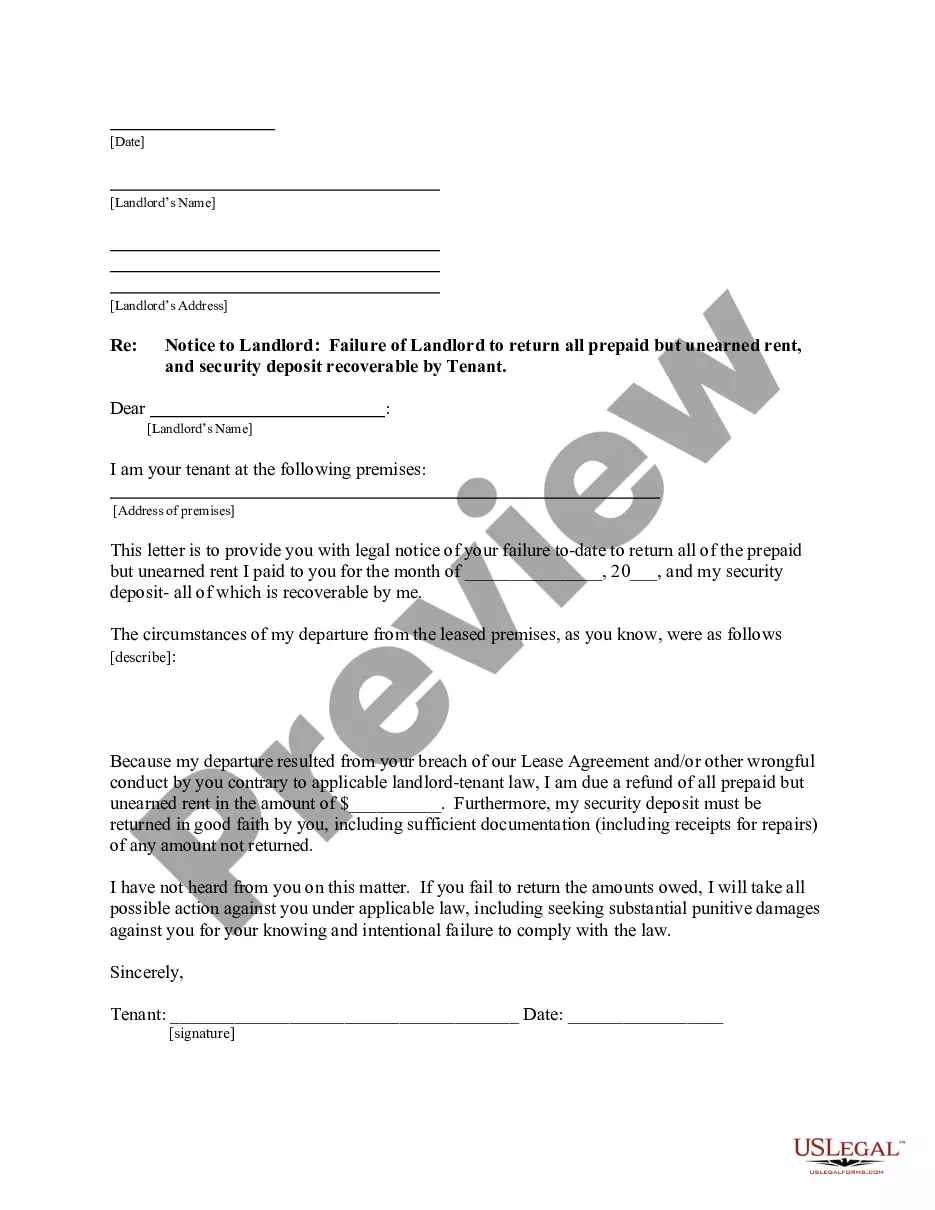
How to fill out Indiana Letter From Tenant To Landlord For Failure Of Landlord To Return All Prepaid And Unearned Rent And Security Recoverable By Tenant?
- If you have a US Legal Forms account, log in to access your account and locate the tenant-specific template. Ensure your subscription is current; renew as necessary.
- If you're new to US Legal Forms, begin by checking the preview and description of the tenant landlord return. Confirm it meets your needs and aligns with local jurisdiction requirements.
- If the document is not suitable, utilize the Search tab to find another template that better fits your needs.
- Once you've selected the right form, click 'Buy Now' to choose your subscription plan. You will need to create an account to access the extensive resources available.
- Complete your purchase by entering your payment details, either through credit card or PayPal, to finalize the subscription.
- After purchasing, download your form and save it to your device. You can access it anytime in the My Forms section.
In conclusion, using US Legal Forms allows you to efficiently obtain your tenant landlord return for tenant documents with ease. Their vast library and expert assistance ensure that you can confidently navigate your legal needs.
Visit US Legal Forms today to empower yourself with the legal documents you need!
Form popularity
FAQ
The new rental law in Michigan includes provisions aimed at improving transparency in rental agreements and enhancing tenant rights. It requires landlords to provide clearer terms regarding lease agreements and security deposits. Staying informed about these changes is crucial for both landlords and tenants to avoid misunderstandings. To learn more about the implications of these laws, check out US Legal Forms, which offers comprehensive information on tenant landlord return for tenant topics.
Landlords are generally not responsible for minor repairs or damages caused by a tenant's actions, such as excessive wear on carpets or fixtures. They are also not liable for personal injuries or damages resulting from a tenant's negligence. Being aware of these responsibilities helps both parties understand their obligations. For clarity on your rights, explore the resources available through US Legal Forms related to tenant landlord return for tenant issues.
In Michigan, a landlord can deduct from a security deposit for unpaid rent, damages beyond normal wear and tear, and cleaning costs if the rental unit is left dirty. Landlords must provide an itemized list of deductions within 30 days after the tenant vacates the property. Knowing these rules helps ensure a fair process for tenant landlord return for tenant matters. For templates and legal advice, US Legal Forms is a valuable resource.
Landlord harassment in Michigan includes any aggressive behavior aimed at forcing a tenant to leave, such as excessive showing of the property, cutting off utilities, or threatening eviction without cause. Such actions are illegal and can lead to legal consequences for the landlord. If you suspect harassment, it is important to document incidents and seek guidance. US Legal Forms can help you understand your rights regarding tenant landlord return for tenant issues.
In Michigan, landlords cannot engage in retaliatory actions against tenants, such as raising rent or evicting them for exercising their legal rights. They are also prohibited from entering a tenant's property without proper notice or consent. Understanding these illegal practices is essential for both tenants and landlords to maintain a good relationship. For detailed legal information, US Legal Forms can guide you on tenant landlord return for tenant obligations.
To write a notice from a tenant to a landlord, start by clearly stating your name, address, and the date. Then, specify the purpose of the notice, such as requesting repairs or notifying the landlord about an issue. Use clear and polite language throughout the document. For assistance in drafting a formal notice, consider using US Legal Forms, which provides templates specifically designed for tenant landlord return for tenant scenarios.
Your letter should begin with your contact information, followed by the date and your landlord’s details. Use a professional tone and state the purpose of your letter clearly. Address any specific issues you want to discuss, and be sure to thank your landlord for their attention. Effective communication can enhance the tenant landlord return for tenant dynamic significantly.
In Texas, landlords can only deduct for specific reasons such as unpaid rent, repair costs for damages beyond normal wear and tear, or cleaning fees if necessary. It is crucial for landlords to document all deductions transparently to protect themselves legally. Understanding these nuances ensures that both parties navigate the tenant landlord return for tenant process fairly.
Start your letter with your address and the date, then respectfully address your landlord. State your intention to vacate, including the specific move-out date, which is important for clarity. Providing your reasons can help foster goodwill, ensuring a smoother tenant landlord return for tenant process in the future.
Begin your letter with your address and date, followed by your landlord's contact information. Clearly state your intention and include the reason if applicable. Make sure to specify any timelines or conditions that pertain to your notice. A well-worded letter can facilitate better communication, supporting the tenant landlord return for tenant arrangement.