Name Change Rules For Central Government Employees
Description


Get your form ready online
Our built-in tools help you complete, sign, share, and store your documents in one place.
Make edits, fill in missing information, and update formatting in US Legal Forms—just like you would in MS Word.
Download a copy, print it, send it by email, or mail it via USPS—whatever works best for your next step.
Sign and collect signatures with our SignNow integration. Send to multiple recipients, set reminders, and more. Go Premium to unlock E-Sign.
If this form requires notarization, complete it online through a secure video call—no need to meet a notary in person or wait for an appointment.
We protect your documents and personal data by following strict security and privacy standards.

Make edits, fill in missing information, and update formatting in US Legal Forms—just like you would in MS Word.

Download a copy, print it, send it by email, or mail it via USPS—whatever works best for your next step.

Sign and collect signatures with our SignNow integration. Send to multiple recipients, set reminders, and more. Go Premium to unlock E-Sign.

If this form requires notarization, complete it online through a secure video call—no need to meet a notary in person or wait for an appointment.

We protect your documents and personal data by following strict security and privacy standards.
Looking for another form?

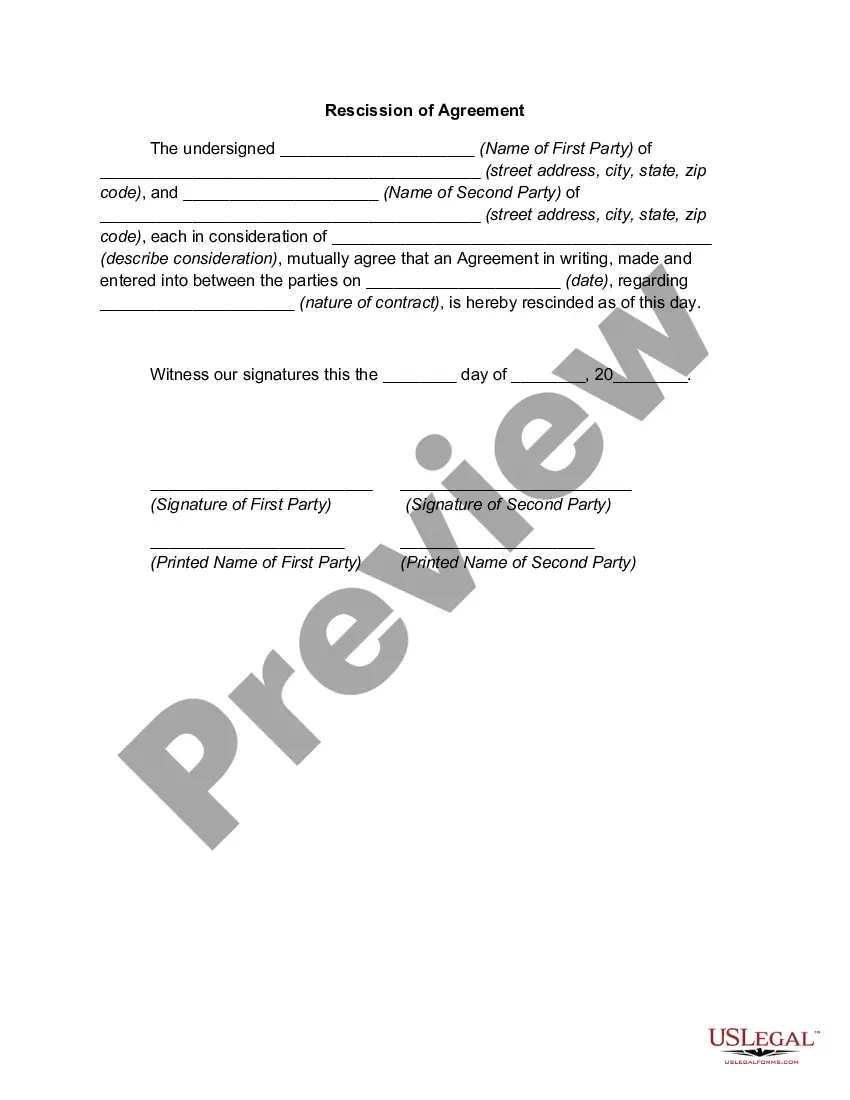






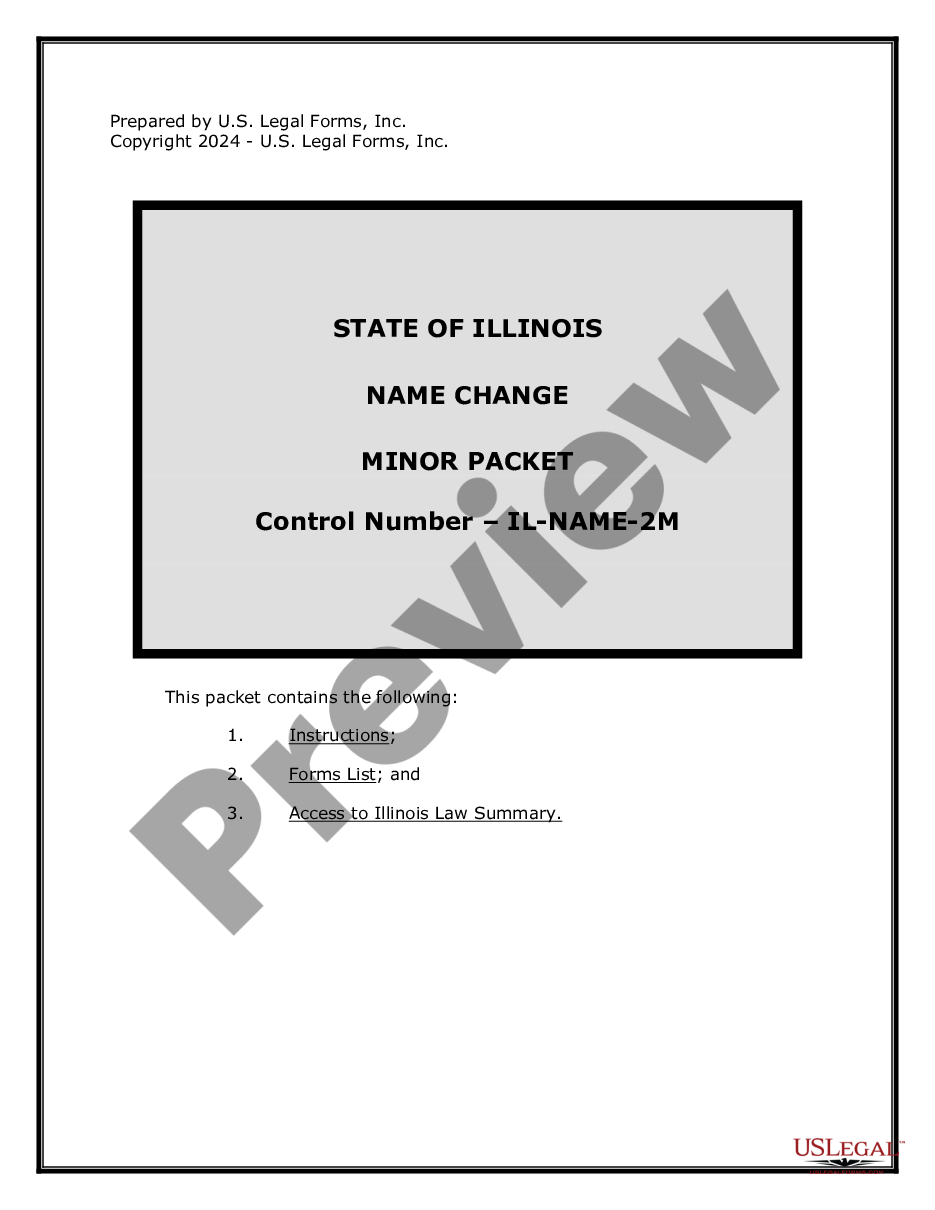
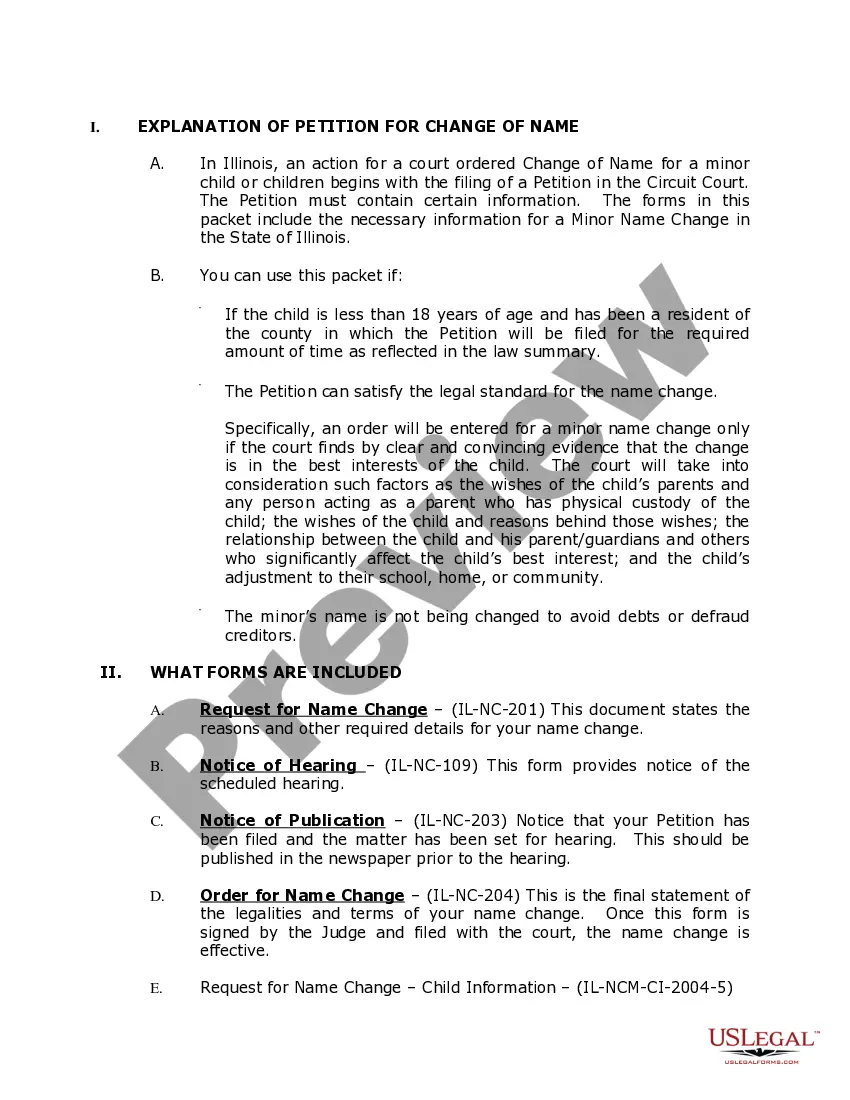
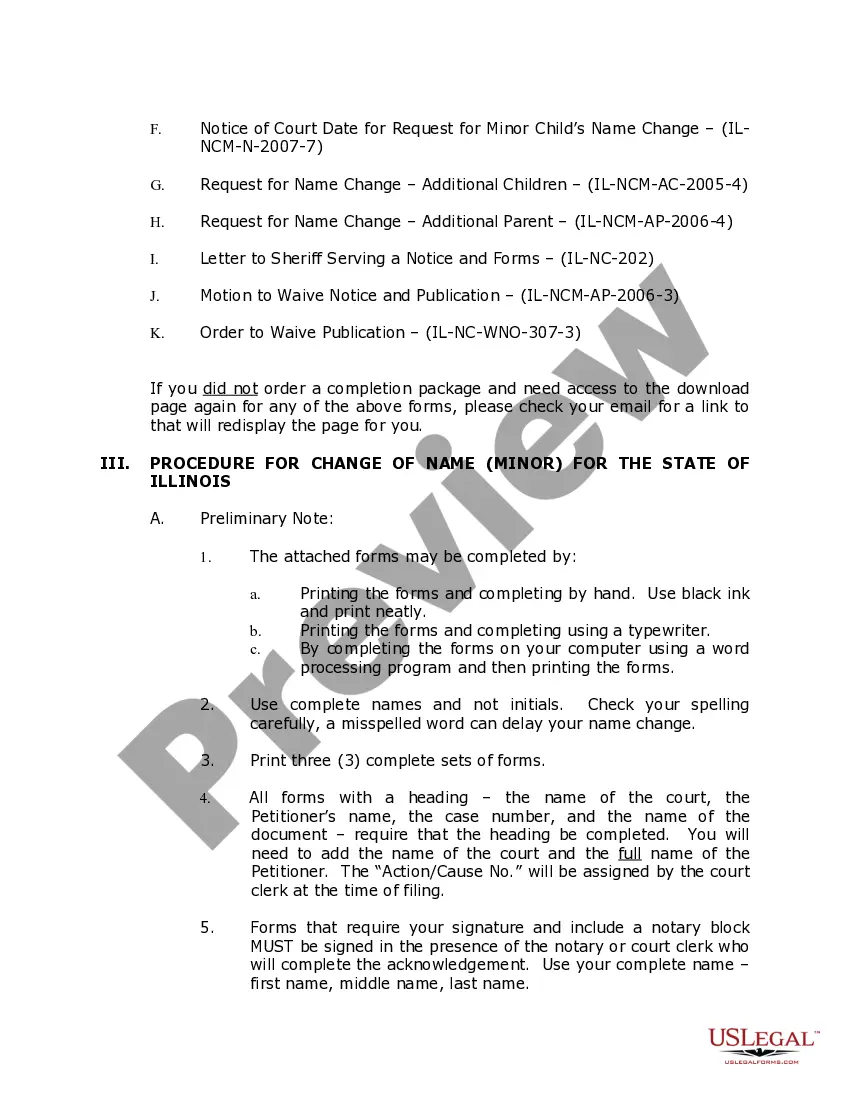
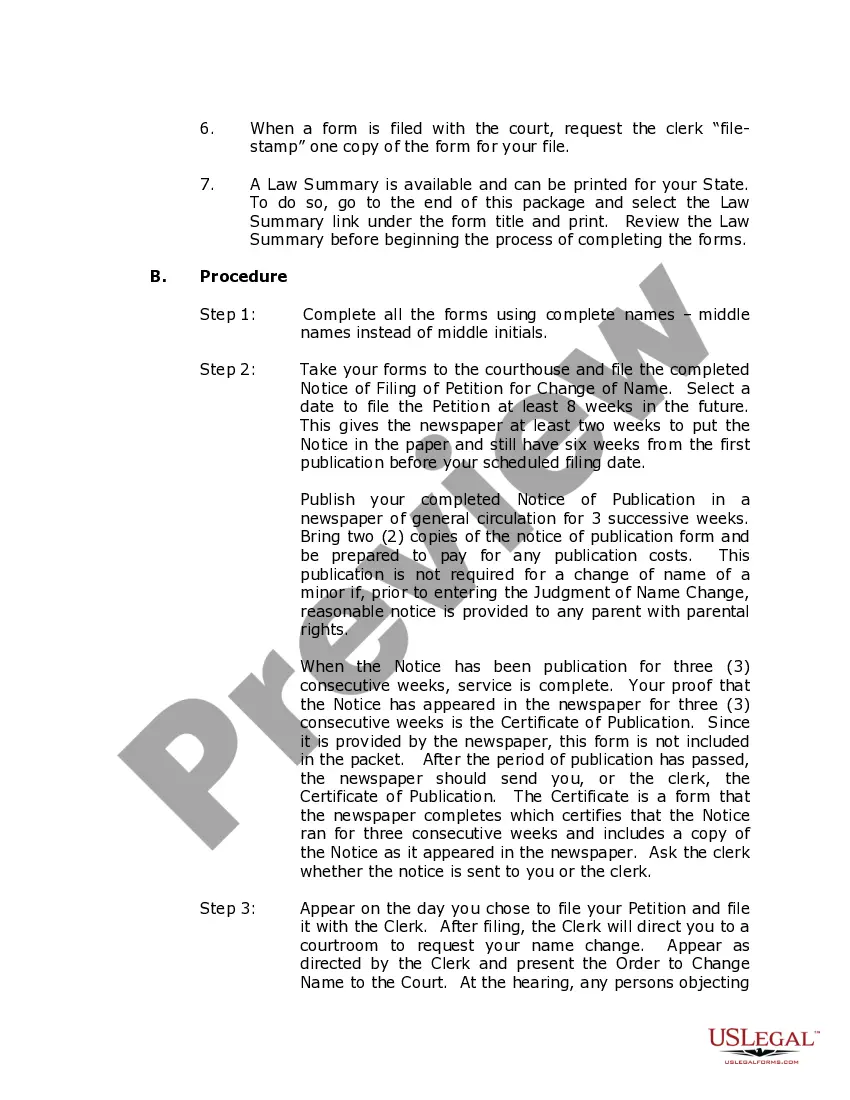
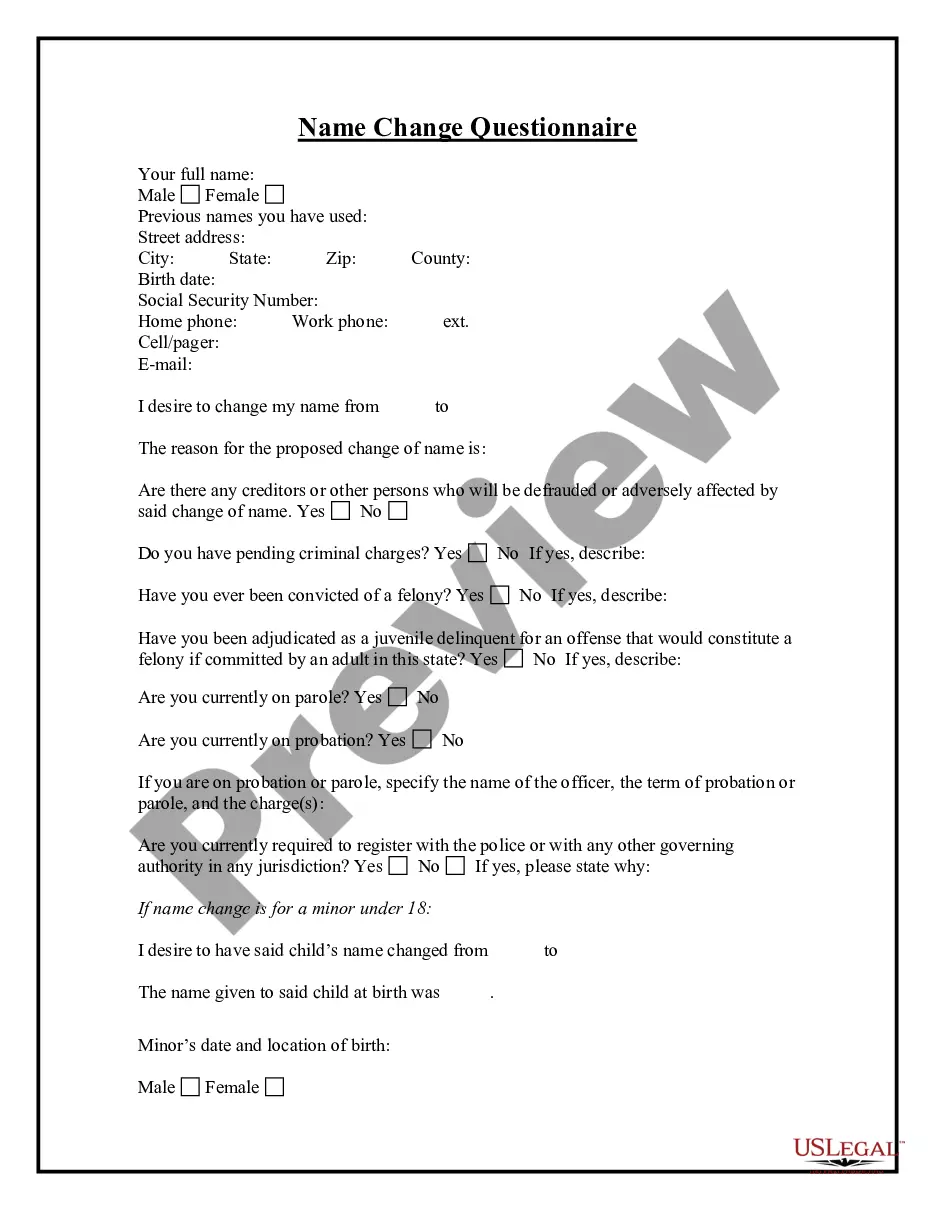
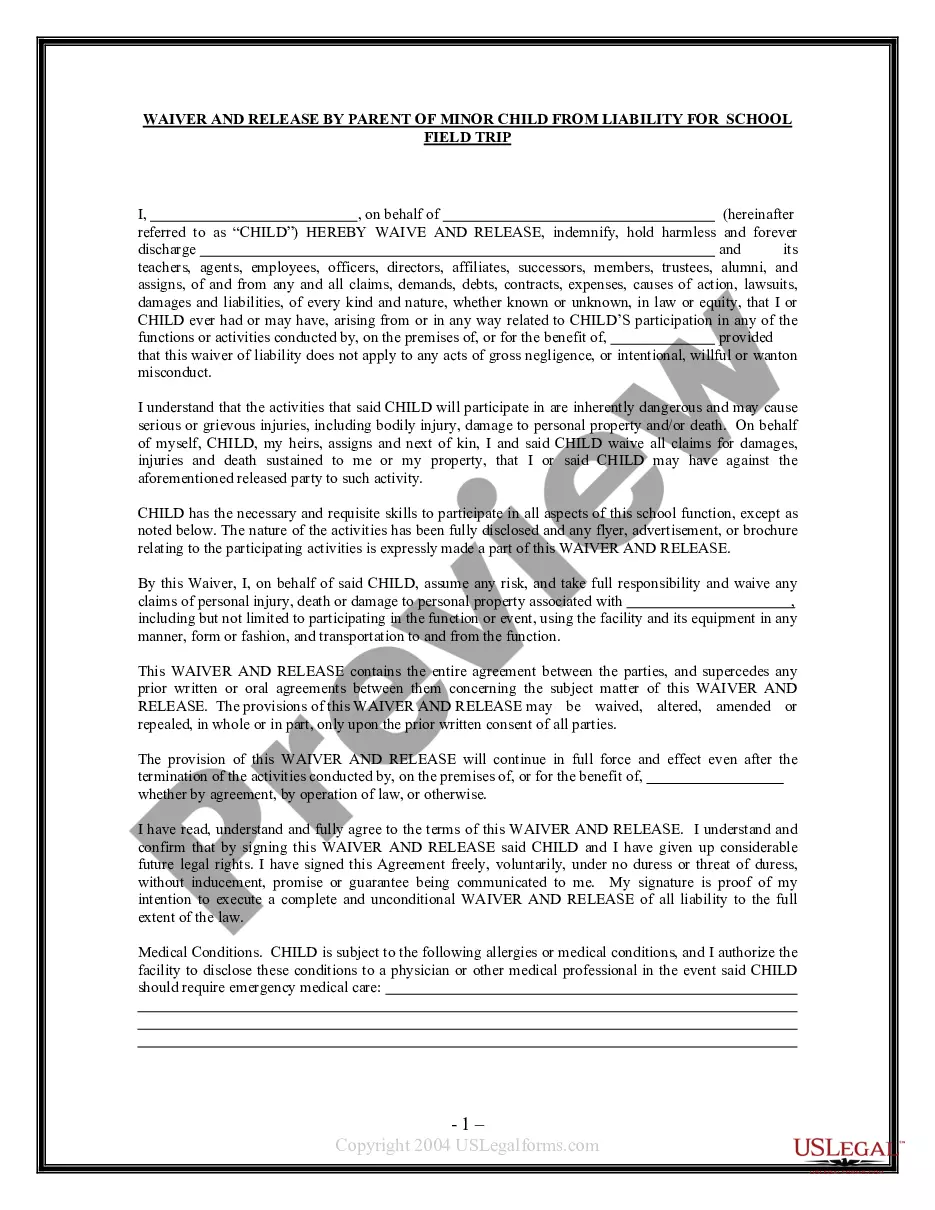
How to fill out Illinois Name Change Instructions And Forms Package For A Minor?
- If you are a returning user, log into your account and access your document template using the Download button. Ensure your subscription is active; if not, you will need to renew it according to your payment plan.
- For first-time users, begin by reviewing the Preview mode and the form description to confirm you select the correct template for your needs.
- If the template does not meet your requirements, utilize the Search tab to find a different form that aligns better with your local jurisdiction.
- Once you have the correct document, click the Buy Now button and select your preferred subscription plan. You will need to create an account to access the full library.
- Complete your purchase by entering your credit card details or through your PayPal account for the subscription.
- After purchase, download your form and save it on your device. You can also access it later from the My Forms section of your account.
In conclusion, US Legal Forms provides a user-friendly experience for obtaining legal documents required for name change procedures. With a vast library of over 85,000 forms and expert support, you can feel confident in your legal filings.
Don't hesitate—unlock the benefits of streamlined legal documentation today!
Form popularity
FAQ
Yes, if you change your name, you are required to complete a new I-9 form to reflect your current legal name. This ensures compliance with federal regulations under the name change rules for central government employees. Submitting a new I-9 maintains accurate employment eligibility verification.
Yes, names of federal employees are usually considered public information, subject to specific privacy laws and regulations. Under the name change rules for central government employees, this transparency fosters trust and accessibility within the government sector. However, certain exemptions may apply depending on the employee's role or situation. To stay informed about these nuances, visit the resources provided by US Legal Forms.
Employees typically must inform you of their name when it is relevant to the task at hand. The name change rules for central government employees emphasize this requirement to foster clear communication. It not only helps build trust but also ensures that proper procedures are followed during interactions. For individuals seeking clarity, the US Legal Forms website offers comprehensive insights into these expectations.
Public employees generally need to identify themselves when performing official duties. This requirement upholds public trust by assuring citizens of accountability and transparency. In the context of name change rules for central government employees, it is crucial to understand when and how employees must disclose their identities. Resources like US Legal Forms can provide thorough information on these regulations.
Yes, government employees must provide their name in certain situations to ensure transparency and accountability. Name change rules for central government employees dictate that while identification is necessary, specific situations vary based on the type of inquiry. It's important for these employees to comply with established protocols during official interactions. For more detailed guidance, you can leverage tools available on the US Legal Forms platform.
When an employee changes their name, the necessary documentation typically includes a legal name change certificate, such as a marriage certificate or court order. Additionally, the employee should submit updated identification, like a driver's license or passport, that reflects the new name. It is also important to inform the HR department, as they must update their records in accordance with the name change rules for central government employees. Ensuring all documents are in order helps facilitate a smooth transition and avoids potential issues with payroll and benefits.
When an employee changes their last name, it is essential to update various records and inform relevant departments. First, notify HR and provide the necessary documentation related to the name change. Then, update identification records, payroll information, and benefits to adhere to the name change rules for central government employees, ensuring all legal documents reflect the most current information.
To change your last name, you will typically need legal documentation, such as a marriage certificate, divorce decree, or court order. The name change rules for central government employees mandate that any requested changes must be supported by proper identification. Make a checklist of the required documents to streamline the process and avoid delays.
To change your name as a federal employee, follow the name change rules for central government employees, starting with notifying your human resources (HR) department. Submit the required documents, such as a marriage certificate or court order. HR will guide you through the process, ensuring all records, including payroll and benefits, are updated accordingly.
Yes, a new I-9 form is required when an employee changes their name to reflect the name on their legal documents. The name change rules for central government employees state that the employee should complete a new I-9, as the previous form will no longer match their updated identification. Always keep your employee records accurate to ensure compliance with federal regulations.