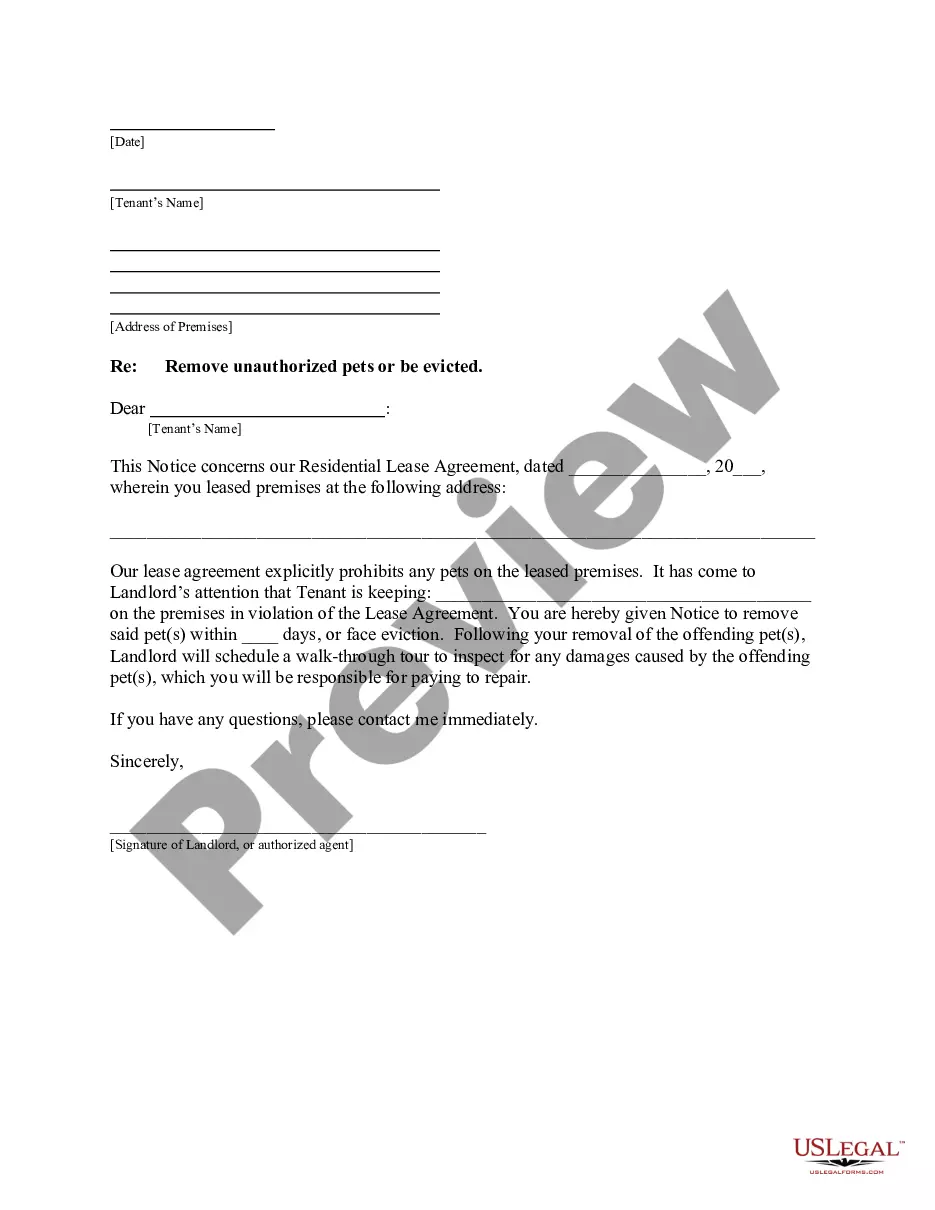
Pet Violation Fee
Description
Get your form ready online
Our built-in tools help you complete, sign, share, and store your documents in one place.
Make edits, fill in missing information, and update formatting in US Legal Forms—just like you would in MS Word.
Download a copy, print it, send it by email, or mail it via USPS—whatever works best for your next step.
Sign and collect signatures with our SignNow integration. Send to multiple recipients, set reminders, and more. Go Premium to unlock E-Sign.
If this form requires notarization, complete it online through a secure video call—no need to meet a notary in person or wait for an appointment.
We protect your documents and personal data by following strict security and privacy standards.

Make edits, fill in missing information, and update formatting in US Legal Forms—just like you would in MS Word.

Download a copy, print it, send it by email, or mail it via USPS—whatever works best for your next step.

Sign and collect signatures with our SignNow integration. Send to multiple recipients, set reminders, and more. Go Premium to unlock E-Sign.

If this form requires notarization, complete it online through a secure video call—no need to meet a notary in person or wait for an appointment.

We protect your documents and personal data by following strict security and privacy standards.
Looking for another form?




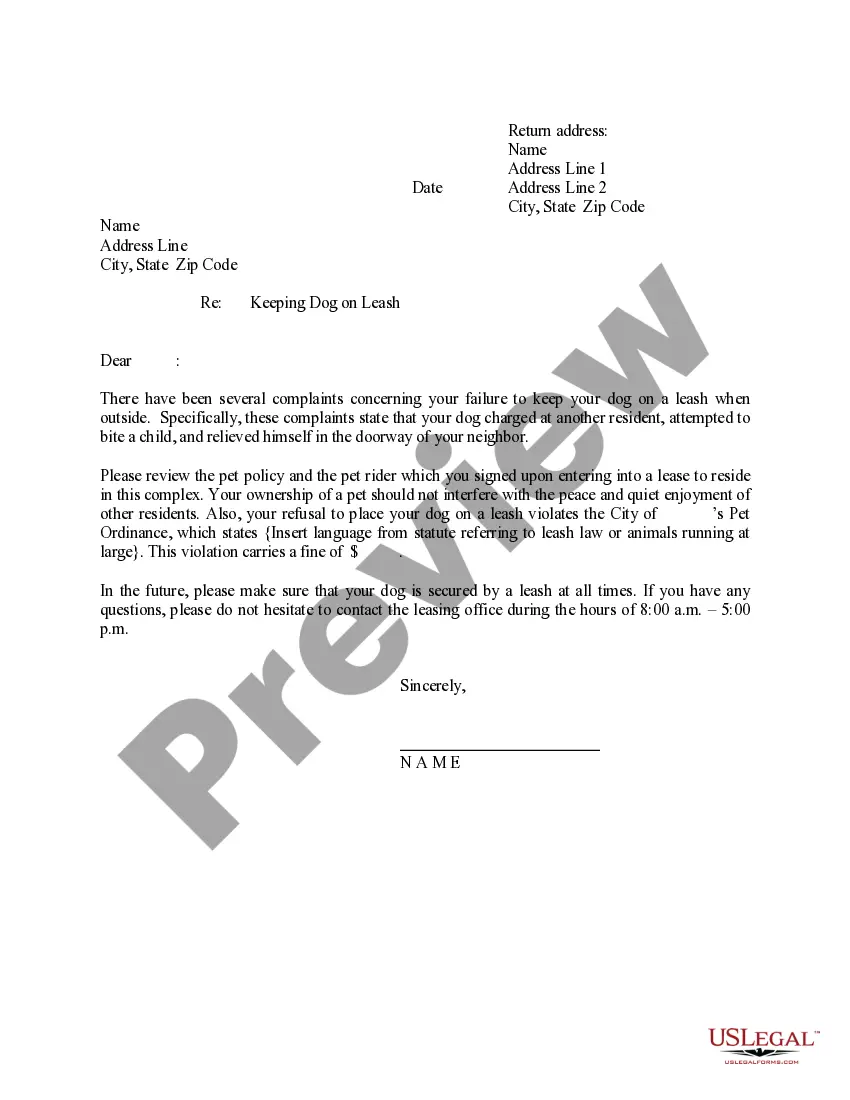
How to fill out Illinois Letter From Landlord To Tenant As Notice To Remove Unauthorized Pets From Premises?
Locating a reliable source to acquire the latest and suitable legal templates is a significant part of navigating bureaucracy.
Identifying the appropriate legal documents requires precision and careful consideration, which is why it is crucial to obtain samples of Pet Violation Fee exclusively from credible providers, such as US Legal Forms.
Once you have the document on your device, you can modify it using the editor or print it out and complete it by hand. Eliminate the stress associated with your legal documentation. Explore the vast collection of US Legal Forms to find legal templates, verify their applicability to your scenario, and download them instantly.
- Utilize the catalog navigation or search feature to discover your template.
- Examine the form’s details to confirm if it meets the standards of your state and locality.
- Check the form preview, if available, to ensure the template is indeed what you need.
- Continue your search and look for the right document if the Pet Violation Fee does not align with your requirements.
- When you are certain about the document’s applicability, download it.
- If you are a registered user, click Log in to verify and access your selected templates in My documents.
- If you haven't created an account yet, click Buy now to acquire the form.
- Select the pricing plan that suits your needs.
- Proceed with the registration to finalize your purchase.
- Complete your transaction by selecting a payment method (credit card or PayPal).
- Choose the document format for downloading the Pet Violation Fee.
Form popularity
FAQ
To navigate a lease that prohibits pets, you might consider discussing your situation with your landlord. Providing a pet resume or referring to a specific pet agreement can sometimes help. It's vital to negotiate amicably and explore options such as paying a pet violation fee. Additionally, using services like USLegalForms allows you to access legal advice and forms that can support your case.
Most pet deposits range from $200 to $500, depending on the rental property and the type of pet you own. Landlords often use pet violations fees to cover potential damage caused by pets. It's crucial to review your lease agreement for specific terms regarding pet deposits and additional fees. For personalized assistance, USLegalForms offers resources that can guide you through understanding these costs.
An example of a pet answer could be a response from a landlord about the pet policy in a rental agreement. If a tenant asks if they can have a dog, the landlord might reply with conditions including breed restrictions and a pet violation fee for noncompliance. Clear communication around pet policies helps prevent misunderstandings and facilitates smoother tenant-landlord relationships.
The no pets allowed clause is a part of a lease that explicitly prohibits tenants from having pets on the premises. Violating this clause can result in penalties, including a pet violation fee. If you are a pet owner, it is essential to understand this clause to avoid disputes with your landlord or property management.
A pet clause is a specific section within a rental agreement that addresses the ownership of pets by tenants. This clause typically includes details about accepted pets, any restrictions, and the consequences of violating the agreement, such as pet violation fees. Familiarizing yourself with your pet clause can help you maintain a good relationship with your landlord.
A pet clause is a provision in a lease or rental agreement that outlines the rules regarding pets. For example, it may specify that pets are allowed with prior approval from the landlord, and it may also detail any associated pet violation fees. Understanding the pet clause is crucial to avoid unexpected charges and ensure compliance with your lease.
Setting a rate of $50 a day for house sitting is often viewed as reasonable, depending on the responsibilities involved. If the house sitter is also caring for pets or managing special requirements, this fee may be justified. Additionally, if a property has strict rules about pet ownership, it can help owners avoid hefty pet violation fees. Guests appreciate responsible sitters who communicate expectations clearly.
California has recently implemented laws that affect pet ownership in rental properties, promoting broader pet access. These laws require landlords to consider reasonable accommodations for tenants with pets, amid specific regulations. If you’re navigating these new rules, it might be wise to review your lease to avoid possible pet violation fees. US Legal Forms offers resources to help you understand your rights and responsibilities under these regulations.
Getting caught with a pet in an apartment can lead to various consequences, often outlined in the lease agreement. Landlords may impose pet violation fees, ask you to remove the pet, or even initiate eviction proceedings. It’s crucial to understand your rental agreement to avoid these issues. If you're facing this situation, consider reaching out to US Legal Forms for resources on how to approach potential disputes.
Charging $100 a day for dog sitting may reflect a premium service, particularly if the sitter offers extensive experience or specialized care. However, it is important to assess the local market rates and the specific needs of the pet. If concerns about pet violation fees arise, some owners might feel more secure paying for high-quality care. Always ensure clear communication about expectations and fees to avoid misunderstandings.