Power Attorney For Child
Description
Get your form ready online
Our built-in tools help you complete, sign, share, and store your documents in one place.
Make edits, fill in missing information, and update formatting in US Legal Forms—just like you would in MS Word.
Download a copy, print it, send it by email, or mail it via USPS—whatever works best for your next step.
Sign and collect signatures with our SignNow integration. Send to multiple recipients, set reminders, and more. Go Premium to unlock E-Sign.
If this form requires notarization, complete it online through a secure video call—no need to meet a notary in person or wait for an appointment.
We protect your documents and personal data by following strict security and privacy standards.

Make edits, fill in missing information, and update formatting in US Legal Forms—just like you would in MS Word.

Download a copy, print it, send it by email, or mail it via USPS—whatever works best for your next step.

Sign and collect signatures with our SignNow integration. Send to multiple recipients, set reminders, and more. Go Premium to unlock E-Sign.

If this form requires notarization, complete it online through a secure video call—no need to meet a notary in person or wait for an appointment.

We protect your documents and personal data by following strict security and privacy standards.
Looking for another form?


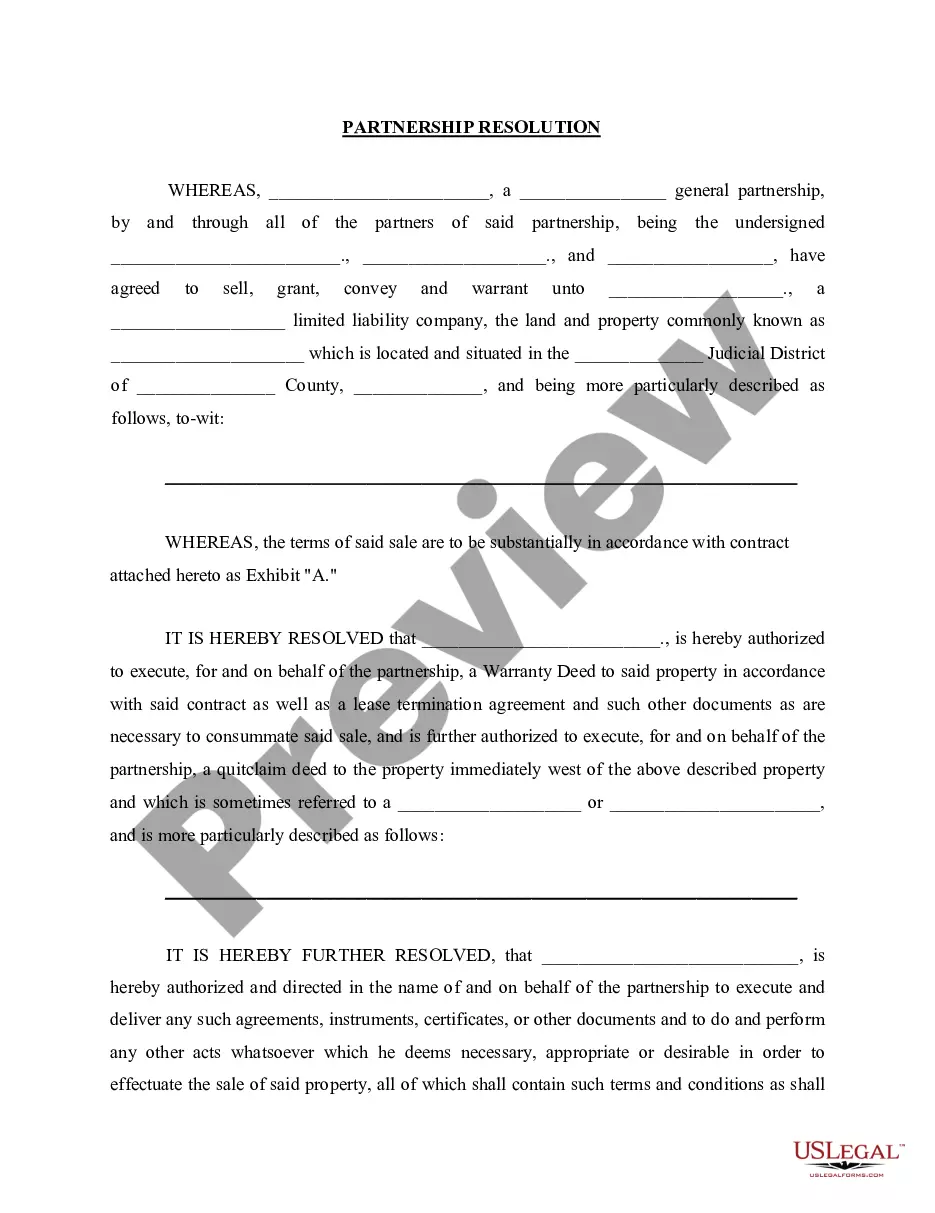
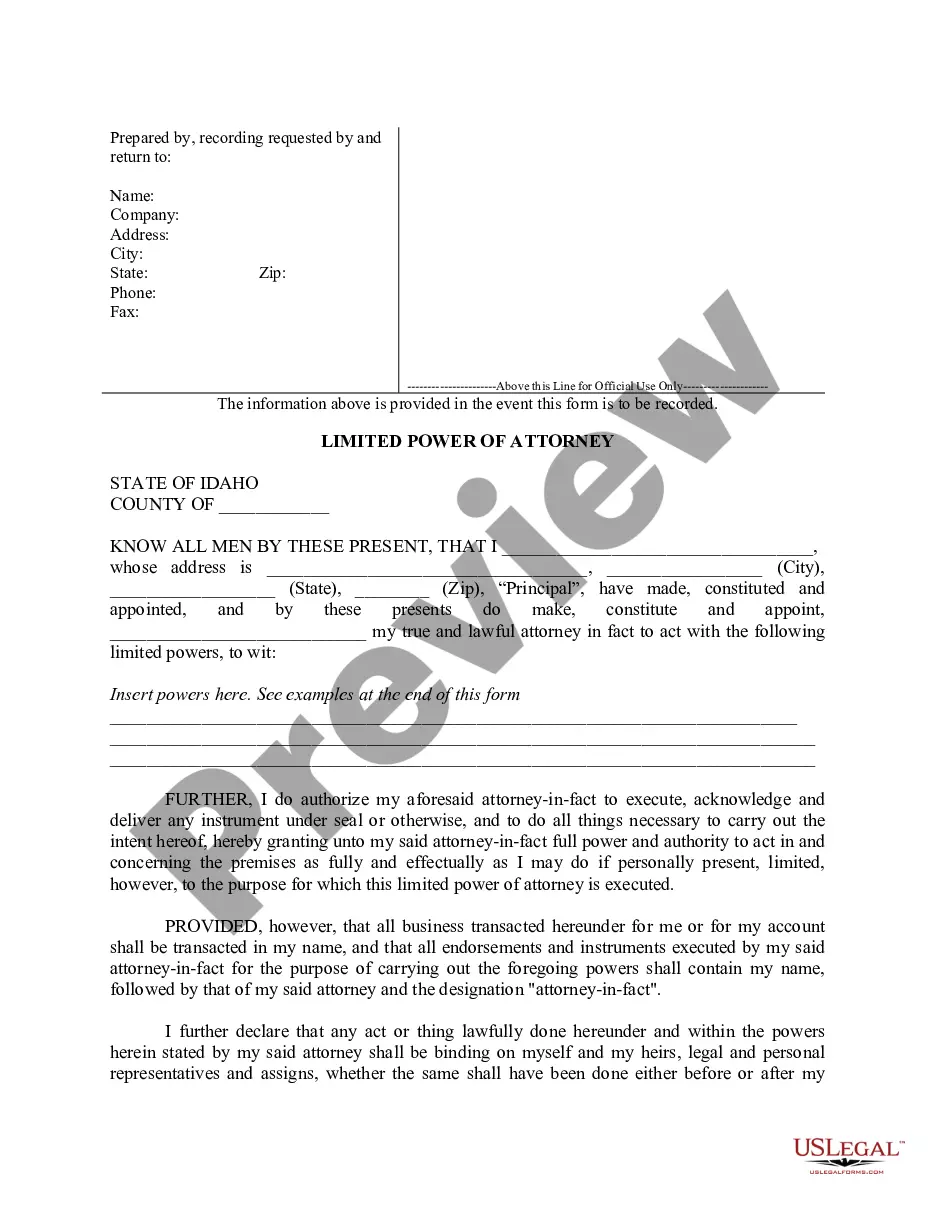
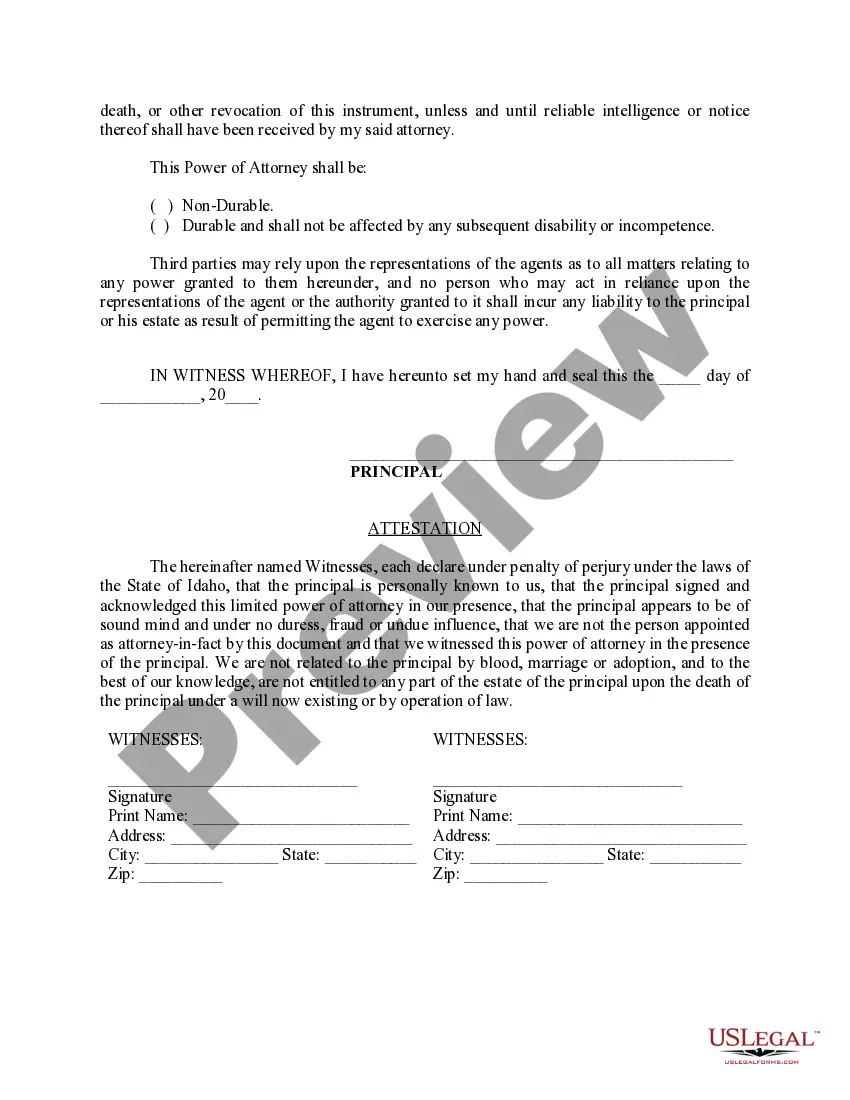
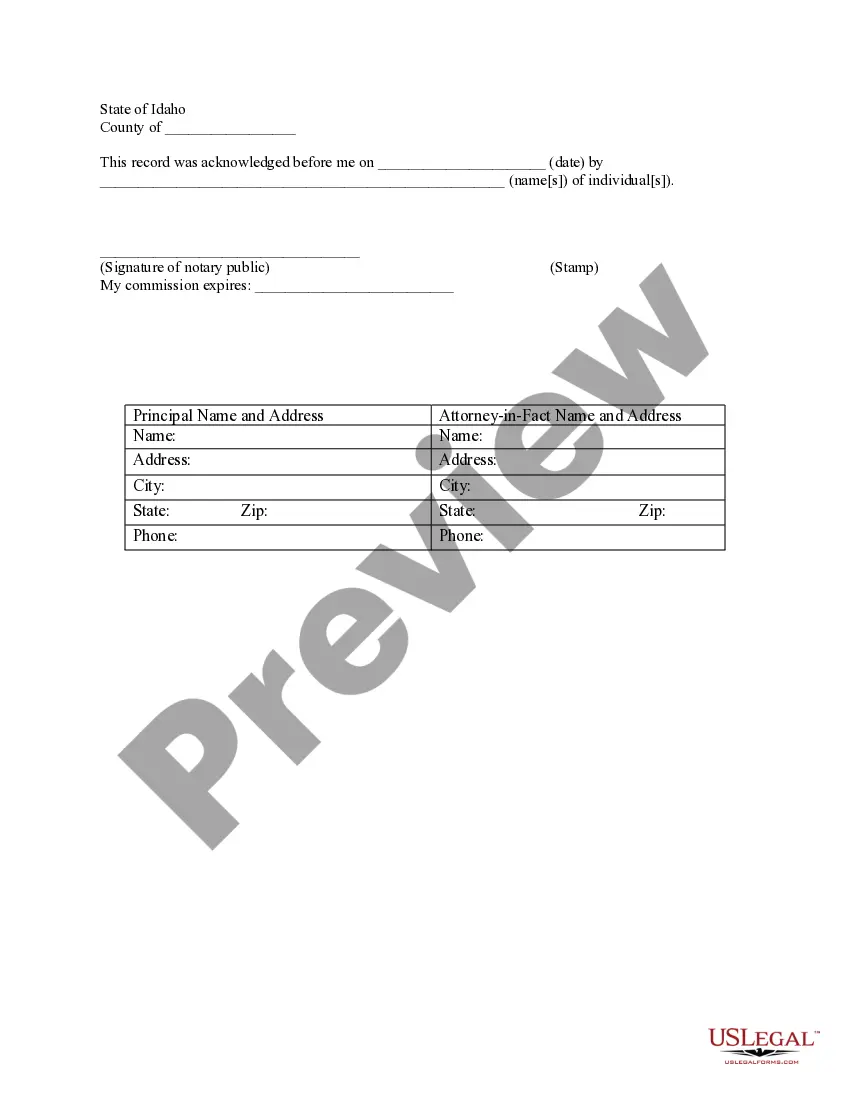
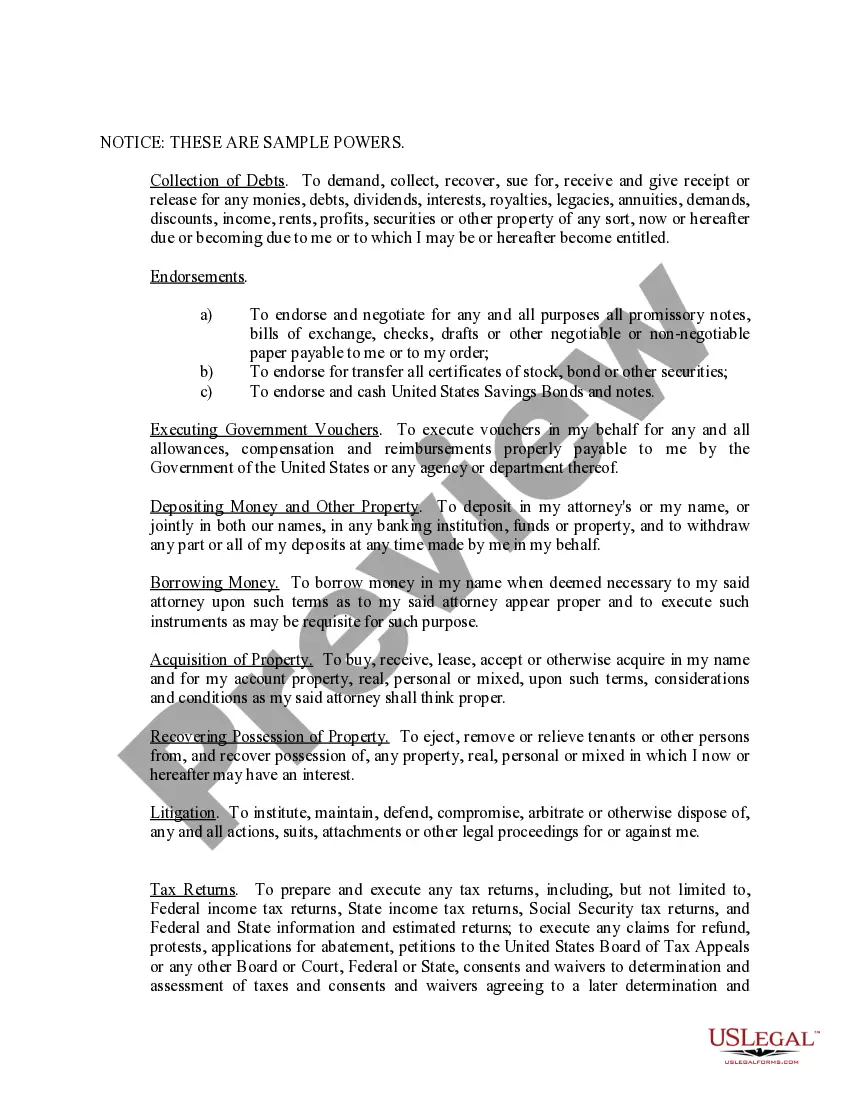
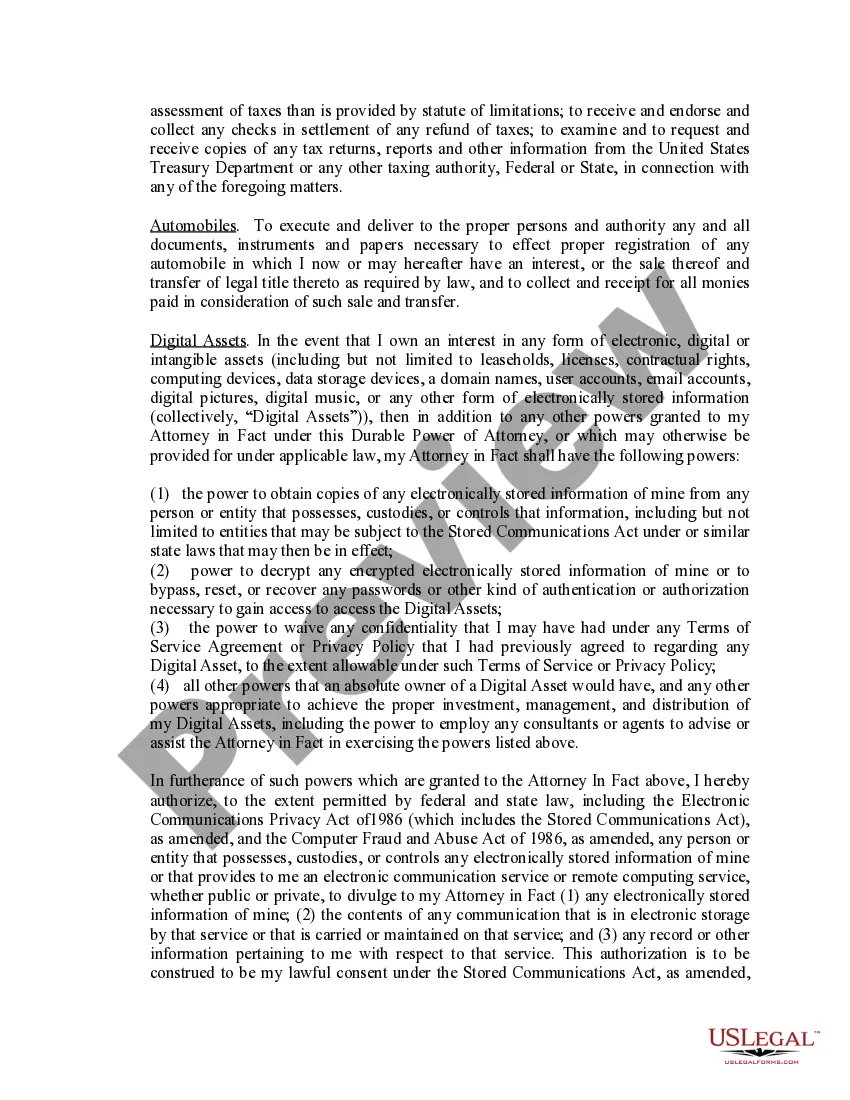
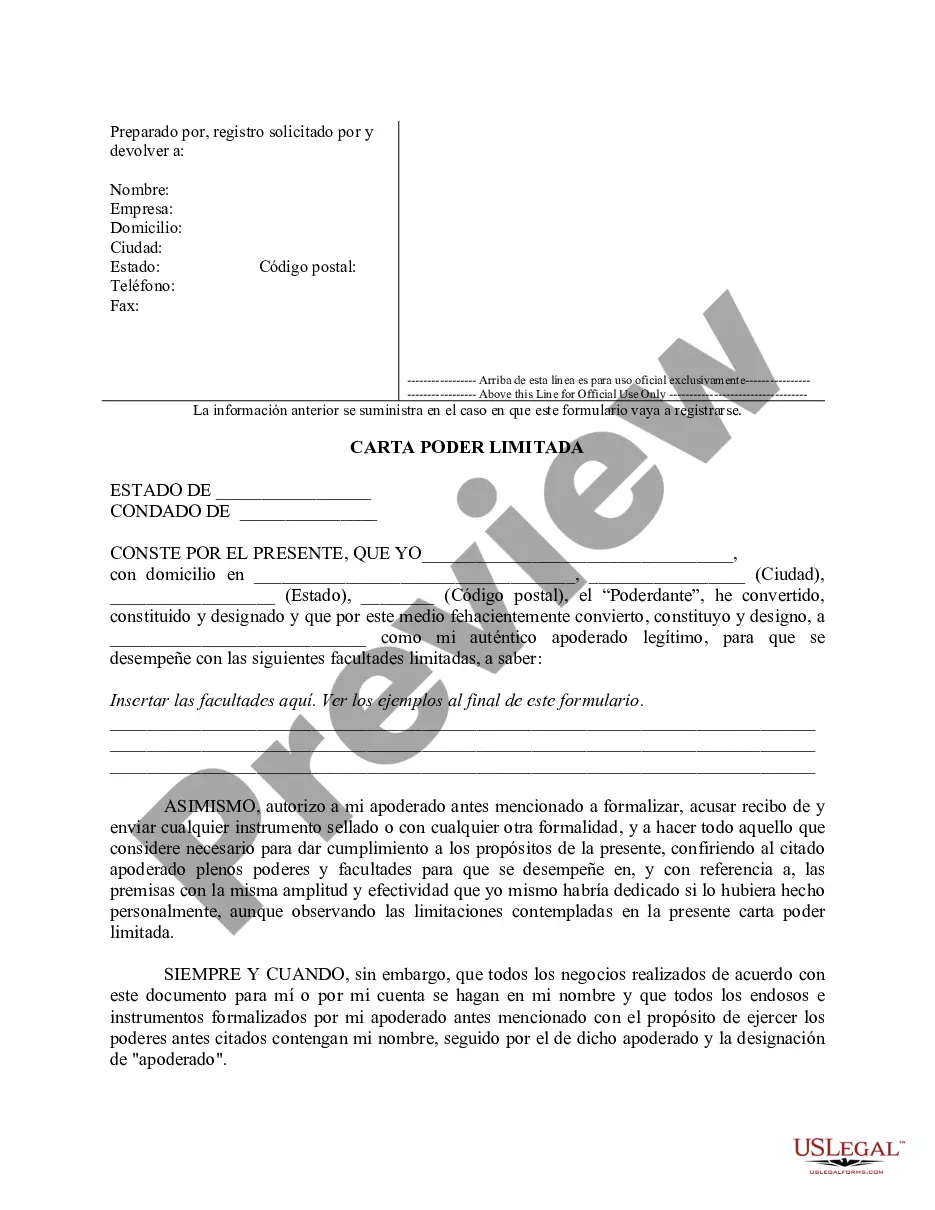
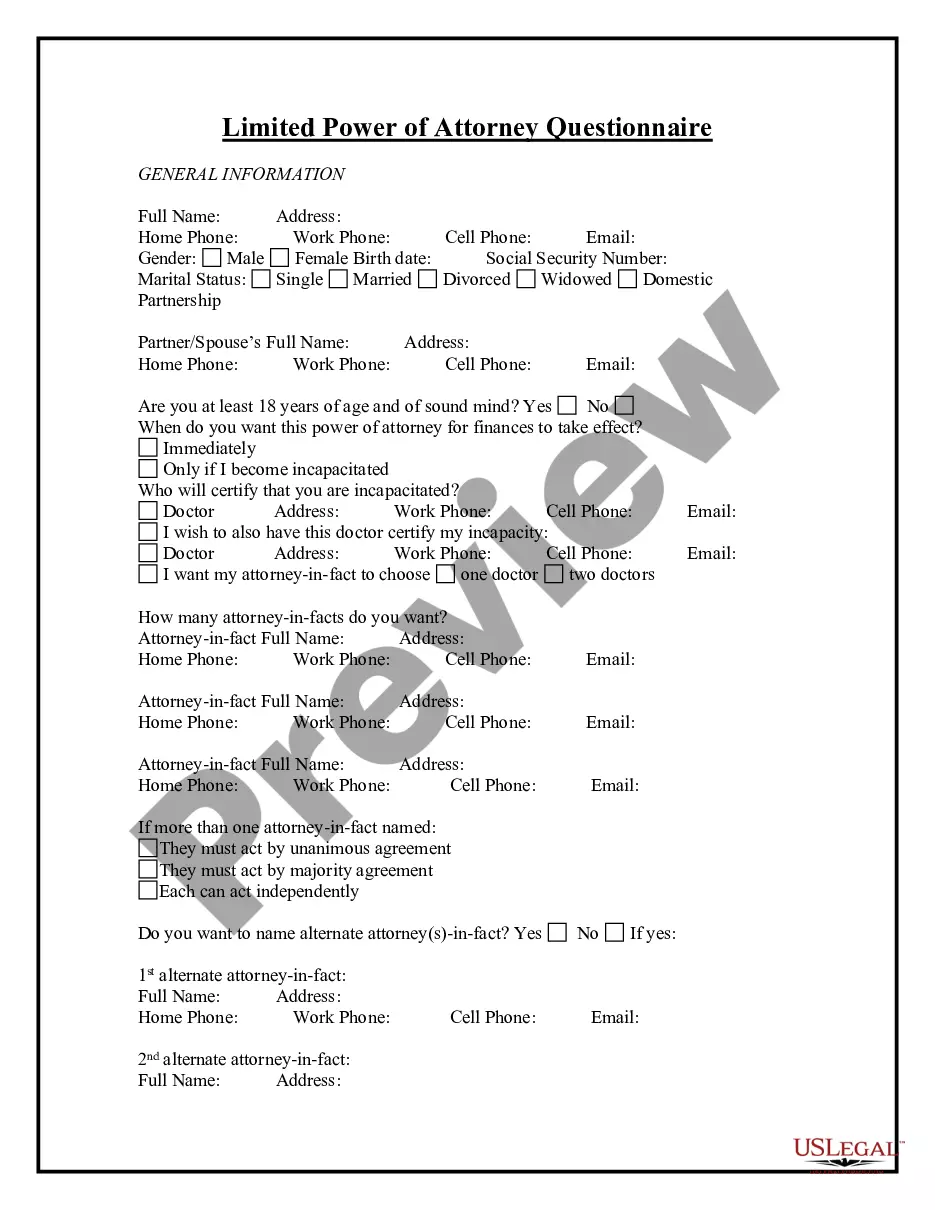
How to fill out Idaho Limited Power Of Attorney Where You Specify Powers With Sample Powers Included?
- If you're returning to US Legal Forms, simply log in to your account to retrieve the needed form. Ensure your subscription is active; if not, renew as required.
- For first-time users, begin by reviewing the Preview mode and form description carefully to choose the power attorney that fits your needs and complies with local laws.
- If the initial choice doesn’t meet your requirements, utilize the Search tab to locate alternative templates that may be more suitable.
- Purchase the document by clicking 'Buy Now' and selecting a subscription plan that works best for you. Make sure to create an account for full access.
- Complete your purchase by entering your payment information through credit card or PayPal.
- Finally, download your power attorney form and save it to your device. You can access it anytime through the My Forms section.
In conclusion, US Legal Forms empowers individuals to efficiently manage their legal documentation needs with a vast, user-friendly library. By following these steps, you can secure a power attorney for your child seamlessly.
Ready to get started? Visit US Legal Forms today and take control of your legal needs!
Form popularity
FAQ
To obtain power of attorney over your adult child, you need to have a discussion with them about your intent and ensure they agree. Both of you will need to sign the power of attorney document, which typically requires notarization. Working with platforms like UsLegalForms can provide you with templates and guidance tailored to your situation. Establishing a power attorney for child can empower you to make crucial decisions on their behalf when necessary.
You can obtain guardianship of a child without a lawyer by navigating the court process on your own. This involves filling out the appropriate forms, submitting them to the court, and possibly attending a hearing. Many find that using UsLegalForms' templates and resources helps them manage this process effectively. They can guide you through the necessary steps to establish a power attorney for child and ensure you understand your responsibilities.
In New York, you do not necessarily need a lawyer to create a power of attorney for a child. However, having legal guidance can simplify the process and ensure that all documents meet state requirements. UsLegalForms offers resources to help you understand the steps and prepare the necessary documents efficiently. With the right tools, obtaining a power attorney for child can be straightforward.
Choosing between power of attorney and guardianship depends on your specific circumstances. A power attorney for child is often more flexible and allows you to retain some control, while guardianship provides a more formal arrangement for care. It's essential to evaluate your needs and priorities, and consulting resources such as USLegalForms can help clarify these options, ensuring you make the best decision for your child's welfare.
Setting up a power attorney for child can be straightforward. Begin by identifying the individual you want to designate as the agent for your child, then draft the necessary documents that comply with state laws. Using platforms like USLegalForms can simplify this process by providing templates and guidance specific to your needs, ensuring that you have the right authority to manage your child's affairs.
While guardianship offers protection, it also has its disadvantages. Establishing guardianship can be a lengthy legal process, which may cause delays in securing immediate care for your child. Additionally, guardianship can limit parental rights, making the power attorney for child a more flexible option for retaining decision-making authority while still protecting your child's interests.
In general, a power attorney for child does not override parental rights. Instead, it allows a parent to delegate certain responsibilities to another adult. This delegation can be beneficial for managing day-to-day tasks or medical decisions, but it does not diminish the fundamental rights of a parent, ensuring that the child's best interests remain the priority.
A guardian typically has authority over a child's wellbeing, which can sometimes override a power attorney for child. If you establish a power of attorney for your child, it is crucial to understand that a guardian's decisions may take precedence in specific situations. However, having a power attorney for child can still provide you with significant control over certain matters, especially in day-to-day decisions.
Writing a power of attorney for your child involves specifying the legal authority you want to grant to a trusted individual, such as a relative or friend. Start by detailing your child's information and the appointed agent's name. It is crucial to outline the specific powers and limitations, ensuring all parties understand their roles. For a seamless experience, consider using US Legal Forms to access expert templates and instructions for crafting a power attorney for child.
To write a simple power of attorney, start by identifying the person you wish to appoint as your agent. Clearly state their name and include your own information, specifying the powers you are granting them. Ensure you sign the document in the presence of a notary or witnesses, as required by your state's laws. Utilizing a platform like US Legal Forms can simplify this process by providing templates and guidelines tailored to creating a power attorney for child.