Tenant Cease Rent With A Bill
Description



Get your form ready online
Our built-in tools help you complete, sign, share, and store your documents in one place.
Make edits, fill in missing information, and update formatting in US Legal Forms—just like you would in MS Word.
Download a copy, print it, send it by email, or mail it via USPS—whatever works best for your next step.
Sign and collect signatures with our SignNow integration. Send to multiple recipients, set reminders, and more. Go Premium to unlock E-Sign.
If this form requires notarization, complete it online through a secure video call—no need to meet a notary in person or wait for an appointment.
We protect your documents and personal data by following strict security and privacy standards.

Make edits, fill in missing information, and update formatting in US Legal Forms—just like you would in MS Word.

Download a copy, print it, send it by email, or mail it via USPS—whatever works best for your next step.

Sign and collect signatures with our SignNow integration. Send to multiple recipients, set reminders, and more. Go Premium to unlock E-Sign.

If this form requires notarization, complete it online through a secure video call—no need to meet a notary in person or wait for an appointment.

We protect your documents and personal data by following strict security and privacy standards.
Looking for another form?






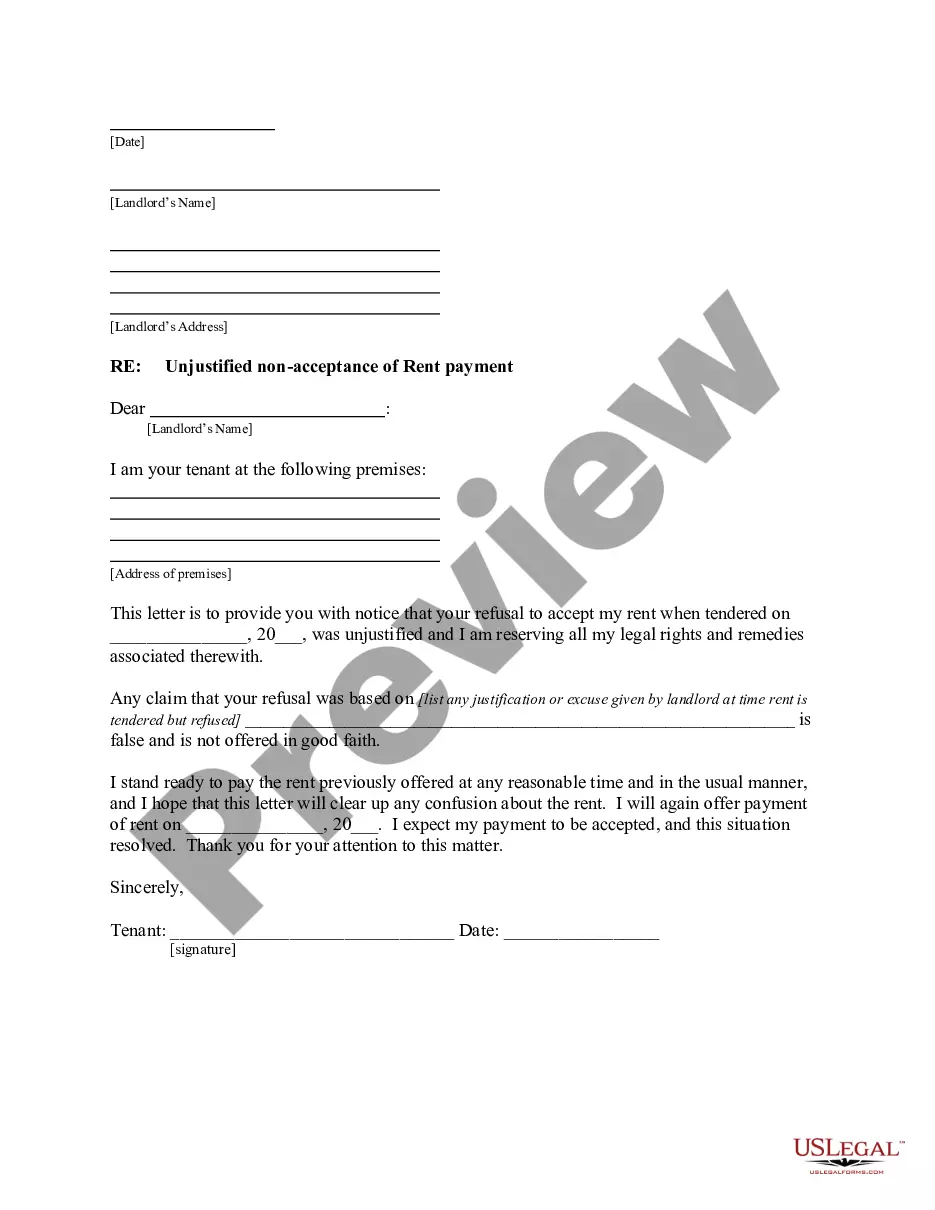
How to fill out Iowa Letter From Tenant To Landlord Containing Notice To Cease Unjustified Nonacceptance Of Rent?
- Log in to your existing US Legal Forms account or create a new one if this is your first visit.
- Navigate to the preview mode, and check the description of the tenant cease rent with a bill form to ensure it fits your requirements.
- Use the search tab to explore additional templates if necessary. Verify the form's compatibility with your local jurisdiction.
- Select the Buy Now option corresponding to your preferred subscription plan.
- Complete your purchase by entering your payment details or using your PayPal account.
- Download your completed form directly to your device. Access it anytime through the My Forms menu in your profile.
Utilizing US Legal Forms ensures you're equipped with a robust library of over 85,000 legal forms. This service not only allows you to create documents swiftly but also provides access to premium experts who can guide you through the completion process.
Don’t let legal complexities hold you back. Start navigating your tenant rights efficiently by visiting US Legal Forms today and make your first step towards obtaining the necessary documentation.
Form popularity
FAQ
In a demand letter for unpaid rent, include the date, the tenant's address, and clear details about the amount due. Stipulate a timeline for payment and describe any further actions you may take if payment is not received. Emphasizing the idea of tenant cease rent with a bill reinforces the seriousness of the situation and the need for prompt resolution.
Start your letter by addressing the person and stating the issue clearly. Mention the specific amount owed and any relevant dates. By addressing the matter of tenant cease rent with a bill, you encourage them to take action, whether it’s through payment or discussing options.
Writing a letter to stop renting involves specifying your intention to terminate your lease. Clearly indicate your address, the date you plan to vacate, and any move-out procedures you will follow. If you're in a situation where nonpayment occurs, you can also address potential resolutions, such as using tenant cease rent with a bill to settle outstanding amounts.
When writing a letter to a tenant for nonpayment of rent, start with the date and the tenant's name and address. Clearly state the amount due and the consequences of continued nonpayment. You may want to mention that ceasing rent is a serious matter, and using a tenant cease rent with a bill may be a viable next step if the situation doesn’t improve.
To write a letter to your landlord for late rent, begin with a clear subject line stating that it's regarding your rent payment. Include your name, address, and a statement apologizing for the delay, along with the expected payment date. If you are considering a tenant cease rent with a bill, express your willingness to resolve the matter and maintain open communication.
No, a landlord cannot legally lock you out without notice in Ohio. It is essential that the tenant cease rent with a bill has proper legal proceedings followed, which includes giving notification and obtaining court permission for eviction. Tenants should know their rights and seek legal help if they face unlawful eviction tactics.
To cancel a tenant's lease, it is crucial to follow the legal procedures set forth in the lease agreement and local laws. If there are issues, such as the tenant cease rent with a bill, the landlord should provide proper notice and possibly initiate eviction proceedings. Using platforms like uslegalforms can help landlords understand their rights, prepare the necessary documents, and navigate the process seamlessly.
Ohio law typically requires a tenant to provide a written notice of at least 30 days before moving out. However, this notice period can change depending on the lease agreement. If a tenant cease rent with a bill is involved, it's wise to consult the lease and consider communicating directly with the landlord for clear terms.
The speed of eviction in Ohio varies depending on several factors, including the type of notice given and the tenant's response. Typically, if a tenant cease rent with a bill occurs, the process starts with a notice and could lead to court proceedings that may take a few weeks. It’s vital for tenants to act promptly and consult resources or legal services if they face an eviction.
Yes, a 3-day eviction is legal in Ohio under specific circumstances. If a tenant cease rent with a bill has been delivered and the rent remains unpaid, landlords can provide a three-day notice to vacate. Yet, tenants must be aware that they have the right to respond and seek assistance, which can affect the urgency of the eviction.