Reserving Life Estate For Sale
Description
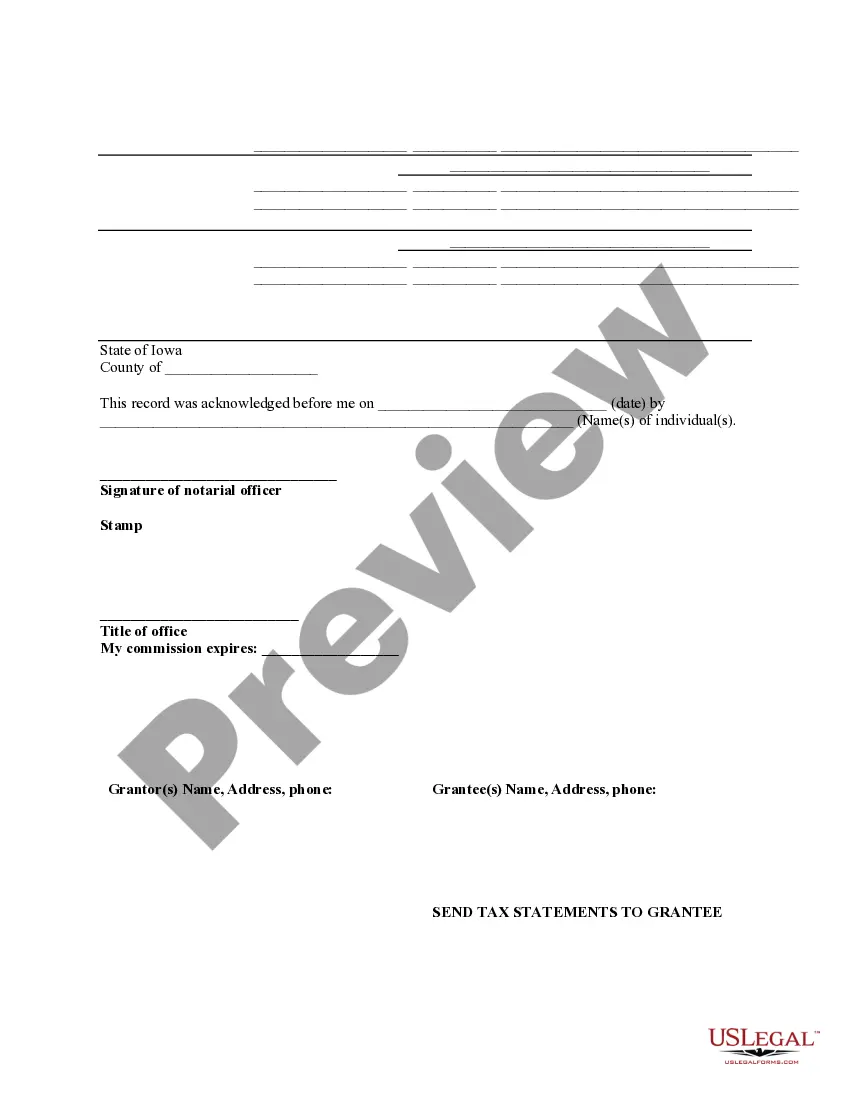
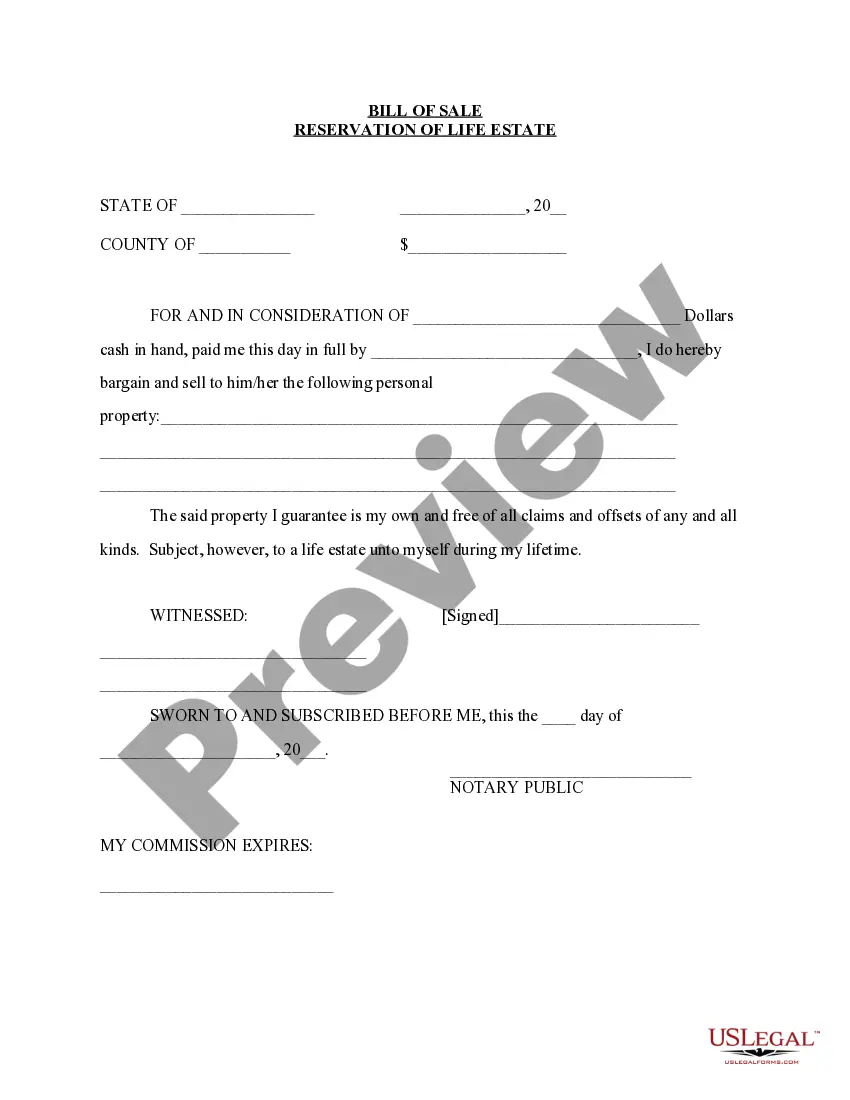

Get your form ready online
Our built-in tools help you complete, sign, share, and store your documents in one place.
Make edits, fill in missing information, and update formatting in US Legal Forms—just like you would in MS Word.
Download a copy, print it, send it by email, or mail it via USPS—whatever works best for your next step.
Sign and collect signatures with our SignNow integration. Send to multiple recipients, set reminders, and more. Go Premium to unlock E-Sign.
If this form requires notarization, complete it online through a secure video call—no need to meet a notary in person or wait for an appointment.
We protect your documents and personal data by following strict security and privacy standards.

Make edits, fill in missing information, and update formatting in US Legal Forms—just like you would in MS Word.

Download a copy, print it, send it by email, or mail it via USPS—whatever works best for your next step.

Sign and collect signatures with our SignNow integration. Send to multiple recipients, set reminders, and more. Go Premium to unlock E-Sign.

If this form requires notarization, complete it online through a secure video call—no need to meet a notary in person or wait for an appointment.

We protect your documents and personal data by following strict security and privacy standards.
Looking for another form?
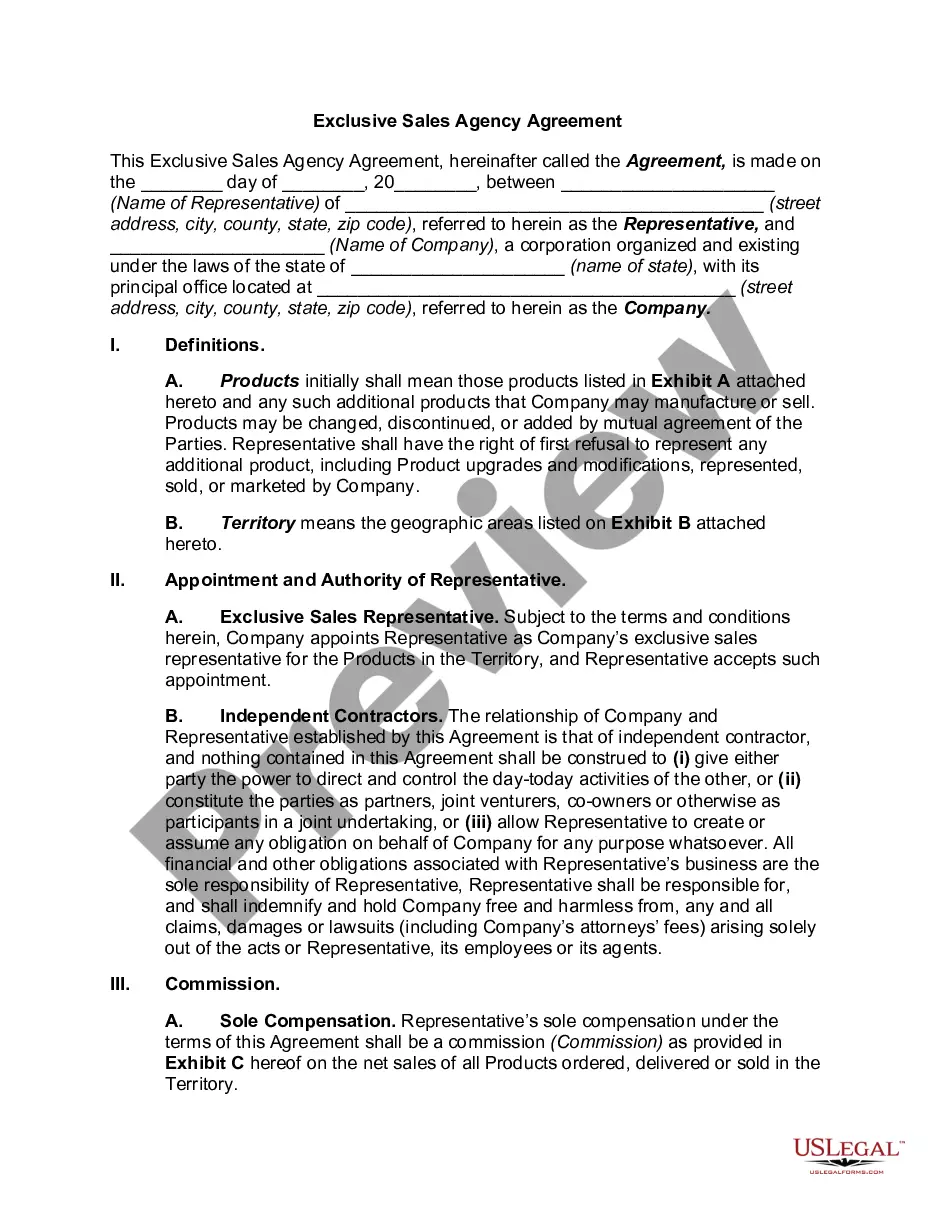

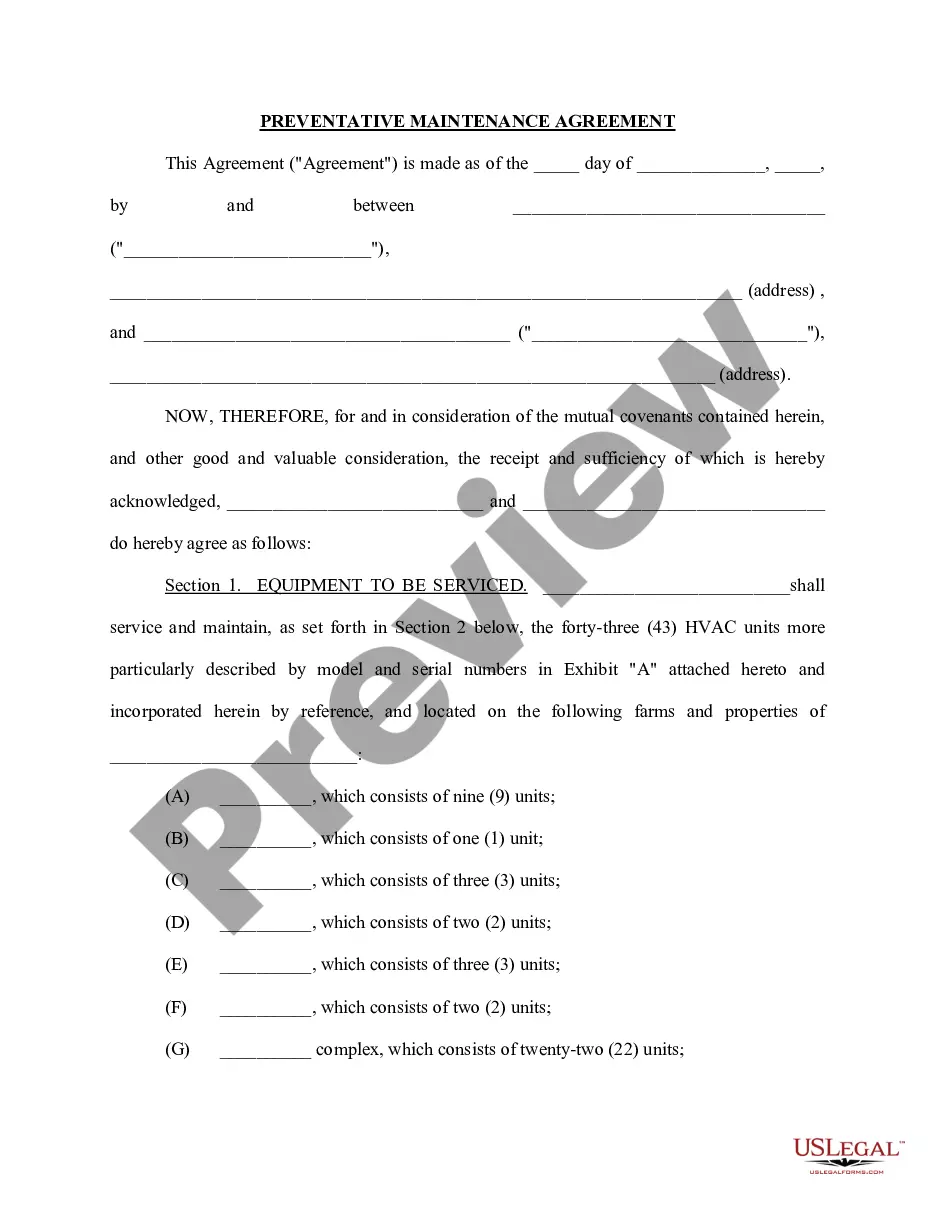




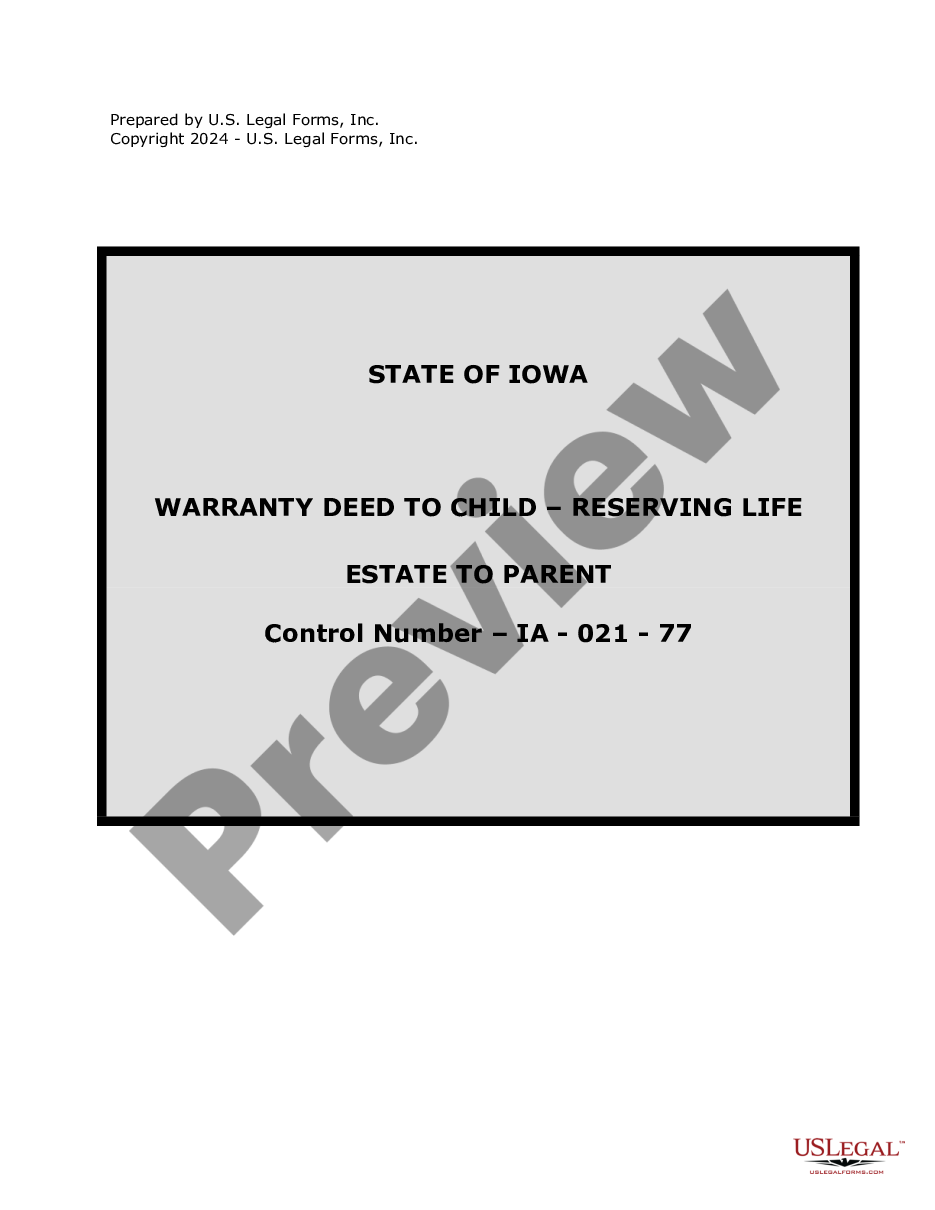
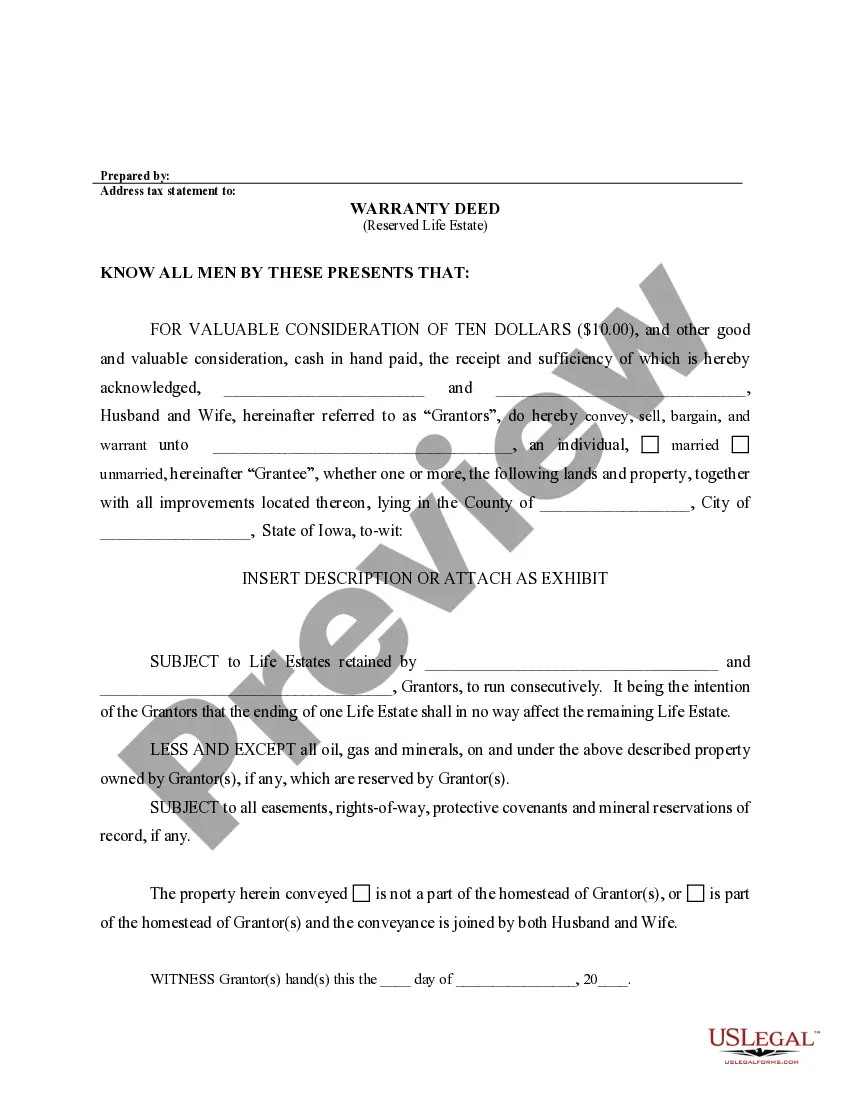
How to fill out Iowa Warranty Deed To Child Reserving A Life Estate In The Parents?
- Log into your US Legal Forms account if you're a returning user. Ensure your subscription is active, or renew it if necessary.
- For first-time users, start by checking the form preview and descriptions to find the correct document fitting your jurisdiction's requirements.
- If the desired form doesn't match your needs, use the search feature to locate the appropriate one.
- Once you find the right document, click 'Buy Now' and select your preferred subscription plan; you'll need to create an account first.
- Proceed with the purchase by entering your payment details using a credit card or PayPal.
- After completing your payment, download the form directly to your device, and access it anytime from the 'My Forms' section in your account.
In conclusion, US Legal Forms empowers users to effortlessly manage their legal document needs. With a vast range of templates and access to expert assistance, you can ensure all your forms are accurately completed and legally sound.
Start today by visiting US Legal Forms and explore how easy it is to reserve a life estate for sale!
Form popularity
FAQ
When reserving a life estate for sale, it is essential to understand the tax implications involved. The life tenant typically retains the responsibility for property taxes while living in the home. However, the value of the life estate is subject to tax calculations upon the tenant’s passing, which can affect the overall estate size and potential inheritance taxes for heirs.
While reserving a life estate for sale has its advantages, there are also downsides to consider. One significant drawback is that the owner cannot sell or mortgage the property without the consent of the remainderman. Furthermore, if repairs or taxes become an issue, the life tenant is responsible, which can sometimes lead to conflict with heirs.
People often consider reserving a life estate for sale to maintain control over their property while providing for seamless transfer upon death. This arrangement allows individuals to live in their homes without the burden of estate taxes during their lifetime. Additionally, it ensures that heirs receive the property without going through probate, simplifying the transition.
A deed reserving life estate is a legal document that establishes the right to use a property during one’s lifetime while transferring the property’s ownership to another party for the future. This type of arrangement ensures that, when reserving life estate for sale, the seller retains the right to live in the property until death, at which point the new owner takes full control. Understanding this concept is crucial for effective property management and estate planning. If you need assistance with creating such deeds, ulegalforms provides the resources you need.
When considering reserving life estate for sale, it's vital to recognize the potential drawbacks. Life estates limit the owner's control over the property, as you can’t sell or mortgage it without the agreement of the remainderman. Additionally, when the life tenant passes away, the property automatically transfers to the remainderman, which can complicate estate planning. These factors may affect your financial strategies in the long term.
A life estate can be sold by the life tenant through a formal agreement. The sale must also be officially documented, and potential buyers must be informed about the life estate status. If you consider exploring your options with a property currently under a reserved life estate for sale, consulting legal resources can streamline the process.
When a life estate is reserved, it means that the current property owner retains the right to live in and use the property for their lifetime while transferring the remainder interest to another party. This arrangement allows for the benefits of property ownership to be passed along without immediate transfer. It's essential to understand the implications of reserving life estates for sale when planning property transitions.
One significant disadvantage of a life estate is the restricted ability to sell or refinance the property. The life tenant generally maintains limited control, as the remaindermen hold the title after the life tenant's death. Thus, exploring options around reserving a life estate for sale becomes crucial to understand the implications.
A typical life estate clause may state, 'I grant a life estate to John Doe, granting him the right to use, enjoy, and benefit from the property for his lifetime, after which the property will pass to Jane Doe.' Such clauses clarify the terms of ownership and can be particularly useful when reserving life estates for sale.
The major downside of a life estate lies in its limitations. The life tenant cannot fully control the property, as they cannot sell or encumber the property without consent from the remaindermen. Additionally, property taxes and maintenance costs remain the responsibility of the life tenant, even when they have a reserved life estate for sale.