Hawaii Assignment Trust For The Environment
Description
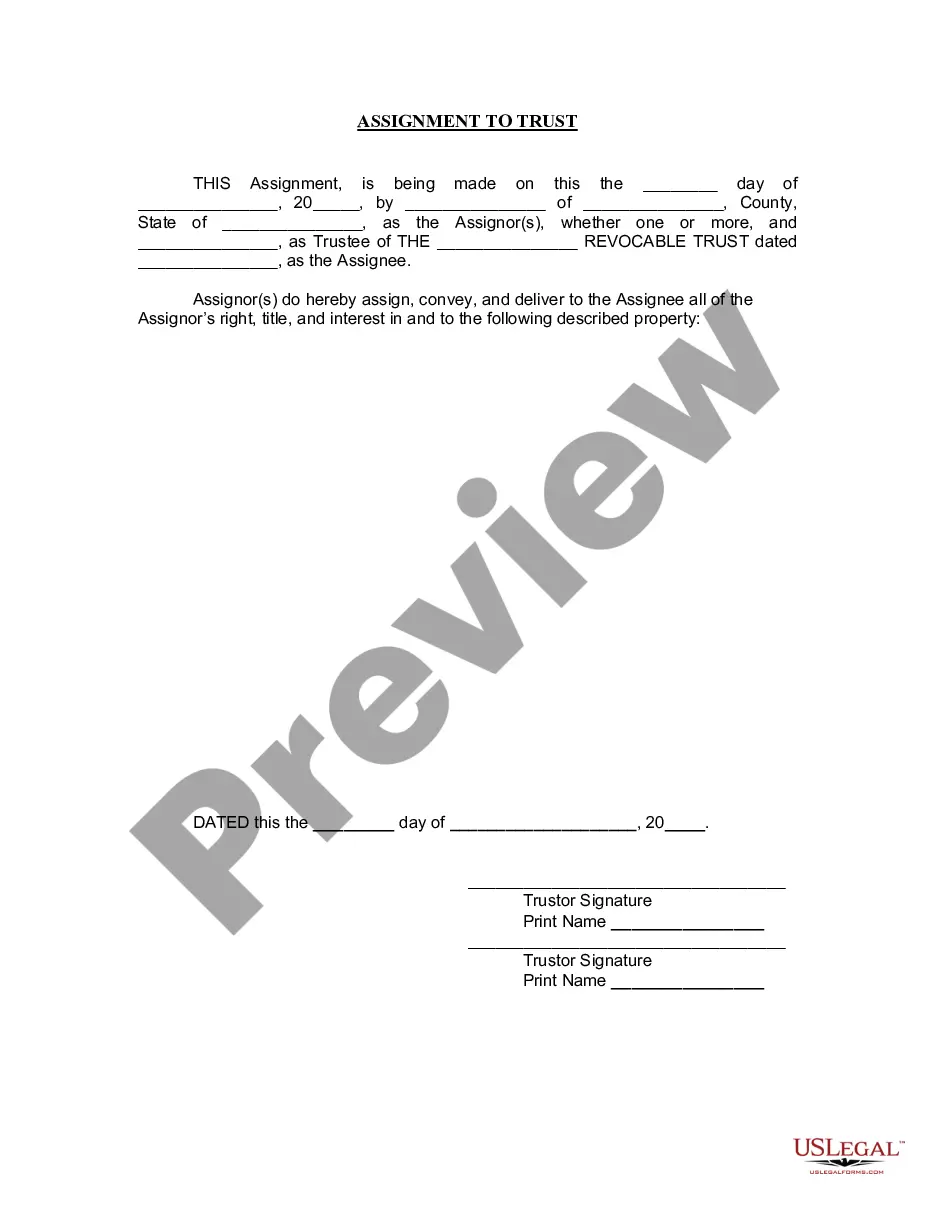
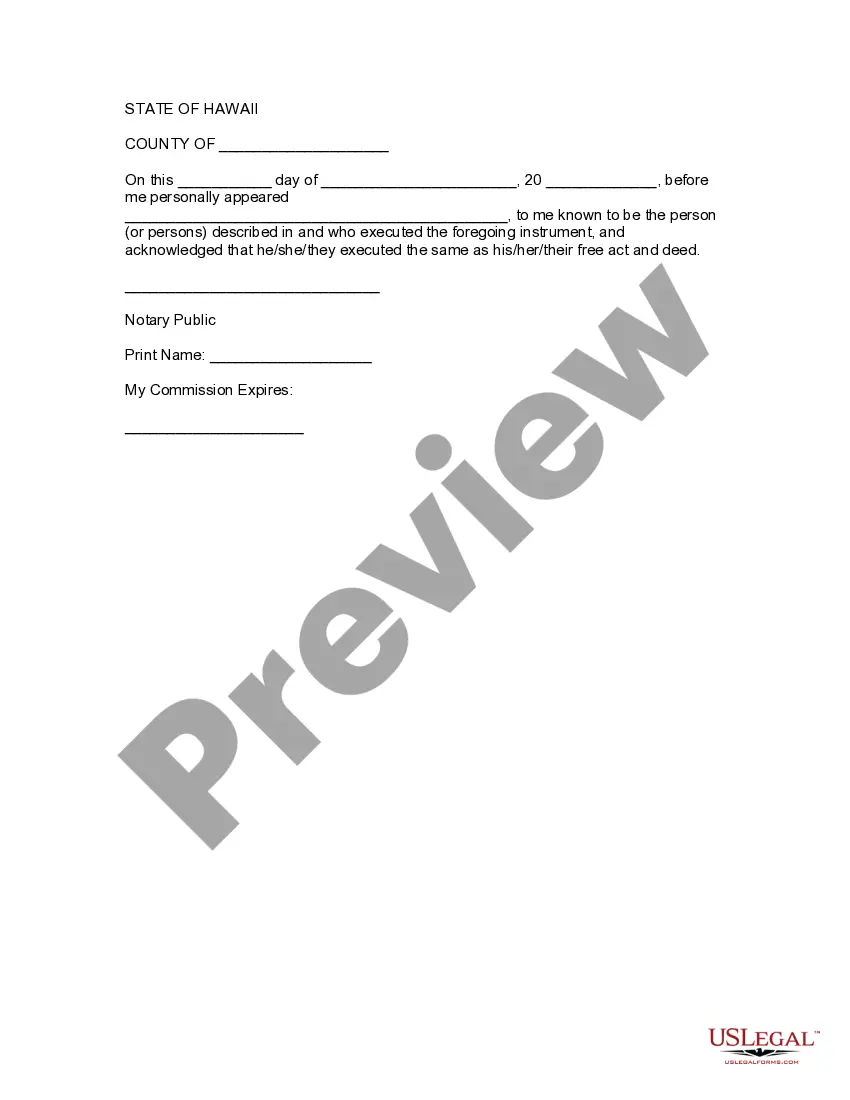

Get your form ready online
Our built-in tools help you complete, sign, share, and store your documents in one place.
Make edits, fill in missing information, and update formatting in US Legal Forms—just like you would in MS Word.
Download a copy, print it, send it by email, or mail it via USPS—whatever works best for your next step.
Sign and collect signatures with our SignNow integration. Send to multiple recipients, set reminders, and more. Go Premium to unlock E-Sign.
If this form requires notarization, complete it online through a secure video call—no need to meet a notary in person or wait for an appointment.
We protect your documents and personal data by following strict security and privacy standards.

Make edits, fill in missing information, and update formatting in US Legal Forms—just like you would in MS Word.

Download a copy, print it, send it by email, or mail it via USPS—whatever works best for your next step.

Sign and collect signatures with our SignNow integration. Send to multiple recipients, set reminders, and more. Go Premium to unlock E-Sign.

If this form requires notarization, complete it online through a secure video call—no need to meet a notary in person or wait for an appointment.

We protect your documents and personal data by following strict security and privacy standards.
Looking for another form?
How to fill out Hawaii Assignment To Living Trust?
- If you're a returning user, log in and access your account to download the necessary form template by selecting the Download button. Ensure your subscription is active.
- For first-time users, begin by reviewing the Preview mode and form descriptions to find the perfect match for your legal needs while ensuring compliance with local regulations.
- If you discover discrepancies, use the search feature at the top of the page to locate the correct template. Move to the next step once you find the right match.
- Proceed to purchase the document by clicking the Buy Now button and selecting your preferred subscription plan. You'll need to create an account for full access.
- Complete your purchase by entering your credit card details or using your PayPal account to finalize the subscription.
- Download your form and save it to your device. You can also access it anytime from the My Forms section of your profile.
US Legal Forms is dedicated to empowering users, providing access to an extensive collection of over 85,000 legal forms that are easy to fill and edit, outperforming competitors at similar costs.
Ready to take the next step in managing your Hawaii assignment trust for the environment? Start leveraging US Legal Forms today for seamless documentation and expert support!
Form popularity
FAQ
A land trust serves to protect land and resources for a variety of public benefits. These benefits include conserving wildlife habitats, preserving agricultural lands, and maintaining open spaces for recreational activities. The purpose of a land trust is closely tied to the idea of the Hawaii assignment trust for the environment, as it allows communities to connect with their natural surroundings and promote sustainable practices. By prioritizing conservation, land trusts support long-lasting ecological health and community well-being.
The mission of the Hawaii Land Trust is to protect and preserve Hawaii's cultural and natural heritage for current and future generations. They aim to safeguard vital ecosystems while promoting sustainable land use. In doing so, the Hawaii Land Trust aligns its goals with the principles of the Hawaii assignment trust for the environment, ensuring that our unique landscapes receive the care they deserve. Their commitment extends beyond land protection, fostering community engagement and awareness about environmental stewardship.
The land trust law in Hawaii establishes the legal framework for the preservation of land for conservation purposes. It allows organizations like the Hawaii Land Trust to acquire, manage, and protect land from development. This law supports the objectives of the Hawaii assignment trust for the environment by ensuring that land conservation efforts align with state goals. Understanding this law helps convey how land trusts can operate effectively within the state's legal system.
Hawaii Land Trust works to protect and conserve the unique landscapes of Hawaii through thoughtful land management and stewardship. Their efforts focus on preserving important natural, cultural, and agricultural resources. By engaging with local communities and stakeholders, the Hawaii Land Trust ensures that these vital areas remain intact for future generations. They play a pivotal role in promoting the concept of the Hawaii assignment trust for the environment.
Environmental issues in Hawaiʻi include waste management, land development, and climate change effects. These factors can have lasting impacts on the islands' delicate environments. The Hawaii assignment trust for the environment focuses on solutions that engage communities to tackle these issues collaboratively, ensuring a sustainable future for all.
The biggest environmental issue in Hawaii is the impact of tourism on the fragile ecosystems. Overcrowding can lead to pollution, resource depletion, and habitat damage. The Hawaii assignment trust for the environment addresses these concerns by promoting responsible tourism practices that benefit both visitors and local communities.
The environmental rights amendment in Hawaiʻi establishes that all residents have a right to a clean and healthful environment. This provision empowers citizens to advocate for sustainable practices and hold polluters accountable. By aligning with the Hawaii assignment trust for the environment, individuals can better understand how to protect these rights and promote environmental stewardship.
The number one environmental problem in Hawaiʻi is the degradation of coral reefs. These vital ecosystems support marine life, protect coastlines, and contribute to tourism. The Hawaii assignment trust for the environment works tirelessly to restore and protect these reefs through research and community initiatives, ensuring a healthier ocean for future generations.
Hawaiʻi faces several pressing environmental issues, including invasive species, water quality, and habitat loss. Invasive species disrupt the native ecosystems and threaten local wildlife. The Hawaii assignment trust for the environment plays a crucial role in combating these challenges by implementing conservation programs and fostering community awareness.
The biggest threat to Hawaiʻi is climate change. Rising sea levels, changing weather patterns, and increased natural disasters pose serious risks to the island's ecosystems and communities. The Hawaii assignment trust for the environment seeks to address these threats by promoting sustainable practices and protecting natural resources. By engaging local stakeholders, we can better safeguard our unique environment.