Hawaii Predeceased Back With A Child
Description
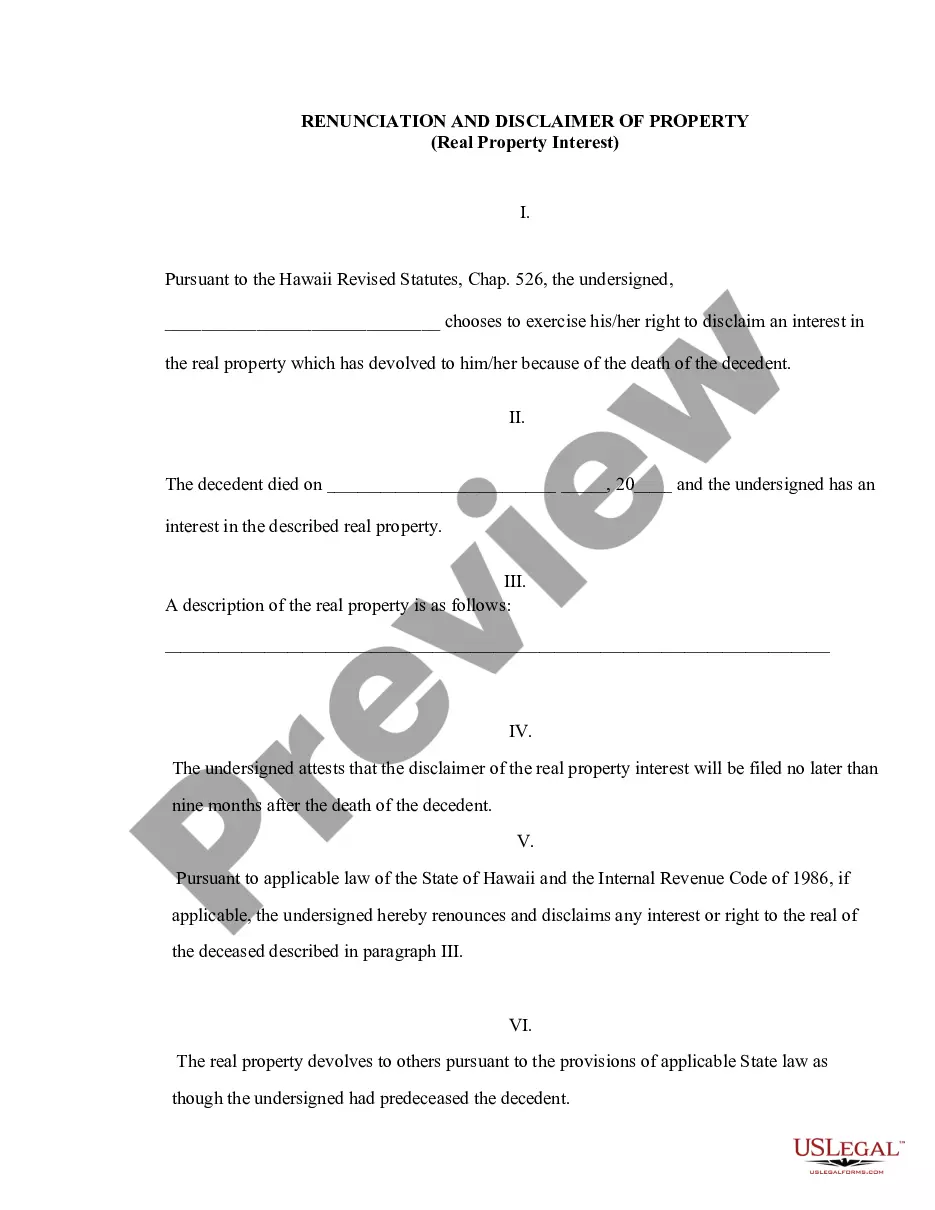
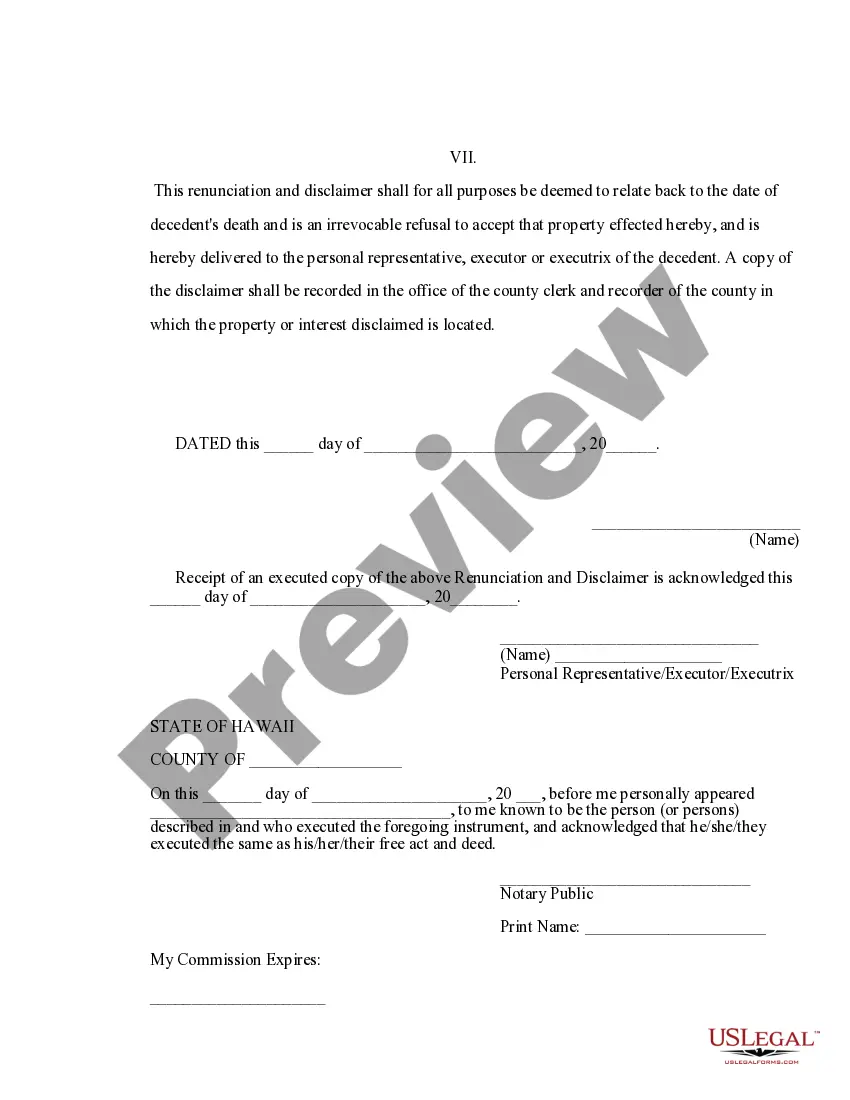
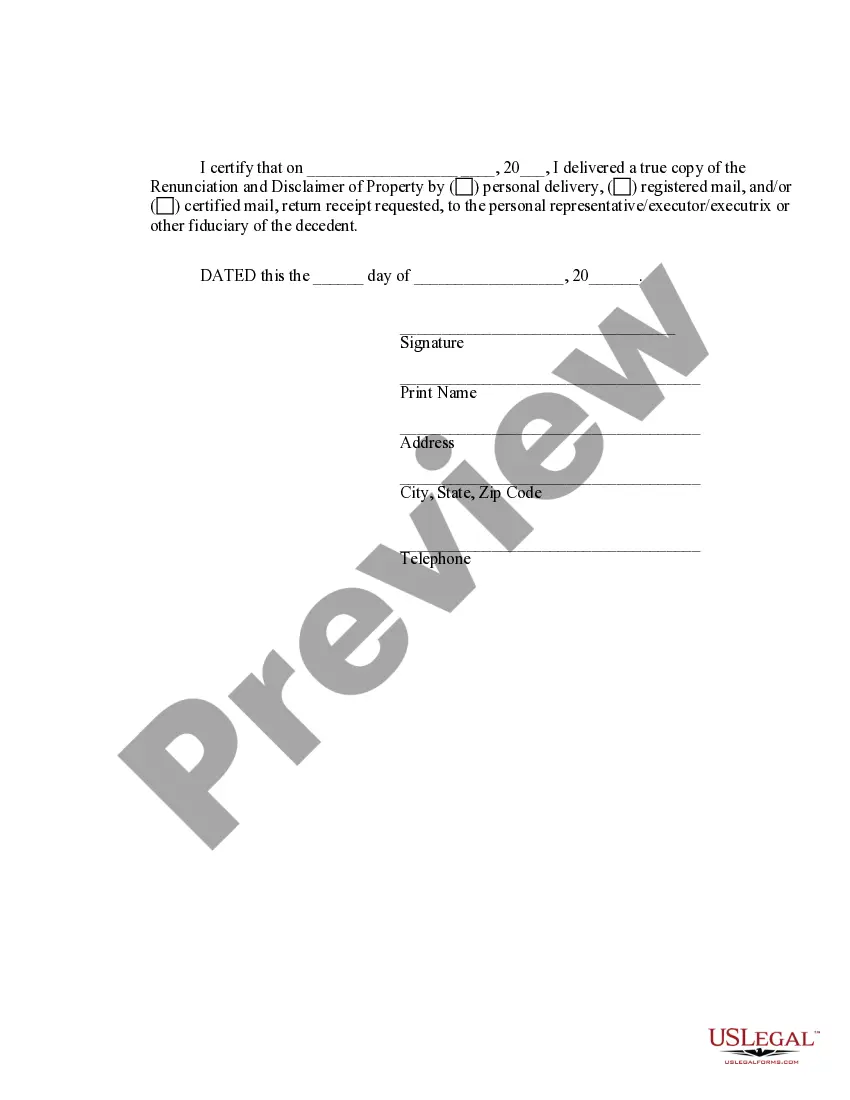
Get your form ready online
Our built-in tools help you complete, sign, share, and store your documents in one place.
Make edits, fill in missing information, and update formatting in US Legal Forms—just like you would in MS Word.
Download a copy, print it, send it by email, or mail it via USPS—whatever works best for your next step.
Sign and collect signatures with our SignNow integration. Send to multiple recipients, set reminders, and more. Go Premium to unlock E-Sign.
If this form requires notarization, complete it online through a secure video call—no need to meet a notary in person or wait for an appointment.
We protect your documents and personal data by following strict security and privacy standards.

Make edits, fill in missing information, and update formatting in US Legal Forms—just like you would in MS Word.

Download a copy, print it, send it by email, or mail it via USPS—whatever works best for your next step.

Sign and collect signatures with our SignNow integration. Send to multiple recipients, set reminders, and more. Go Premium to unlock E-Sign.

If this form requires notarization, complete it online through a secure video call—no need to meet a notary in person or wait for an appointment.

We protect your documents and personal data by following strict security and privacy standards.
Looking for another form?







How to fill out Hawaii Renunciation And Disclaimer Of Real Property Interest?
- If you're an existing subscriber, start by logging in to your account to download your required form. Ensure your subscription is active; renew if necessary.
- For first-time users, begin by exploring the Preview mode of your desired form. Confirm it aligns with your needs and complies with your local jurisdiction.
- If the initial form doesn’t meet your requirements, utilize the Search function at the top to find an alternative template.
- After selecting the right document, proceed to purchase by clicking the Buy Now button and choosing an appropriate subscription plan. A user account registration will be required.
- Complete your payment using either credit card information or your PayPal account to finalize the subscription.
- Finally, download your selected form and save it on your device. You can access it anytime from the My Forms section of your profile.
US Legal Forms is committed to empowering users—from individuals to attorneys—by providing a robust library of legal forms that surpasses many competitors. With access to premium experts, you can ensure your forms are completed accurately.
Start your journey to legal clarity today by visiting US Legal Forms and exploring the unmatched resources available to you!
Form popularity
FAQ
Yes, you can claim benefits for your deceased child under certain circumstances. If your child has passed away but had a legal claim, you may pursue that claim for Hawaii predeceased back with a child. It is essential to gather the necessary documentation and evidence to support your claim. Additionally, seeking assistance from legal resources, such as USLegalForms, can simplify the process.
If there is no will, inheritance is determined by Hawaii’s intestacy laws. This means that the estate will be divided among surviving relatives, prioritizing children, parents, and siblings. For those facing a Hawaii predeceased back with a child situation, this process can dictate how and to whom the assets go, making it vital to know your rights and options.
An issue of predeceased child refers to the legal status of a child who has died before their parent. In Hawaii, the state law allows that the descendants of a predeceased child may inherit in their stead. Understanding this concept is vital in a Hawaii predeceased back with a child scenario to ensure the right individuals receive their inheritance.
If a person dies without a will, Hawaii’s intestacy laws dictate how assets are distributed. Generally, children inherit first, followed by parents and siblings. This situation is crucial for anyone dealing with a Hawaii predeceased back with a child, as their rights to inheritance can be impacted significantly under these laws.
When someone dies without a will in Hawaii, their estate goes through probate under state laws. The court appoints an administrator to oversee the distribution of assets according to Hawaii's intestacy laws. These laws determine that a child or children, such as in a Hawaii predeceased back with a child situation, may inherit a significant portion of the estate.
In Hawaii, abandonment of a child occurs when a parent fails to provide for the child's basic needs or has no contact with them for a significant time. This law can affect custody and inheritance issues, especially involving a Hawaii predeceased back with a child. It’s essential to understand these regulations to navigate family law effectively.
In Hawaii, the next of kin is typically the person's closest living relatives. This includes spouses, children, parents, and siblings. In the case of a Hawaii predeceased back with a child, the child may inherit if the parent passes away. Understanding who qualifies as next of kin is essential for inheritance and probate matters.
In general, only legally recognized heirs or beneficiaries can claim an inheritance in Hawaii. Legal claims or disputes can arise, especially if there are family tensions or unclear intentions. If you are navigating a situation such as a Hawaii predeceased back with a child, knowing your rights and the laws can safeguard you and ensure that the rightful beneficiaries are recognized.
When an individual dies without a will in Hawaii, the state's intestacy laws determine the heirs. Typically, the property goes to the spouse and children first, followed by other relatives if there are no immediate family members. Understanding this system, especially in a Hawaii predeceased back with a child situation, can help families anticipate their inheritance.
Beneficiaries in Hawaii have the right to receive their inheritance as specified in a valid will or according to state laws when there is no will. They can also request information about the estate and are entitled to a timely distribution once the probate process concludes. In cases involving a Hawaii predeceased back with a child, awareness of these rights can help in managing expectations.