Georgia And Divorce Law
Description
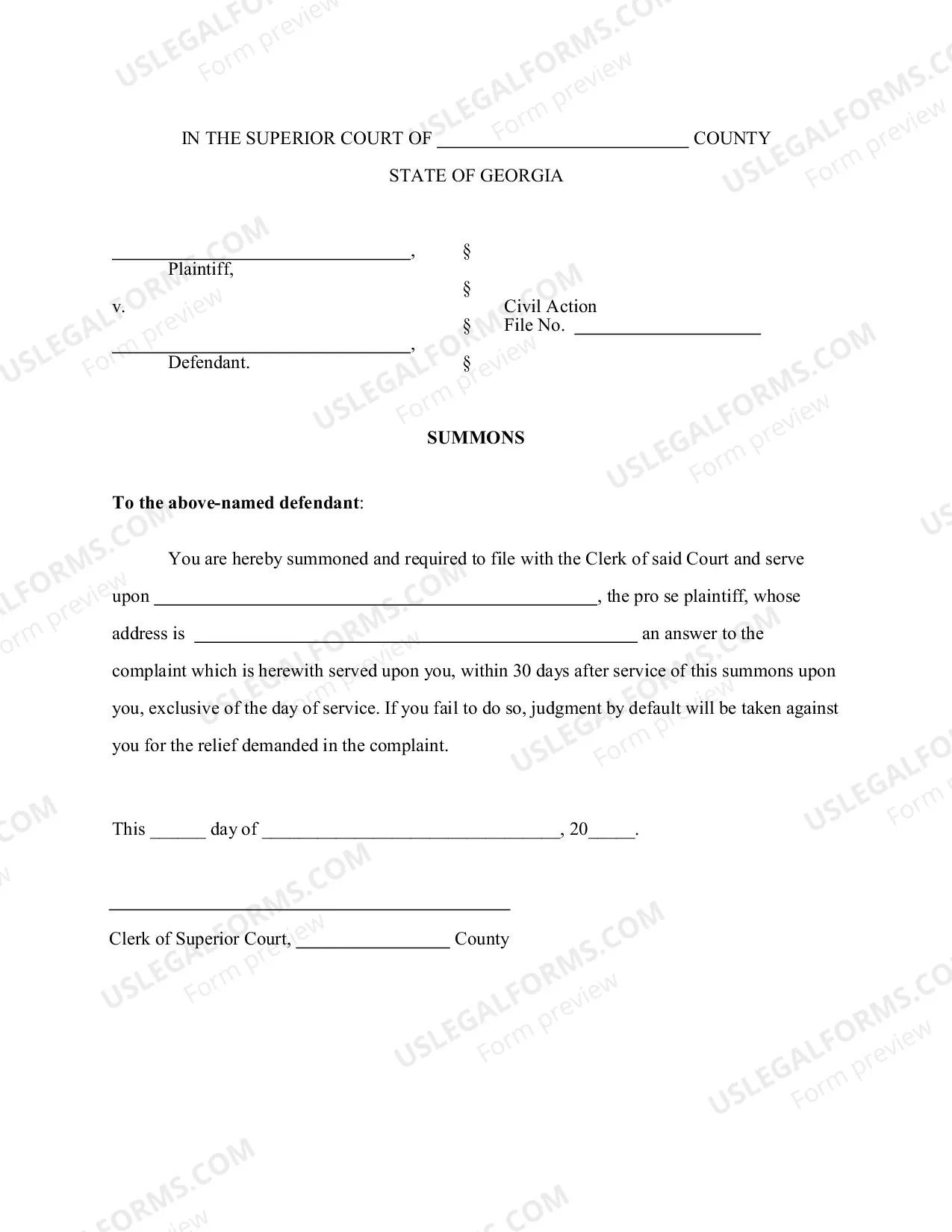
Get your form ready online
Our built-in tools help you complete, sign, share, and store your documents in one place.
Make edits, fill in missing information, and update formatting in US Legal Forms—just like you would in MS Word.
Download a copy, print it, send it by email, or mail it via USPS—whatever works best for your next step.
Sign and collect signatures with our SignNow integration. Send to multiple recipients, set reminders, and more. Go Premium to unlock E-Sign.
If this form requires notarization, complete it online through a secure video call—no need to meet a notary in person or wait for an appointment.
We protect your documents and personal data by following strict security and privacy standards.

Make edits, fill in missing information, and update formatting in US Legal Forms—just like you would in MS Word.

Download a copy, print it, send it by email, or mail it via USPS—whatever works best for your next step.

Sign and collect signatures with our SignNow integration. Send to multiple recipients, set reminders, and more. Go Premium to unlock E-Sign.

If this form requires notarization, complete it online through a secure video call—no need to meet a notary in person or wait for an appointment.

We protect your documents and personal data by following strict security and privacy standards.
Looking for another form?









Form popularity
FAQ
While Georgia and divorce law do not explicitly list a sexless marriage as grounds for divorce, it can still influence proceedings. The lack of intimacy may be viewed as cruelty or abandonment, depending on the circumstances. If intimacy has drastically decreased and it affects your quality of life, discussing your situation with a divorce attorney can provide clarity. Additionally, uslegalforms offers resources to help you navigate these delicate matters.
Georgia and divorce law recognize several fault grounds for divorce, including adultery, abandonment, cruelty, and substance abuse. A spouse can prove these grounds as reasons for the divorce, which may impact the court's decisions on property division and alimony. It's essential to gather appropriate evidence if you intend to file on these grounds. Seeking assistance from platforms like uslegalforms can help ensure you have all documentation in order.
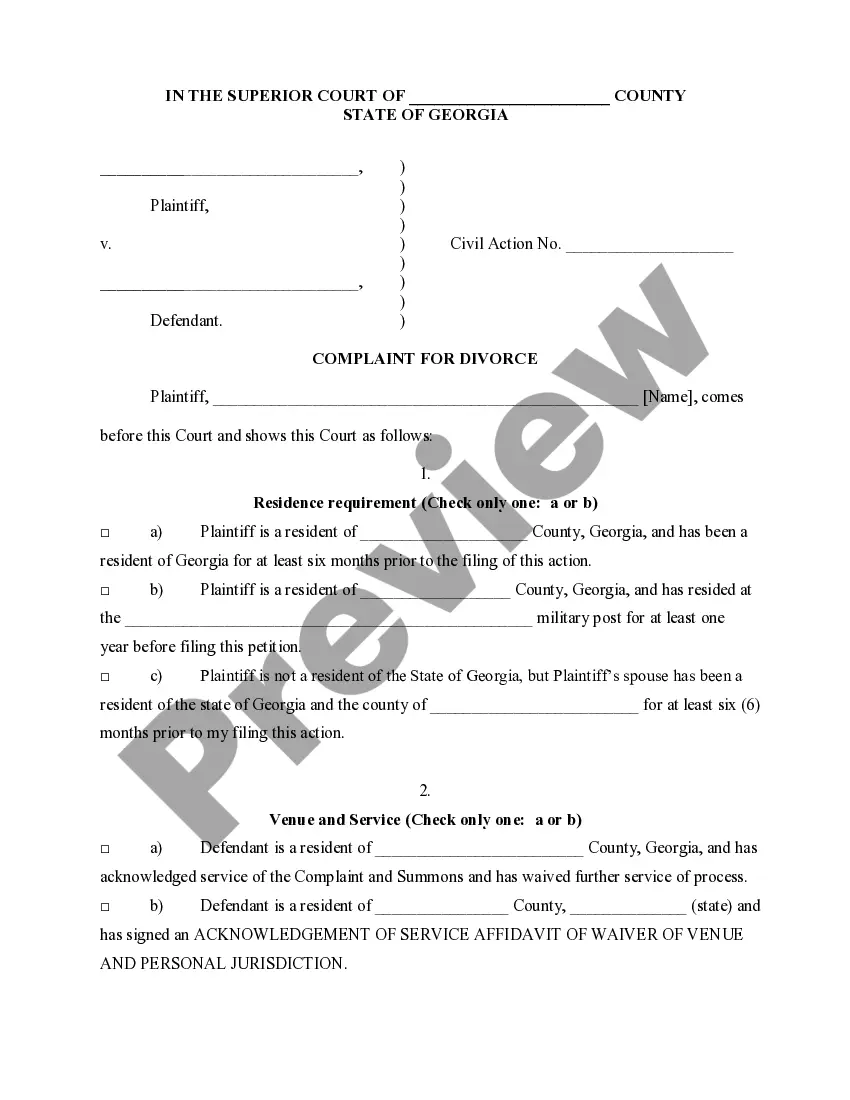
To file for divorce in Georgia and divorce law, at least one spouse must be a resident of the state for at least six months before filing. You need to establish grounds for the divorce, which can be based on fault or a no-fault basis. Filing requires completing and submitting the appropriate legal forms to the court, which can often be simplified through platforms like uslegalforms. This ensures you meet all legal requirements and avoids common pitfalls.
In Georgia and divorce law, the decision on who leaves the marital home can depend on several factors. Generally, neither spouse is forced to leave unless a court order is issued. However, if a spouse feels unsafe or if there are issues of domestic violence, it may be wise to seek a protective order that may require one party to vacate the home. Consulting with a legal professional can help clarify your specific situation.
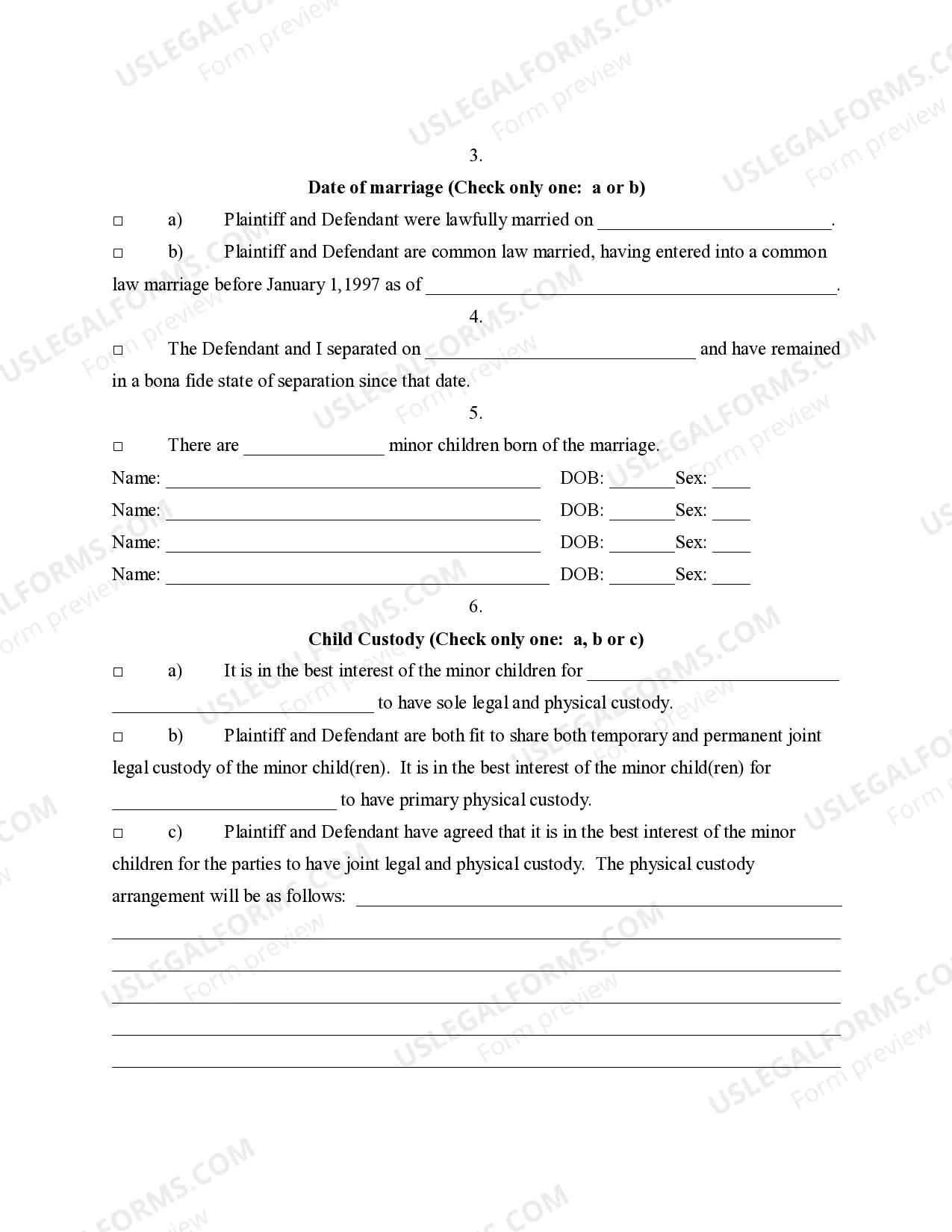
In Georgia, you do not need to be separated for any specific period before filing for divorce. However, having time apart can help resolve issues such as property division and custody arrangements, leading to a smoother divorce process. Knowing these details about Georgia and divorce law can better prepare you for what lies ahead.
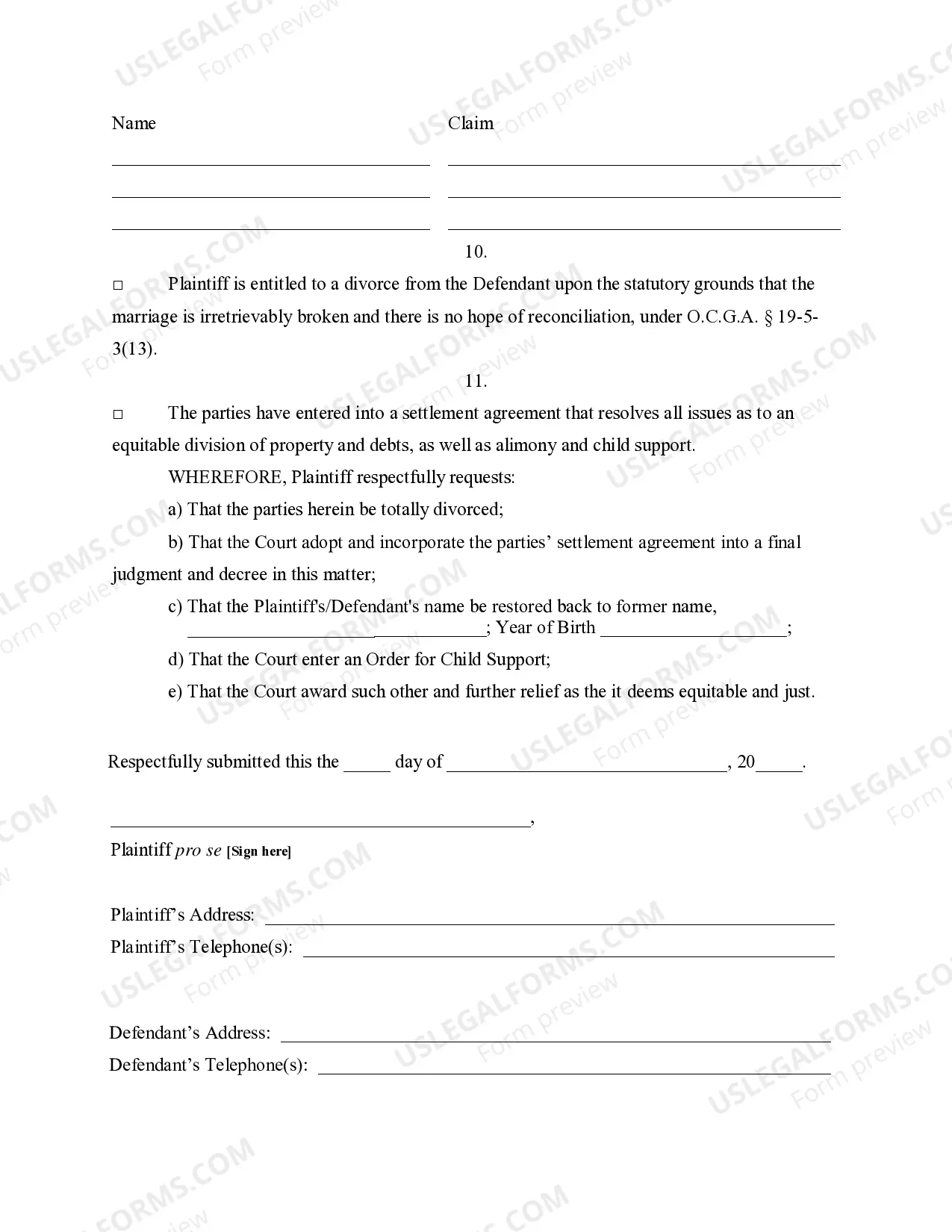
No, Georgia is not a 50/50 state; it practices equitable distribution instead of community property laws. This means that marital assets are divided fairly based on various considerations, rather than split down the middle. Familiarizing yourself with Georgia and divorce law will help you understand how your assets may be divided in your unique situation.
Yes, it is possible to obtain a divorce in Georgia without the other party's signature if you pursue a contested divorce. In such cases, you can proceed with filing your divorce papers, and the court can grant the divorce in accordance with Georgia and divorce law. It is essential to follow the legal procedures correctly to ensure your rights are protected.
In a divorce in Georgia, the wife is entitled to a fair distribution of marital property and assets, as well as potential alimony if applicable. The specific entitlements will depend on the circumstances of the marriage, including contributions and financial needs. A comprehensive understanding of Georgia and divorce law can ensure that you receive the rightful support during and after the divorce.
In Georgia, there is no specific waiting period for divorce after separation; you can file for divorce immediately. However, it is often recommended to have a period of separation to allow for clarity and resolution of issues before filing. This understanding of Georgia and divorce law can help streamline your divorce process.
Georgia follows the principle of equitable distribution when dividing marital assets in a divorce. This means that assets are divided fairly, but not necessarily equally, based on various factors like the length of the marriage, each spouse's finances, and contributions to the household. Understanding these nuances in Georgia and divorce law can help you prepare for discussions about asset division.
