Last Will And Testament Philippines
Description
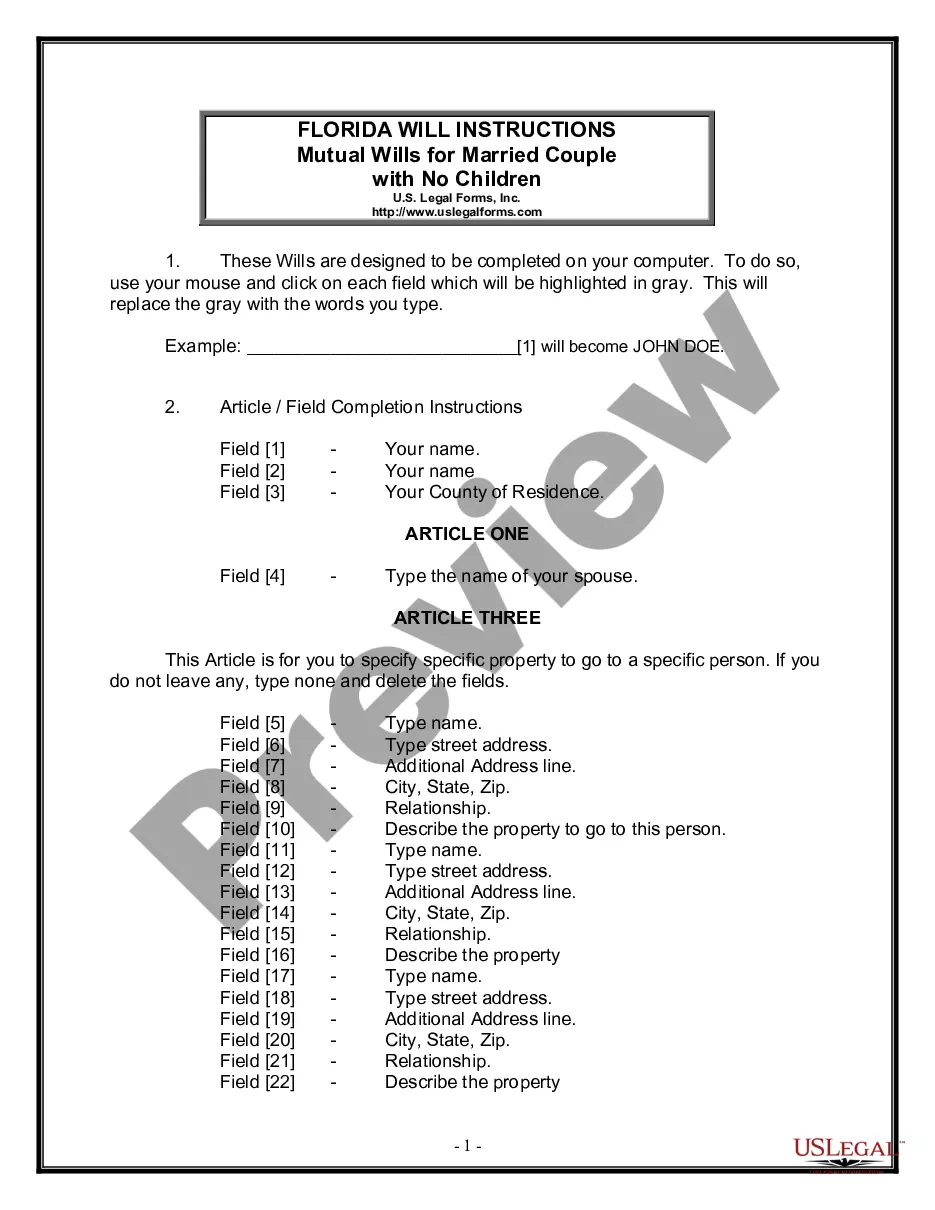
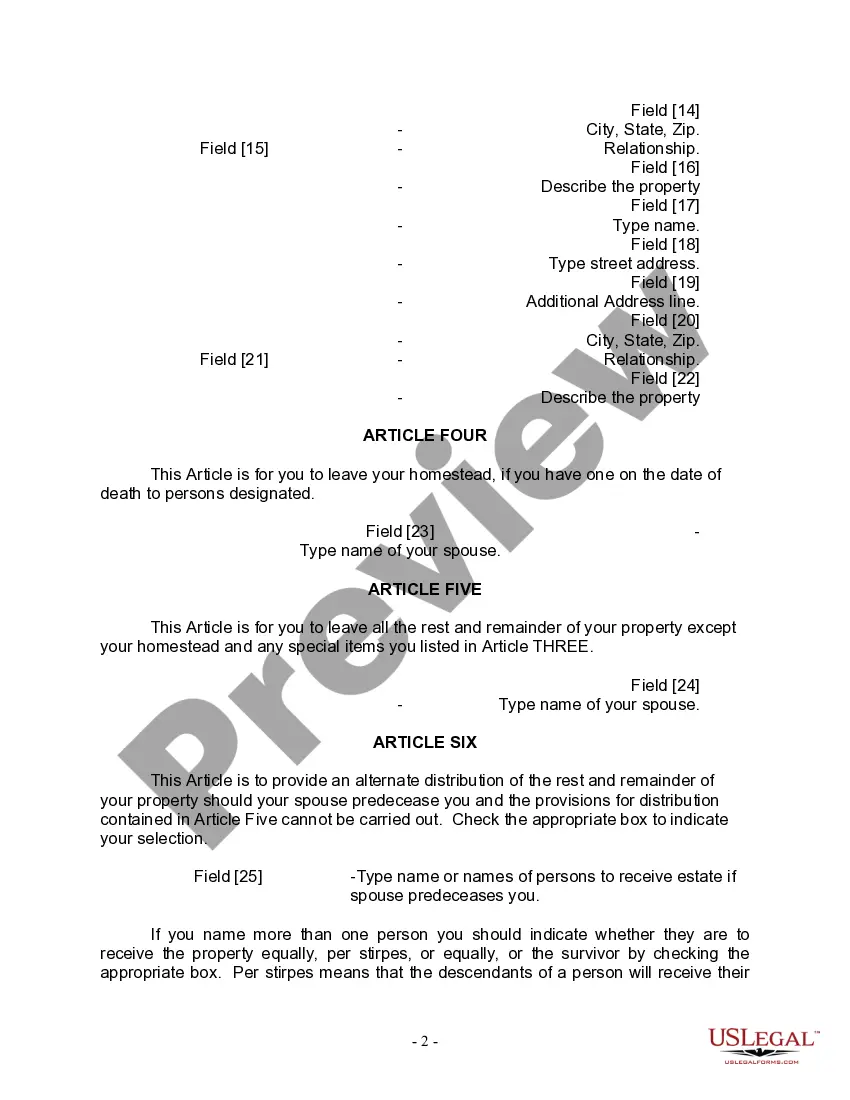
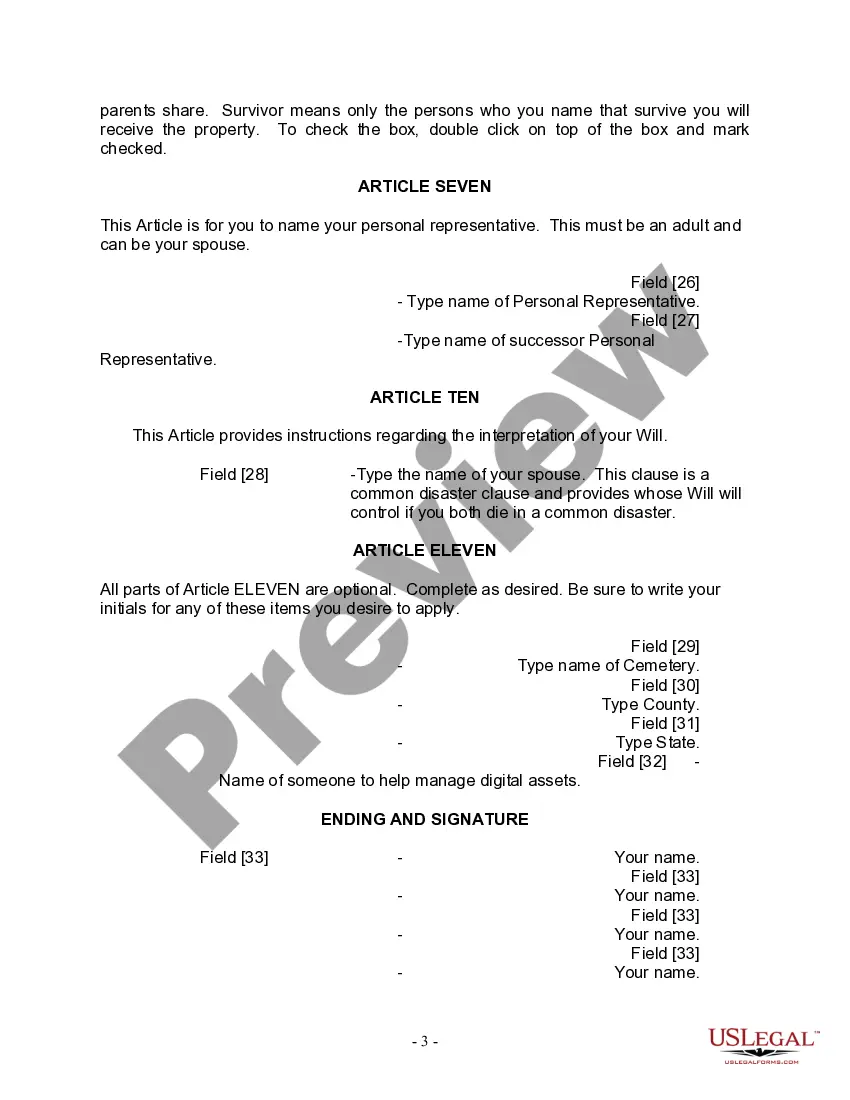
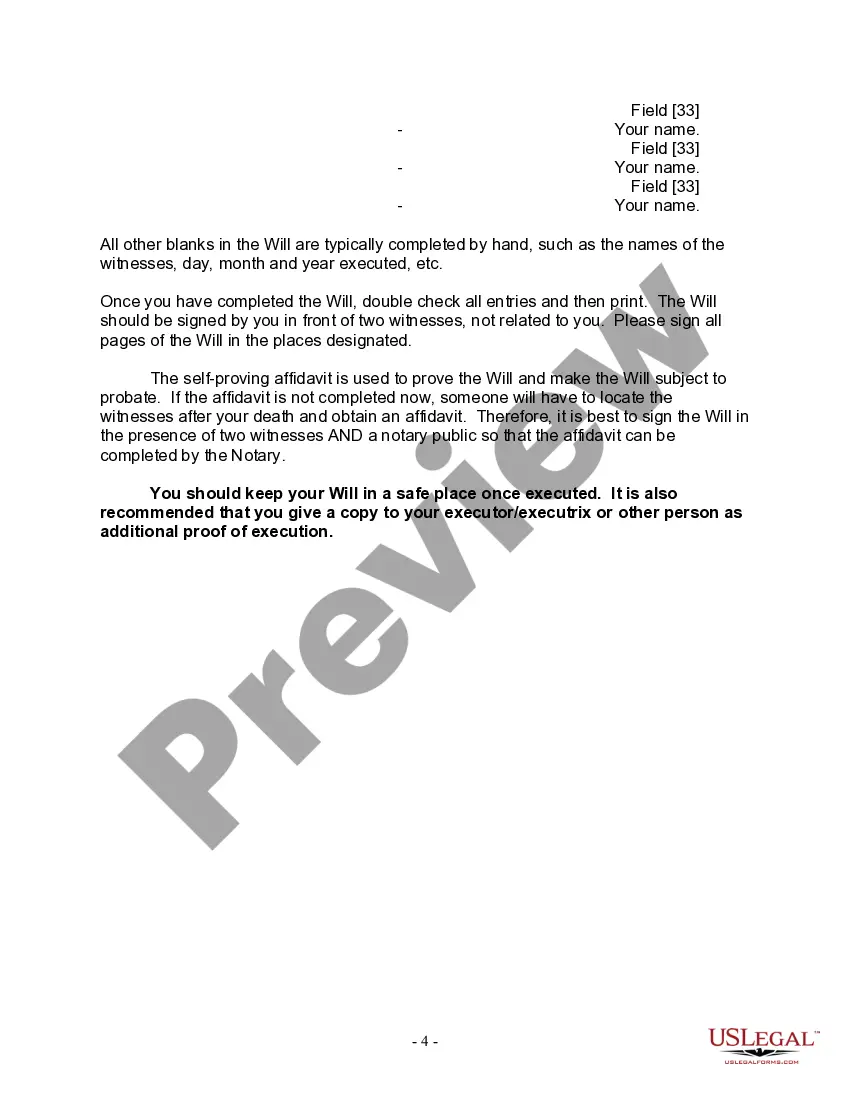
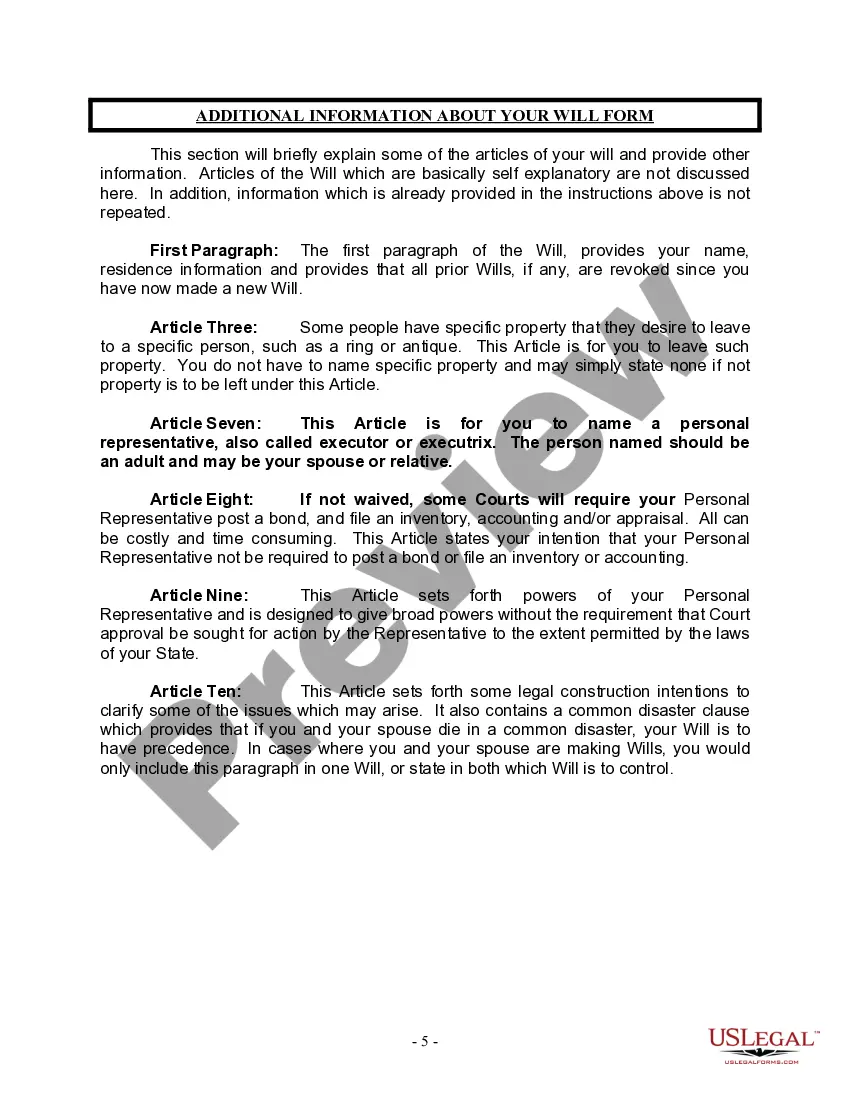
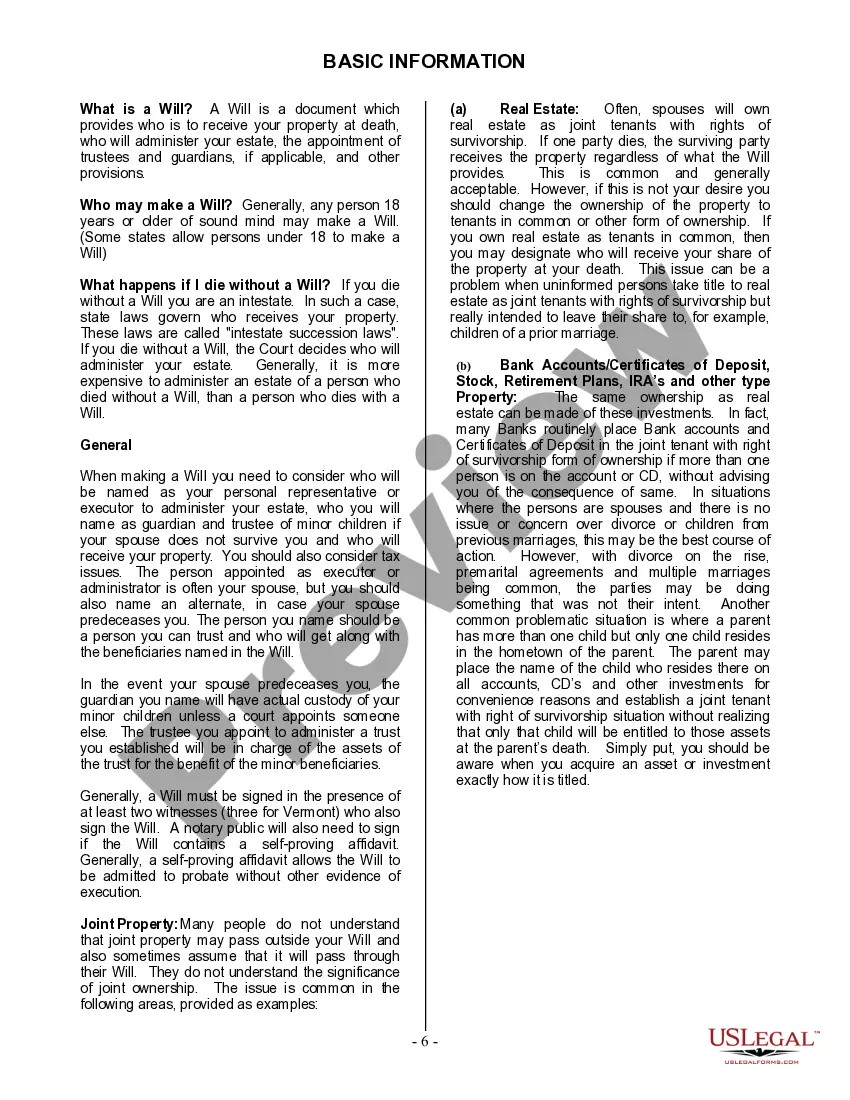
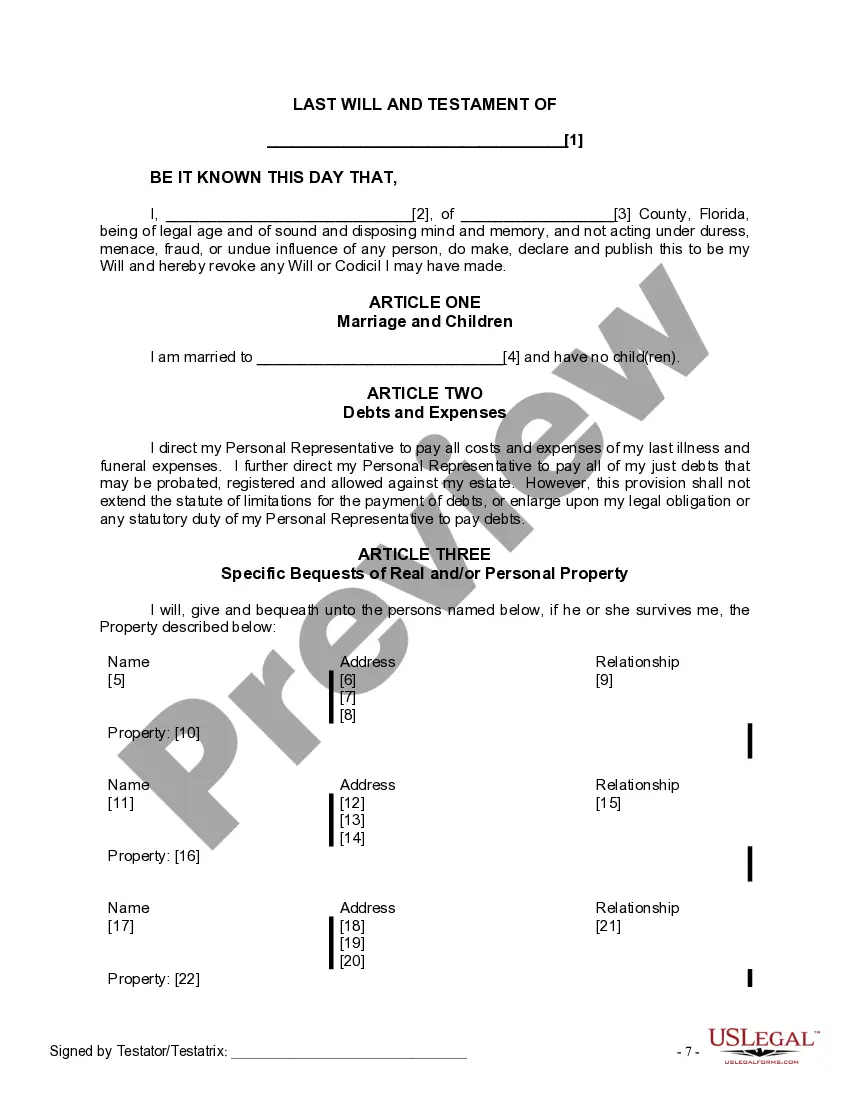
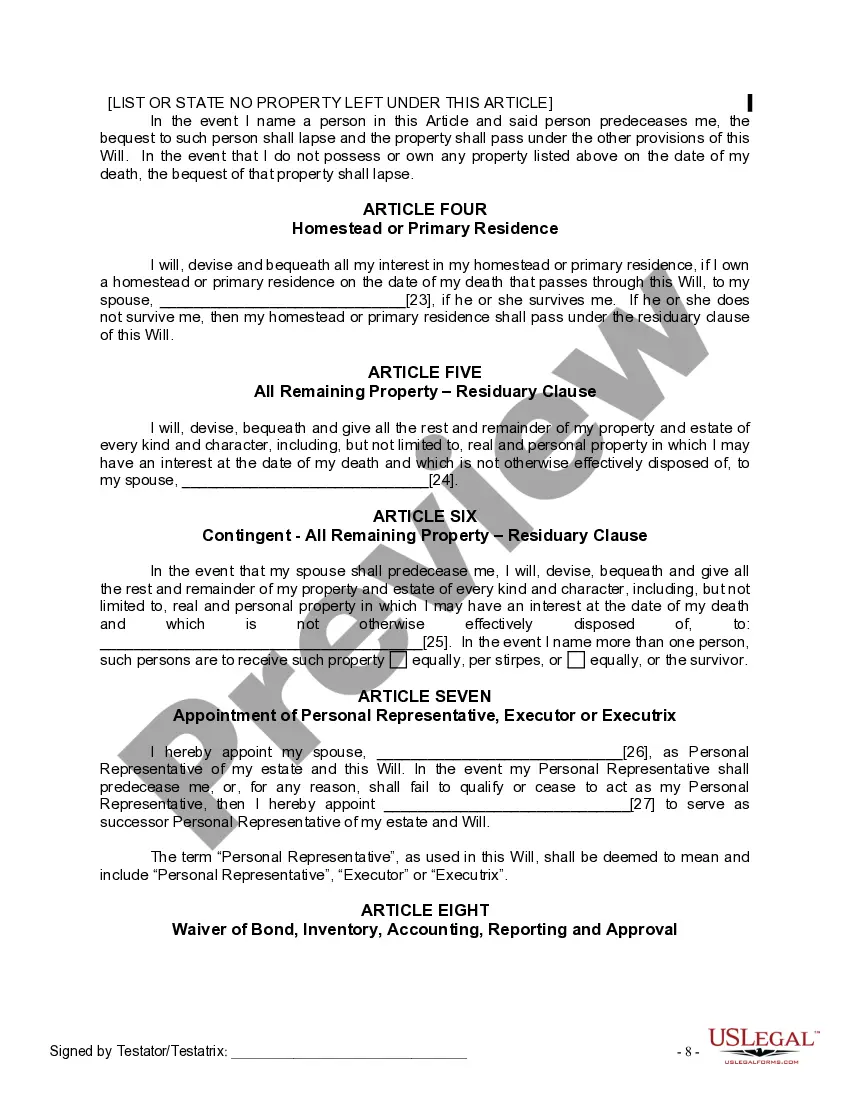
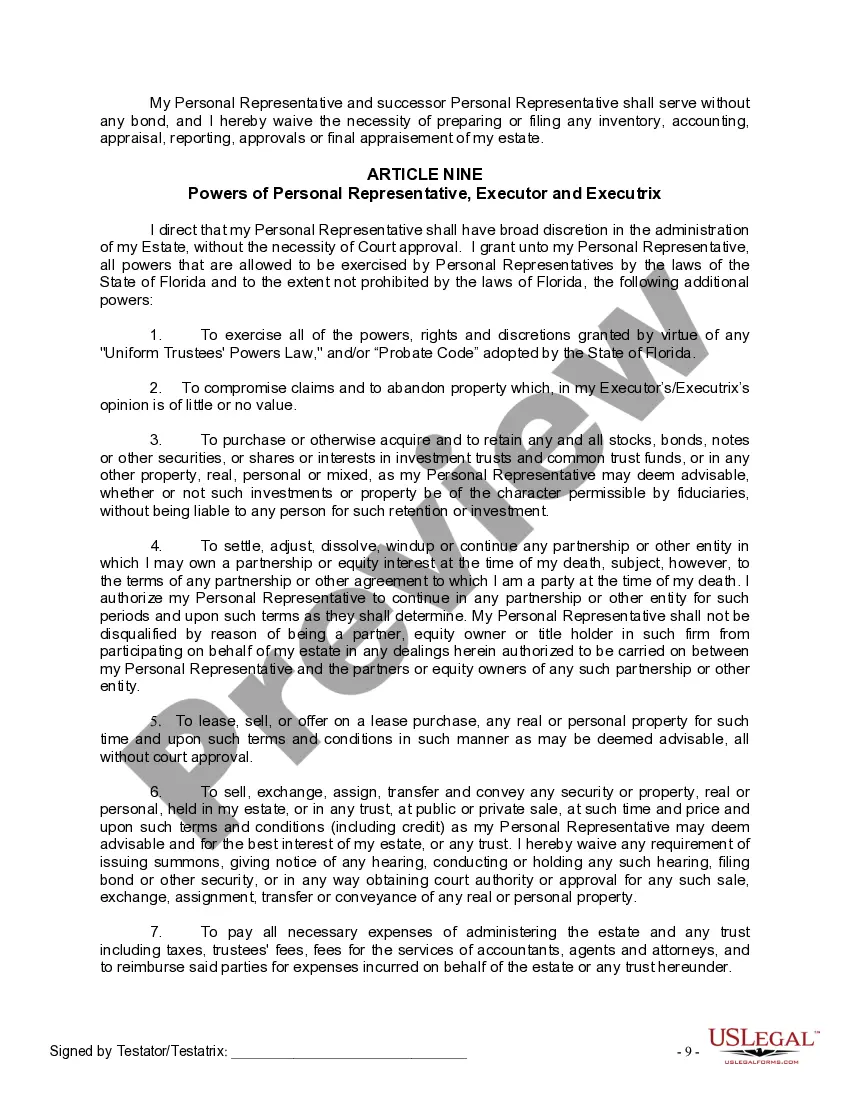




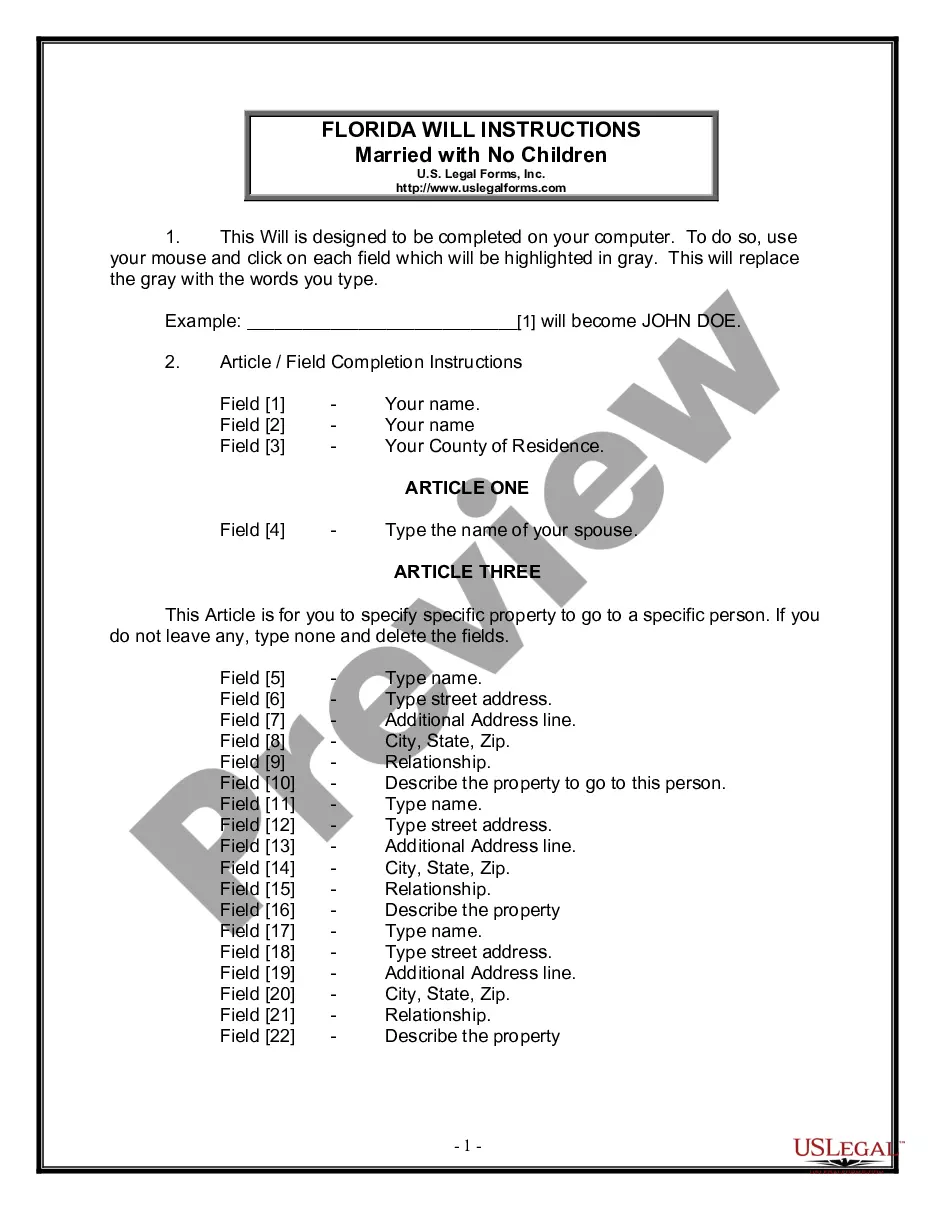
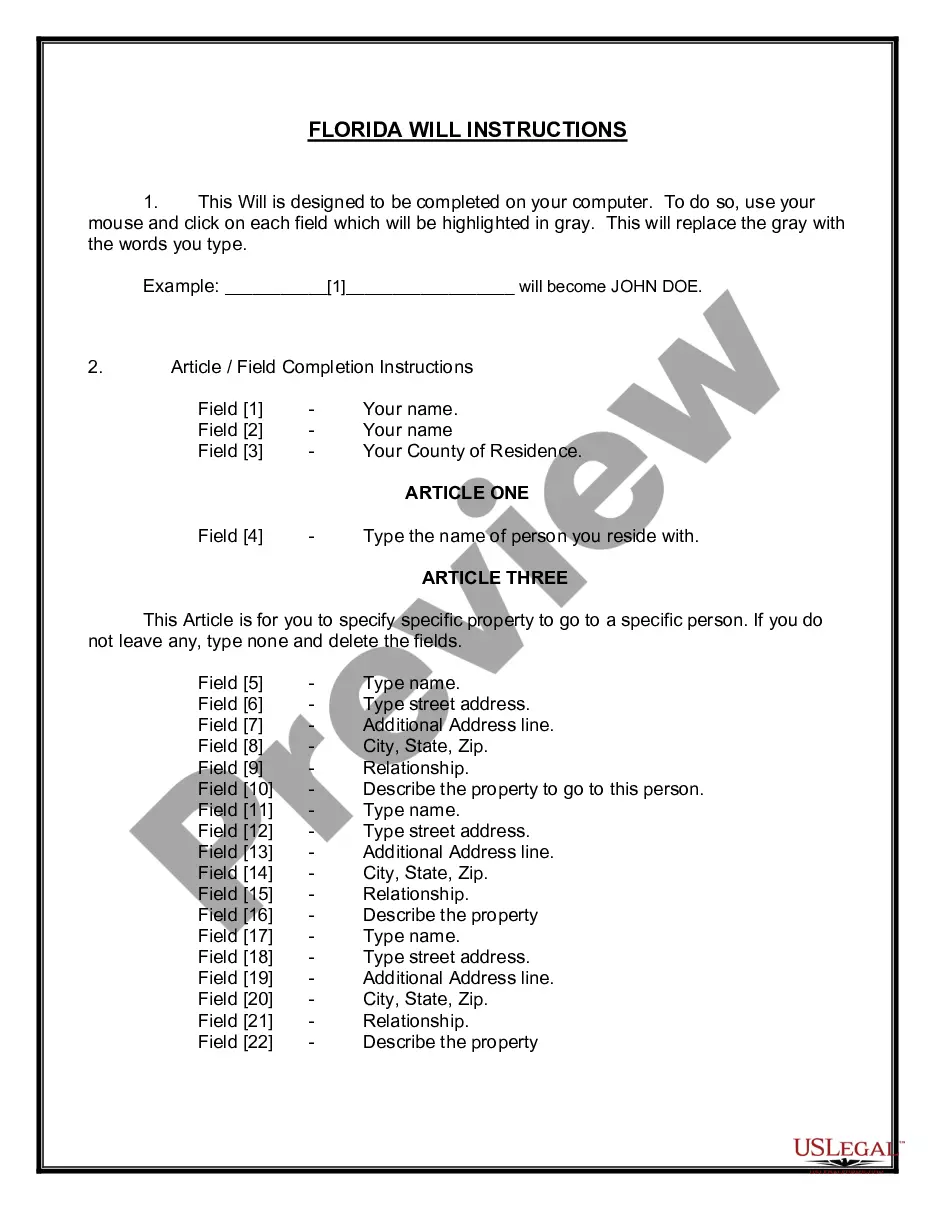
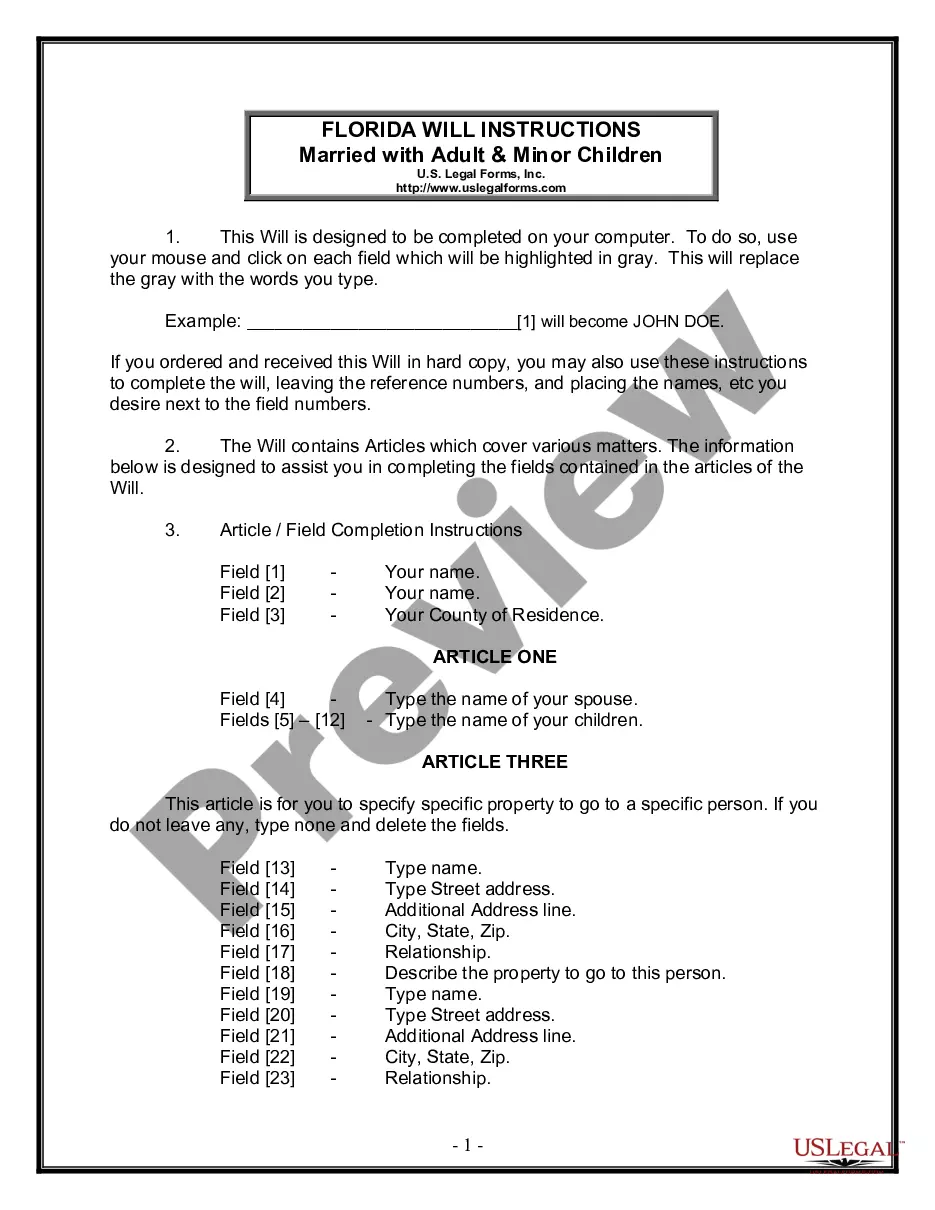
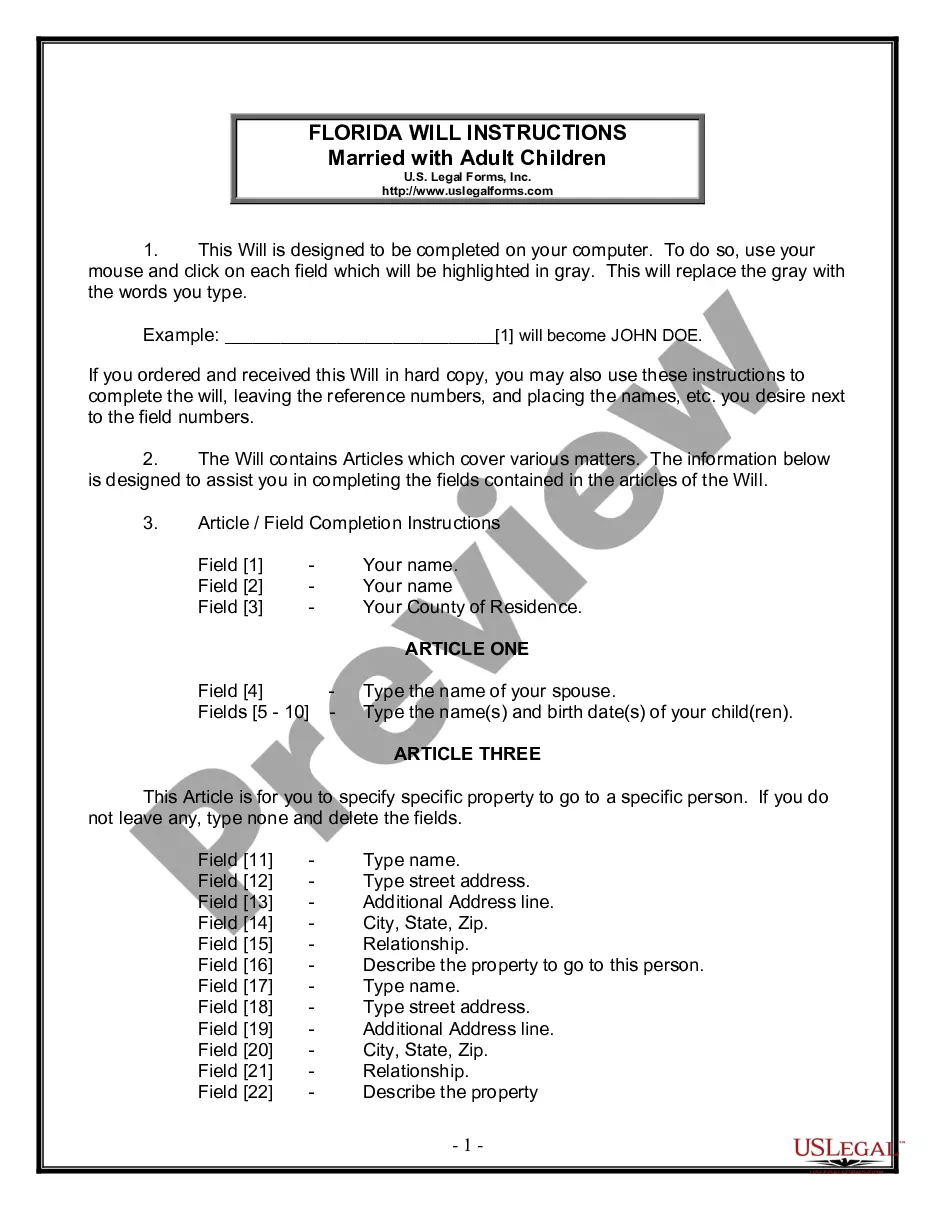
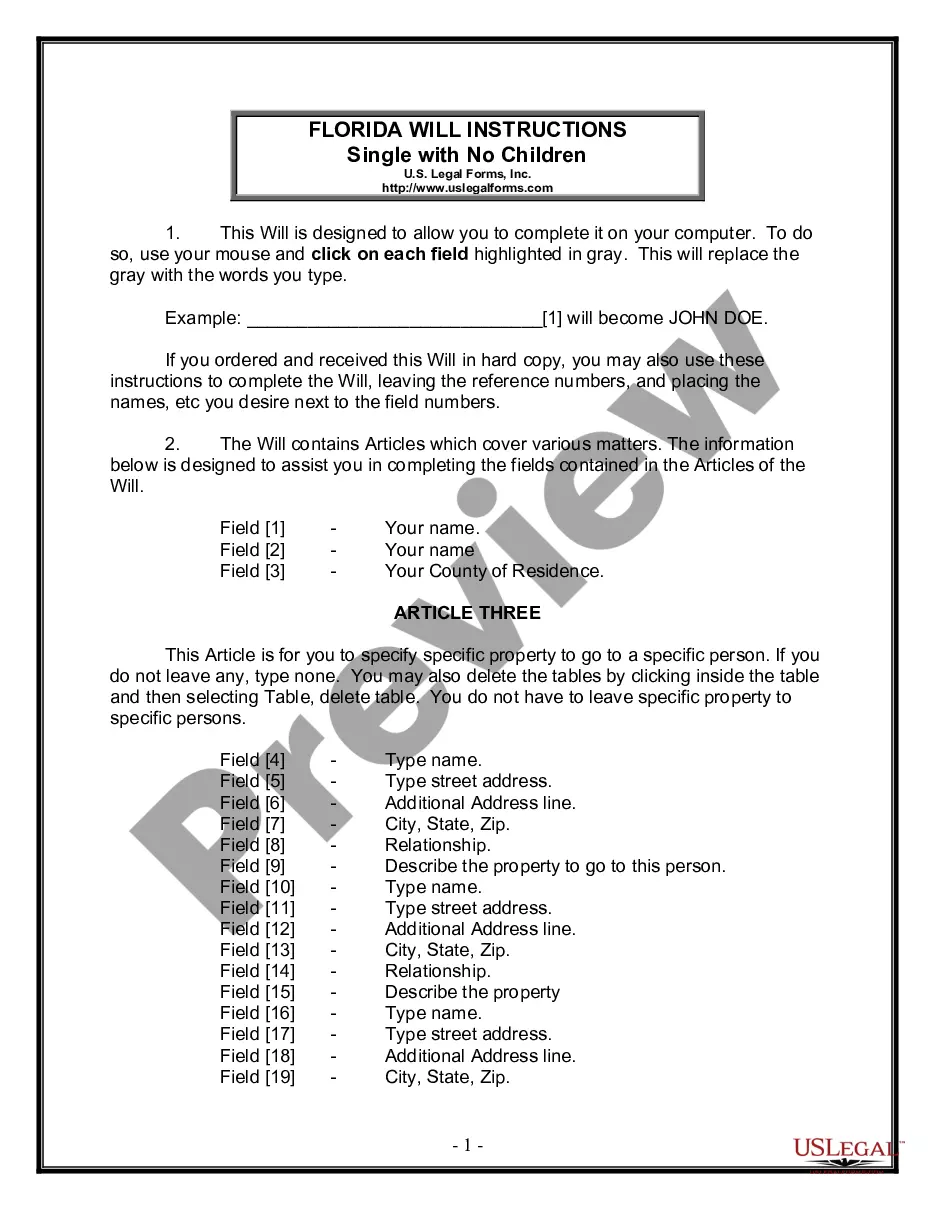
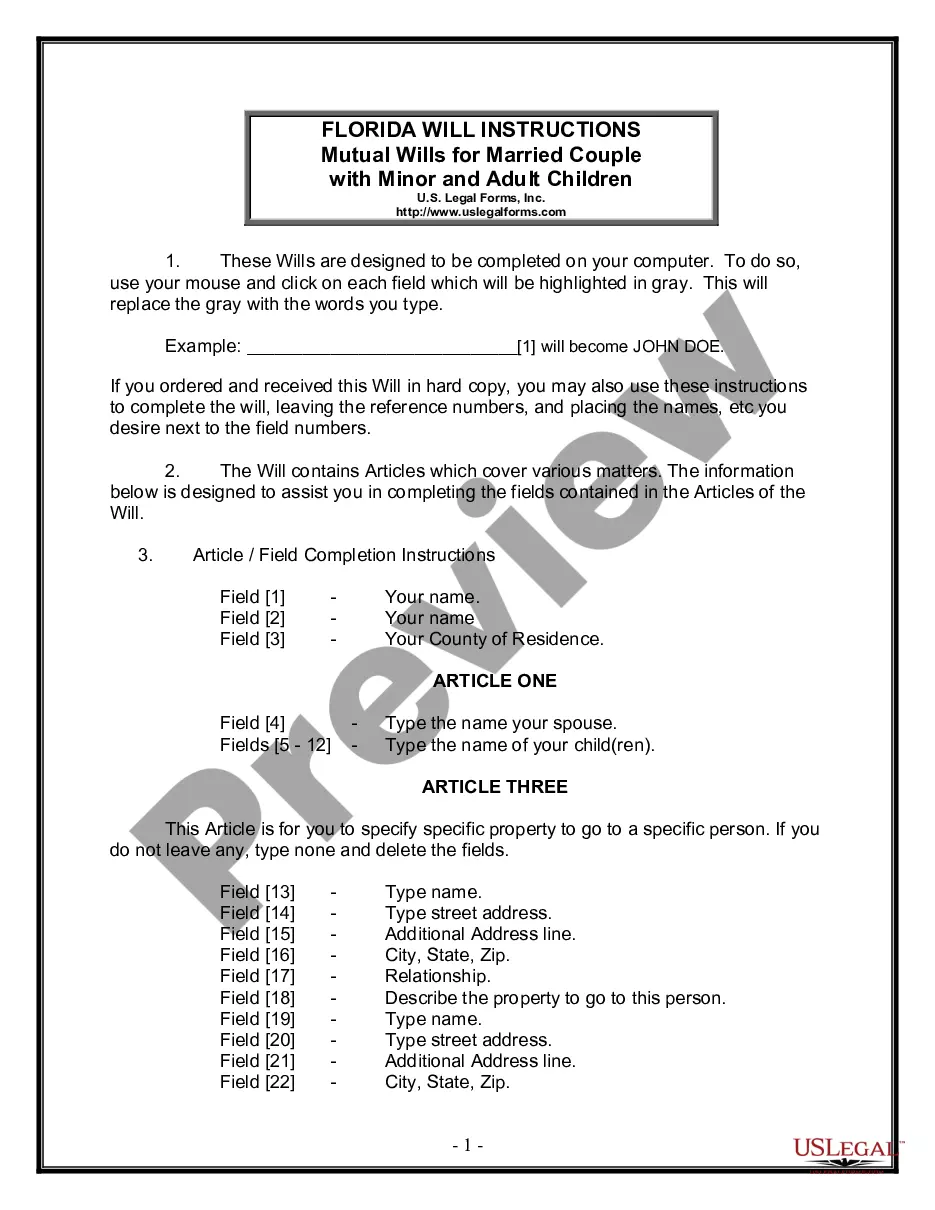
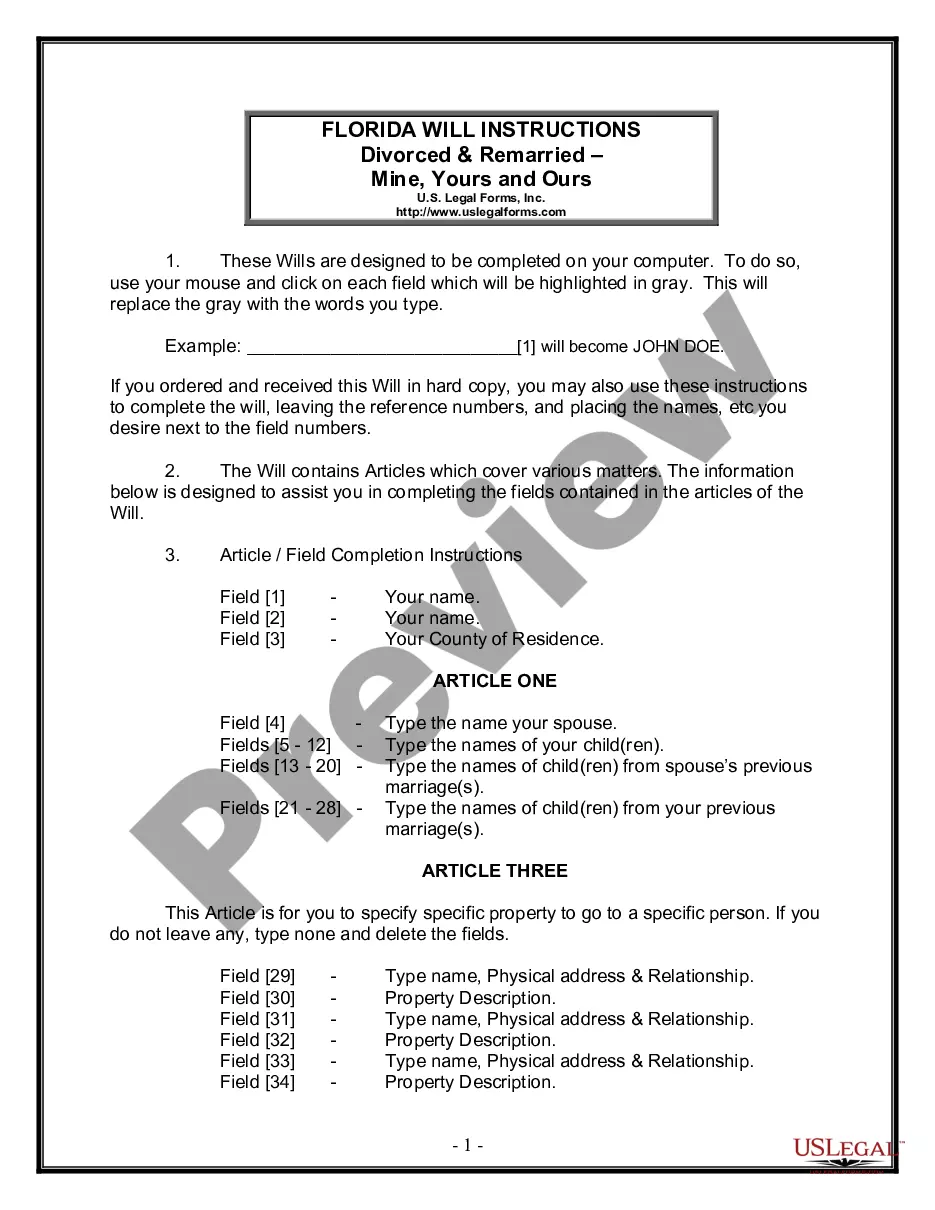
How to fill out Florida Mutual Wills Package With Last Wills And Testaments For Married Couple With No Children?
Whether for professional reasons or personal matters, everyone must confront legal circumstances at some point in their lives. Completing legal documents requires meticulous diligence, starting from choosing the correct form template.
For instance, if you select an incorrect version of the Last Will And Testament Philippines, it will be rejected upon submission. Thus, it is essential to have a trustworthy source of legal documents like US Legal Forms.
With an extensive catalog from US Legal Forms available, you do not need to waste time searching for the right template online. Utilize the library’s straightforward navigation to find the suitable form for any circumstance.
- Obtain the template you require using the search bar or catalog navigation.
- Review the form’s description to ensure it aligns with your situation, jurisdiction, and area.
- Click on the form’s preview to view it.
- If it is not the correct document, return to the search feature to find the Last Will And Testament Philippines sample you are looking for.
- Download the template if it satisfies your requirements.
- If you already possess a US Legal Forms account, simply click Log in to access any previously saved files in My documents.
- If you do not have an account yet, you can obtain the form by clicking Buy now.
- Select the appropriate pricing option.
- Fill out the account registration form.
- Select your payment method: either a bank card or a PayPal account.
- Choose the document format you desire and download the Last Will And Testament Philippines.
- Once downloaded, you can complete the form using editing software or print it and fill it out manually.
Form popularity
FAQ
For a will to be valid in the Philippines, it must be in writing, signed by the testator, and witnessed by three competent individuals. The document should clearly express the testator’s intentions regarding the distribution of their estate. Furthermore, adherence to these requirements can significantly prevent potential conflicts, ensuring that the last will and testament in the Philippines meets all necessary legal standards.
A US will may not be considered valid in the Philippines without proper validation processes. To be recognized, the US will must meet the legal requirements and standards set by Philippine law. It is advisable to consult with legal experts to address potential issues and ensure that estate planning aligns with the regulations concerning a last will and testament in the Philippines.
The last will and testament holds significant power in the Philippines, serving as the primary legal document to dictate how a person's assets will be distributed after their death. It provides vital instructions to the executor regarding the settlement of debts and distribution of property. When crafted properly, it ensures that the testator's wishes are honored, making it a crucial element of estate planning and management in the Philippines.
Yes, a handwritten last will and testament, often known as a holographic will, is legal in the Philippines. However, it must be entirely written and signed by the testator without any witnesses. While this option offers flexibility, it is essential for the document to meet the relevant legal standards to avoid potential disputes regarding the last will and testament in the Philippines.
In the Philippines, the last will and testament must comply with specific legal requirements to be valid. It must be in writing, signed by the testator, and witnessed by at least three credible individuals. Additionally, the will should reflect the true intentions of the testator regarding the distribution of their estate, ensuring clarity and compliance with local laws governing the last will and testament in the Philippines.
You do not necessarily need a lawyer to make a last will and testament in the Philippines, but having legal advice can be beneficial. Creating your will on your own is an option, especially if your estate is straightforward. However, platforms like USLegalForms can provide valuable resources to ensure your will adheres to legal requirements and is written correctly.
The requirements for a last will and testament in the Philippines include being at least eighteen years old and of sound mind. Additionally, the will should be written, signed, and witnessed. Understanding these requirements is essential, and using platforms like USLegalForms can clarify these details and ensure you meet all legal standards.
In the Philippines, notarizing your last will and testament adds an important layer of authenticity. While it is not strictly necessary for a will to be notarized, having it notarized can help prevent disputes after your passing. Also, it enhances the likelihood that your will will be respected and upheld by the courts.
Creating a last will and testament in the Philippines without a lawyer is certainly possible. You can start by outlining your assets and how you wish to distribute them. It's important to ensure that your will complies with local laws, so using a reliable platform like USLegalForms can help guide you through the necessary steps.
One of the most common mistakes in a will is failing to update it after major life changes. This could include marriage, divorce, the birth of children, or significant changes in financial status. Keeping your last will and testament Philippines up-to-date is crucial to ensure that your wishes are accurately reflected.