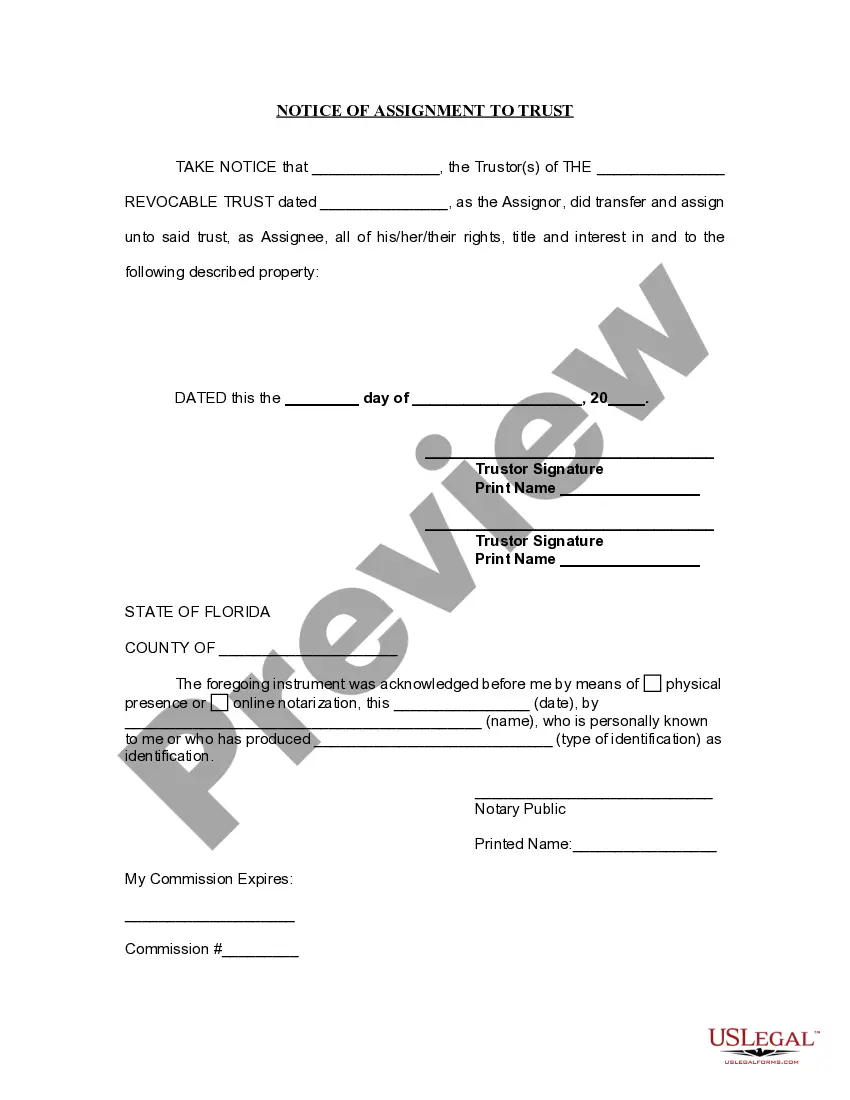
Living Trust Form Blank For The Formal Portion
Description
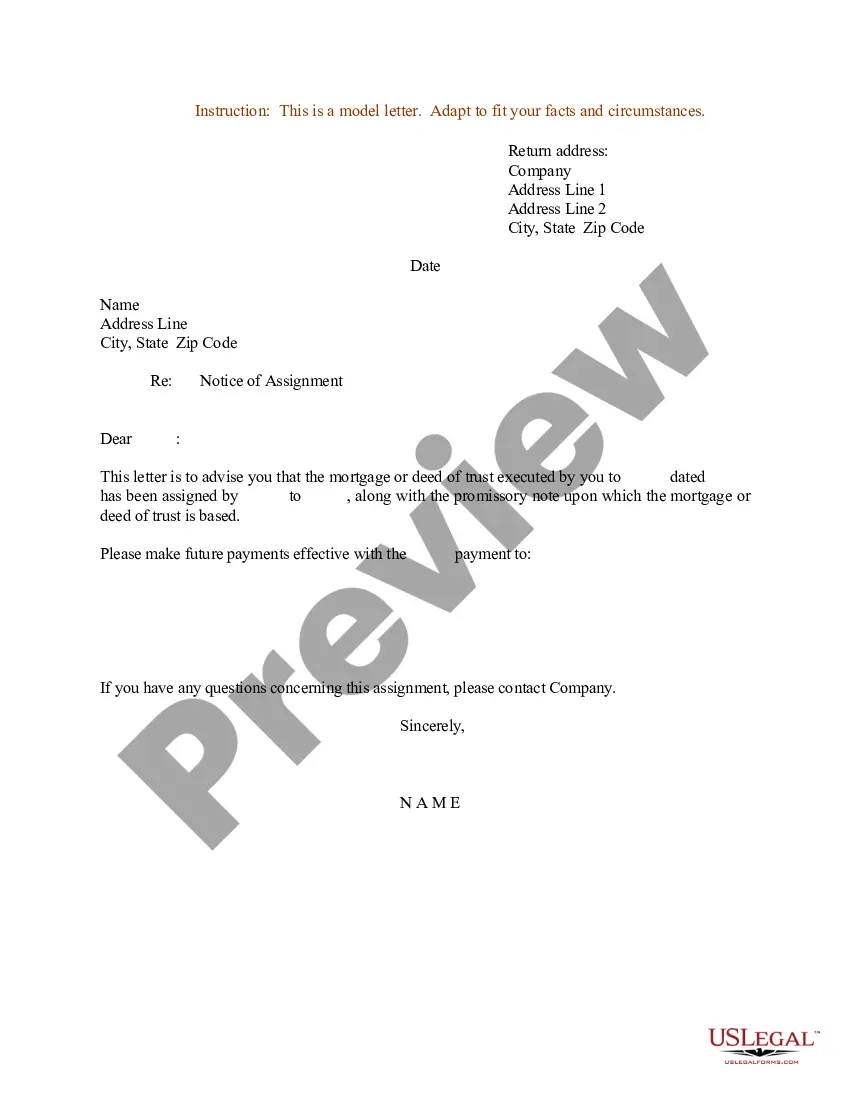
Get your form ready online
Our built-in tools help you complete, sign, share, and store your documents in one place.
Make edits, fill in missing information, and update formatting in US Legal Forms—just like you would in MS Word.
Download a copy, print it, send it by email, or mail it via USPS—whatever works best for your next step.
Sign and collect signatures with our SignNow integration. Send to multiple recipients, set reminders, and more. Go Premium to unlock E-Sign.
If this form requires notarization, complete it online through a secure video call—no need to meet a notary in person or wait for an appointment.
We protect your documents and personal data by following strict security and privacy standards.

Make edits, fill in missing information, and update formatting in US Legal Forms—just like you would in MS Word.

Download a copy, print it, send it by email, or mail it via USPS—whatever works best for your next step.

Sign and collect signatures with our SignNow integration. Send to multiple recipients, set reminders, and more. Go Premium to unlock E-Sign.

If this form requires notarization, complete it online through a secure video call—no need to meet a notary in person or wait for an appointment.

We protect your documents and personal data by following strict security and privacy standards.
Looking for another form?





How to fill out Florida Notice Of Assignment To Living Trust?
- If you're a returning user, log in to your account and download the living trust form blank once your subscription is confirmed.
- For new users, start by previewing the form description to ensure it fits your needs and complies with local laws.
- If necessary, explore alternative templates using the Search tab for any adjustments deemed necessary.
- Select the form you want. Click on the Buy Now button and choose your desired subscription plan.
- Complete your purchase by entering your credit card or PayPal information.
- Download your living trust form blank and save it to your device. Retrieve it anytime from the My Forms section in your account.
US Legal Forms makes it simple for individuals and attorneys to access a robust library of legal documents. With over 85,000 editable forms at your fingertips, you can ensure that your paperwork is both precise and legally compliant.
Take the first step in securing your estate today. Start your journey with US Legal Forms for peace of mind and expert support.
Form popularity
FAQ
A formal accounting of a trust provides a clear, detailed summary of all financial activity within the trust. This includes income, expenses, distributions, and the value of trust assets. Having a living trust form blank for the formal portion makes it easier for trustees to record this information accurately and comply with legal obligations. For families and beneficiaries, this transparency fosters trust and clarity about how the assets are managed.
A living trust example could include a scenario where a parent sets up a trust to manage their home and savings for their children. For instance, they can specify in a living trust form blank that their assets should be distributed to their children upon reaching a certain age. This real-world application demonstrates how a living trust can benefit families by providing clear guidelines for asset management and distribution.
One of the biggest mistakes parents make when setting up a trust fund is failing to clearly articulate their wishes. Often, parents overlook the importance of documentation, leaving their intentions open to interpretation. Using a living trust form blank addresses these issues by guiding parents through the necessary details. This can prevent confusion and ensure that the trust serves its intended purpose.
Yes, a living trust is indeed a formal trust. It can be established during your lifetime, allowing you to manage your assets while you are alive and designate how they will be distributed after your passing. Utilizing a living trust form blank helps ensure that all legal requirements are met, making your trust formal and enforceable.
Creating a living trust template requires a clear understanding of your assets and intentions. Start by making a list of your properties and the individuals you wish to benefit. Then, fill out a living trust form blank, which will guide you in structuring your template. This approach ensures that your trust adequately reflects your wishes and requirements.
A trust is formed through a legal document known as a trust agreement or declaration of trust. This document outlines the terms and conditions of the trust, including the name of the trust, the trustee, and the beneficiaries. Using a living trust form blank can make drafting this document easier and ensure all necessary details are included.
Setting up a trust template involves outlining your specific needs and objectives for the trust. You can use a living trust form blank to help structure your template effectively. Make sure to include details about your beneficiaries, assets, and any instructions for managing those assets. By utilizing a clear template, you can simplify the trust setup process.
To create a living trust by yourself, begin by gathering necessary information about your assets and beneficiaries. Next, use a reliable living trust form blank to outline the terms of your trust. It's crucial to detail how assets will be managed and distributed. After completing the form, ensure it is signed correctly and witnessed, as dictated by your state's laws.
Filling out a living trust involves providing essential information such as the names of the trustees, beneficiaries, and details about the assets included in the trust. It is important to carefully complete all sections while adhering to legal specifications. To simplify this task, consider using a living trust form blank for the formal portion, which guides you through the necessary steps and ensures your trust is valid and effectively protects your assets.
Formal trust accounting refers to the official documentation process that outlines how trust assets are managed and distributed according to the trust agreement. This process protects the interests of beneficiaries and ensures transparency in financial activities. If you are looking to establish a trust, using a living trust form blank for the formal portion will help you create an effective accounting system that meets legal requirements.