Florida Commercial Lease Laws
Description
Get your form ready online
Our built-in tools help you complete, sign, share, and store your documents in one place.
Make edits, fill in missing information, and update formatting in US Legal Forms—just like you would in MS Word.
Download a copy, print it, send it by email, or mail it via USPS—whatever works best for your next step.
Sign and collect signatures with our SignNow integration. Send to multiple recipients, set reminders, and more. Go Premium to unlock E-Sign.
If this form requires notarization, complete it online through a secure video call—no need to meet a notary in person or wait for an appointment.
We protect your documents and personal data by following strict security and privacy standards.

Make edits, fill in missing information, and update formatting in US Legal Forms—just like you would in MS Word.

Download a copy, print it, send it by email, or mail it via USPS—whatever works best for your next step.

Sign and collect signatures with our SignNow integration. Send to multiple recipients, set reminders, and more. Go Premium to unlock E-Sign.

If this form requires notarization, complete it online through a secure video call—no need to meet a notary in person or wait for an appointment.

We protect your documents and personal data by following strict security and privacy standards.
Looking for another form?





How to fill out Florida Commercial Building Or Space Lease?
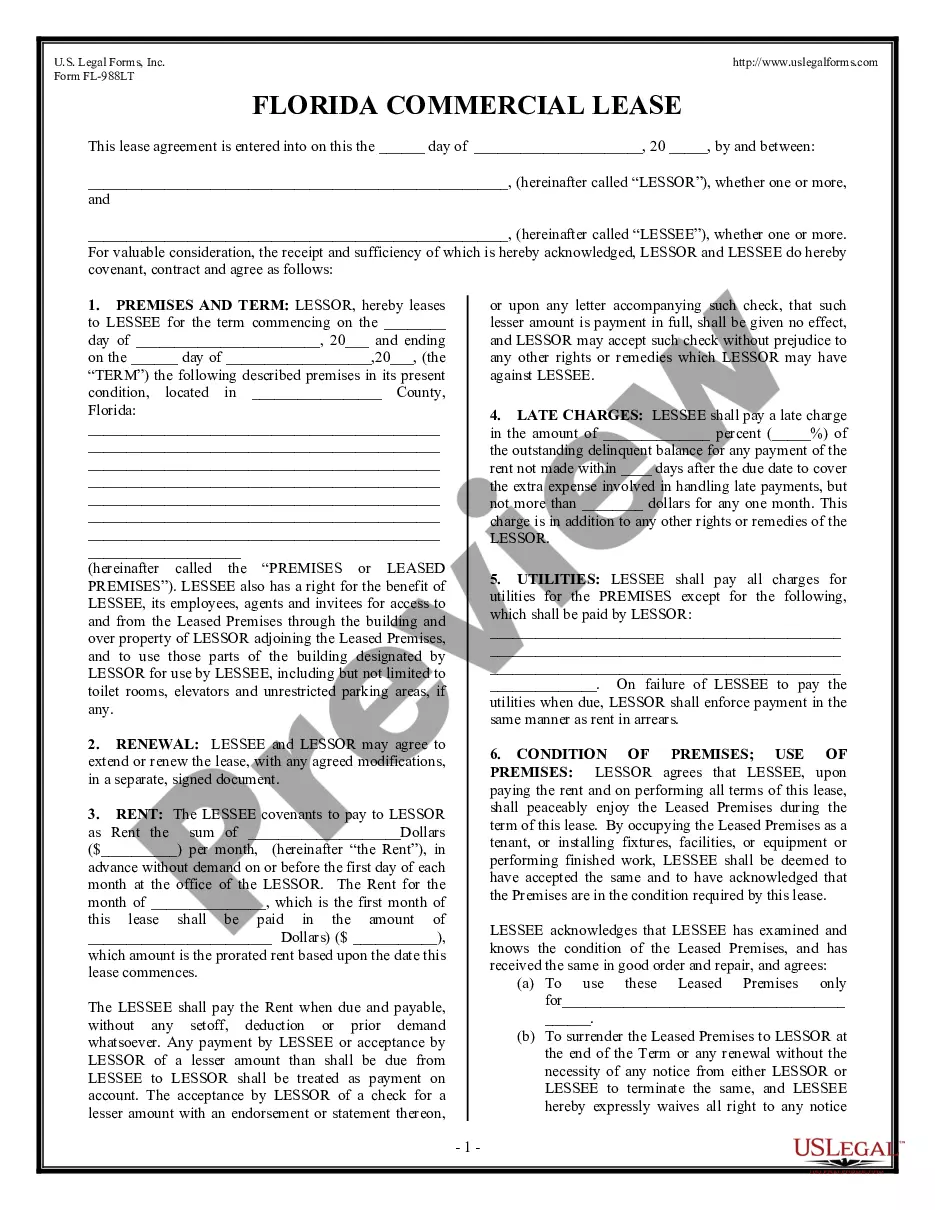
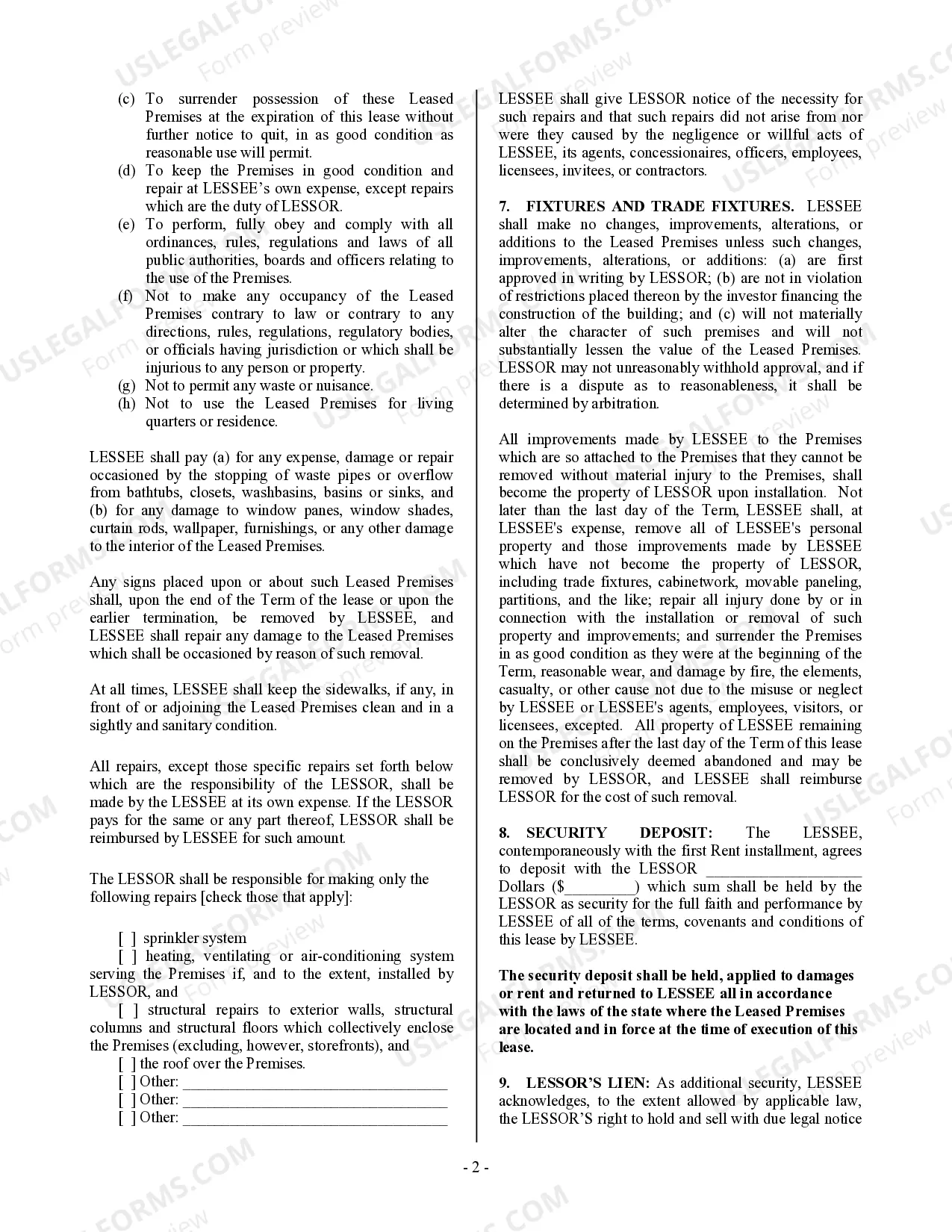
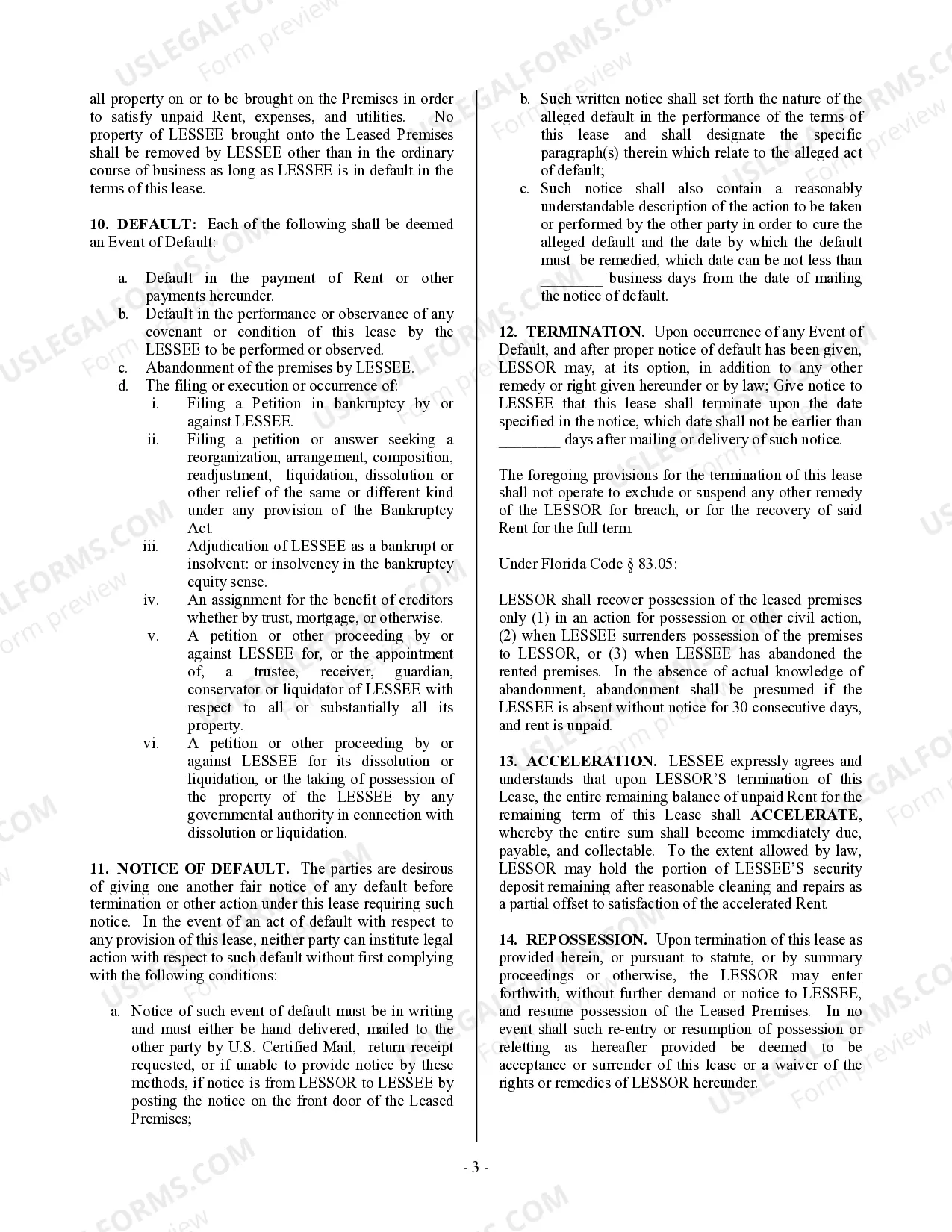
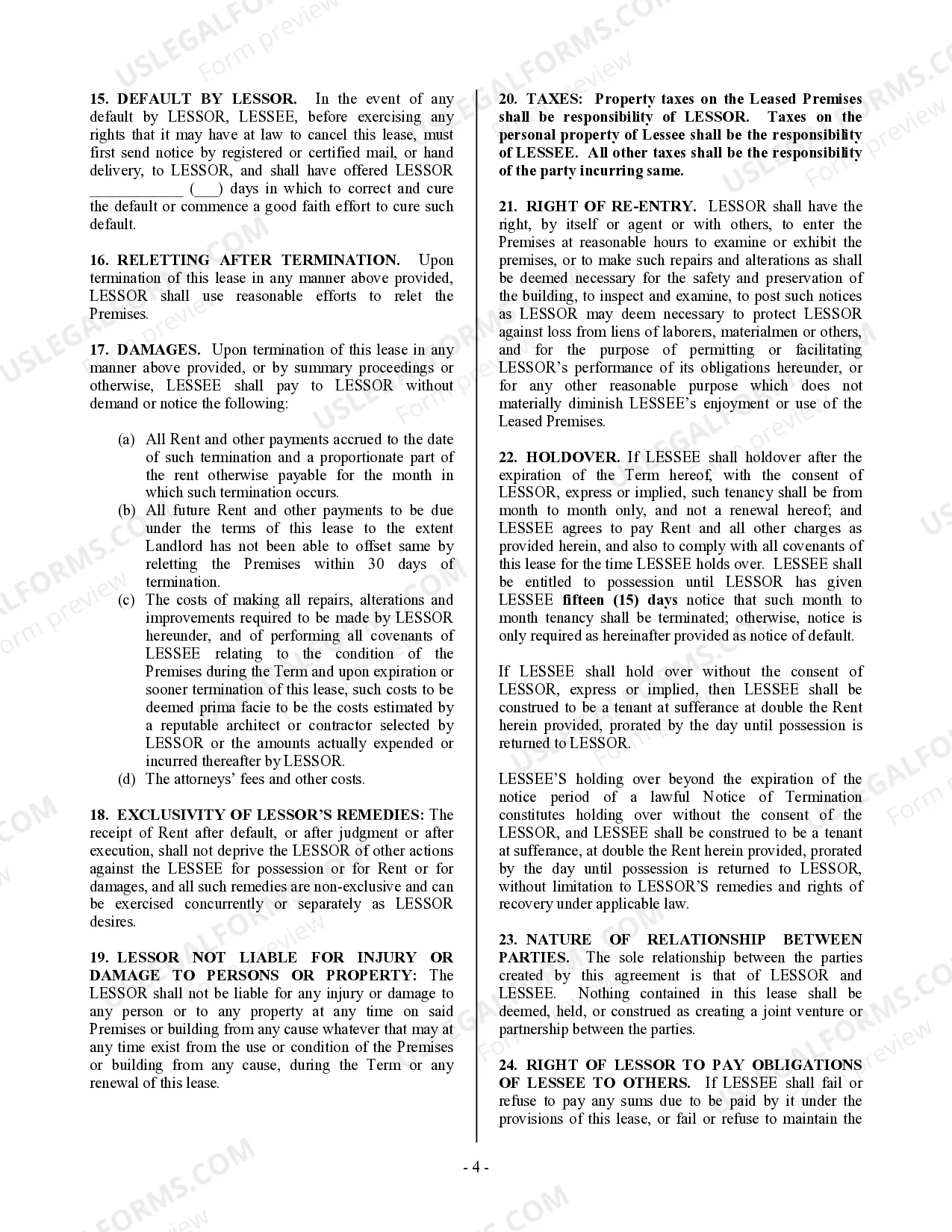
Getting a go-to place to access the most current and appropriate legal templates is half the struggle of working with bureaucracy. Finding the right legal documents demands accuracy and attention to detail, which explains why it is vital to take samples of Florida Commercial Lease Laws only from reliable sources, like US Legal Forms. An improper template will waste your time and hold off the situation you are in. With US Legal Forms, you have very little to be concerned about. You can access and view all the information about the document’s use and relevance for the situation and in your state or county.
Consider the listed steps to finish your Florida Commercial Lease Laws:
- Utilize the library navigation or search field to locate your template.
- Open the form’s description to ascertain if it matches the requirements of your state and county.
- Open the form preview, if there is one, to make sure the template is the one you are looking for.
- Go back to the search and look for the correct template if the Florida Commercial Lease Laws does not fit your requirements.
- When you are positive about the form’s relevance, download it.
- When you are a registered customer, click Log in to authenticate and gain access to your picked forms in My Forms.
- If you do not have a profile yet, click Buy now to get the template.
- Pick the pricing plan that fits your needs.
- Go on to the registration to finalize your purchase.
- Complete your purchase by picking a transaction method (bank card or PayPal).
- Pick the document format for downloading Florida Commercial Lease Laws.
- When you have the form on your gadget, you may alter it using the editor or print it and complete it manually.
Remove the headache that comes with your legal paperwork. Discover the comprehensive US Legal Forms catalog where you can find legal templates, check their relevance to your situation, and download them on the spot.
Form popularity
FAQ
Commercial tenants should also understand their covenant of quiet enjoyment rights. Simply put, the landlord must assure the renter of a clear title and promise not to disturb the tenant's belongings. It also guarantees the tenant will enjoy unhindered possession of the property during the lease period.
Do Commercial Documents Need to Be Notarized in Florida? No, your lease document doesn't have to be notarized in Florida. However, if the landlord or tenant decides that they want to notarize the document, they can make the request.
With the introduction of the amendment, Florida Statutes 689.01 (1) expressly state that ?no subscribing witnesses shall be required for a lease of real property or any such instrument pertaining to a lease of real property.? The reason behind the original requirement was the prevention of fraud or forgery.
Landlord's Duties This would include the foundation, walls and roof of the building. The landlord is also usually responsible for the electrical, heating and ventilation systems. Meeting building, fire and safety codes is generally up to the landlord.
The lessor's most essential duty is to deliver possession of the property to the lessee on the date stated in the lease. The duty of quiet enjoyment, provides that the landlord is the proper title owner of the property and there will be no disturbances in the lessee's possession of the property.