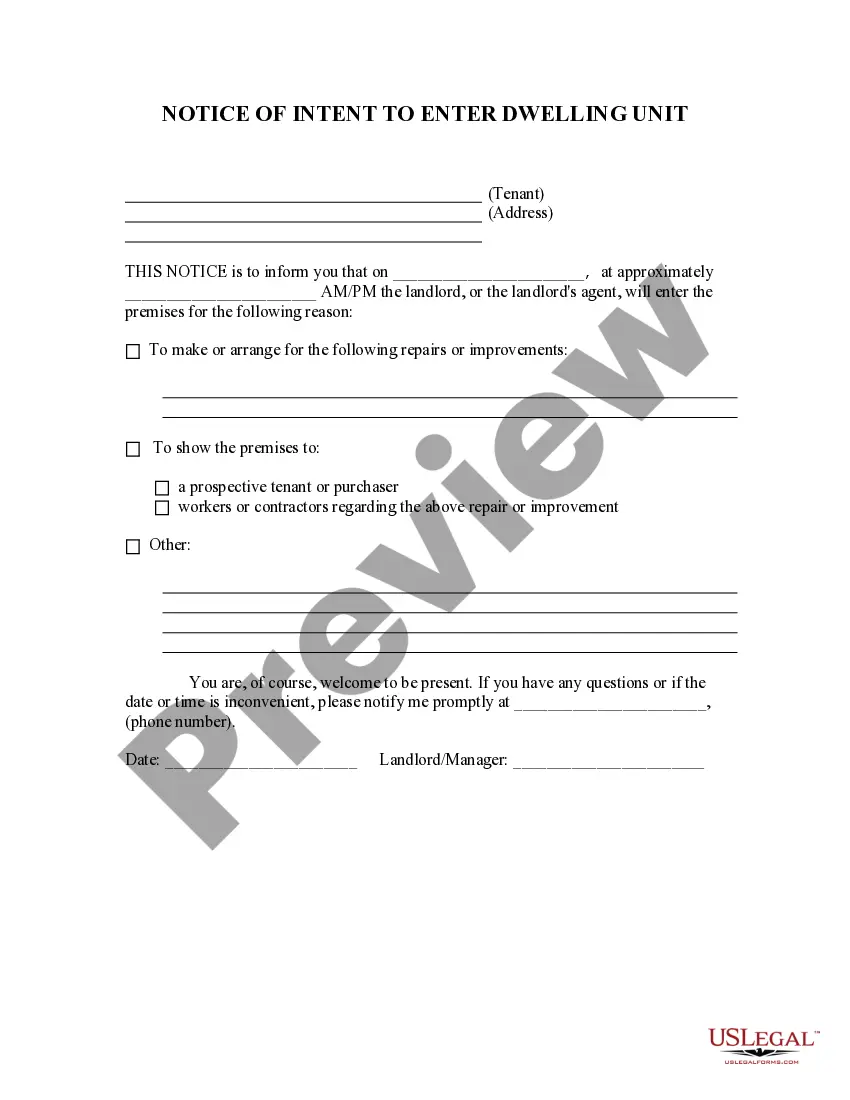
Enter Landlord Document For The Tenant
Description

Get your form ready online
Our built-in tools help you complete, sign, share, and store your documents in one place.
Make edits, fill in missing information, and update formatting in US Legal Forms—just like you would in MS Word.
Download a copy, print it, send it by email, or mail it via USPS—whatever works best for your next step.
Sign and collect signatures with our SignNow integration. Send to multiple recipients, set reminders, and more. Go Premium to unlock E-Sign.
If this form requires notarization, complete it online through a secure video call—no need to meet a notary in person or wait for an appointment.
We protect your documents and personal data by following strict security and privacy standards.

Make edits, fill in missing information, and update formatting in US Legal Forms—just like you would in MS Word.

Download a copy, print it, send it by email, or mail it via USPS—whatever works best for your next step.

Sign and collect signatures with our SignNow integration. Send to multiple recipients, set reminders, and more. Go Premium to unlock E-Sign.

If this form requires notarization, complete it online through a secure video call—no need to meet a notary in person or wait for an appointment.

We protect your documents and personal data by following strict security and privacy standards.
Looking for another form?

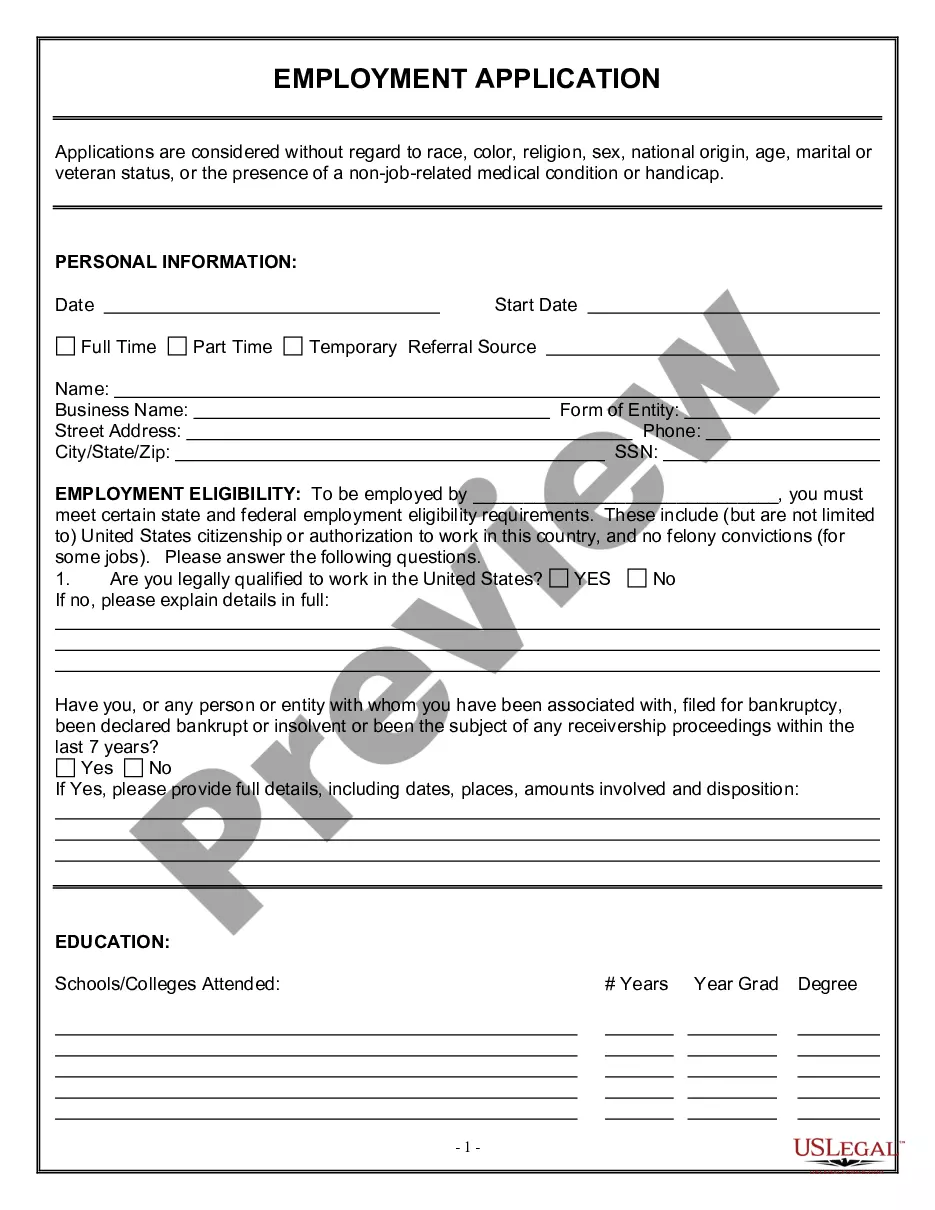



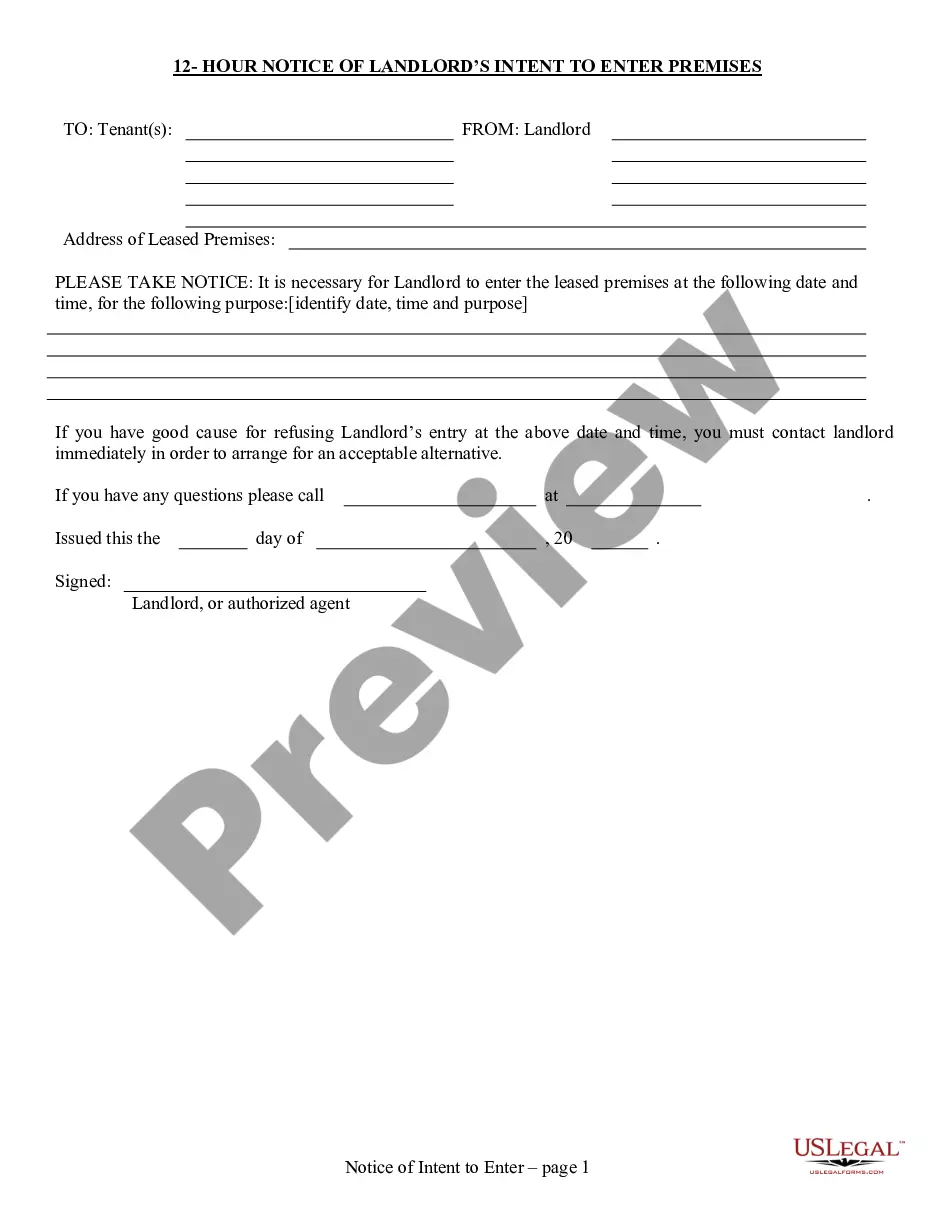
How to fill out Florida 12 Hour Notice Of Landlord's Intent To Enter Premises For Residential From Landlord To Tenant?
- Log into your account if you're a returning user, and verify your subscription is active before downloading the required form.
- For first-time users, explore the Preview mode and read the form description to select the template that best fits your situation.
- If the selected document doesn't meet your needs, utilize the Search tab to find a more suitable option.
- Once you find the right form, click 'Buy Now' and pick your preferred subscription plan. Ensure to create an account for full access.
- Proceed with payment using your credit card or PayPal to purchase the subscription successfully.
- After the transaction, download your document to your device, and you'll have access anytime in the 'My Forms' section.
In conclusion, US Legal Forms streamlines the process of entering landlord documents for tenants, making it convenient and efficient. With comprehensive resources and expert support, you can ensure your legal documents are precise and legally valid.
Start your journey today and experience the ease of managing your legal needs with US Legal Forms!
Form popularity
FAQ
Typically, the landlord fills out the landlord verification form, which confirms the rental history and conditions of a tenant. This form is often necessary for tenants applying for new housing, as it provides essential background information. Clear communication between landlords and tenants is crucial during this process. For added assistance, you may want to enter landlord documents for the tenant that outline verification requirements.
In Minnesota, tenants have the right to refuse their landlord entry, but this is contingent on specific conditions. If the landlord fails to provide adequate notice or if the entry is not urgent, you can deny access. It's crucial to keep this in mind to protect your living environment. Utilizing resources to enter landlord documents for the tenant can help clarify these rights during any disputes.
Yes, tenants generally have the right to refuse entry to their landlord, especially if proper notice has not been given. This right emphasizes your privacy and peace of mind while living in a rental property. However, be considerate of your landlord's need for access to maintain the property. To better navigate these situations, consult documents that outline how to properly enter landlord documents for the tenant.
As a renter in North Carolina, you have specific rights that protect you. These include the right to a habitable living space, the right to privacy, and the right to proper notice before your landlord enters your home. It is beneficial to be aware of these rights to ensure a fair rental experience. Entering landlord documents for the tenant can provide detailed insights into your protections.
In North Carolina, tenants can refuse entry to their landlord under certain circumstances. If the landlord has not provided appropriate notice or if there is no emergency, you may deny access. Familiarizing yourself with your lease agreement and local laws is essential in these situations. To better understand your rights, consider entering landlord documents for the tenant which outline these regulations.
As a tenant, you have the right to privacy in your rented space. However, landlords typically have the right to enter your home for necessary inspections, provided they give proper notice. If you wish to deny entry, ensure you have valid reasons, such as a lack of notice or an emergency. Remember, entering landlord documents for the tenant may help clarify these rights.
A good tenant reference letter should include a brief introduction of the tenant, your relationship to them, and the duration of their tenancy. Highlight positive attributes, such as punctuality in rent payments and property maintenance. Providing a personal touch, like specific examples of responsible behavior, can greatly enhance the letter’s effectiveness. You can create and enter landlord documents for the tenant to make the process of addressing references seamless with platforms like US Legal Forms.
To write a letter to your landlord aimed at avoiding eviction, express your intention to resolve any issues clearly and respectfully. Mention the specific circumstances that have led to the situation, such as financial difficulties, and propose a plan for addressing the matter. Being proactive and suggesting possible solutions can demonstrate your commitment and may encourage your landlord to work with you rather than pursue eviction. Utilizing a solution like US Legal Forms allows you to enter landlord documents for the tenant effectively.
To write a formal letter to your landlord, start with a respectful greeting and include your contact information at the top. Clearly state your intent in the opening paragraph, whether you are requesting repairs, addressing a concern, or formally providing notice. Providing specific details will help avoid confusion and reinforce your communication. Consider using a trusted platform like US Legal Forms to enter landlord documents for the tenant, which can streamline the process.
When starting a letter to a tenant, begin with a clear and polite greeting. Use their name to personalize the message, and then state the purpose of the letter right away. For instance, if you need to discuss a specific issue, mention it in the opening lines. Remember to express your willingness to assist as needed and clarify that this letter aims to maintain an open line of communication.