Lease Landlord Form For Canada
Description

Get your form ready online
Our built-in tools help you complete, sign, share, and store your documents in one place.
Make edits, fill in missing information, and update formatting in US Legal Forms—just like you would in MS Word.
Download a copy, print it, send it by email, or mail it via USPS—whatever works best for your next step.
Sign and collect signatures with our SignNow integration. Send to multiple recipients, set reminders, and more. Go Premium to unlock E-Sign.
If this form requires notarization, complete it online through a secure video call—no need to meet a notary in person or wait for an appointment.
We protect your documents and personal data by following strict security and privacy standards.

Make edits, fill in missing information, and update formatting in US Legal Forms—just like you would in MS Word.

Download a copy, print it, send it by email, or mail it via USPS—whatever works best for your next step.

Sign and collect signatures with our SignNow integration. Send to multiple recipients, set reminders, and more. Go Premium to unlock E-Sign.

If this form requires notarization, complete it online through a secure video call—no need to meet a notary in person or wait for an appointment.

We protect your documents and personal data by following strict security and privacy standards.
Looking for another form?









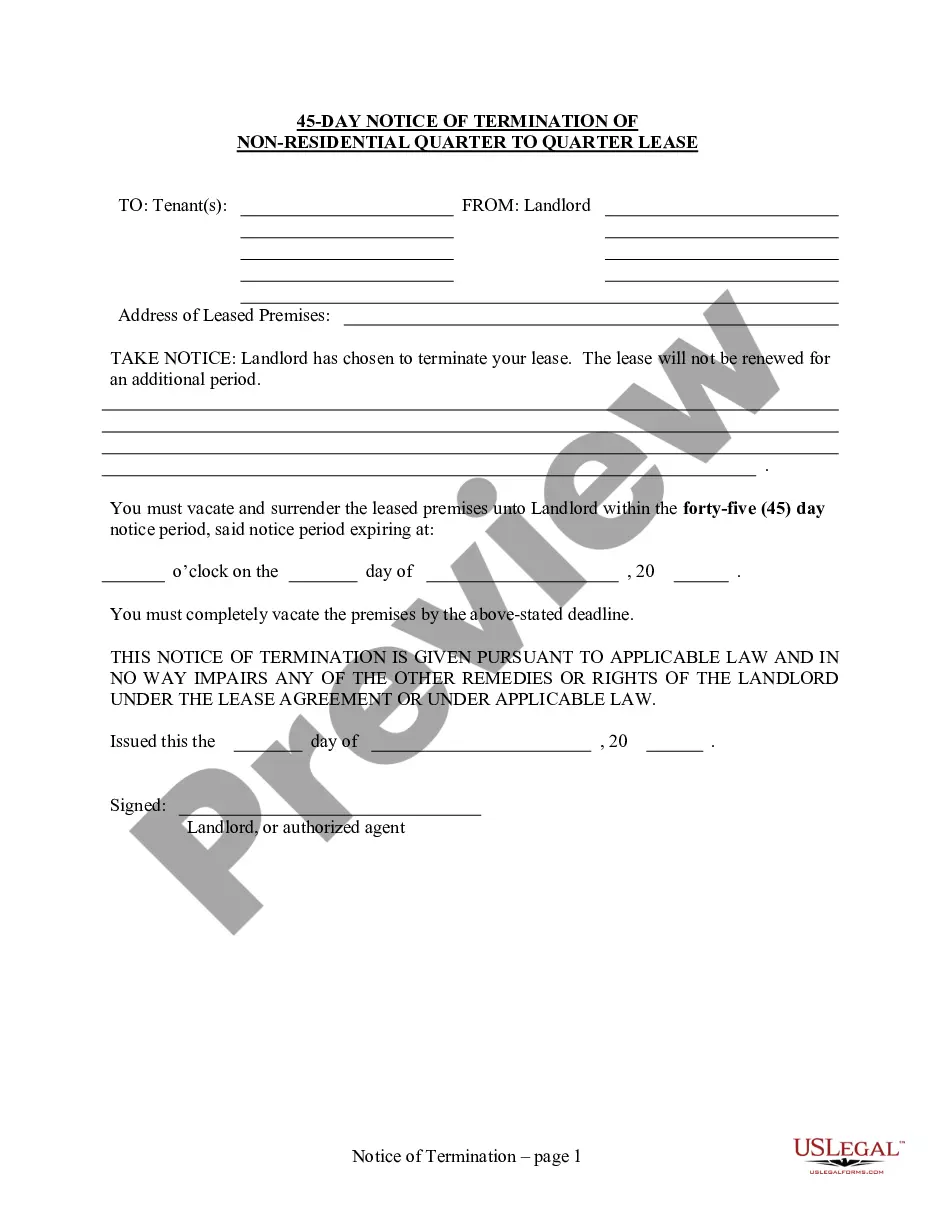
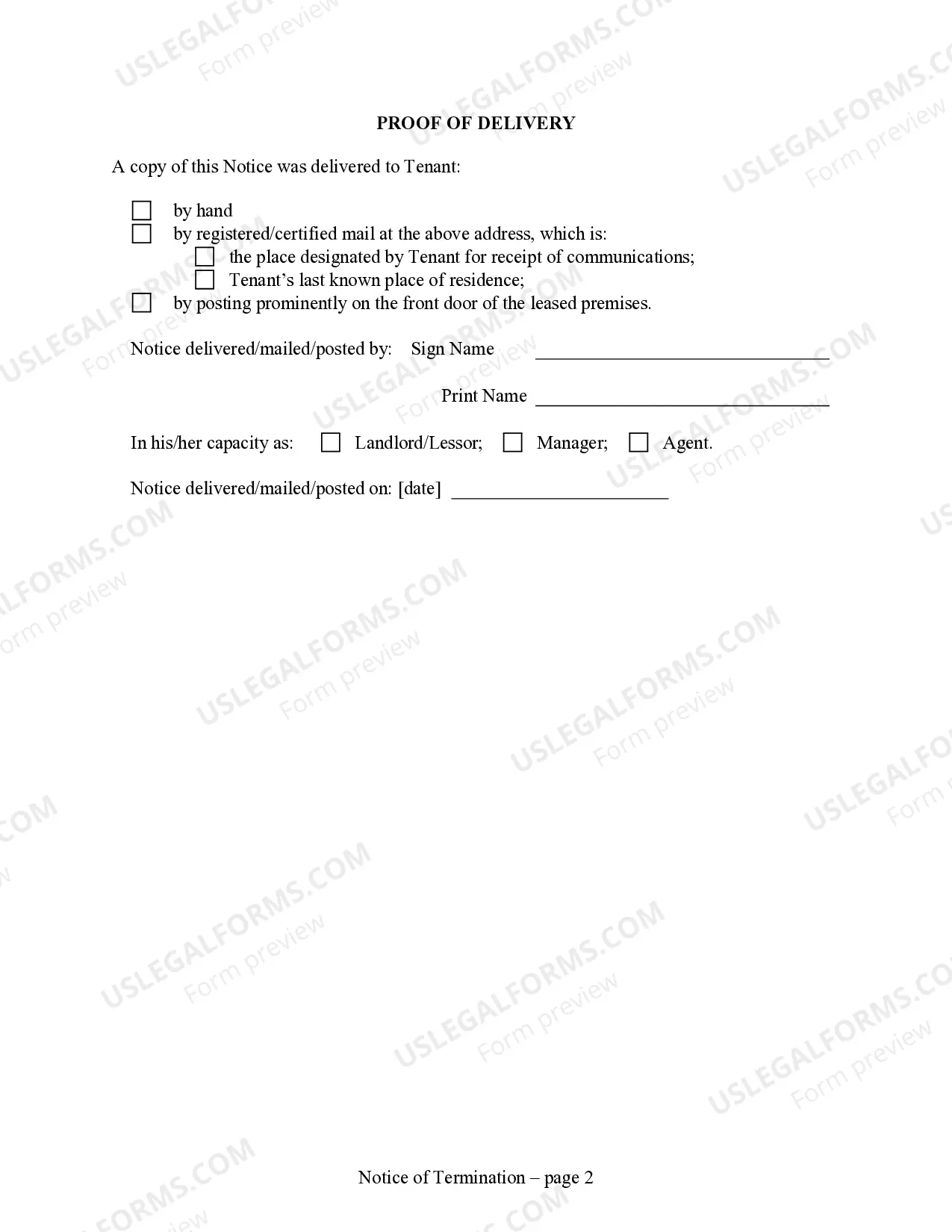
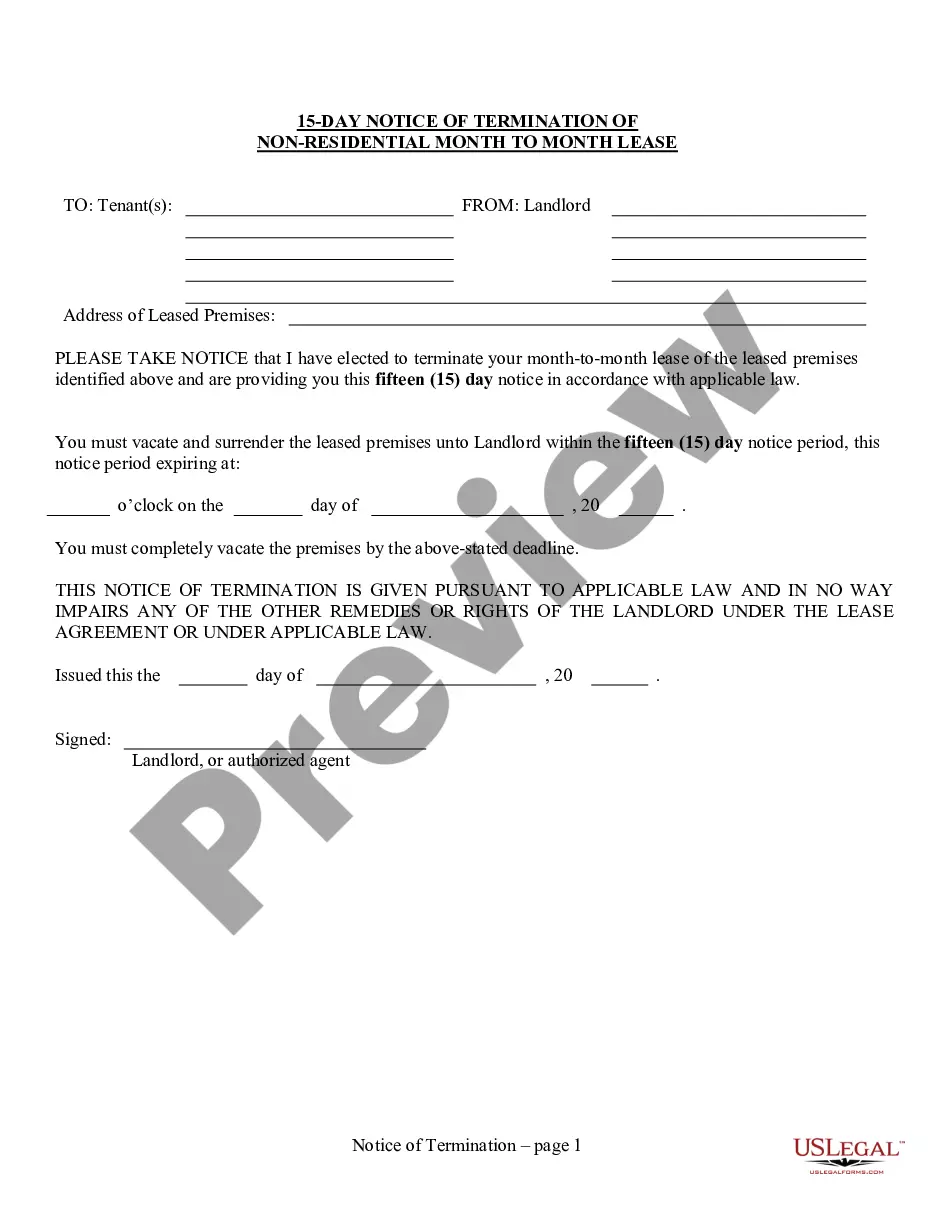
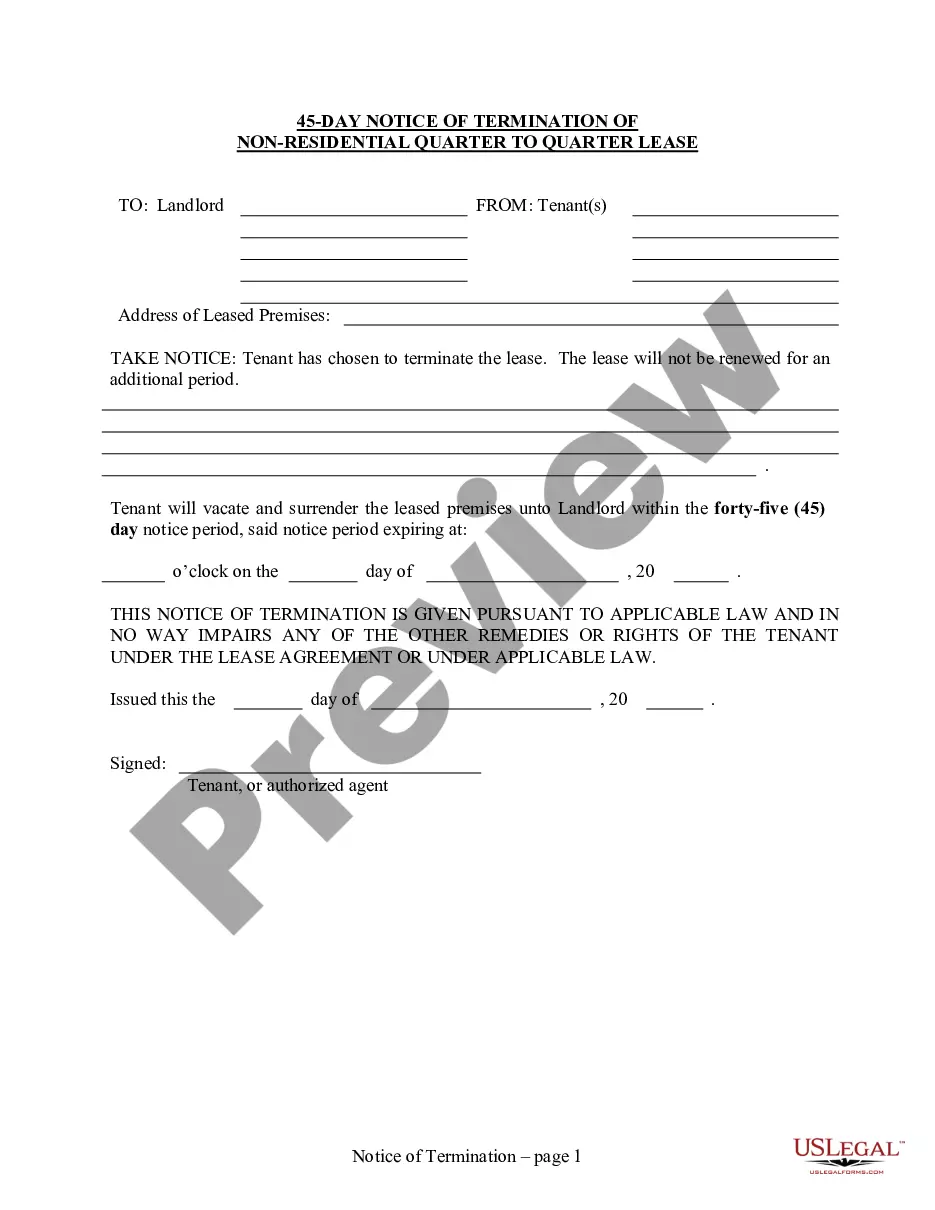
How to fill out Florida Notice To Terminate Quarter-to-Quarter Lease - Nonresidential - 45 Days Notice From Landlord To Tenant?
- Log in to your US Legal Forms account if you are an existing user. Ensure your subscription is active, or renew it based on your chosen plan.
- Browse the Preview mode and read the form description carefully to select the correct lease landlord form that fits your requirements.
- If the document doesn’t meet your needs, utilize the Search feature to find alternate templates that align better with your jurisdiction.
- Purchase the chosen document by clicking the Buy Now button, and select your desired subscription plan. Create an account to unlock full access to the library.
- Complete the payment process using your credit card or PayPal. Once completed, receive access to your form.
- Download the form onto your device and find it later in the My Forms section of your profile for future reference.
In conclusion, US Legal Forms offers a robust solution for easily acquiring legal documents, complemented by a user-friendly interface and expert assistance for form completion. Its extensive collection ensures you can find the right lease landlord form for Canada without hassle.
Start simplifying your legal processes today by exploring US Legal Forms and gathering your essential documents!
Form popularity
FAQ
The L9 form is a document used to report a tenant's rent arrears to the landlord and tenant board in Ontario. This Lease landlord form for Canada plays a vital role in managing collections and eviction proceedings. Using the L9 form helps landlords keep accurate records and take appropriate action when necessary.
A N9 tenant in Ontario refers to a tenant who has submitted an N9 form to their landlord, indicating their intention to vacate the property. This action is part of the legal process covered by Lease landlord forms for Canada, allowing both parties to manage the end of a lease responsibly. Proper communication through this form can facilitate a smoother moving-out experience.
The L2 form, or Application to Evict a Tenant for Reasons Other Than Non-Payment of Rent, is essential for landlords seeking to evict tenants for various reasons. This Lease landlord form for Canada allows landlords to present their case to the landlord and tenant board effectively. Properly completing an L2 form ensures a clear presentation of the grounds for eviction.
The purpose of an N11 form in Ontario is to document the mutual decision between a landlord and a tenant to end a rental agreement. This form serves as the official Lease landlord form for Canada, reducing the risk of misunderstandings later on. Using the N11 formalizes the agreement, ensuring both parties are protected legally.
The N9 form is a notice that tenants in Ontario use to provide their landlord with written notice of their intention to terminate the lease. This form is essential in the Lease landlord form for Canada ecosystem, allowing tenants to comply with legal requirements for ending their tenancy. Proper use of the N9 ensures a smooth transition for both the tenant and landlord.
The N11 form in Canada, also known as a Mutual Agreement to Terminate a Tenancy, allows both landlords and tenants to agree to terminate a lease. This Lease landlord form for Canada ensures there is clarity and mutual consent about ending the rental agreement. It provides a legal framework, safeguarding both parties against potential disputes.
To evict a tenant in Ontario, you typically need to use the L1 form, which is the Application to Evict a Tenant for Non-Payment of Rent. This Lease landlord form for Canada streamlines the process of formally initiating the eviction process with the landlord and tenant board. It is crucial to fill out this form accurately to avoid delays in your request.
A landlord form is a standardized document that outlines the terms of a rental agreement or other landlord-tenant interactions. It can include lease agreements, eviction notices, or maintenance requests. Utilizing a lease landlord form for Canada can help streamline communication and ensure clarity in the leasing process.
Yes, you can write your own lease agreement in Canada, but it's essential to be informed about the relevant laws and regulations. Many resources, including lease landlord forms for Canada, can assist in creating a comprehensive document. This ensures that your agreement meets legal standards and protects both parties.
You do not necessarily need a lawyer to draft a lease agreement, but it can be beneficial. Many landlords choose to use templates, such as a lease landlord form for Canada, which provide clarity on legal requirements. If your situation is complex or you have concerns, consulting a lawyer can provide peace of mind.