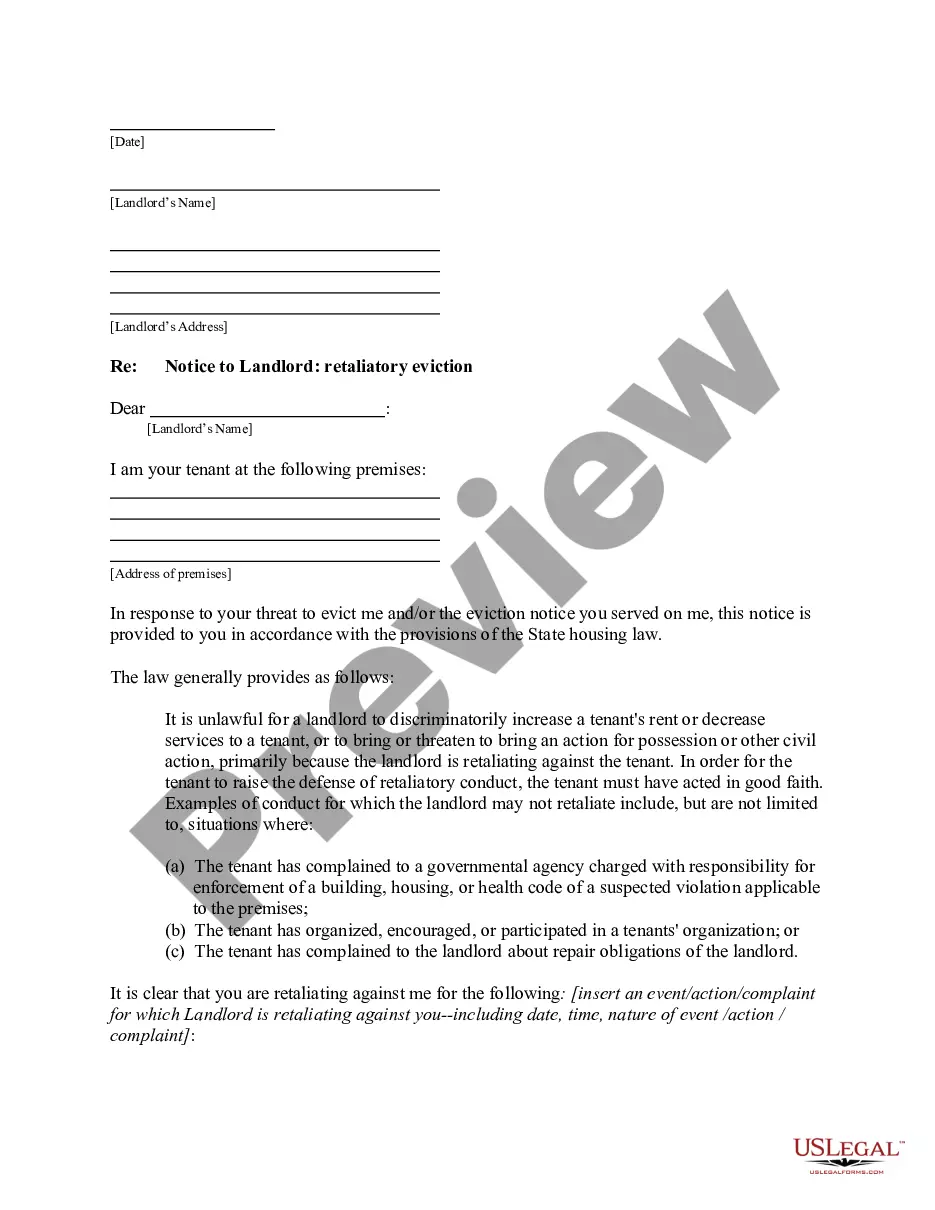
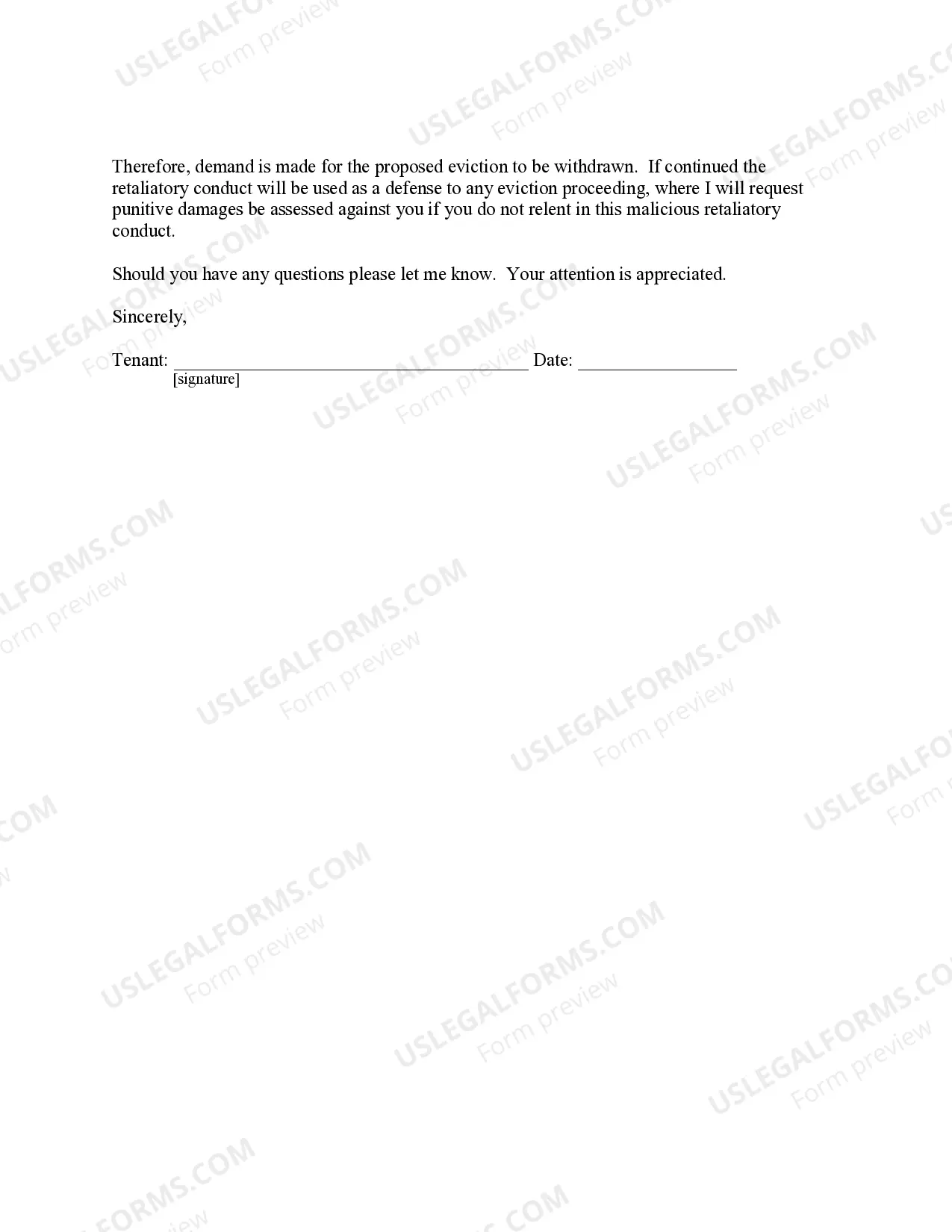
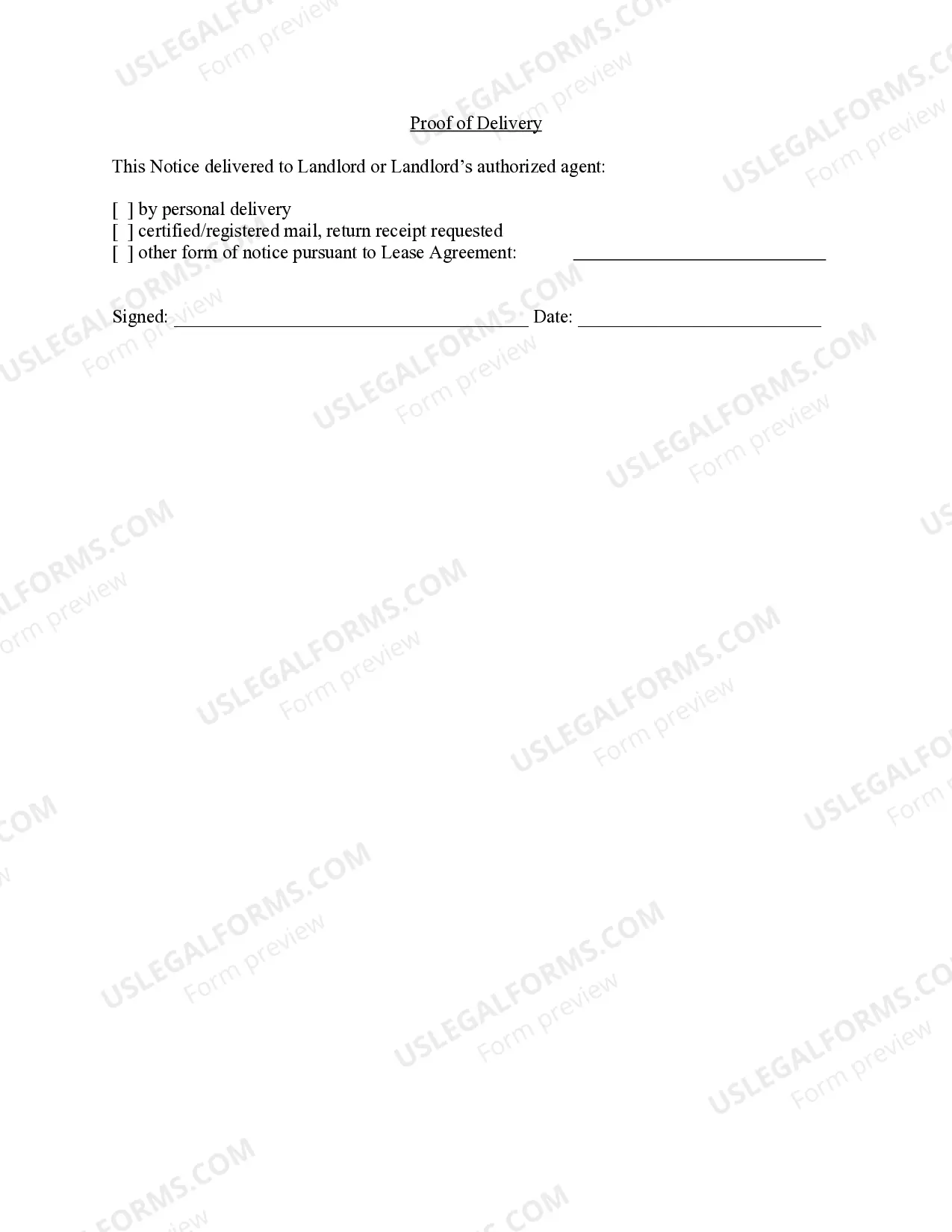
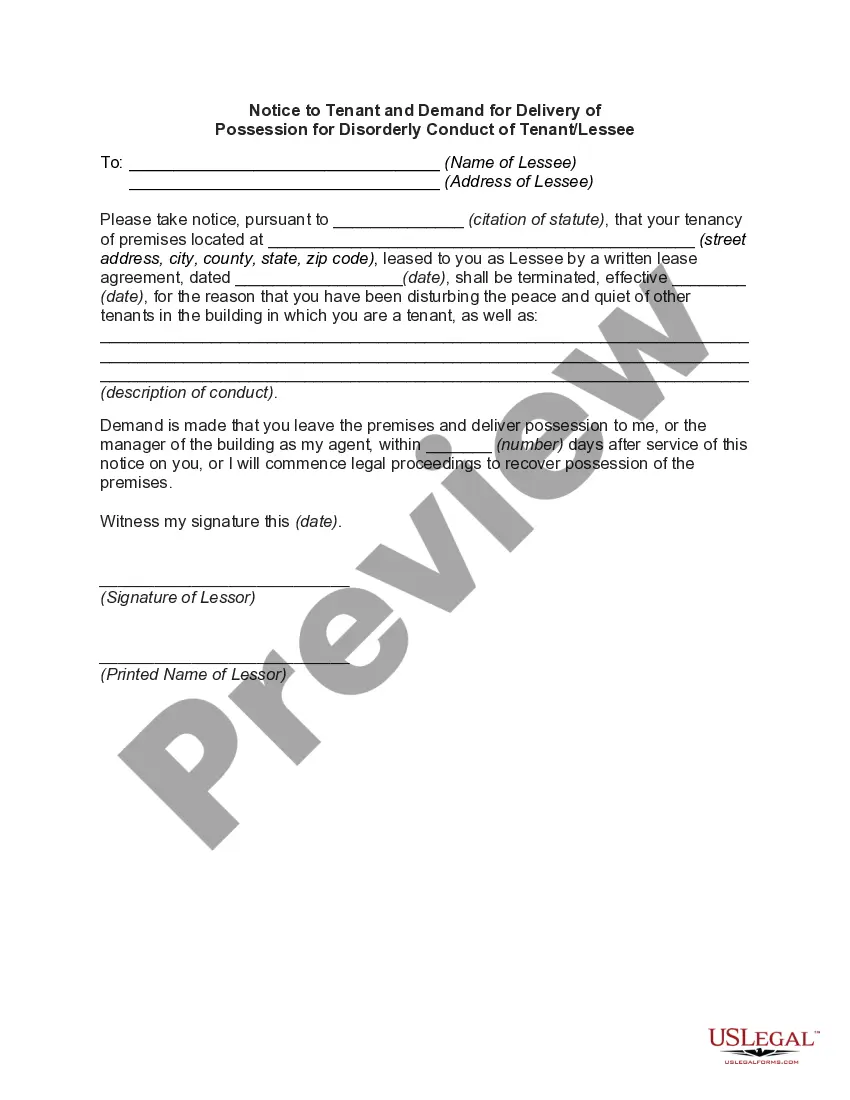
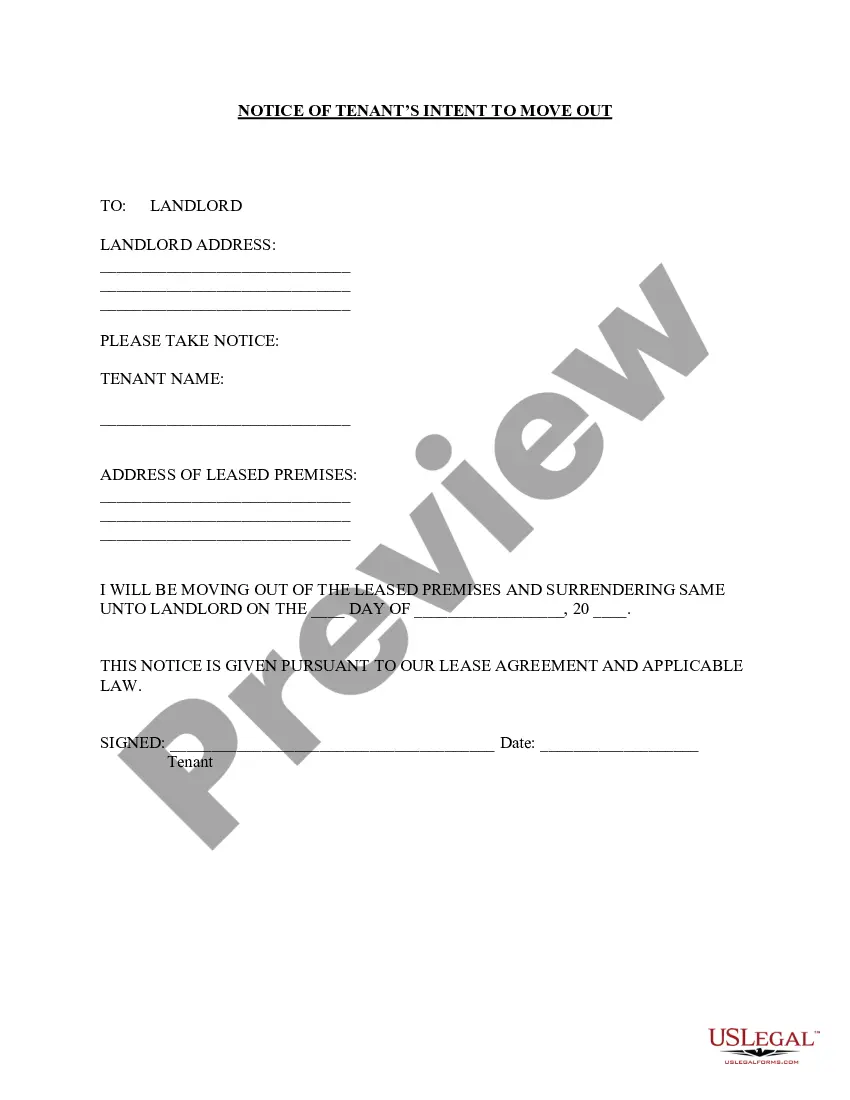
Letter Notice Eviction With Letterhead
Description



Get your form ready online
Our built-in tools help you complete, sign, share, and store your documents in one place.
Make edits, fill in missing information, and update formatting in US Legal Forms—just like you would in MS Word.
Download a copy, print it, send it by email, or mail it via USPS—whatever works best for your next step.
Sign and collect signatures with our SignNow integration. Send to multiple recipients, set reminders, and more. Go Premium to unlock E-Sign.
If this form requires notarization, complete it online through a secure video call—no need to meet a notary in person or wait for an appointment.
We protect your documents and personal data by following strict security and privacy standards.

Make edits, fill in missing information, and update formatting in US Legal Forms—just like you would in MS Word.

Download a copy, print it, send it by email, or mail it via USPS—whatever works best for your next step.

Sign and collect signatures with our SignNow integration. Send to multiple recipients, set reminders, and more. Go Premium to unlock E-Sign.

If this form requires notarization, complete it online through a secure video call—no need to meet a notary in person or wait for an appointment.

We protect your documents and personal data by following strict security and privacy standards.
Looking for another form?









How to fill out Florida Letter From Tenant To Landlord Containing Notice To Landlord To Cease Retaliatory Threats To Evict Or Retaliatory Eviction?
Legal administration can be exasperating, even for skilled professionals.
When you seek a Letter Notice Eviction With Letterhead and lack the time to invest in finding the correct and current version, the process can be stressful.
Access a valuable repository of articles, guides, tutorials, and tools pertinent to your circumstances and needs.
Save time and effort searching for the documents you require, and use US Legal Forms’ sophisticated search and Preview feature to find Letter Notice Eviction With Letterhead and obtain it.
Transform your routine document management into a seamless and user-friendly experience today.
- If you have a monthly subscription, Log In to your US Legal Forms account, find the form, and download it.
- Visit the My documents section to see the documents you have saved and organize your folders as you prefer.
- If this is your first experience with US Legal Forms, create a free account and gain unlimited access to all features of the platform.
- Here are the steps to follow after accessing the document you need.
- Verify that this is the correct form by previewing it and reviewing its details.
- Leverage state- or county-specific legal and business documents.
- US Legal Forms encompasses any needs you may have, from individual to corporate paperwork, in one location.
- Employ advanced tools to complete and oversee your Letter Notice Eviction With Letterhead.
Form popularity
FAQ
The main purpose of a living trust is to oversee the transfer of your assets after your death. Under the terms of the living trust, you are the grantor of the trust, and the person you designate to distribute the trust's assets after your death is known as the successor trustee.
Limitations: Requires adherence to trust document's instructions on asset assignments. Joint assets, including certain IRAs and retirement plans, cannot be placed into a one-person trust. No complete tax avoidance: Total avoidance of taxes is rarely possible with living trusts, though there may be ways to reduce them.
Revocable living trusts are used to avoid probate and to protect the privacy of the trust owner and beneficiaries of the trust as well as minimize estate taxes. Revocable trusts, however, have several limitations including the expense to have them written up, and they lack features of an irrevocable trust.
To make a living trust in Vermont, you: Choose whether to make an individual or shared trust. Decide what property to include in the trust. Choose a successor trustee. Decide who will be the trust's beneficiaries?that is, who will get the trust property. Create the trust document.
There are two types of trusts under the jurisdiction of the probate division of the Vermont Superior Court: testamentary and nontestamentary. The probate process is a safety measure for the distribution of property when someone dies.
Property That May Avoid Probate Property held in a trust3 Jointly held property (but not common property) Death benefits from insurance policies (unless payable to the estate)4 Property given away before you die. Assets in a pay-on-death account. Retirement accounts with a named beneficiary.
A Vermont living trust holds ownership of your assets during your life while you continue to use and control them. Assets are then passed to beneficiaries after your death. A revocable living trust (sometimes called an inter vivos trust) can offer a variety of benefits.