Eviction Notice In Florida With Lease
Description



Get your form ready online
Our built-in tools help you complete, sign, share, and store your documents in one place.
Make edits, fill in missing information, and update formatting in US Legal Forms—just like you would in MS Word.
Download a copy, print it, send it by email, or mail it via USPS—whatever works best for your next step.
Sign and collect signatures with our SignNow integration. Send to multiple recipients, set reminders, and more. Go Premium to unlock E-Sign.
If this form requires notarization, complete it online through a secure video call—no need to meet a notary in person or wait for an appointment.
We protect your documents and personal data by following strict security and privacy standards.

Make edits, fill in missing information, and update formatting in US Legal Forms—just like you would in MS Word.

Download a copy, print it, send it by email, or mail it via USPS—whatever works best for your next step.

Sign and collect signatures with our SignNow integration. Send to multiple recipients, set reminders, and more. Go Premium to unlock E-Sign.

If this form requires notarization, complete it online through a secure video call—no need to meet a notary in person or wait for an appointment.

We protect your documents and personal data by following strict security and privacy standards.
Looking for another form?
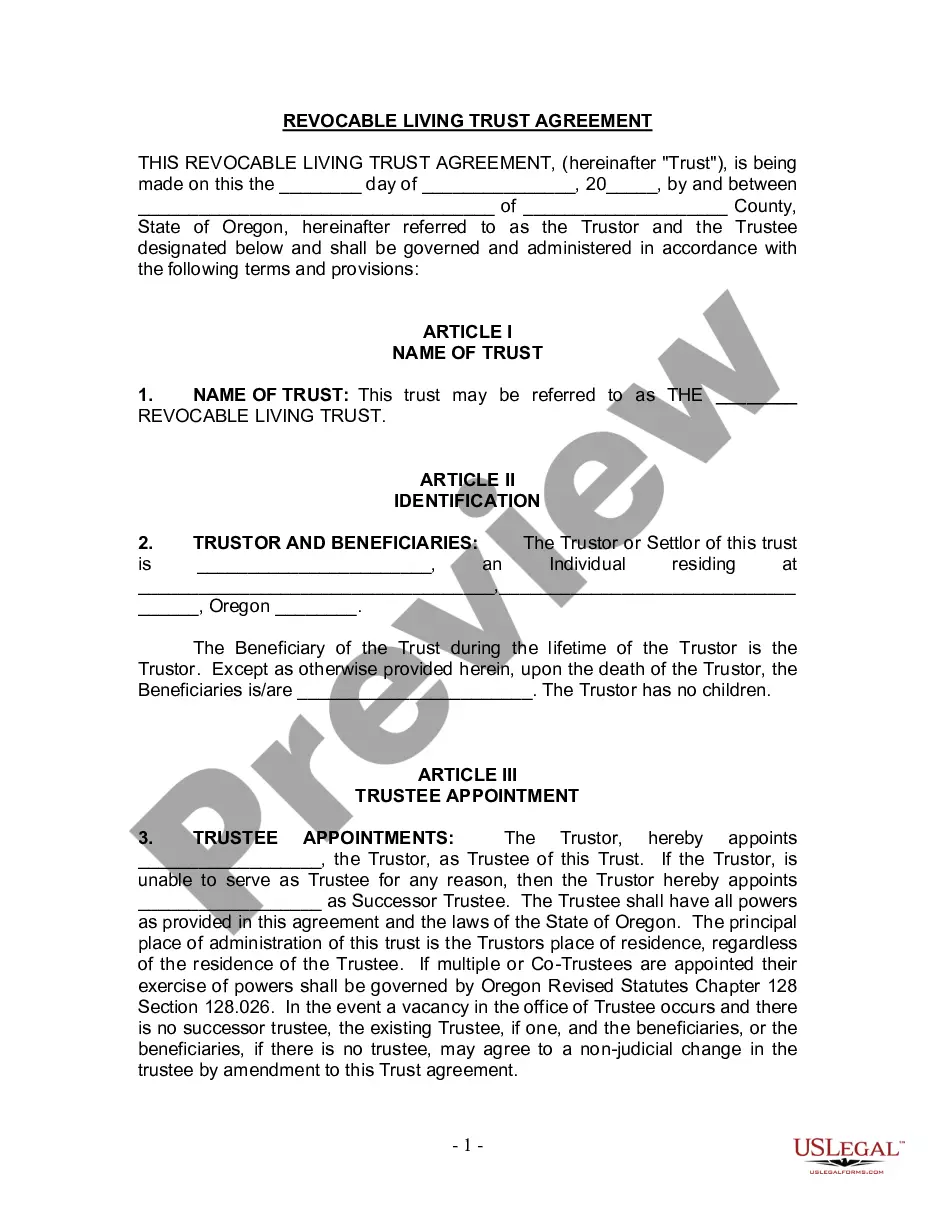




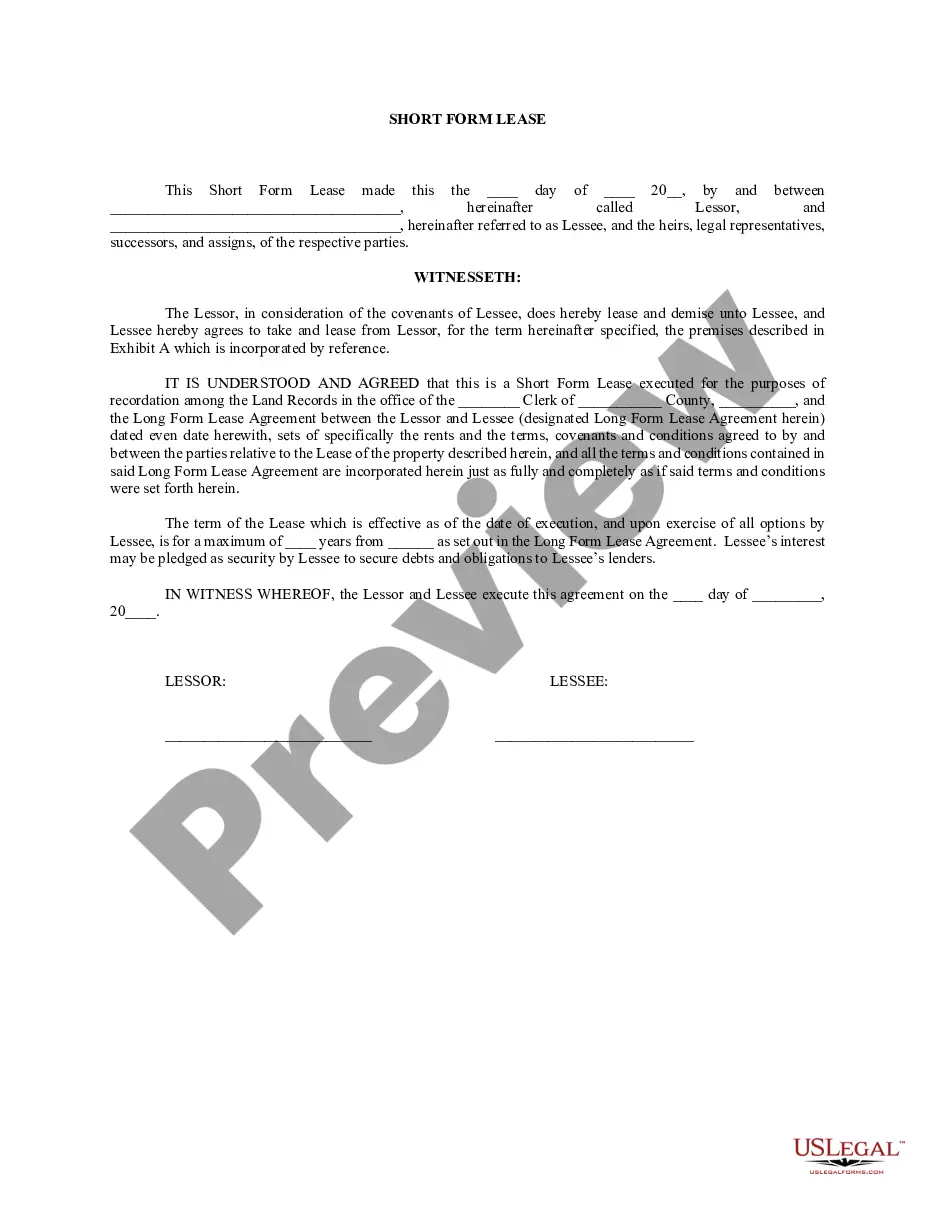


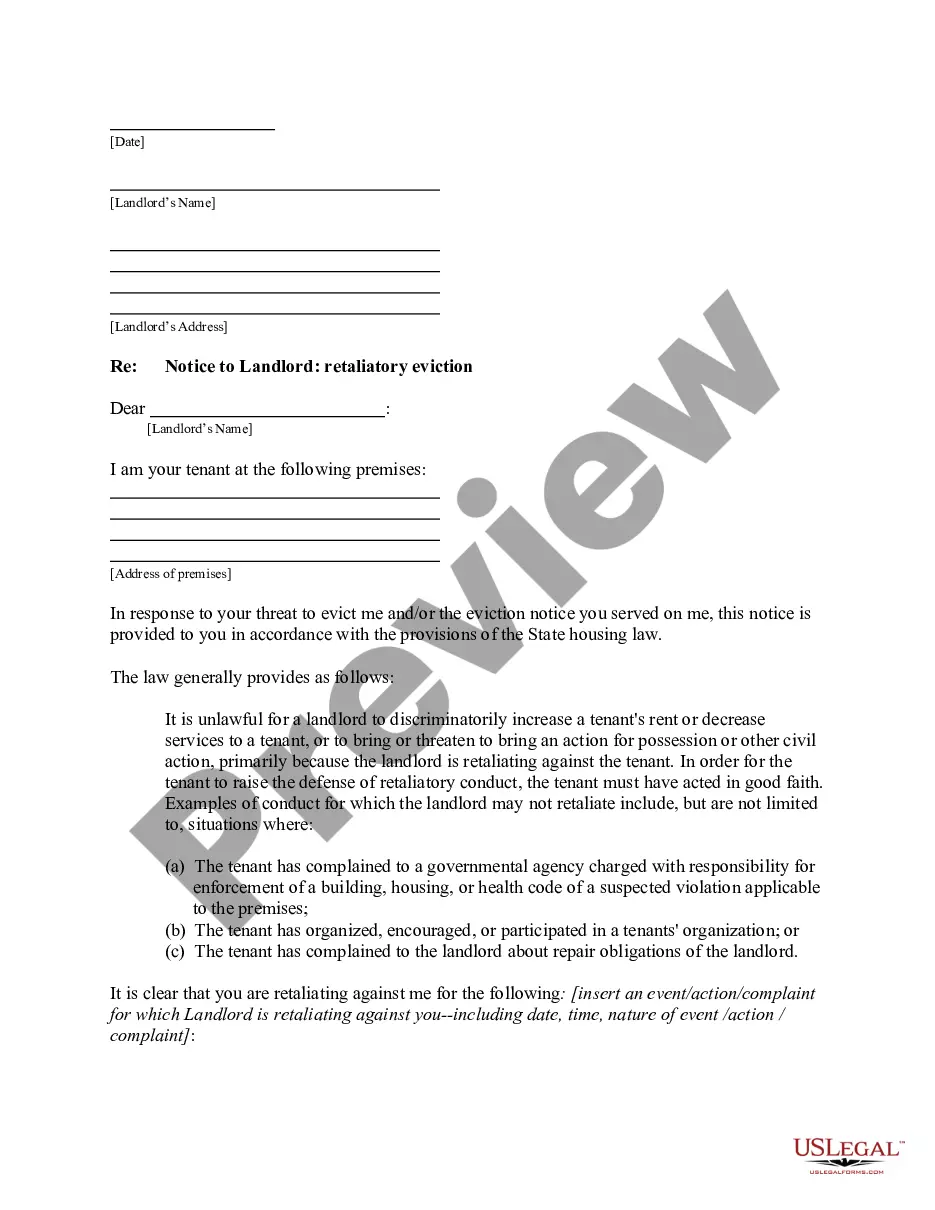
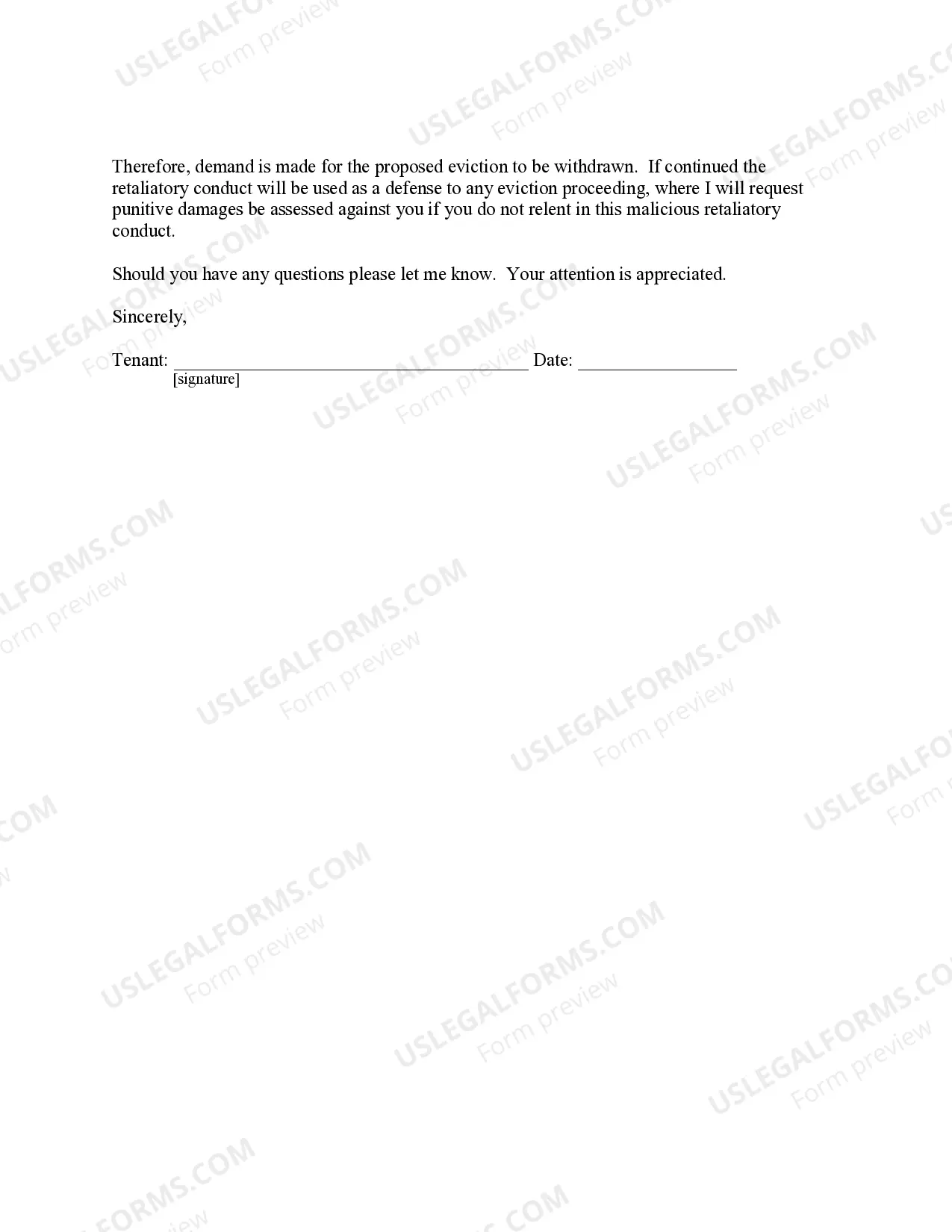
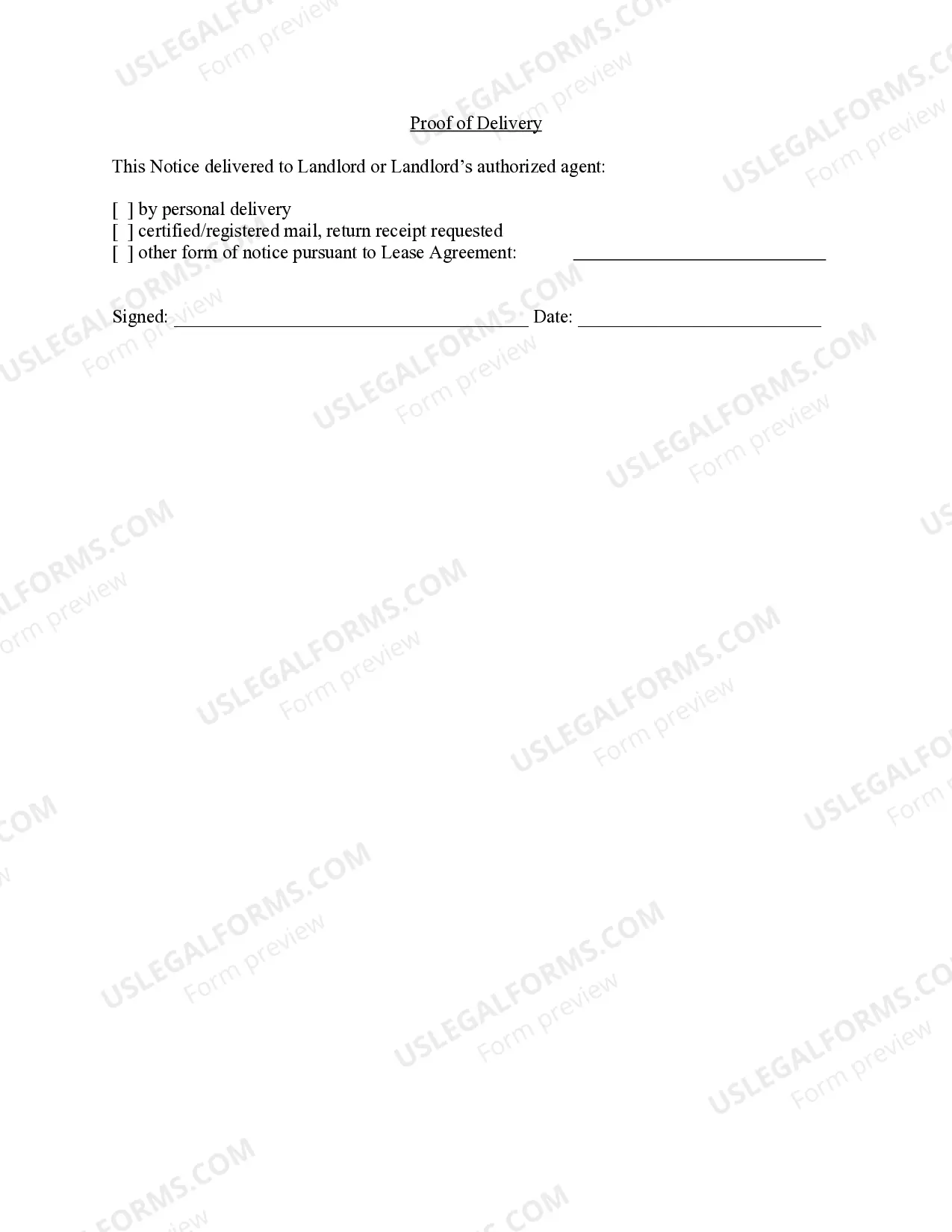
How to fill out Florida Letter From Tenant To Landlord Containing Notice To Landlord To Cease Retaliatory Threats To Evict Or Retaliatory Eviction?
Regardless of whether for commercial reasons or personal matters, everyone eventually encounters legal circumstances in their lifetime.
Completing legal documents requires meticulous attention, starting with selecting the correct form template.
With an extensive US Legal Forms inventory available, you need not waste time searching for the right template online. Utilize the library's straightforward navigation to find the suitable form for any situation.
- Locate the template you require by utilizing the search bar or catalog browsing.
- Review the form's details to verify it aligns with your situation, state, and locality.
- Click on the form's preview to inspect it.
- If it is the incorrect document, return to the search function to find the Eviction Notice In Florida With Lease template you need.
- Download the file when it matches your requirements.
- If you already possess a US Legal Forms account, simply click Log in to retrieve previously stored documents in My documents.
- In case you do not have an account yet, you can acquire the form by clicking Buy now.
- Choose the appropriate pricing option.
- Complete the account registration form.
- Choose your payment method: you can use a credit card or PayPal account.
- Select the file format you prefer and download the Eviction Notice In Florida With Lease.
- Once it is saved, you can fill out the form using editing software or print it out to complete it by hand.
Form popularity
FAQ
Yes, one person can be evicted from a lease, depending on the lease agreement terms. If the lease includes multiple tenants, landlords typically have the right to issue an eviction notice in Florida with lease stipulations applied to any individual tenant. This process ensures that the responsibilities outlined in the lease are met, even if only one tenant fails to comply. Always check your lease agreement and local laws to ensure proper procedures are followed.
In Tennessee, the rules for eviction are quite specific and follow legal procedures. Landlords must provide a written notice before starting the eviction process, and this often includes delivering an eviction notice in Florida with lease terms that must be honored. After providing notice, landlords may file for an eviction order if the tenant does not comply. It’s crucial to follow these procedures carefully to avoid complications.
The time it takes to legally evict a tenant in Florida varies, but generally, the process can take several weeks to a few months. After serving an eviction notice in Florida with lease terms, you must wait for the notice period to pass before filing a lawsuit. If the tenant contests the eviction, it could prolong the process. For a smoother experience, consider using US Legal Forms to navigate the legalities efficiently.
To initiate an eviction on your lease, you need to begin with the proper eviction notice in Florida with lease documentation. This notice typically must inform the tenant of a lease violation and provide a specific timeframe for resolution. If the tenant does not comply, you may proceed with filing an eviction lawsuit in your local court. US Legal Forms can guide you through the documentation process, ensuring you meet all legal requirements.
Legally evicting someone in Florida involves multiple steps, starting with issuing the correct eviction notice. After the notice period expires, if the tenant has not complied, you may file a complaint in the county court. Following a hearing and if the judgment is in your favor, you may obtain a writ of possession to remove the tenant from the property legally.
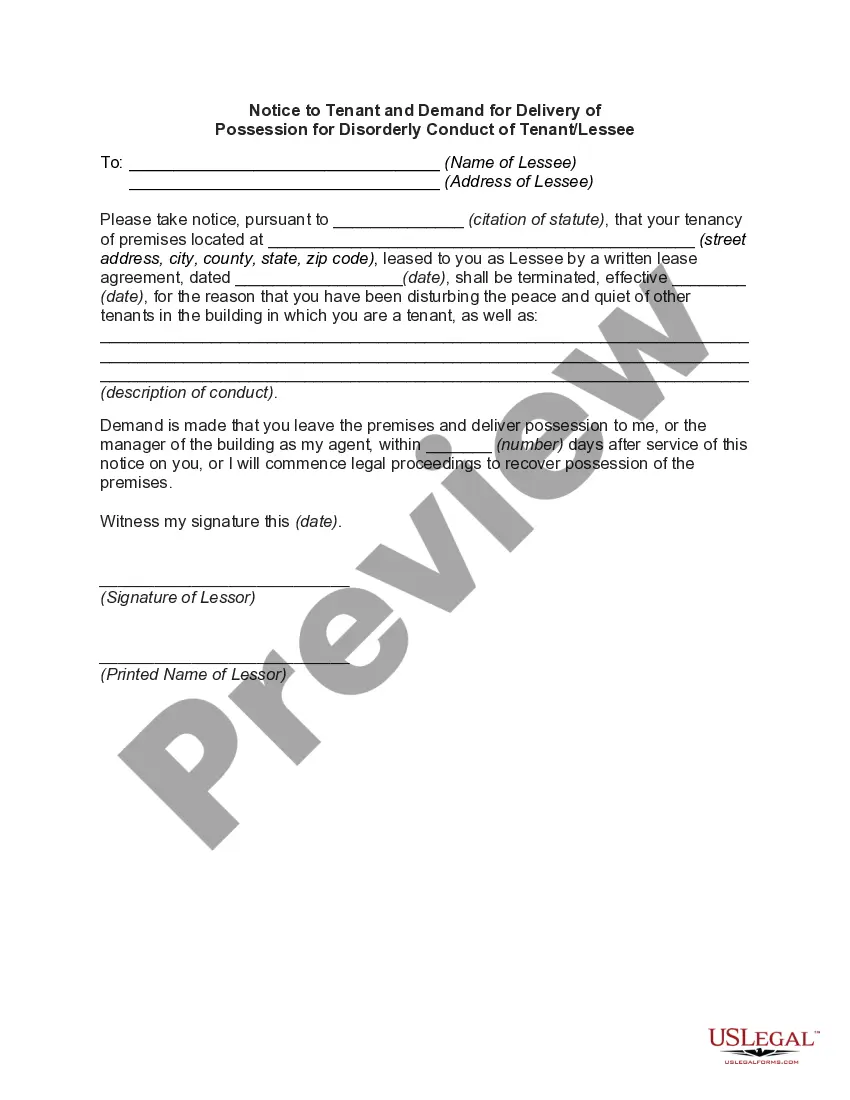
To write an eviction notice in Florida, begin by stating the date, your name, and the tenant's name. Clearly outline the reason for eviction and include relevant lease details, such as the violation or expiration date. Conclude with the time frame given to the tenant for compliance, as stipulated by Florida law, ensuring your template aligns with the eviction notice in Florida with lease guidelines.
Yes, you can evict someone with a lease in Florida if they violate the lease terms. Common reasons include non-payment of rent, damage to property, or engaging in illegal activities. It is important to follow the legal process by issuing the appropriate eviction notice and allowing the tenant a chance to remedy the situation, as prescribed by state laws.
To give a notice to vacate in Florida, deliver a written notice to the tenant specifying the reason and the deadline for vacating the property. Ensure that the notice respects the notice period required by law, depending on the lease terms. You can hand it directly to the tenant, send it by certified mail, or post it on the property if needed.
In Florida, landlords are required to provide a 60-day notice if the lease is for a year or longer and the lease is set to renew. It is a good practice to remind tenants of their responsibilities and upcoming lease expiration. For month-to-month leases, a 15-day notice is usually sufficient to inform tenants about termination.
In Florida, eviction notices must comply with state laws, which require clear communication of the reason for the eviction. If there is a lease involved, the notice should state the violation of the lease terms, such as non-payment of rent or lease expiration. Landlords must provide a specific timeframe for the tenant to resolve the issue or vacate the premises, typically ranging from three to fifteen days, depending on the reason.